We remain fully operational. Our teams are working around the clock to ensure your deliveries continue safely.

DOWNLOAD THE APP


Customer Services
Copyright © 2025 Desertcart Holdings Limited
DOWNLOAD THE APP
Buy anything from 5,000+ international stores. One checkout price. No surprise fees. Join 2M+ shoppers on Desertcart.
Desertcart purchases this item on your behalf and handles shipping, customs, and support to South Korea.
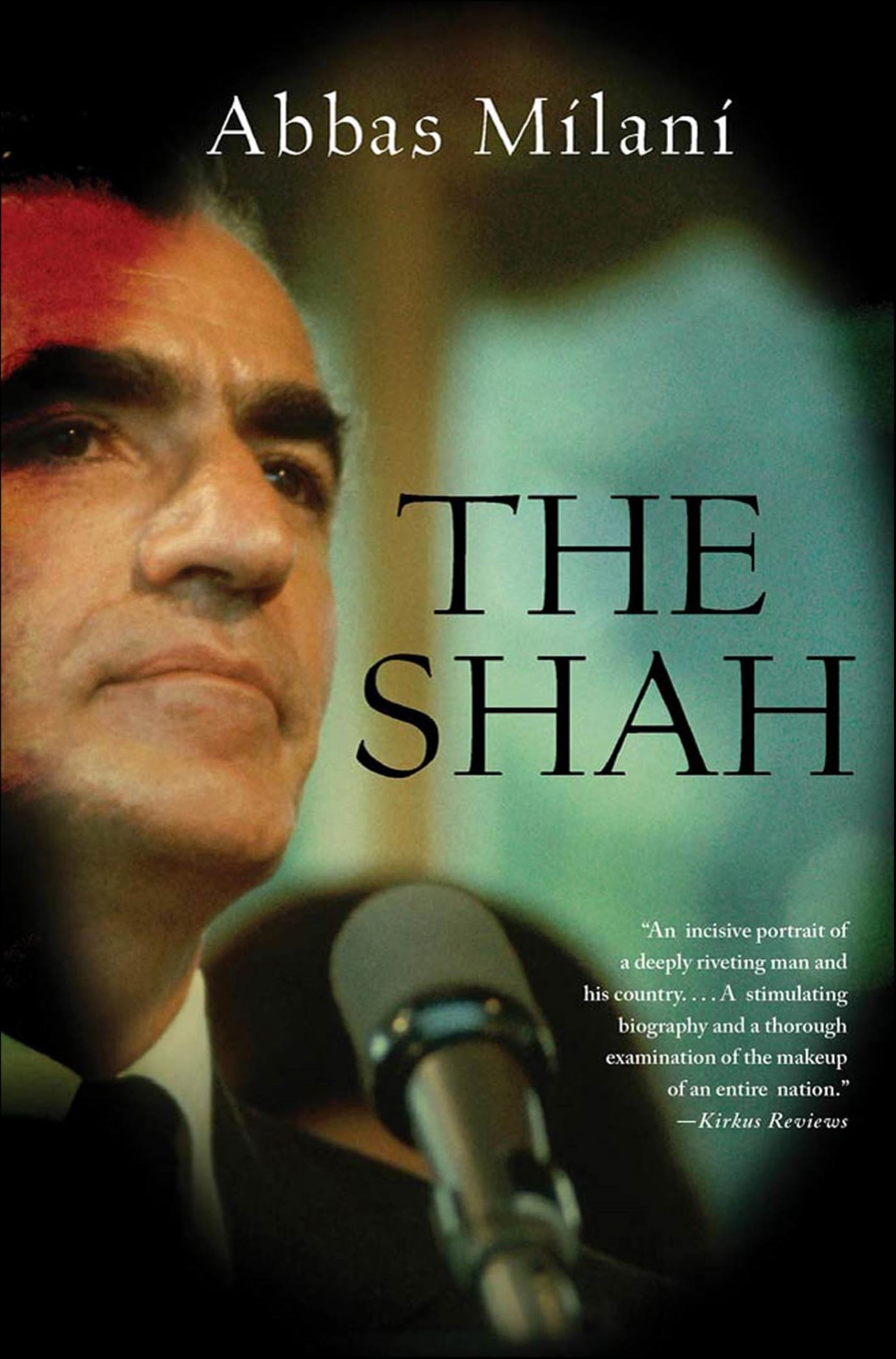
The Shah - Kindle edition by Milani, Abbas. Download it once and read it on your Kindle device, PC, phones or tablets. Use features like bookmarks, note taking and highlighting while reading The Shah. Review: Brilliant! Abbas Milani at his best! - Abbas Milani in beautiful prose provides an in-depth overview of the Shah's rise and fall in an objective manner relying on primary sources (declassified documents), diary letters, and interviews with the people involved and in close proximity within the Shah's regime. I understand that some monarchists may feel that this book has a slant against the Shah; while those irrationally against the Shah may on the other hand feel that it to be in contrast be too positively reflect on the Shah. In reality, this is a nuanced book that provides in details the evidence of both the good and bad of the Shah and how this manifested with him at the helm of the Peacock Throne. I also enjoyed the fact that it provided quite some detailed sources on Reza Shah Khan's tenure as well as an objective outlook on the authoritarian tendencies of Mossadeq. The Shah certainly had lots of faults but the one thing that you cannot say is that he did not love his country. He wanted the best for his people and for his country and unfortunately Iran has gone only down hill since the regressive revolution of 1979. It is important that we all learn history in its most objective forms so that we can have a better understanding of the lessons history affords us in helping us become much wiser. This book has definitely been one of my favorite books of all time. A highly recommended read. Review: The Shah by Abbas Milani - This is a marvelous, wide-ranging and intelligently written story of the reign of Shah Mohammed Reza Pahlevi. It looks to me to be an excellent piece of scholarship. I lived just down the street from the Shah for two years, from 1970 to 1972, and I served as an advisor to his Supreme Military Staff, and advised in the creation of his National Defence University, but I don't presume to be an expert on the Shah. During the years that I lived and worked in Iran, and in all that I have read and heard since then, the Shah was a good leader for Iran, trying to bring a backward country into the modern world, and to carve out a greater part for Iran in the world. When I was there, and since the Shah was restored to his throne less than 20 years before, the Soviet Union loomed large on the landscape. Everything we did in and with Iran reflected our need to keep Iran on our side in the great balancing act between the USSR and the West. During World War II Britain, the United States and the USSR all stationed forces in Iran in order to ship millions of tons of military supplies and food north to Russia. At war's end, the British and Americans began to leave, but the Soviets occupied northern provinces, and appeared very determined to annex those parts of the country. The Shah, with British and American help, was able to expel the Soviet troops from those northern provinces. When I was there the Shah had just about reached the high point of his rule. The British, in a long-before announced move, had taken their navy out of the waters "east ofAden", or the Red Sea, and with American encouragement the Shah's Imperial Navy was taking over a larger role in the Persian Gulf and the Gulf of Oman, and gradually, theIndian Ocean. In 1973, the Yom Kippur War took place, and the coalition of oil-producing countries put a giant clamp on world oil supplies. For Iran and the Shah, the money came flooding in. Up to that time, he had been able to manage the greed of his relatives and close associates, keeping graft and corruption bubbling below the surface. Milani's book certainly does not paint the Shah as a modern day hero, or the Savior of Iran, but he was clearly a very positive influence on Iran, and his leadership was bringing Iran into the modern world, with education for more Iranians, improvements in standard of living, and a greatly improved standing in the world community. He was a secular ruler, and he and the Shahbanou set an example for modernizing the role of women in the country. It seems to be a very fair picture of a man born to a Persian Cossack officer of very humble beginnings. That officer seems to have fallen into the role of Shah of Iran, by the events of the time, carried along by crafty and often unprincipled westerners--mostly British, but later, the operatives of the United States took over the care, feeding and steering of the Shah. In 1965 the Shah, in Milani's view, had reached about the pinnacle of his reign. By then he was skilled, principled, and moving rapidly to modernize his country. If only he could have done more of all that good, but he had a lot of things working against him. When I arrived in Iran in September, 1970, I was one of a few U.S. Naval officers, on a staff of mostly Army officers and men, and a growing number of Air Force officers and men. The American presence in Iran had begun during World War II, just before President Roosevelt, Winston Churchill and Josef Stalin had their historic Teheran Conference there. In 1970 the United States was busy helping the Shah to build up his armed forces as a bulwark against the Soviet Union and its allies in the region--Afghanistan, Iraq, Syria, and India. At the same time, Britain had scheduled a complete withdrawal of its naval forces from the Indian Ocean, and was turning that responsibility over to the United States Navy, and to Iran. This book tells about life in the cocoon around the Shah, as he became increasingly protected by a small circle of sycophants, and even foreign diplomats, CIA and MI6 operatives. Those in that circle became people who told him what he wanted to hear, and at the same time urged him to buy more. And buy he did. With all the oil money that was coming to the country, he bought destroyers from the UK, trucks and artillery from the USSR, and state-of-the-art jet fighters, Boeing airliners, and much more from the U.S. During my time there, my wife taught bright young Iranians English, and I learned Persian from other bright young Iranians, and in our exposure to the unofficial Persian world, we heard bits and pieces of the discontent that was simmering in the country. However, no one was putting this picture together for the Shah, nor was he listening. No one would dare darken his day telling him how the world would soon know that SAVAK, his security agency, was more and more shifting to the dark side of doing dirty tricks. No one was giving him a good report about how Islamic groups were building up resentment to the Shah. His efforts to westernize the country naturally irritated those groups, but he had no apparent plan for handling this growing resentment. In 1971 the Shah put on a magnificent party out in the desert at the ancient city ofPersepolis. It was a grand party. He spent millions to put up elegant tents for his visitors, with marble bathrooms and rich Persian carpets, and running water--right out there in the desert! And they came--kings and princes and princesses--from all over the world. I remember seeing Prince Rainier and Princess Grace, and Emperor Haile Selassie ofEthiopia, and King Hussein of Jordan. The U.S. sent Spiro Agnew, the VP, I think. That whole event did not go down well with the growing circle of Iranians critical of the Shah. As time went on, the Shah became more disconnected to any voices that would tell him "bad news". American diplomats and intelligence operatives reported growing discontent, but back home in the USA, presidents and Secretaries of State dared not rock the Shah's boat, so did not bother the Shah with their findings. By 1975, the Shah was pulling in more money than even he and his circle could spend, and no one seemed to be worrying about how all this would play out. And then there were the girls. Lots of girls. This was the beginning of the end, as his appetite for debauchery overcame his desire to lead. He was also facing early signs of cancer, and intelligent Iranians were beginning to see the end. Some of those bright Iranians were Mullahs and other religious leaders. How does the 1979 Islamic Revolution relate to the string of revolutions and uprisings taking place today? The central point is: a leader who isolates himself from his people is ruling in the dark. Even a dictator must be aware of his people, and this is where the Shah failed. One can see similar failings in Mubarak, Qaddafi, al Assad, el Abadine Ben Ali and Saleh. The Islamic Republic of Iran appears to be much worse for Iran than the Shah ever was. There are a lot of smart, well-educated Persians, both in Iran and abroad, and I feel confident that before long, they will figure out a way to unseat the Mullahs and thugs who are running Iran slowly into the sand.
| Best Sellers Rank | #296,868 in Kindle Store ( See Top 100 in Kindle Store ) #56 in History of Iran #61 in Iran History #67 in Historical Middle East Biographies |
S**1
Brilliant! Abbas Milani at his best!
Abbas Milani in beautiful prose provides an in-depth overview of the Shah's rise and fall in an objective manner relying on primary sources (declassified documents), diary letters, and interviews with the people involved and in close proximity within the Shah's regime. I understand that some monarchists may feel that this book has a slant against the Shah; while those irrationally against the Shah may on the other hand feel that it to be in contrast be too positively reflect on the Shah. In reality, this is a nuanced book that provides in details the evidence of both the good and bad of the Shah and how this manifested with him at the helm of the Peacock Throne. I also enjoyed the fact that it provided quite some detailed sources on Reza Shah Khan's tenure as well as an objective outlook on the authoritarian tendencies of Mossadeq. The Shah certainly had lots of faults but the one thing that you cannot say is that he did not love his country. He wanted the best for his people and for his country and unfortunately Iran has gone only down hill since the regressive revolution of 1979. It is important that we all learn history in its most objective forms so that we can have a better understanding of the lessons history affords us in helping us become much wiser. This book has definitely been one of my favorite books of all time. A highly recommended read.
S**N
The Shah by Abbas Milani
This is a marvelous, wide-ranging and intelligently written story of the reign of Shah Mohammed Reza Pahlevi. It looks to me to be an excellent piece of scholarship. I lived just down the street from the Shah for two years, from 1970 to 1972, and I served as an advisor to his Supreme Military Staff, and advised in the creation of his National Defence University, but I don't presume to be an expert on the Shah. During the years that I lived and worked in Iran, and in all that I have read and heard since then, the Shah was a good leader for Iran, trying to bring a backward country into the modern world, and to carve out a greater part for Iran in the world. When I was there, and since the Shah was restored to his throne less than 20 years before, the Soviet Union loomed large on the landscape. Everything we did in and with Iran reflected our need to keep Iran on our side in the great balancing act between the USSR and the West. During World War II Britain, the United States and the USSR all stationed forces in Iran in order to ship millions of tons of military supplies and food north to Russia. At war's end, the British and Americans began to leave, but the Soviets occupied northern provinces, and appeared very determined to annex those parts of the country. The Shah, with British and American help, was able to expel the Soviet troops from those northern provinces. When I was there the Shah had just about reached the high point of his rule. The British, in a long-before announced move, had taken their navy out of the waters "east ofAden", or the Red Sea, and with American encouragement the Shah's Imperial Navy was taking over a larger role in the Persian Gulf and the Gulf of Oman, and gradually, theIndian Ocean. In 1973, the Yom Kippur War took place, and the coalition of oil-producing countries put a giant clamp on world oil supplies. For Iran and the Shah, the money came flooding in. Up to that time, he had been able to manage the greed of his relatives and close associates, keeping graft and corruption bubbling below the surface. Milani's book certainly does not paint the Shah as a modern day hero, or the Savior of Iran, but he was clearly a very positive influence on Iran, and his leadership was bringing Iran into the modern world, with education for more Iranians, improvements in standard of living, and a greatly improved standing in the world community. He was a secular ruler, and he and the Shahbanou set an example for modernizing the role of women in the country. It seems to be a very fair picture of a man born to a Persian Cossack officer of very humble beginnings. That officer seems to have fallen into the role of Shah of Iran, by the events of the time, carried along by crafty and often unprincipled westerners--mostly British, but later, the operatives of the United States took over the care, feeding and steering of the Shah. In 1965 the Shah, in Milani's view, had reached about the pinnacle of his reign. By then he was skilled, principled, and moving rapidly to modernize his country. If only he could have done more of all that good, but he had a lot of things working against him. When I arrived in Iran in September, 1970, I was one of a few U.S. Naval officers, on a staff of mostly Army officers and men, and a growing number of Air Force officers and men. The American presence in Iran had begun during World War II, just before President Roosevelt, Winston Churchill and Josef Stalin had their historic Teheran Conference there. In 1970 the United States was busy helping the Shah to build up his armed forces as a bulwark against the Soviet Union and its allies in the region--Afghanistan, Iraq, Syria, and India. At the same time, Britain had scheduled a complete withdrawal of its naval forces from the Indian Ocean, and was turning that responsibility over to the United States Navy, and to Iran. This book tells about life in the cocoon around the Shah, as he became increasingly protected by a small circle of sycophants, and even foreign diplomats, CIA and MI6 operatives. Those in that circle became people who told him what he wanted to hear, and at the same time urged him to buy more. And buy he did. With all the oil money that was coming to the country, he bought destroyers from the UK, trucks and artillery from the USSR, and state-of-the-art jet fighters, Boeing airliners, and much more from the U.S. During my time there, my wife taught bright young Iranians English, and I learned Persian from other bright young Iranians, and in our exposure to the unofficial Persian world, we heard bits and pieces of the discontent that was simmering in the country. However, no one was putting this picture together for the Shah, nor was he listening. No one would dare darken his day telling him how the world would soon know that SAVAK, his security agency, was more and more shifting to the dark side of doing dirty tricks. No one was giving him a good report about how Islamic groups were building up resentment to the Shah. His efforts to westernize the country naturally irritated those groups, but he had no apparent plan for handling this growing resentment. In 1971 the Shah put on a magnificent party out in the desert at the ancient city ofPersepolis. It was a grand party. He spent millions to put up elegant tents for his visitors, with marble bathrooms and rich Persian carpets, and running water--right out there in the desert! And they came--kings and princes and princesses--from all over the world. I remember seeing Prince Rainier and Princess Grace, and Emperor Haile Selassie ofEthiopia, and King Hussein of Jordan. The U.S. sent Spiro Agnew, the VP, I think. That whole event did not go down well with the growing circle of Iranians critical of the Shah. As time went on, the Shah became more disconnected to any voices that would tell him "bad news". American diplomats and intelligence operatives reported growing discontent, but back home in the USA, presidents and Secretaries of State dared not rock the Shah's boat, so did not bother the Shah with their findings. By 1975, the Shah was pulling in more money than even he and his circle could spend, and no one seemed to be worrying about how all this would play out. And then there were the girls. Lots of girls. This was the beginning of the end, as his appetite for debauchery overcame his desire to lead. He was also facing early signs of cancer, and intelligent Iranians were beginning to see the end. Some of those bright Iranians were Mullahs and other religious leaders. How does the 1979 Islamic Revolution relate to the string of revolutions and uprisings taking place today? The central point is: a leader who isolates himself from his people is ruling in the dark. Even a dictator must be aware of his people, and this is where the Shah failed. One can see similar failings in Mubarak, Qaddafi, al Assad, el Abadine Ben Ali and Saleh. The Islamic Republic of Iran appears to be much worse for Iran than the Shah ever was. There are a lot of smart, well-educated Persians, both in Iran and abroad, and I feel confident that before long, they will figure out a way to unseat the Mullahs and thugs who are running Iran slowly into the sand.
S**I
A must read....!
I stopped reading this book from sheer fury many times. It was frustrating to read.It showed how a few men and one woman, made decisions about a whole nation's direction of life! It was very infuriating. It also validated most of the suspecions most of us Iranian-Americans grew up with. However, I picked it up again and again, because I had to know more. It is a comprehensive look at how and why and who did what in our history! I was a little disappointed that Dr. Milani could not hide his distaste for the Shah a little better. As objective and factual as he is about most all of the information, his dislike for the Shah is palpable throughout his book.Other than that, I am certain this will be a great source of reference for most people. It will illuminate or disillude many of the misguided political activists, who have given up their youth and livelihoods for their politiacl beliefs. Many will realize how those few people, influenced and directed various belief systems in that nation. They implemented and removed belief systems like they were pieces of furniture! Created whole governments and constitutions simply as a fecade to appease their allies and enemies, while manipulated key features of the system in the background to their own benefits! The foreign involvment in Iran's domestic affairs would not have been as comprehensive and as effective, without the help of the many traitors who sold themselves repeatedly and relentlessly. In reading between the lines it becomes obvious, how The Shah evolved from a naive and petrified, yet arrogant young man into a savy polititian that learned the game and played it well for a long time. He was intoxicated by his power and success and finally was overthrown when inebriated!
M**T
An excellent biography
Most biographies are either hagiography or a hatchet job, but this book is neither. The author spent time in the shah’s jail, making him a possible author of a book that would denigrate the shah, yet it is not. It is, in my opinion, a balanced book that discusses the shah’s life, with an emphasis on why he was overthrown in 1979. The book is well written and the prose is clear and to the point. The author paints a picture of a complex man – a man who aimed to project a tough image, yet at critical moments was indecisive and vacillating. The book discussed the shah’s elevation to the throne in1941, his struggles against Mohammad Mossadeq in the 1950’s, his response to the near revolution in 1963, and most of all his reaction to the more critical events of 1977-1979. The book explains what he did to modernize Iran, why his policies were ultimately self defeating and how he interacted with the Soviet Union, Britain and lastly with the US. The book discusses the shah’s strengths and his many weaknesses and how these ultimately led to his downfall. I heartily recommend this book to anyone who wants to learn more about Iran, the 1978-9 Iranian revolution and what lessons can be learned from these events.
J**A
Last Word on The Shah
For God's sake, let us sit upon the ground And tell sad stories of the death of kings; How some have been deposed; some slain in war, Some haunted by the ghosts they have deposed; Some poison'd by their wives: some sleeping kill'd; All murder'd: for within the hollow crown That rounds the mortal temples of a king Keeps Death his court and there the antic sits, Scoffing his state and grinning at his pomp, Allowing him a breath, a little scene, To monarchize, be fear'd and kill with looks, Infusing him with self and vain conceit, As if this flesh which walls about our life, Were brass impregnable, and humour'd thus Comes at the last and with a little pin Bores through his castle wall, and farewell king! Abbas Milani has written the only book about the late Shah of Iran you will ever need. Much material based on declassified materials this book explores many of the myths and historical revisionism that surrounds the fall of the Iranian monarchy. Professor Milani is scholar and historian and a trusted source on Iranian matters.
V**R
Thorough history of Shah’s reign
Came away which much better understanding of Shah’s contributions to modernization of Iran; so much turnover in government and military officials that it was difficult to keep track ofthem
A**S
Arash
Overall it is a good read and make the reader eager the finish the book quickly. However based on Dr. Milani's background, I was expecting the book to be more factual and evidence-based than what it is. Frequent citations are used to support the claims by the author, however, when one look at the references, they are not always credible and unbiased sources sometime dubious. There are several surprising factual errors in the book that cannot be attributed to typographical or editorial mistakes but only a lack of knowledge. One example that I can remember now is that the author states rather absurdly that Fadaian Khalgh and MEK (Mojahedin khalgh) are offshoots of the National Front. The fact is that Fadaian are and offshoot of the Tudeh party and MEK is an offshoot of the freedom movement (Nehzat Azadi).There are several places that the author has interjected his speculations and guesswork as historical facts. Sometime he makes claim about the thought process of individuals and reasons behind certain decisions or the content of individuals' private discussions and it is not at all clear how he is aware of such information. He mentions of the contents of private conversations between individuals in cases where it is very hard to postulate how the contents of such discussions have been made available or even recorded. Overall it is an entertaining book and useful if one is looking for a shallow description of the events during shah's period but definitely not if you are looking for an evidence-based factual account of the contemporaneity history of Iran.
E**H
A Hare Pretending to be a Lion
What surprises me the most about this book is the amount of influence the British & U.S. exerted on the Shah, and the fact that the Shah was so weak in dealing with his opposition as well as foreign influence. The title of the review is a very appropriate quote taken from the book. When areas of conflicting information arise, the author does an excellent job of explaining why, and what the most plausible explanation is for what actually transpired and the reasons behind it. I also didn't realize the extent of interference in the Shah's regime by the U.S. - even considering going as far as overthrowing the Shah. And, they very well could have engineered that as well! The author has a large vocabulary, and luckily, reading this book on a Kindle, I could use the built-in dictionary feature and continue reading without much interruption. Great book on the Shah, Iran and the Middle East mindset.
Trustpilot
1 month ago
2 months ago