We remain fully operational. Our teams are working around the clock to ensure your deliveries continue safely.

DOWNLOAD THE APP


Customer Services
Copyright © 2025 Desertcart Holdings Limited
DOWNLOAD THE APP

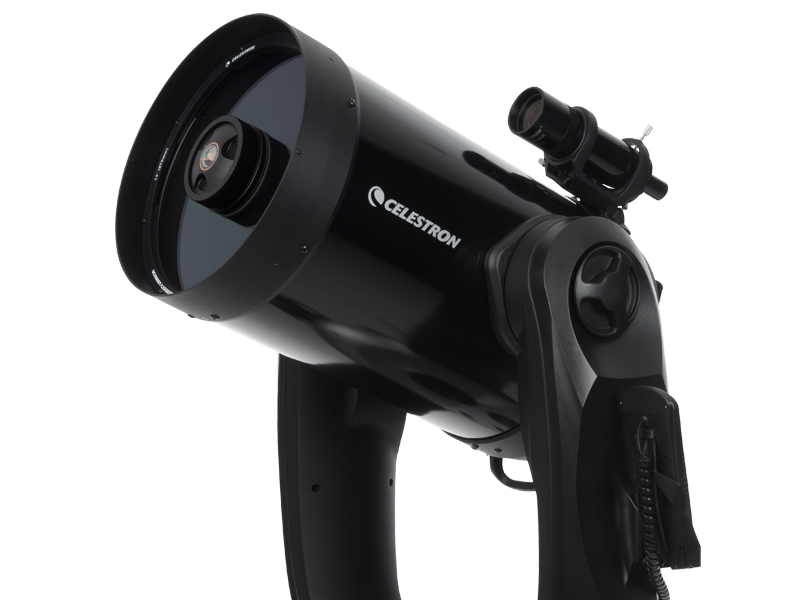
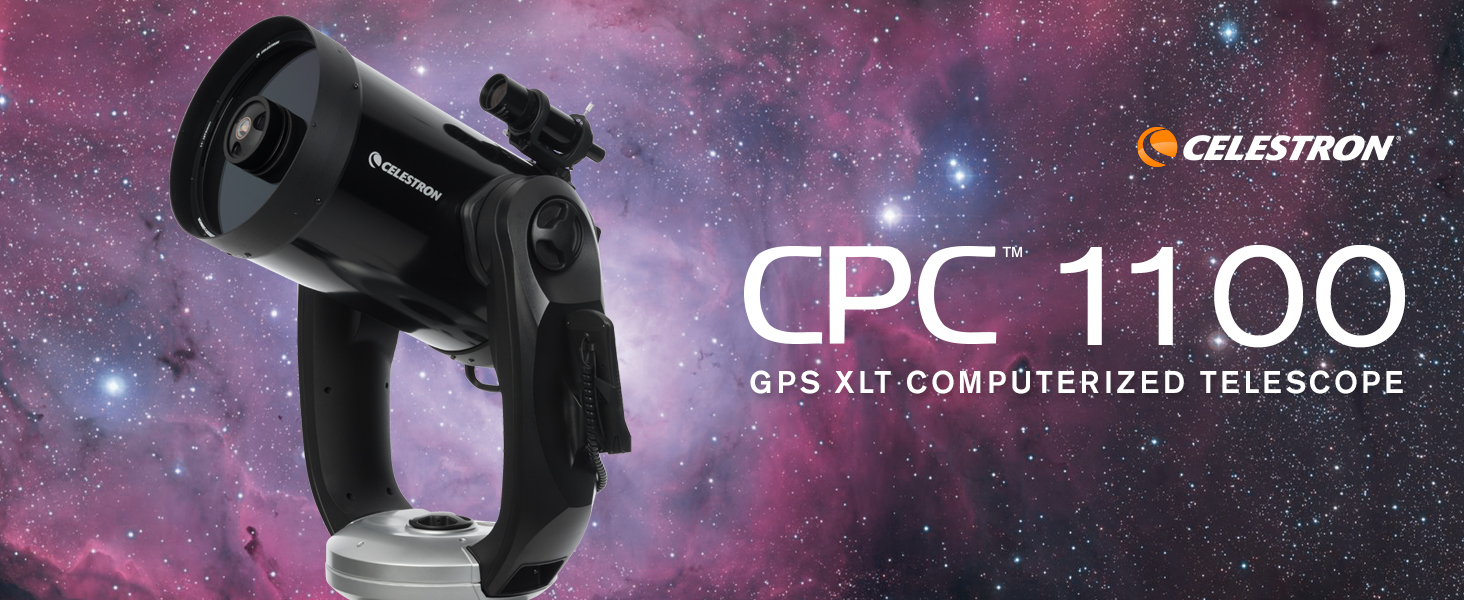
🌌 Unlock the Universe: See More, Discover Faster, Stargaze Smarter!
The Celestron CPC 1100 StarBright XLT GPS Schmidt-Cassegrain Telescope combines a powerful 11-inch aperture with advanced SkyAlign technology and an internal GPS for rapid, precise alignment. Featuring a robust dual fork arm GoTo mount with access to a vast database of 40,000+ celestial objects, it delivers stunning views of planets, galaxies, and nebulae. Designed for both serious amateurs and astrophotographers, its ergonomic build balances portability with premium optics, enhanced by StarBright XLT coatings. Includes a 9x50 finderscope, tripod, and bonus Starry Night software, backed by a 2-year US warranty and expert support.






| ASIN | B000ARFND2 |
| Batteries | 1 Lithium Metal batteries required. (included) |
| Best Sellers Rank | #2,992 in Camera & Photo Products ( See Top 100 in Camera & Photo Products ) #20 in Catadioptric Telescopes |
| Customer Reviews | 3.7 3.7 out of 5 stars (120) |
| Date First Available | June 17, 2003 |
| Is Discontinued By Manufacturer | No |
| Item Weight | 53.6 pounds |
| Item model number | 11075-XLT |
| Manufacturer | Celestron |
| Product Dimensions | 36 x 19 x 37 inches |
D**E
Nice telescope!
Update January 2018: I used this scope for the solar eclipse and have been photographing deep sky objects with a wedge. It's still going strong and working fine after I replaced the front cell. I've had a few issues with the GPS receiver that I've been able to resolve. I recently replaced the nylon ball bearings in the base of the mount with stainless steel bearings in order to get smoother tracking for astrophotography. Update March 2016 - Parts are difficult to obtain from Celestron!! I had an unfortunate accident with my telescope while setting up a outreach demonstration in a gym on a cloudy night. I forgot to tighten the thumbscrews that secure the scope to the tripod, and then tried to adjust the tripod! It was a dumb mistake and entirely my fault. I typically am more careful but guess I was in a hurry. The telescope fell and dented the front cell (the bezel that the lens cap attaches to). I've since tested the scope with an artificial star and found that the optics are still very fine! The collimation was off a bit but not by much. I added "Bob's knobs" and was able to get a nice diffraction pattern during the fine in-focus collimation adjustment. Celestron refused to sell me the front cell!! They offered the option of sending the scope back to the factory but it will take 20 to 40 days and cost an estimated $300. I don't mind the $300 so much, but don't want to be without the scope for a month as the weather is just getting nice and Jupiter is nicely placed! I continued bugging Celestron, and they reluctantly agreed to sell me the front cell. It wasn't too hard to replace and I collimated the optical tube. It's been working fine ever since! Update November 2015, a few months after purchase: =========================================== I'm still happy wit this purchase. This telescope has rekindled my interest in amateur astronomy and helped me to see the sky in a "new light". It's also been a hit with my neighbors when I've invited them to star parties. The GOTO feature is really useful and helps keep things moving. The tripod and telescope are a bit unwieldy to carry into the field, but that's subjective. It takes me about 15 minutes to unload the stuff from my car and set up at my favorite field not far from my home. I'd seen the planets before in my old 4.5" Newtonian scope that were OK, but have got some great views of the lunar eclipse, Saturn, Venus, and the moon with the CPC800 in the couple of months that I've owned it, and I'm dying to see Jupiter when it rises high in the night sky for me in the spring of 2016 (I'm not a morning person!). Meanwhile this CPC800 has helped me to discover the beauty of deep sky objects such as galaxies and nebulae. I say this with some trepidation because you shouldn't expect to run out and see images as you see them in magazines. The great ring nebula in Lyra for example, still looks like a small fuzzy doughnut. But it is resolvable and unmistakable in this telescope, whereas in my 4.5" Newtonian it was barely recognizable. Such objects will never look as you see them in a magazine because the human eye is not as sensitive as long exposure photography, and we're bound to do our observing from under a thick layer of atmosphere. Speaking of which, I'll note that I'm located in a rural area with low light pollution and at about 1000' above sea level. I've gained a new appreciation for how special and rare dark skies are. Pity the city-dwellers who cannot see the milk way! That's the way the ball bounces. I've started experimenting with astrophotography through this scope and have seen some colors in the nebulae through an inexpensive used DSLR camera from eBay. It's opened a whole new world for me but I see this as a specialized area that will take me a long while to master. One of the first things you'll run into with this Schmidt-Cassegrain scope as opposed to a Newtonian telescope is dew. Moisture in the air will condense on the corrector plate and end your viewing session before you're ready. It's inevitable. I made a primitive dew shield from flexible black foam craft sheets. This works well, is inexpensive, and buys you a couple of hours before the dew forms. I eventually constructed a 3-watt dew heater. These things can be easily purchased as well, but I like DYI when possible. Learning these things is a natural progression if you take this hobby seriously. Astronomy requires patience and endurance. Summer buzzing bugs - winter freezing feet - cloudy nights. But you'll be rewarded if you stick with it. Have fun! ... It's a very nice instrument. I'm happy with it so far. I've had better luck using the one-star alignment method by just pointing it to a known object than by using the three star alignment. One star alignment is pretty quick and gets me close enough to find other objects pretty well. The tripod is very solid. That tracking works well. Images are quite crisp with the supplied eyepiece. The controller is fairly intuitive, although it feels a bit dated with the menu-driven two-line LCD display. I found the power switch LED to be too bright as it shines up from the base pretty much into your eyes. I covered it with a piece of black tape. The underside of the tripod has six triangular cavities cast into the aluminum. I added red LED light strips in these compartments shining down on the accessory tray and found these to be very helpful. The light shines down onto the tray and not into your eyes since the LED's themselves are well hidden in the cavities. I power the telescope and other accessories (including the LEDs) from a 20 aH sealed lead acid battery that I carry in a canvas bag. I had a great time with this during the lunar eclipse star party on September 27th. The GOTO feature was extremely useful during the eclipse. As the skies darkened and stars started popping out, I could quickly slew to the ring nebula or Andromeda, and then easily slew right back to the moon to check its progress. The DC power connector has a locking ring that is supposed to engage with threads on the DC socket. It doesn't. Celestron used a DC socket with threads that don't protrude enough from the base. I find it a curious oversight. The correct socket is probably only worth a couple of bucks. I worry that the power cord might pull out and mess up my alignment, so I tie the cord through the handle on the fork. The finder scope inverts the image and has a non-illuminated reticle, and the adjustment screws protrude further than I would like. I found that they interfered with my piggyback camera mount. So I'm not really nuts about the finder scope. I've generally been pretty pleased with purchases on Amazon. However, this is the most expensive item I've bought from Amazon so far. In retrospect, I would buy it from another supplier. Amazon chose to ship this using a freight carrier from a warehouse about 1000 miles from me, which took about a week. It arrived on time and in good condition, but later I later discovered that I could have bought this from another supplier in a neighboring state who would have shipped UPS without charging sales tax. I probably could have received the telescope in two days instead of a week. It's a nice scope and expect to get years of enjoyment from it.
A**D
Great Scope, Unbeatable Price
I bought this telescope as a 50th birthday present to myself, and it did not disappoint. The optics are fantastic, the setup was a breeze, and it's a joy to operate. There is some minor assembly required, but the instructions are clear and it was only about 30 minutes from shipping box to first light. One word of caution: While the CPC 1100 invoices as one item with one tracking number, it actually ships in two cartons (one for the telescope and one for the tripod). UPS dropped off just one box (the tripod) and, when asked, said he only had the one carton on the truck. About 15 minutes later, while I was on the phone with a VERY helpful Amazon agent, the UPS man pulled up again with the second box. Disaster averted! Assembly was quick and aligning the finder scope was easy. Read the manual, and you'll have no problems. Checking the optical path, the telescope's collimation was perfect, so no major bouncing around during shipping and no adjustments necessary. First light was on the pre-sunset Moon, and the Aristarchus Plateau was my first sight with the included 40mm eyepiece. The clarity was nothing short of breathtaking. Higher magnification was also quite clear down through an 8mm eyepiece before atmospheric turbulence limited the seeing. Using the SkyAlign system with the NexStar hand controller was also a snap. Just power up the system, let the GPS lock, then select three bright stars for alignment. Center the first star on the cross hairs of the finder scope, press "ENTER", then slew the telescope with the hand controller until the star is centered in the eyepiece, and press "ALIGN". Repeat for two more bright stars in different parts of the sky, and you're done. Now, you've got easy go-to access to the 40,000 objects in the NexStar database. A couple of other notes: If you're purchasing this telescope, know that it's big and it's heavy. The ergonomics of the carrying handles are good, but you better be prepared to lift and maneuver 62 pounds (28 kg). Also, the telescope comes with only one 40mm eyepiece and a 12-volt car power adapter. If you want to really start using your new telescope, I recommend purchasing the Celestron Accessory Kit for a nice selection of eyepieces and filters, as well as the Celestron 18778 AC Adapter for Computerized Telescopes to power your telescope from a standard household outlet/extension cord. I highly recommend this telescope for the fantastic optics, ease of use, and Amazon's great price.
V**N
Poor Customer Service
My telescope arrived damaged. Not shipping damaged, but defective. I contacted Celestron and they instructed me to take the telescope apart, remove a part, and reassemble it for shipping. I had to repackage it and send it to their repair department. Their department received it on the 23rd of January and they STILL have it. It's now Feb 25th. I bought a BRAND NEW telescope and I have yet to use it. They told me that their repair department has up to 30 days to process a repair. Or what? Nothing. I call and they simply tell me that I have to keep waiting. There is a line. Wait for an email with your shipping information. No consolation prize, no rush on the repair, NOTHING. Simply, too bad, you have to wait longer. Not only that, but their customer support line services the entire world. They even tell you that when you call. So the wait time can be extremely long. If I knew this is the customer service process, I would not have bought this product. The telescope is no doubt a great one. I just wish I could have found out by now. Unacceptable customer service that I have no choice but to accept. If customer service is anywhere near the top of your list, do not buy from Celestron.
P**9
Le seul défaut que je lui trouve : son encombrement. Novice, il s agit de mon premier télescope. Le rendu me paraît très net et très lumineux. J apprécie la localisation automatique et le suivi automatique des astres. Je reste surpris de l ergonomie des logiciels tout comme de l utilisation de port série rs232. C est une recette réchauffée de plus de dix ans.
N**B
I decided to upgrade from a Skywatcher 130 (a good beginners scope) and have found it well worthwhile. It arrived very quickly and well packed from Green Witch. The supplier has helped me with a small problem I thought I had (that turned out to be a misunderstanding on my part) and I am grateful for their excellent service. The scope is solid and robustly made - I am reasonably fit though wouldn't like to risk my back with any of the larger models - this one is quite heavy enough thankyou! - and it sits firmly on the tripod. Setting up the guidescope was easy though I may also attach the smaller guide scope from the Skywatcher for rough alignment. The control system (GPS, GOTO, huge object database) is not difficult to set up and is truly stunning, taking all the hard work out of finding and tracking targets of any brightness. Great to be able to pick out nebulae, double stars, planets etc from the list and let the CPC800 do the rest. you get a pretty good 40mm eyepiece with it which gives about 50 mag. I am also using the 24 and 10mm and 2xBarlow that came with the Skywatcher but will probably look for some better quality ones in the future. The only minor issue I've found is that the lead for the 'car battery' power supply (I use a Skywatcher 7Ah power tank) plugs into the scope base and has a screw thread to secure it - but it doesn't quite engage in the socket on the scope. However, all in all this is a brilliant quality, easy to use, telescope and good value for what you get. At some point I would like to do some astroimaging but I believe it may be necessary to purchase a wedge to convert the Altazimuth mount to Equatorial for this purpose.
M**N
This is an incredibly well-made device. Anyone who has ever used a simple telescope will be familiar with the two greatest problems: a tripod that vibrates and using two knobs on stalks to keep the object in the centre of the eyepiece. The tripod used with this telescope is heavy and rigid, 14.5kg of die-cast aluminium with stainless steel tubes; I have not noticed any vibration. The telescope is motorised and keeps the object centralised. Setting up the telescope took some time. Once the tripod is levelled, lifting the telescope into place can cause difficulties if you are alone as a central peg on the tripod has to locate in a hole on the underside of the base of the telescope. With some practice, and looking around the base for symmetrical placing of the tops of the tripod legs, this will become easier. One rotated into place, three bolts hold the telescope in position. Engage all three bolts before tightening them. They are captive bolts and they are sprung too, so when dismantling you feel when the bolts have disengaged. The telescope is heavy (22kg) so hold the telescope close to the body when lifting it into place. The sighting scope (9x50) is good for terrestrial use but can be a nightmare for use at night. A 'red spot' sight is much easier to use when aligning the telescope. I had some difficulty at first and found that the GPS system thought that I was in California rather that west Wales. I had to go through the computer menu to switch off the GPS and then switch it back on again to get the correct setting. A session in daylight in order to line up the sighting scope or red-spot finder and also to familiarise yourself with the computer menu is a good idea. The CPC 800 is a joy to use. The motors are very quiet and move the telescope very smoothly to your target. You may have a few people waiting to look, and not having to twiddle any knobs in between is sheer bliss. It is, as I said at the beginning, a very well-made machine that is a delight to use. The telescope is packed in two large boxes because of the weight of the tripod and the heavier optical tube assembly and base. These can become separated in transit. Be patient, it is worth the wait.
R**E
Easy to use. Optically good. But tracking failed after an hour or so of use. Would be really exellent If tracking could be cured. I believe there are a great many in use around the world, maybe I was just unlucky. I have other Celestron products with no problems at all.
G**K
this is an awesome piece of kit,solid tripod,nil vibration for pics etc,if you're looking for a new scope this one i would recommend although it's not for the fainthearted as it weighs a lot.!!!!!!
Trustpilot
1 week ago
3 days ago