We remain fully operational. Our teams are working around the clock to ensure your deliveries continue safely.

DOWNLOAD THE APP


Customer Services
Copyright © 2025 Desertcart Holdings Limited
DOWNLOAD THE APP


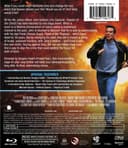
A phenomenon allows police officer John Sullivan (Jim Caviezel) to save the life of his long-dead father (Dennis Quaid). But changing the past leads to a string of brutal, serial homicides. Now, they both must race across time to stop the killer. Review: "I'm Still Here, Chief"--A Father/Son Love Story With Sci-Fi and a Murder Mystery on the Side - If you could change the past, would you? If, in changing the past, you altered the future as well, would you have the courage to work across time to try and fix the future? Those are the questions at the heart of this incredible movie. REVIEW CONTAINS SPOILERS John Sullivan's life was forever altered when his firefighter father Frank was killed in the line of duty in 1969, when John was only 6 years old. John was raised by his widowed nurse mother, Julia, and made his childhood dream of becoming a cop a reality, working homicide under his dad's best friend Satch. The 36-year-old John (Jim Caviezel) lives in his childhood home, and one night, he and his best friend since childhood Gordo, find Frank's old ham radio. John hooks it up and while fooling around with it, not really expecting anything to come of it, he connects with a faint voice. Initially not knowing who the man is, they talk briefly about baseball. The next night, when that same voice comes across the ham radio even stronger, and asks how John knew exactly what was going to happen in the World Series game that was played that afternoon between the Mets and the Orioles, John tells him it wasn't too tough, since the game happened 30 years ago. A few sentences later, John realizes that somehow, he is talking with father Frank (Dennis Quaid) back in 1969! He tries to prove himself by reminding Frank of Frank's childhood nickname for him (Little Chief) and the song Frank used to sing to him at bedtime every night ("Take Me Out to the Ball Game"), but Frank isn't buying it and thinks some psycho is stalking him and his family. When he threatens to hunt down this phantom voice on the ham radio "until the day I die," John informs him that he already died, in the Buxton fire...which, John soon realizes hasn't happened yet, but WILL happen the next day in 1969! Frank is still angry and refusing to believe he's talking to his son 30 in the future. John frantically tries to get his father to listen to him, managing to get out, "If you would have just gone the other way, you would have made it!" before losing the connection. The next day, Frank's company is called to a four-alarm fire at an abandoned warehouse formerly owned by the Buxton company...which gives him pause when he sees the name on the outside of the burning building. Could that nut on the radio have been on to something? When Frank gets trapped in the flames, he recalls the words from his supposed son--"If you would have just gone the other way, you would have made it!"--and instead of following his instincts, he does indeed go the other way...and does indeed make it out of the building alive, also saving the life of the unconscious runaway teenage girl he went into the building to save in the process. While this is happening in 1969, at the same time in 1999, John is having a drink with Satch and Gordo at a bar. Gordo toasts to Frank: "Here's to your dad. 30 years ago today." Then suddenly, lightning-flash memories begin flitting through John's brain: John growing up, and his dad is there with him and his mom! Camping trips, Little League games, washing Frank's fire-engine red classic Mustang in the driveway, Frank showing young teens John and Gordo his ham radio. John drops his drink, shattering the glass into a million pieces, and announces to the shocked Satch and Gordo that his father didn't die in a fire. They look at him oddly as Gordo reminds John that John's father died of cancer 10 years ago. Father and son reconnect on the ham radio that night, with Frank no longer doubting that "the voice of an angel" that "reached right out of Heaven and pulled my butt out of the fire" is his Little Chief, all grown up. Separated by 30 years, but connected by this ham radio, Frank and the grown-up John talk long into the night. You might want to have tissues handy for this part. John tries to reach his mother Julia (Elizabeth Mitchell) after saying good night to Frank on the ham radio, but gets her answering machine, leaving a message for him to call her. Then he goes to sleep and has a disturbing dream that makes little sense. He is 6 years old again, crying and wearing a black suit and tie, hiding underneath a table covered with a tablecloth and clutching the cross necklace his mother always wears. His mother is nowhere to be found, but their house is filled with people dressed in black and talking quietly and somberly...including a priest. Frank finally finds little Johnny hiding under the table by getting down on the floor, lifting the tablecloth, and seeing his son sitting there in tears, clutching Julia's necklace. Jarred awake by the disturbing dream, John again tries calling his mother...but an irate voice answers the phone, "Noah's Deli." He hangs up and redials a few seconds later, only to get the same irate voice insisting that this is Noah's Deli. John gets dressed and goes into work, where Satch (Andre Braugher) follows him into the men's room and lectures him on respect ("You can disrespect yourself all you want, John, but you will NOT disrespect me!") The excavation of a female skeleton has reopened a cold case that John is assigned to: a missing teenage girl from 1969, who turns out to be the first of ten victims of an uncaught serial killer the police tagged The Nightingale Murderer, because, with the exception of the teenage girl, all of his victims were nurses. When John corrects Satch that there were only three victims, Satch looks at John incredulously and forcefully reminds him that there were ten victims, and John should know that better than anyone...whereupon John attacks the stack of case files on his desk, and while sifting through them, finds a file on his own mother...Julia Sullivan. She was one of The Nightingale Murderer's victims! John reconnects with Frank on the ham radio that night and breaks the news to him. Frank initially thinks that Julia has just died in 1999, but is horrified when John tells him that no, she's going to be murdered by a serial killer in a few days in 1969. Frank just wants to get Julia and little Johnny the hell out of town, but for John, that's not good enough. There are seven other women that weren't supposed to die. John figures out that because Frank didn't die in the Buxton fire, Julia worked her regular shift at the hospital that night, saving the life of a patient who turned out be The Nightingale Murderer in the process. Frank's chief and the family priest went to the hospital to get her when Frank died, so she wasn't there that night, and the guy died after having killed only three people. But because Frank didn't die after John's warning across time and space, Julia was at the hospital to save the guy, and he went on to kill seven more people, including her! Father and son team up across time to work together to save the woman they both love, and the other seven victims as well. John is relieved when he reports to Frank that "Carrie Reynolds [one of the victims] is alive and well today because of you, Dad" (since John had the case files and knew where the killer would be and what he would do when he got there, John gave Frank the locations and descriptions of the women; Carrie Reynolds moonlighted as a waitress in a bar and Frank went to the bar the night she was supposed to have been murdered and just hung around until last call, kept her talking, and made sure she got to her car safely, since she was murdered in the alley behind the bar; he didn't see anyone particularly suspicious, he told John). Things take a turn for the worse, though, when Frank tries to save the second victim, Sissy Clark. She too is moonlighting as a cocktail waitress, but at a different bar than Carrie Reynolds. Frank tries to do for Sissy what he did for Carrie but fails because the killer gets the drop on him in the bar's men's room, knocks him out, and steals his driver's license from his wallet. By the time Frank regains consciousness and gets to Sissy Clark's apartment, she's dead. Although Frank feels terrible about Sissy Clark, John tells his dad, "Dad, we got him! His prints are on your wallet! Take your wallet and hide it someplace in the house...someplace no one will look for 30 years!" Together they decide that Frank will wrap his wallet in plastic wrap and put it in the dining room window seat, under the loose board inside the window seat. Frank and John maintain their ham radio connection while Frank puts the wallet in the window seat, and John retrieves it 30 years later. John has gotten a positive ID on the fingerprints in 1999 and discovered that the killer is a reitred cop named Jack Shepard. He has a tense verbal confrontation with Shepard in a bar. Shepard's mother, a nurse, was murdered years ago. "If they had known your mother was nightingale, they would have looked closer at the family, Jack. They would have looked at you." Shepard asks John what he's looking at. "Stealing your life away," John replies. "You went down 30 years ago, pal. You just don't know it yet." John is relating this to Frank via the ham radio when Satch shows up at the Sullivans' in 1969 with a couple of uniformed officers to take Frank down to the station, because his driver's license was found under Sissy Clark's dead body. Frank physically fights Satch not to be taken from his family, and once he is dragged down to the police station, Satch tells him that unless he can come up with an explanation for how his driver's license ended up under this dead girl, they're going to make him for Sissy Clark's murder. So Frank tells Satch the truth: John, the ham radio, the 30 years' time difference, all of it. Of course Satch doesn't believe it. But Frank, John, and Satch all three were die-hard Mets fans, and this was 1969, the year of the Amazin' Mets' World Series win, and John described every game in detail to Frank even though Frank himself had only seen the first two. The day Frank is hauled down to the police station is the day of the last game of the World Series, the game which featured the world-famous shoe polish pitch: the ball hit batter Cleon Jones on the shoe, getting a smear of polish on it, and Mets manager Gil Hodges insisted, on the basis of the shoe polish on the ball, that Jones be awarded first base because he was hit by the pitch. "You just go and watch the game, and if it don't happen, then I'm a liar!" Frank challenges Satch while also dropping Jack Shepard's name as the real killer and insisting he knows it's true because John told him...on the radio, from the future...that the fingerprints match. Meanwhile, Julia Sullivan has tracked Satch down, demanding answers about why he dragged her husband and his best friend out of their house in front of 6-year-old Johnny and Gordo. But Satch is too distracted by the ball game to give Julia many answers or much comfort...and when he sees the Cleon Jones shoe polish pitch and Jones trotting to first base, he realizes that Frank was telling the truth after all! Frank manages to escape from the police station by setting off the fire alarm (he is a firefighter, after all) while Satch (and most of the rest of the precinct) are watching the game, and he goes after the killer himself. Now knowing Frank is innocent, and willing to check out Shepard, Satch and his partner break into Shepard's apartment after Frank and Shepard have already had a fight there. Satch and his partner follow after them, finally finding them at the river, where it appears that, in a literal fight to the death, Frank has killed Jack Shepard. Frank is allowed to go home to his family, while police divers suit up in scuba gear to search the river for Shepard's body. Frank fixes the ham radio, which got broken when he knocked it off the table when Satch and the uniforms dragged him out of there earlier in the afternoon, and he is able to contact John in 1999 and tell him that it's over. John looks around his house, though, and his eyes fall upon the family pictures: pictures of just him and Frank and their dalmatian dog Elvis. "If Mom's okay, then where is she?" John asks plaintively. "But...I killed him," Frank says, puzzled. And it is in that moment that Jack Shepard shows up to the house in both 1969 and 1999, ready to kill every Sullivan he finds in both years! Can Frank in 1969, and John in 1999, finally put an end to Shepard once and for all, without losing either of their lives, or the life of their beloved wife and mother Julia, in the process? If you're a fan of sci-fi, if you like mysteries, or if you enjoy father/son relationship stories, and you haven't seen Frequency yet, you're really missing out on a FABULOUS movie. Review: Making it Right - Frequency is a remarkable movie. I just discovered it and am glad to see that others continue to add their comments here. First, I must applaud the premise - the use of a ham radio as the device that connects father and son in a supernatural way. My uncle was a ham radio operator and even taught classes. It had a tremendous mystique all its own. Dennis Quaid is fabulous. He effortlessly portrays Frank Sullivan, a man who is passionate about his values, devoted to his family, and larger than life as a fireman. The movie opens to this father's heroic rescue of a pair of workers trapped underground after a tanker crash. He comes right home to the wife he loves, the son he loves -- John, his "Little Chief" -- in the home he loves; he has it all. Moving forward thirty years, we meet the adult John. James Caviezel tears me to pieces in these early scenes as we learn that this father died in a fire 30 years ago. John is a cop working homicide. He is still living in the house he grew up in. He did not completely recover from his father's death. He drinks to find numbness and his girlfriend (who he loves) walks out on him. But he is a good man in his own right. His mother's phone number is on his speed-dial and he takes the time to stay involved in her life. On this difficult night in October 1999, as he approaches the anniversary of his father's death, his childhood friend Gordo (Noah Emmerich - The Truman Show) helps set up his father's old ham radio that they find looking for fishing gear under the stairs. Later, with the aurora borealis glistening overhead, father and son make contact on this radio over the distance of 30 years. Awesome! My favorite scene on the DVD is captioned "Catching Up," and takes place after a skeptical Frank, up to his ears in smoke and flames, follows his son's frantic warning that he should "go the other way" to safety rather than the death that John remembered. On returning home unscathed, Frank, accidentally wakes his six-year old son, evolving into a joyous bike-riding lesson. He then finds adult John's voice on the ham and they catch up. At one point, Frank asks adult John if he is still his "Little Chief" and James Caviezel's tearful reply "I'm trying to be" is profound. Dennis Quaid and James Caviezel run with their roles here. They are two great American actors at work. The entire cast is wonderful. Elizabeth Mitchell as wife and mother plays so much love and strength into her role. The screenplay, by Toby Emmerich, brother of Noah, is tight, tender and imaginative. (The brothers do a great commentary together on the DVD special features.) The crime-thriller sub-plot is gripping and the ending satisfying.
| Contributor | Andre Braugher, Bill Carraro, Daniel Henson, Dennis Quaid, Elizabeth Mitchell, Gregory Hoblit, Hawk Koch, Jack McCormack, Janis Rothbard Chaskin, Jim Caviezel, Jordan Bridges, Marin Hinkle, Melissa Errico, Michael Cera, Noah Emmerich, Peter MacNeill, Richard Saperstein, Robert Shaye, Shawn Doyle, Stephen Joffe, Toby Emmerich Contributor Andre Braugher, Bill Carraro, Daniel Henson, Dennis Quaid, Elizabeth Mitchell, Gregory Hoblit, Hawk Koch, Jack McCormack, Janis Rothbard Chaskin, Jim Caviezel, Jordan Bridges, Marin Hinkle, Melissa Errico, Michael Cera, Noah Emmerich, Peter MacNeill, Richard Saperstein, Robert Shaye, Shawn Doyle, Stephen Joffe, Toby Emmerich See more |
| Customer Reviews | 4.8 out of 5 stars 7,529 Reviews |
| Format | Blu-ray |
| Genre | Drama, Mystery & Suspense/Crime, Science Fiction & Fantasy |
| Initial release date | 2012-07-10 |
| Language | English |
F**R
"I'm Still Here, Chief"--A Father/Son Love Story With Sci-Fi and a Murder Mystery on the Side
If you could change the past, would you? If, in changing the past, you altered the future as well, would you have the courage to work across time to try and fix the future? Those are the questions at the heart of this incredible movie. REVIEW CONTAINS SPOILERS John Sullivan's life was forever altered when his firefighter father Frank was killed in the line of duty in 1969, when John was only 6 years old. John was raised by his widowed nurse mother, Julia, and made his childhood dream of becoming a cop a reality, working homicide under his dad's best friend Satch. The 36-year-old John (Jim Caviezel) lives in his childhood home, and one night, he and his best friend since childhood Gordo, find Frank's old ham radio. John hooks it up and while fooling around with it, not really expecting anything to come of it, he connects with a faint voice. Initially not knowing who the man is, they talk briefly about baseball. The next night, when that same voice comes across the ham radio even stronger, and asks how John knew exactly what was going to happen in the World Series game that was played that afternoon between the Mets and the Orioles, John tells him it wasn't too tough, since the game happened 30 years ago. A few sentences later, John realizes that somehow, he is talking with father Frank (Dennis Quaid) back in 1969! He tries to prove himself by reminding Frank of Frank's childhood nickname for him (Little Chief) and the song Frank used to sing to him at bedtime every night ("Take Me Out to the Ball Game"), but Frank isn't buying it and thinks some psycho is stalking him and his family. When he threatens to hunt down this phantom voice on the ham radio "until the day I die," John informs him that he already died, in the Buxton fire...which, John soon realizes hasn't happened yet, but WILL happen the next day in 1969! Frank is still angry and refusing to believe he's talking to his son 30 in the future. John frantically tries to get his father to listen to him, managing to get out, "If you would have just gone the other way, you would have made it!" before losing the connection. The next day, Frank's company is called to a four-alarm fire at an abandoned warehouse formerly owned by the Buxton company...which gives him pause when he sees the name on the outside of the burning building. Could that nut on the radio have been on to something? When Frank gets trapped in the flames, he recalls the words from his supposed son--"If you would have just gone the other way, you would have made it!"--and instead of following his instincts, he does indeed go the other way...and does indeed make it out of the building alive, also saving the life of the unconscious runaway teenage girl he went into the building to save in the process. While this is happening in 1969, at the same time in 1999, John is having a drink with Satch and Gordo at a bar. Gordo toasts to Frank: "Here's to your dad. 30 years ago today." Then suddenly, lightning-flash memories begin flitting through John's brain: John growing up, and his dad is there with him and his mom! Camping trips, Little League games, washing Frank's fire-engine red classic Mustang in the driveway, Frank showing young teens John and Gordo his ham radio. John drops his drink, shattering the glass into a million pieces, and announces to the shocked Satch and Gordo that his father didn't die in a fire. They look at him oddly as Gordo reminds John that John's father died of cancer 10 years ago. Father and son reconnect on the ham radio that night, with Frank no longer doubting that "the voice of an angel" that "reached right out of Heaven and pulled my butt out of the fire" is his Little Chief, all grown up. Separated by 30 years, but connected by this ham radio, Frank and the grown-up John talk long into the night. You might want to have tissues handy for this part. John tries to reach his mother Julia (Elizabeth Mitchell) after saying good night to Frank on the ham radio, but gets her answering machine, leaving a message for him to call her. Then he goes to sleep and has a disturbing dream that makes little sense. He is 6 years old again, crying and wearing a black suit and tie, hiding underneath a table covered with a tablecloth and clutching the cross necklace his mother always wears. His mother is nowhere to be found, but their house is filled with people dressed in black and talking quietly and somberly...including a priest. Frank finally finds little Johnny hiding under the table by getting down on the floor, lifting the tablecloth, and seeing his son sitting there in tears, clutching Julia's necklace. Jarred awake by the disturbing dream, John again tries calling his mother...but an irate voice answers the phone, "Noah's Deli." He hangs up and redials a few seconds later, only to get the same irate voice insisting that this is Noah's Deli. John gets dressed and goes into work, where Satch (Andre Braugher) follows him into the men's room and lectures him on respect ("You can disrespect yourself all you want, John, but you will NOT disrespect me!") The excavation of a female skeleton has reopened a cold case that John is assigned to: a missing teenage girl from 1969, who turns out to be the first of ten victims of an uncaught serial killer the police tagged The Nightingale Murderer, because, with the exception of the teenage girl, all of his victims were nurses. When John corrects Satch that there were only three victims, Satch looks at John incredulously and forcefully reminds him that there were ten victims, and John should know that better than anyone...whereupon John attacks the stack of case files on his desk, and while sifting through them, finds a file on his own mother...Julia Sullivan. She was one of The Nightingale Murderer's victims! John reconnects with Frank on the ham radio that night and breaks the news to him. Frank initially thinks that Julia has just died in 1999, but is horrified when John tells him that no, she's going to be murdered by a serial killer in a few days in 1969. Frank just wants to get Julia and little Johnny the hell out of town, but for John, that's not good enough. There are seven other women that weren't supposed to die. John figures out that because Frank didn't die in the Buxton fire, Julia worked her regular shift at the hospital that night, saving the life of a patient who turned out be The Nightingale Murderer in the process. Frank's chief and the family priest went to the hospital to get her when Frank died, so she wasn't there that night, and the guy died after having killed only three people. But because Frank didn't die after John's warning across time and space, Julia was at the hospital to save the guy, and he went on to kill seven more people, including her! Father and son team up across time to work together to save the woman they both love, and the other seven victims as well. John is relieved when he reports to Frank that "Carrie Reynolds [one of the victims] is alive and well today because of you, Dad" (since John had the case files and knew where the killer would be and what he would do when he got there, John gave Frank the locations and descriptions of the women; Carrie Reynolds moonlighted as a waitress in a bar and Frank went to the bar the night she was supposed to have been murdered and just hung around until last call, kept her talking, and made sure she got to her car safely, since she was murdered in the alley behind the bar; he didn't see anyone particularly suspicious, he told John). Things take a turn for the worse, though, when Frank tries to save the second victim, Sissy Clark. She too is moonlighting as a cocktail waitress, but at a different bar than Carrie Reynolds. Frank tries to do for Sissy what he did for Carrie but fails because the killer gets the drop on him in the bar's men's room, knocks him out, and steals his driver's license from his wallet. By the time Frank regains consciousness and gets to Sissy Clark's apartment, she's dead. Although Frank feels terrible about Sissy Clark, John tells his dad, "Dad, we got him! His prints are on your wallet! Take your wallet and hide it someplace in the house...someplace no one will look for 30 years!" Together they decide that Frank will wrap his wallet in plastic wrap and put it in the dining room window seat, under the loose board inside the window seat. Frank and John maintain their ham radio connection while Frank puts the wallet in the window seat, and John retrieves it 30 years later. John has gotten a positive ID on the fingerprints in 1999 and discovered that the killer is a reitred cop named Jack Shepard. He has a tense verbal confrontation with Shepard in a bar. Shepard's mother, a nurse, was murdered years ago. "If they had known your mother was nightingale, they would have looked closer at the family, Jack. They would have looked at you." Shepard asks John what he's looking at. "Stealing your life away," John replies. "You went down 30 years ago, pal. You just don't know it yet." John is relating this to Frank via the ham radio when Satch shows up at the Sullivans' in 1969 with a couple of uniformed officers to take Frank down to the station, because his driver's license was found under Sissy Clark's dead body. Frank physically fights Satch not to be taken from his family, and once he is dragged down to the police station, Satch tells him that unless he can come up with an explanation for how his driver's license ended up under this dead girl, they're going to make him for Sissy Clark's murder. So Frank tells Satch the truth: John, the ham radio, the 30 years' time difference, all of it. Of course Satch doesn't believe it. But Frank, John, and Satch all three were die-hard Mets fans, and this was 1969, the year of the Amazin' Mets' World Series win, and John described every game in detail to Frank even though Frank himself had only seen the first two. The day Frank is hauled down to the police station is the day of the last game of the World Series, the game which featured the world-famous shoe polish pitch: the ball hit batter Cleon Jones on the shoe, getting a smear of polish on it, and Mets manager Gil Hodges insisted, on the basis of the shoe polish on the ball, that Jones be awarded first base because he was hit by the pitch. "You just go and watch the game, and if it don't happen, then I'm a liar!" Frank challenges Satch while also dropping Jack Shepard's name as the real killer and insisting he knows it's true because John told him...on the radio, from the future...that the fingerprints match. Meanwhile, Julia Sullivan has tracked Satch down, demanding answers about why he dragged her husband and his best friend out of their house in front of 6-year-old Johnny and Gordo. But Satch is too distracted by the ball game to give Julia many answers or much comfort...and when he sees the Cleon Jones shoe polish pitch and Jones trotting to first base, he realizes that Frank was telling the truth after all! Frank manages to escape from the police station by setting off the fire alarm (he is a firefighter, after all) while Satch (and most of the rest of the precinct) are watching the game, and he goes after the killer himself. Now knowing Frank is innocent, and willing to check out Shepard, Satch and his partner break into Shepard's apartment after Frank and Shepard have already had a fight there. Satch and his partner follow after them, finally finding them at the river, where it appears that, in a literal fight to the death, Frank has killed Jack Shepard. Frank is allowed to go home to his family, while police divers suit up in scuba gear to search the river for Shepard's body. Frank fixes the ham radio, which got broken when he knocked it off the table when Satch and the uniforms dragged him out of there earlier in the afternoon, and he is able to contact John in 1999 and tell him that it's over. John looks around his house, though, and his eyes fall upon the family pictures: pictures of just him and Frank and their dalmatian dog Elvis. "If Mom's okay, then where is she?" John asks plaintively. "But...I killed him," Frank says, puzzled. And it is in that moment that Jack Shepard shows up to the house in both 1969 and 1999, ready to kill every Sullivan he finds in both years! Can Frank in 1969, and John in 1999, finally put an end to Shepard once and for all, without losing either of their lives, or the life of their beloved wife and mother Julia, in the process? If you're a fan of sci-fi, if you like mysteries, or if you enjoy father/son relationship stories, and you haven't seen Frequency yet, you're really missing out on a FABULOUS movie.
J**E
Making it Right
Frequency is a remarkable movie. I just discovered it and am glad to see that others continue to add their comments here. First, I must applaud the premise - the use of a ham radio as the device that connects father and son in a supernatural way. My uncle was a ham radio operator and even taught classes. It had a tremendous mystique all its own. Dennis Quaid is fabulous. He effortlessly portrays Frank Sullivan, a man who is passionate about his values, devoted to his family, and larger than life as a fireman. The movie opens to this father's heroic rescue of a pair of workers trapped underground after a tanker crash. He comes right home to the wife he loves, the son he loves -- John, his "Little Chief" -- in the home he loves; he has it all. Moving forward thirty years, we meet the adult John. James Caviezel tears me to pieces in these early scenes as we learn that this father died in a fire 30 years ago. John is a cop working homicide. He is still living in the house he grew up in. He did not completely recover from his father's death. He drinks to find numbness and his girlfriend (who he loves) walks out on him. But he is a good man in his own right. His mother's phone number is on his speed-dial and he takes the time to stay involved in her life. On this difficult night in October 1999, as he approaches the anniversary of his father's death, his childhood friend Gordo (Noah Emmerich - The Truman Show) helps set up his father's old ham radio that they find looking for fishing gear under the stairs. Later, with the aurora borealis glistening overhead, father and son make contact on this radio over the distance of 30 years. Awesome! My favorite scene on the DVD is captioned "Catching Up," and takes place after a skeptical Frank, up to his ears in smoke and flames, follows his son's frantic warning that he should "go the other way" to safety rather than the death that John remembered. On returning home unscathed, Frank, accidentally wakes his six-year old son, evolving into a joyous bike-riding lesson. He then finds adult John's voice on the ham and they catch up. At one point, Frank asks adult John if he is still his "Little Chief" and James Caviezel's tearful reply "I'm trying to be" is profound. Dennis Quaid and James Caviezel run with their roles here. They are two great American actors at work. The entire cast is wonderful. Elizabeth Mitchell as wife and mother plays so much love and strength into her role. The screenplay, by Toby Emmerich, brother of Noah, is tight, tender and imaginative. (The brothers do a great commentary together on the DVD special features.) The crime-thriller sub-plot is gripping and the ending satisfying.
E**R
Terrific!
WOW! I loved this movie! I had never seen it, too busy raising a family when it was first made. What I loved about this movie is that there was no in-your-face edgy political or social messaging, no self-conscious pc posturing, no graphic sex, just pure imaginative storytelling. Come to think of it, this movie was made before CGI effects and digital filming became de rigueur. While there are some special effects, it's more movie-making the old fashioned way. There are some mature themes and one or two violent action sequences, but nothing over the top. In that regard, it isn't for young children, but teens may enjoy it. This is a realistic fantasy that has you believing in the possibilities by the end of the movie. The good acting, likeable characters, period settings, and captivating story draw you in from the beginning. The plot has great twists and turns and keeps you on your toes. There are underlying currents of love and loyalty that bind family and friendships, and I found that enjoyable and compelling. I would have to say this will find a place in my list of all-time favorite movies. Disclaimer: I'm a huge fan of the aurora borealis (northern lights), and they figure prominently as the catalyst for the fantastic to happen in this movie.
J**A
One of My Favorite Movies
This is one of my favorite movies. It feautures two of my favorite actors, Jim Caviezel and Dennis Quaid. I like that it focuses on a family that loves one another and especially on a healthy relationship between a son and his father. It is the perfect blend of being a story with a science fiction element that is still rooted in a realistic drama. The mystery and conclusion are both very satisfying to watch unfold.
S**I
solar flare Aurora borealis ham radio physics, MLB baseball, 60s rock, cigarette smoking lung cancer
Create all the happiness you are able to create; remove all the misery you are able to remove. Utilitarian philosopher Jeremy Bentham A wedding is just another party. A marriage is conscientious commitment to toilet cleaning, cooking, laundry, working paying bills and confronting life's unpredictables together, shoulder to shoulder, every day, forever. Self-care sacrifices self-indulgent destructive habits for the survival of the marriage, which is more important than either partner as an individual. Frequency writer Toby Emmerich bends radiowaves across three decades 1969-1999 to permit father-son communication and information knowledge transfer across 30 years. Director Greg Hoblit shapes an inventive astrophysical domain into visual frames: clothes, living room colors, furniture, photos, newspapers, memories changing each time a past moment shifts. DennisQuaid as FrankSullivan is a chain-smoking Miracle Mets, Elvis fan, firefighter, Ham radio operator, who loves his nurse wife Julia "Jules" (Elizabeth Mitchell). JimCaviezel 1999 is 1969 Johnny, the Sullivan's grown up 36yo son John, an alcoholic smoker chronically depressed police detective incapable of trusting affection after losing his dad as a child. As father and son actors, both Quaid and Caviezel are blue-eyed left-handed, southpaws. Frequency's 1969 music is pure nostalgia: Heatwave Martha & The Vandellas, Susie Q Creedence Clearwater Revival, Take Me Out To The Ballgame Carly Simon arrangement sung for Ken Burns' 1994 documentary Baseball. Son Of A Preacher Man Dusty Springfield references the tradition of police and firefighter sons to follow in father's careers for generations. 181 US firefighters died of COVID from the start of the pandemic through 2021 when it was the leading cause of death in the line of duty. Surviving near death experiences daily may invite excessive risk taking, smoking, drinking, refusing COVID vaccination. On a TV in the background, real life astrophysicist Brian Greene is interviewed by Dick Cavett in both 1969 and 1999, explaining solar flares and the aurora borealis. Bonus features (without subtitles or closed captions) interviews Ham radio operators who describe unusual events like picking up signals on a precise day and time, but decades after an original broadcast. Where do radiowaves go? recalls Galaxy Quest (Sigourney Weaver, Tim Allen, Alan Rickman comedy) a Star Wars satire, with decades old TV broadcasts mistaken for historical documents. MLB Baseball bonds Frequency's fathers, sons, and work colleagues. The 1969 Miracle Mets, Amazing Mets of NY and the Baltimore Orioles World Series "shoe polish incident" dominates background TV. Toby Emmerich, Frequency's scriptwriter provides full film commentary with his actor-brother Noah Emmerich, who plays red-headed neighbor, Johnny's best friend from childhood, Gordo to 1999 John Sullivan police detective. Spoiler: in the opening sequence, Firefighter dad Frank dies saving a squatter in a burning abandoned building Oct 10, 1969. Andre Braugher plays Frank's best friend Satch. Satch's physican wife works with nurse Julia Sullivan, firefighter Frank's wife. Police detective Satch DeLeon becomes role model, surrogate uncle mentor who steps in to shelter Johnny after his firefighter father Frank dies in the 1969 Buxton fire. John via ham radio in 1999 saves his father from the 1969 fire but with unanticipated consequences for the Sullivan family and police detective Jack Shepard. 1999 John tells his dad, 1969 Frank, that Frank dies of lung cancer from smoking in 1989. After a third rescue with future knowledge ham radio transmitted from 1999 to 1969, Frank quits smoking. Changes in 1969 are reflected in 1999 by changes in the color palette of the Sullivan home and its sense of family warmth vs the bachelor loneliness of drinking and smoking distracted workaholism. Shawn Doyle is chilling as police detective Jack Shepard. The aging makeup and acting, posture, gait and voice gravel are believable for 20yo rockers Frank and Jules as they gracefully morph into 50yo grandparents. Jack Shepard (Shawn Doyle) police detective ages from high school, through police detective, to retirement in a photo sequence which is believable. Frequency is an entertaining, comedic, medical murder mystery, theoretical physics thought puzzle and MLB World Series father-son bonding extravaganza. Frequency 1h58m English subtitles for movie only. Extensive Bonus features have No subtitles or Closed Captions: animators discuss how they created the solar flares and aurora borealis, two separate full film commentaries, one with Director Greg Hoblit, and a second with writer Toby Emmerich and his brother, actor Noah Emmerich (who plays adult red-haired Gordo), Bonus interviews with astrophysicist Brian Green explain theoretical physics and ham radio operators describe their procedures, call letters, and the bending of radiowaves with atmospheric changes. The absence of subtitles or Closed Captions hobbles deciphering Bous Features. I used a voice to text app on my phone while watching, with 50-80% voice capture. Frequency reveals the maturation of father-son bonding through decades of shared experiences, from juvenile adrenalin fate tempting impulsive risk taking addiction, to gratitude for the quiet joys of loving and being loved across 30years, by family biological and chosen. Two books, Aging Well George Vaillant MD and The Good Life Robert Waldinger, MD cover a prospective medical study of 800 teens which began in the 1940s. The individuals are studied every few years until death. The differences between the sad sick and lonely like the Jack Shepard character played by Shawn Doyle, and the happy healthy elderly are explained by recreational chemical use versus long term mutually caring relationships. Frequency offers two responses to ACE adverse childhood experiences: two men lose a parent in childhood. Each chooses a different adult path to grieve the loss of control and being deprived of nurturing childhood support. One, Jack Shepard, practices serial rape-murder of nurses, emulating the individual who murdered his mother, in a form of Stockholm Syndrome, attempting to exert control over helplessness. The second, John Sullivan, survives as a chronically depressed alcoholic smoking police detective. 1969 John ends up emulating his dad Frank's best friend police detective Satch, who becomes Johnny's surrogate dad mentor after firefighter Frank dies in the 1969 Buxton fire. John the 1999 adult pursues bad guys, trying to right wrongs in an effort to assuage his grief and pain after losing his loving father as a child. Infinite variations in response to childhood suffering are possible. These two characters choose opposite strategies for denying and getting past hurt both equally isolating and damaging. The inescapable is hanging over your head; while you have life in you, while you still can, make yourself good. Marcus Aurelius Meditations Frequency 5* entertaining time bending astrophysics caper with English subtitles. DVD rating 2* due to lack of Subtitles or Closed Captions for the hearing impaired in extensive and potentially educational Bonus Features.
S**K
Supernatural done well.
Heartfelt moments and plenty of suspense.
H**X
Excellent
Good Movie
J**S
Frequency: Incredible! This movie has it all.
I first saw Frequency the day it was released in theatres, after I saw a preview that got me extremely interested in the movie. I didn't know quite what to expect, but what I found was well written movie, with excellent acting performances and a very gripping storyline, a truly enjoyable moviegoing experience. The story focuses on a cop named John Sullivan (played brilliantly by James Caviezel in a breakthrough big screen performance) who lives in Queens, NY in early October 1999, which happens to be the date of an appearance of a phenomenon that allows John to communicate with his father Frank (with a very solid and emotional performance from Dennis Quaid), on the same radio, in the same house. The interesing part is that John talks to Frank thirty years earlier, merely days before Frank, a firefighter, dies herocially trying to rescue a person trapped in a blazing fire. Frank and John end up making catastrophic changes in the timeline, which leads to the brutal murder of John's mother(in an excellent performance from Elizabeth Mitchell) only days later in 1969. The movie is really a combination of several different elements. First of all it focuses on a father-son relationship between Frank and John. The interaction between Caviezel and Quaid is superb, and leads to some of the films most emotionally moving moments. The emotion is skillfully achieved, as Caviezel and Quaid don't act face-to-face, but across a HAM radio. The interplay between the two time periods really adds to the movie without overshadowing the its story. Frequency also combines elements of suspense, action, mystery, and tense drama. Frequency covers all of the bases, and does so very skillfully. This brings us to the DVD disc itself, which comes from New Line Home Video, who completely loaded the disc with a huge amount of special features, including many interesting DVD-ROM features that can be accessed by any PC with a DVD-ROM drive and PC Friendly installed. If you don't have PC Friendly on your computer, the DVD will install it for you if you so choose. The disc also has deleted scenes, as well as several feature legnth commentaries(by the director, producer, and actor Noah Emmerich who plays the adult Gordo, John's best friend). The disc also includes an interesting original documentary, as well as a trailer and animation galleries. If you are are willing to let your mind go a little bit to accept the science of the storyline, it actually becomes a fascinating part of the movie. This movie would definitely be a worthy addition to any DVD collection. Frequency also offers an extremely exciting and rewarding finale that will not disappoint anyone who watches it. The bottom line is this: Frequency is a wonderful movie, with incredibly strong emotional performances from the entire cast, very moving dramatic moments, as well as tense, gripping action sequences, and a rousing finale. Frequency is definitely one to remember. This movie truly has it all!
Trustpilot
3 weeks ago
2 days ago