
Buy anything from 5,000+ international stores. One checkout price. No surprise fees. Join 2M+ shoppers on Desertcart.
Desertcart purchases this item on your behalf and handles shipping, customs, and support to South Korea.
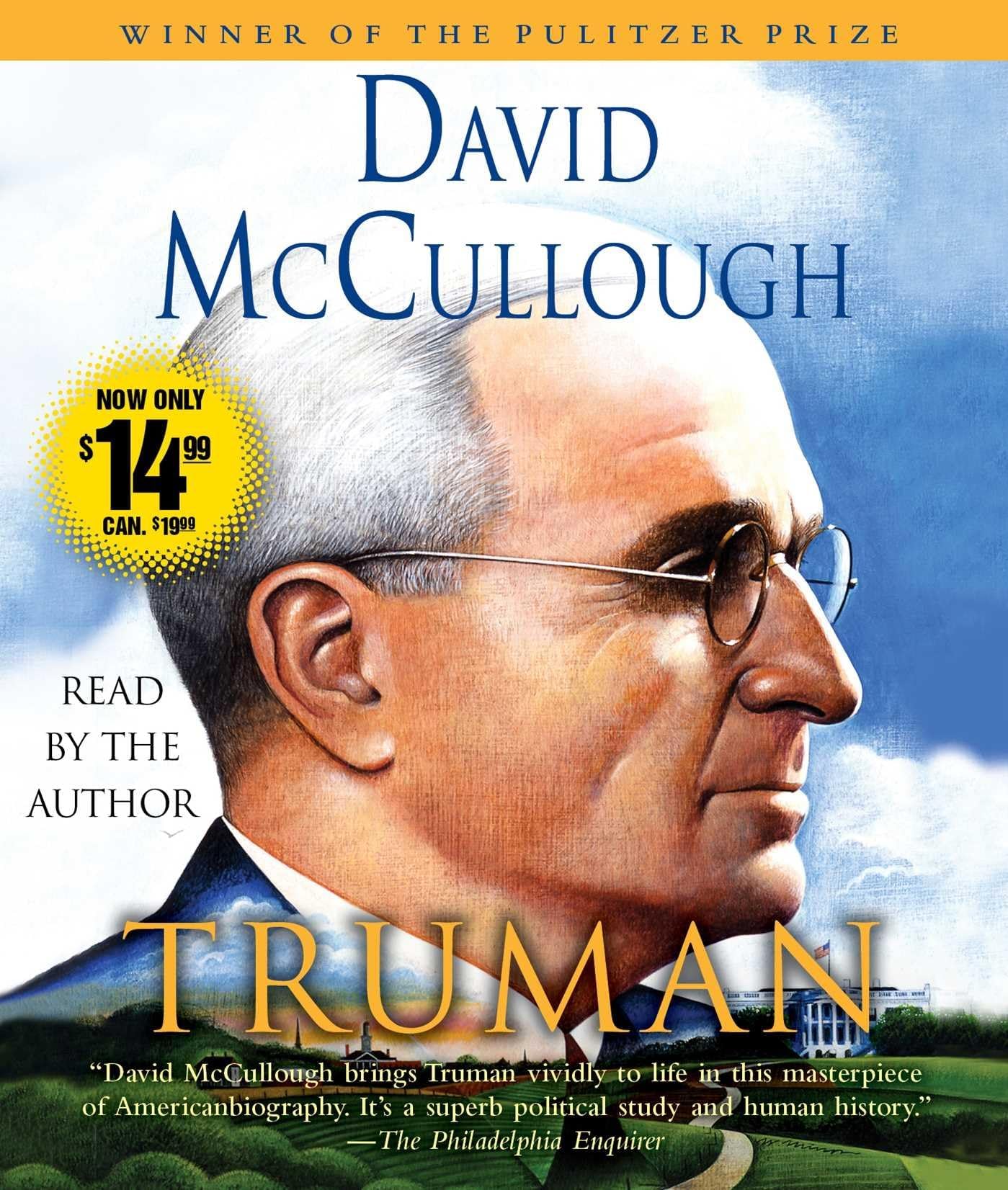
desertcart.com: Truman: 9781442387805: McCullough, David, McCullough, David: Books Review: Truman gave em hell! McCollough gave us a masterpiece. - After finishing David McCollough’s legacy redefining tome of the 33rd U.S. President Harry Truman, it is easy to see why “Truman” is largely considered a masterpiece and the gold standard of Presidential biographies. Although an intimidating 992 pages long, McCollough’s work is so well written and meticulously researched, it makes for a great read. Harry S. Truman has been placed in the upper echelon of great American Presidents, and it’s easy to see why. Never has a President been unexpectedly thrown into the breach of the office with so many ominous decisions to make, yet seemingly so unprepared for the highest and most powerful office in the land. After been reluctantly selected to be Franklin Roosevelt’s Vice President, Truman took the oath of office upon the death of FDR, the world was still at war, just 82 days into Roosevelt’s unprecedented fourth term. Upon learning of the President’s death, it is said Truman asked Eleanor Roosevelt if there was anything he could do for her; she replied, "Is there anything we can do for you? For you are the one in trouble now!" Truman’s rise to the Presidency is a great American story, which McCollough details vividly. The son of a Missouri farmer, which Harry himself became, Truman was truly a man of the people. Earnest, plain spoken, and hardworking, these were the characteristics that justly defined him. After serving as a Field Captain in World War 1, Harry returned to Independence, Missouri where he would marry his sweetheart Bess and become a haberdasher before he would find his calling in public service. After some aid from Kansas City Democratic Machine Boss Tom Pendergast, Truman would go on to become Jackson County Judge, an administrative position similar to that of a County Commissioner. Harry oversaw the County’s “Ten Year Plan”, which included the transformation of the county’s public works including updating the network of roads and a new county courthouse. He was elected the president of the Greater Kansas City Plan Association and made director of the National Conference of City Planning. As an urban planner myself, I found this to be great trivia! After serving 12 years as County Judge, Truman would go on to be elected to the U.S. Senate in 1934, again leveraging the aid of Boss Pendergast. Upon entering the Senate, he would be disregarded as “The Senator from Pendergast”. It was after being reelected to the Senate in 1940, where Truman would begin to make a name for himself, establishing the Truman Committee, charged with rooting out waste and war profiteering from the expansive war mobilization efforts of the Roosevelt Administration. It was during his time on this committee where Truman’s no nonsense and hard work allowed him to establish himself as worthy of a Vice Presidential candidate. Truman’s tenure as President is as consequential as any during the 20th Century. Soon after taking office he set off to Potsdam, Germany to meet with Winston Churchill and Joseph Stalin to discuss the postwar order of Europe. Within months, he authorized the use of the atomic bomb, quickly ending what would have continued to be an enduring and ghastly war with Japan. Upon taking the oath of office, Truman, even as FDR’s Vice President, had no idea the bomb was even in development, which is much more a reflection of FDR given his failing health. His presidency helped achieve historic institutions of monumental consequence including the creation of the United Nations and NATO. Ushered in the Marshall Plan which helped rebuild post-war Europe. Initiated the Berlin Airlift, a campaign to deliver food, coal and other supplies using military aircraft on a massive scale allowing the circumvention of a Soviet blockade to Western Europe. Instituted the “Truman Doctrine” of communist containment. Recognized the creation of Israel. All within his first term! The gripping account of the 1948 reelection bid is certainly a highlight of the book. Truman’s reelection campaign is on of political folklore, and McCollough details it masterfully. Down mightily in the polls to New York Governor Thomas Dewey, and with ever political pundit in the country counting him out, Truman zig-zags across the country by train speaking at every stop along the way. Truman’s plain-speaking approach and “give em hell, Harry!” style contrasting with Dewey’s lofty and empty rhetoric coupled with a lack of urgency ultimately wins the day. Even after garnering massive crowds, he was expected to go down in defeat as of election night. After emerging victorious the day after, Truman holds up the front page of the Chicago Tribune announcing “Dewey Defeats Truman”! Harry S. Truman was never a man to be counted out, and he earned everything he got. Truman’s second term was no less ominous than his first. Even as the economy was as strong as ever, the Korean War and labor strikes dictated much of his time. A lasting triumph of his second term was the desegregating of the military, an action that began to erode the Democratic party’s stronghold on the south. Truman left office after his second term a very unpopular President, succeeded by World War II hero General Dwight D. Eisenhower. It’s said that McCollough’s “Truman” helped to reshape his standing among U.S. Presidents, and it should. Harry S. Truman is proof that if you are given a job, it is your duty to give it all you got, and that hard work does pay off, and that only in America can a man of humble beginnings can soar to great heights. Review: Made me aware of the true Truman. Very different from the tough little guy persona. - I gave this a 5 star rating for several reasons. One being that the depth and the breadth of McCullough’s research is astonishing. But what impressed me even more about this book is that it made me aware that Truman was very different from the “Give’em Hell Harry” little tough guy, who was not very bright, and who rose to power by slugging his way to the top with the help of corrupt political bosses. He may have been tough mentally but physically he was not a bruiser. As a child and young man, he never got into a fight, he would much rather play classical piano or read books. In his senior year of high school, his objective was not sports but to read all the books in the school library. In his 30’s he did volunteer for World War I and the men he commanded praised his valor, but he did not enjoy the violence. It was to him the inescapable evil of war. Perhaps the image of him as a tough guy was enhanced by his having threatened physical assault against a music critic who disparaged Margaret Truman’s singing ability. The assault never happened and when the two men did meet many years later, Truman bore no animosity to the critic and treated him with the greatest courtesy. It is true that he did owe a lot of his political success to the intervention of the powerful Pendergast machine, but he was still meticulously honest in every job they threw his way. They tolerated it because his work ethic was almost beyond human ability but perhaps more importantly it was difficult not to like Harry. He was a man who genuinely liked almost all people and people perceived that affection and tolerance. He always treated even the lowliest with respect and always felt morally obligated to help them in their time of need. Although he did not have a college degree, it was not for lack of intelligence. He left because his father needed his help to support the family when his father went bankrupt. He was not brilliant, but he was very intelligent and a voracious reader. He loved architecture and was involved in almost every step of the massive renovation of the White House. But what he loved even more than architecture was history. To him, it gave him a remarkable grasp of the significance of the flow of human events. In the 1948 presidential race, every political poll, every pundit gave him no chance of winning. He predicted that he would win the presidency with 340 electoral college votes, Dewey 108, Thurmond 42. The actual tally: Truman 303, Dewey 189, Thurmond 39. A man of limited intelligence could not have made such a prediction. A man of limited intelligence could not have orchestrated the rebuilding of Europe (Marshall Plan) and the painless transformation of America from a war to a peacetime economy. Truman is to me a conundrum. He seemed to be virtually devoid of the lust for power that is almost invariably a trait of those who achieve it. He was more like a draft horse putting one foot in front of the other pulling the load given to him, not conscious of any other purpose. But this farmer from Missouri, who did not have the overwhelming presence of a Washington or Roosevelt, who did not have the brilliance of an Adams or a Jefferson, was in Churchill’s estimation the man who save Western civilization. Churchill told him so when he visited Truman in 1952, “The last time you and I sat across the conference table was at Potsdam, Mr. President. I must confess, sir, I held you in very low regard then. I loathed your taking the place of Franklin Roosevelt. I misjudged you badly. Since that time, you more than any other man, have saved Western civilization.”
| Best Sellers Rank | #1,659,102 in Books ( See Top 100 in Books ) #15 in US Presidents #24 in U.S. State & Local History #998 in Books on CD |
| Customer Reviews | 4.7 4.7 out of 5 stars (6,825) |
| Dimensions | 5 x 0.6 x 5.88 inches |
| Edition | Abridged |
| ISBN-10 | 1442387807 |
| ISBN-13 | 978-1442387805 |
| Item Weight | 2.31 pounds |
| Language | English |
| Publication date | May 5, 2015 |
| Publisher | Simon & Schuster Audio |
J**E
Truman gave em hell! McCollough gave us a masterpiece.
After finishing David McCollough’s legacy redefining tome of the 33rd U.S. President Harry Truman, it is easy to see why “Truman” is largely considered a masterpiece and the gold standard of Presidential biographies. Although an intimidating 992 pages long, McCollough’s work is so well written and meticulously researched, it makes for a great read. Harry S. Truman has been placed in the upper echelon of great American Presidents, and it’s easy to see why. Never has a President been unexpectedly thrown into the breach of the office with so many ominous decisions to make, yet seemingly so unprepared for the highest and most powerful office in the land. After been reluctantly selected to be Franklin Roosevelt’s Vice President, Truman took the oath of office upon the death of FDR, the world was still at war, just 82 days into Roosevelt’s unprecedented fourth term. Upon learning of the President’s death, it is said Truman asked Eleanor Roosevelt if there was anything he could do for her; she replied, "Is there anything we can do for you? For you are the one in trouble now!" Truman’s rise to the Presidency is a great American story, which McCollough details vividly. The son of a Missouri farmer, which Harry himself became, Truman was truly a man of the people. Earnest, plain spoken, and hardworking, these were the characteristics that justly defined him. After serving as a Field Captain in World War 1, Harry returned to Independence, Missouri where he would marry his sweetheart Bess and become a haberdasher before he would find his calling in public service. After some aid from Kansas City Democratic Machine Boss Tom Pendergast, Truman would go on to become Jackson County Judge, an administrative position similar to that of a County Commissioner. Harry oversaw the County’s “Ten Year Plan”, which included the transformation of the county’s public works including updating the network of roads and a new county courthouse. He was elected the president of the Greater Kansas City Plan Association and made director of the National Conference of City Planning. As an urban planner myself, I found this to be great trivia! After serving 12 years as County Judge, Truman would go on to be elected to the U.S. Senate in 1934, again leveraging the aid of Boss Pendergast. Upon entering the Senate, he would be disregarded as “The Senator from Pendergast”. It was after being reelected to the Senate in 1940, where Truman would begin to make a name for himself, establishing the Truman Committee, charged with rooting out waste and war profiteering from the expansive war mobilization efforts of the Roosevelt Administration. It was during his time on this committee where Truman’s no nonsense and hard work allowed him to establish himself as worthy of a Vice Presidential candidate. Truman’s tenure as President is as consequential as any during the 20th Century. Soon after taking office he set off to Potsdam, Germany to meet with Winston Churchill and Joseph Stalin to discuss the postwar order of Europe. Within months, he authorized the use of the atomic bomb, quickly ending what would have continued to be an enduring and ghastly war with Japan. Upon taking the oath of office, Truman, even as FDR’s Vice President, had no idea the bomb was even in development, which is much more a reflection of FDR given his failing health. His presidency helped achieve historic institutions of monumental consequence including the creation of the United Nations and NATO. Ushered in the Marshall Plan which helped rebuild post-war Europe. Initiated the Berlin Airlift, a campaign to deliver food, coal and other supplies using military aircraft on a massive scale allowing the circumvention of a Soviet blockade to Western Europe. Instituted the “Truman Doctrine” of communist containment. Recognized the creation of Israel. All within his first term! The gripping account of the 1948 reelection bid is certainly a highlight of the book. Truman’s reelection campaign is on of political folklore, and McCollough details it masterfully. Down mightily in the polls to New York Governor Thomas Dewey, and with ever political pundit in the country counting him out, Truman zig-zags across the country by train speaking at every stop along the way. Truman’s plain-speaking approach and “give em hell, Harry!” style contrasting with Dewey’s lofty and empty rhetoric coupled with a lack of urgency ultimately wins the day. Even after garnering massive crowds, he was expected to go down in defeat as of election night. After emerging victorious the day after, Truman holds up the front page of the Chicago Tribune announcing “Dewey Defeats Truman”! Harry S. Truman was never a man to be counted out, and he earned everything he got. Truman’s second term was no less ominous than his first. Even as the economy was as strong as ever, the Korean War and labor strikes dictated much of his time. A lasting triumph of his second term was the desegregating of the military, an action that began to erode the Democratic party’s stronghold on the south. Truman left office after his second term a very unpopular President, succeeded by World War II hero General Dwight D. Eisenhower. It’s said that McCollough’s “Truman” helped to reshape his standing among U.S. Presidents, and it should. Harry S. Truman is proof that if you are given a job, it is your duty to give it all you got, and that hard work does pay off, and that only in America can a man of humble beginnings can soar to great heights.
J**N
Made me aware of the true Truman. Very different from the tough little guy persona.
I gave this a 5 star rating for several reasons. One being that the depth and the breadth of McCullough’s research is astonishing. But what impressed me even more about this book is that it made me aware that Truman was very different from the “Give’em Hell Harry” little tough guy, who was not very bright, and who rose to power by slugging his way to the top with the help of corrupt political bosses. He may have been tough mentally but physically he was not a bruiser. As a child and young man, he never got into a fight, he would much rather play classical piano or read books. In his senior year of high school, his objective was not sports but to read all the books in the school library. In his 30’s he did volunteer for World War I and the men he commanded praised his valor, but he did not enjoy the violence. It was to him the inescapable evil of war. Perhaps the image of him as a tough guy was enhanced by his having threatened physical assault against a music critic who disparaged Margaret Truman’s singing ability. The assault never happened and when the two men did meet many years later, Truman bore no animosity to the critic and treated him with the greatest courtesy. It is true that he did owe a lot of his political success to the intervention of the powerful Pendergast machine, but he was still meticulously honest in every job they threw his way. They tolerated it because his work ethic was almost beyond human ability but perhaps more importantly it was difficult not to like Harry. He was a man who genuinely liked almost all people and people perceived that affection and tolerance. He always treated even the lowliest with respect and always felt morally obligated to help them in their time of need. Although he did not have a college degree, it was not for lack of intelligence. He left because his father needed his help to support the family when his father went bankrupt. He was not brilliant, but he was very intelligent and a voracious reader. He loved architecture and was involved in almost every step of the massive renovation of the White House. But what he loved even more than architecture was history. To him, it gave him a remarkable grasp of the significance of the flow of human events. In the 1948 presidential race, every political poll, every pundit gave him no chance of winning. He predicted that he would win the presidency with 340 electoral college votes, Dewey 108, Thurmond 42. The actual tally: Truman 303, Dewey 189, Thurmond 39. A man of limited intelligence could not have made such a prediction. A man of limited intelligence could not have orchestrated the rebuilding of Europe (Marshall Plan) and the painless transformation of America from a war to a peacetime economy. Truman is to me a conundrum. He seemed to be virtually devoid of the lust for power that is almost invariably a trait of those who achieve it. He was more like a draft horse putting one foot in front of the other pulling the load given to him, not conscious of any other purpose. But this farmer from Missouri, who did not have the overwhelming presence of a Washington or Roosevelt, who did not have the brilliance of an Adams or a Jefferson, was in Churchill’s estimation the man who save Western civilization. Churchill told him so when he visited Truman in 1952, “The last time you and I sat across the conference table was at Potsdam, Mr. President. I must confess, sir, I held you in very low regard then. I loathed your taking the place of Franklin Roosevelt. I misjudged you badly. Since that time, you more than any other man, have saved Western civilization.”
D**L
Best
P**O
A masterul account of the life of a common man who rose to become the most poweful leader in the world. McCullough follows Truman through the seemingly endless concatenation of failures that constituted his life: his failure a student, as a farmer, as a businessman, and even as a politician, always in the shadow of more charismatic men. Trumans otherworldly perseverance, his ability to conquer failure and learn from it, is shown to be the foundation of his ultimate success.
M**A
Undeservedly in the shadows of FDR and IKE, Truman was a master politician. This book does him justice. A man of integrity, came to the presidency at a critical period and did a superb job. The biography is really fact-filled, vastily researched yet wonderful to read. What can I say? Buy it. Read it. Appreciate it.
N**N
The depth of this writer's exploration is.truly amazing.
D**N
I knew far too little of Truman before listening to and reading David McCullough’s fine biography of him (on Audible and Kindle, respectively). All I could say about him was that Truman was a president to admire, one who’d won himself an enviable reputation. He was also a man of honesty and principle, prepared to take difficult decisions and accept responsibility for them. This biography confirms the truth of those beliefs. But it does far more than that. It reveals Truman not just in his successes but in his failures, and there were many of them. Most notably, he spent many years as a farmer, with mixed results, and later attempted to set up a haberdashery shop, where he went broke. Perhaps more worrying still, he worked closely for many years with political bosses in his native Missouri, some of whom were found to be deeply corrupt. Ironically, it was the dubious associations that led to his successes. Though he worked with some questionable individuals, it’s clear that he never engaged in any murky activities of his own. He maintained personal integrity in poisonous circumstances. But the Missouri bosses were his springboard into politics. He was also a leader of men. Despite his poor eyesight and his lack of any previous military experience, he became an artillery captain during the First World War, distinguishing himself both by his personal courage and by his ability to forge men into a highly-efficient unit. He pulled off that achievement with a disparate group of men who were not soldiers but civilians in uniform. As well as a leader he was, truly, a fighter. That was the quality that most marked his political career. He showed it most clearly at two key times: when he stood for re-election to the Senate in 1940 and when he ran for President in his own right in 1948 (he was elected Vice President in 1944 with Roosevelt, and inherited the presidency when the latter died). On both those occasions he showed a tireless ability to campaign even when all around him were telling him he had no chance of winning. He covered huge distances speaking to crowds and individuals at every opportunity. Above all, he established a personal bond with thousands, who passed the message on to many times that number of others. Against the odds, he won both those elections, astounding friend and adversary alike. I found another quality of his just as striking: his ability to build consensus. Even after he had taken a decision, for instance to build a Hydrogen bomb, he would allow his subordinates to debate the issue, leading many of the discussions himself. Eventually, they would come around to the view that he had already adopted, at which point he put it into application knowing that his team was behind him. Nor did he ever duck responsibility for the choices he made. We might not agree with his decision to build a Hydrogen bomb, or to use the Atom bomb against Japan, or to involve the US in the Korean War. It’s hard, however, not to admire the resolution with which he took those decisions, knowing that they were his responsibility and his alone, and accepting that criticism for the consequences had to be directed at him. Told with a great deal of humour and in the clear and gripping language which always marks David McCullough’s work, this biography brings out all these aspects of the man. That provides us with a work that is a pleasure to read (or listen to) full of vital insights into a remarkable personality.
Trustpilot
1 week ago
3 weeks ago