
DOWNLOAD THE APP


Customer Services
Copyright © 2025 Desertcart Holdings Limited
DOWNLOAD THE APP

📻 Stay Ahead of the Signal Curve—Catch Every Wave, Anywhere!
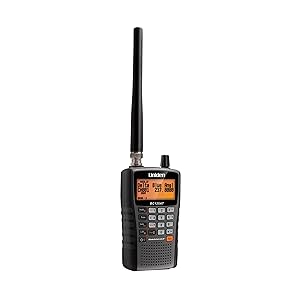
The Uniden Bearcat BC125AT is a robust analog handheld scanner featuring 500 alpha-tagged channels across a wide frequency range (25-54 MHz, 108-174 MHz, 225-380 MHz, 400-512 MHz). Equipped with Close Call Technology, it instantly detects nearby transmissions and offers pre-set popular channels for quick access. Lightweight and portable with a bright orange backlit display, it supports PC programming via free software and runs on 2 AA batteries for up to 10 hours. Ideal for enthusiasts tracking non-digital police, fire, aviation, marine, railroad, and racing communications.







| ASIN | B00772MR0K |
| Additional Features | Digital Display |
| Battery Average Life | 10 Hours |
| Best Sellers Rank | #2 in Portable CB Radios |
| Brand | Uniden |
| Built-In Media | Civil & Military Aircraft Bands, Free Software Available Online, Uniden Bearcat 500 Channel Alpha Numeric Hand Held Radio Scanner, Usb Cable |
| Color | Multicolor |
| Compatible Devices | Personal Computer |
| Customer Reviews | 4.0 out of 5 stars 9,530 Reviews |
| Frequency Range | 25-54 MHz, 108-174 MHz, 225-380 MHz, 400-512 MHz (UHF) |
| Global Trade Identification Number | 00050633650639 |
| Item Dimensions D x W x H | 2.17"D x 4.33"W x 7.28"H |
| Item Type Name | Scanner |
| Item Weight | 1.01 Pounds |
| Manufacturer | Uniden |
| Model Number | BC125AT |
| Number of Batteries | 2 AA batteries required. (included) |
| Number of Channels | 500 |
| Special Feature | Digital Display |
| Talking Range Maximum | 50 Kilometer |
| Tuner Type | UHF |
| UPC | 050633650639 650415524259 |
| Unit Count | 1.0 Count |
| Voltage | 3 Volts |
| Warranty Description | 1 Year Liminted |
| Water Resistance Level | Not Water Resistant |
| Waterproof Rating | IP67 |
D**M
This is a analog radio only.
This is a solid and compact “analog” scanner with many functions. It receives AM and FM only. So depending on where you live and what kind of antenna you connect to it determines what you can hear. Any rubber duck antenna is poor at best. Good for commercial and military aircraft, CB, VHF and UHF ham radio, railway traffic. Many public services such as police and fire have moved to digital modes such as P25 and may be encrypted. Most ham radio VHF and UHF repeaters are still FM, but more and more are moving to digital modes such as D-Star, C4FM, DMR. If you want to hear digital modes, this is not the scanner you want. If you want to hear digital P25 which is usually trunked also you need a scanner like the SDS100. As with any scanner, it’s easier to program the BC125AT with the free software on the Uniden website. You may need to get the proper cable also which is a USB-A to a Mini USB. Scanners use a lot of power, so you will run through a lot of batteries. You can power the radio with just the USB cable if you want. Many people find that more economical in the long run.
T**E
Nice unit; limited support
I like this scanner (the BC125AT) better than the SR30 because it has Alpha tagging (that is, readable labels displayed for each channel, in addition to the frequency assigned to the channel). Otherwise, this scanner is very similar to the SR30. I like that it is compact and lightweight, and easy to read when set so that the display backlight comes on automatically when a channel activates (and turns off when the channel clears). Although it is quite cumbersome and time-consuming to program these units manually, the available (free) programming software makes it a breeze to create one or more channel files, and download whichever configuration is desired. Also, the configuration currently stored in the scanner can be uploaded to the software, where it can be edited and/or saved as desired for backup and/or to update the current configuration. It's even POSSIBLE to create a program file for the SR30 using a file for the BC125AT or vice-versa but because the two units have different file formats, it's necessary to "work" the files to make them cross-compatible (unless Bearcat has now created a file converter app, or you write your own converter). In any case, this file conversion was useful for me so that I could "easily" program my SR30 to have the same configuration as my BC125AT - or vice-versa - by creating a template file - or by uploading the configuration from one scanner - and then re-formatting its data to produce a file for the other model scanner. (Of course, any Alpha Tagging (labels) had to be added manually for the BC125AT's version). And, of course, the model-appropriate configuration files can be used to program more than one scanner of the same model to have the same configuration, if desired. As for features, the BC125AT is similar to the SR30, although it seems to scan more slowly than the SR30. I like most aspects of both models, but there are a few things about both that annoy me: - The units cannot scan while recharging the installed batteries. (However, the units CAN scan while connected to external power but the batteries won't be recharged while the unit is on - inconvenient!). - The channel lock-out "mechanism" is cumbersome to activate unless the channel is currently active. - Certain other keyboard operations seem more difficult than they need to be. - The multi-function knob makes it difficult to adjust the volume and particularly the squelch functions. - It is like pulling teeth to find out details of how some of the features are used and/or how they are intended to work, because apparently, they are not fully documented anywhere - and even the support folks don't know how some things work. - To my knowledge, there is no mobile installation kit to allow the scanner to be operated in a vehicle and then easily removed for temporary hand-held use. - There is no compatible (32-ohm) external speaker offered for use with these scanners. Despite the annoyances, these scanners otherwise function well.
N**S
Great relatively small scanner.
Some reviews on this radio bash it for being unable to listen in on local police department, etc. These users need to do more research. This is an excellent analog receiver, NOT A DIGITAL RECEIVER. Check your local law enforcement radio frequencies and equipment as digital transmissions cannot be picked up by this radio. For where I live this is not an issue. I can hear my local law enforcement clearly and was easy to find their frequencies online. Another invalid complain many users had was how difficult it is to program and use the radio. Seriously, read the manual. There are three different scanning modes, not including Close Call or any of the Priority Scanning functions. I read the manual once and understood their operation and function. I mostly Hold on a single channel but occasionally scan a few banks I programmed from my computer with the included USB cable. Again, follow the directions that came with the radio and you can easily program the radio from a PC. Others have said that the program is similar to Excel, and they are not wrong. It's very simple, it shows you the banks you can program you just fill in the form. My only complaint is the battery life. One one hand, the receiver is relatively compact as it only takes 2 x AA batteries. As a result though, I am averaging about 4 and half hours of listening time before the low battery warning. I wish they would make the receiver a little bigger to accommodate a larger amount of batteries. In summary, I like this scanner a lot. It's relatively small, light, picks up my local frequencies quite clearly, and has decent listening times. Research which frequencies you will want to be listening to to avoid disappointment. I would recommend this to someone as a first time purchase of a police scanner.
E**S
Excellent Starter Scanner
As a lifelong rail fan, I am always looking for ways to improve my rail fan experience. One thing that I thought would advance my experience trackside was a scanner, which would allow me to listen to railroad operations in real time. When deciding on a scanner, I chose the Uniden Bearcat BC125AT because it was within my price range and had a good amount of useful features. I use my scanner almost exclusively to listen to railroad activity, but there are many other uses for the BC125AT. A scanner can be used to receive many different bands and activities; therefore, this product would be ideal for someone who is interested in listening to a variety of radio transmissions. The BC125AT is particularly good for those who are interested in storing their commonly used frequencies and taking their scanner into the field. Many Ways To Listen The BC125AT offers many different options to scan and listen to your desired channels and frequencies. There are nine channel banks with 50 presets each, which means you have the ability to store 450 channels in the scanner’s memory for later use. The BC125AT also comes with Uniden Bearcat programming software, which allows each channel to have an alpha tag or name so memorization of channels is not necessary. You are able to scan your saved channels to check for activity or scan all frequencies. Scanning all frequencies can be done by bank (in order of frequency) or by service. The BC125AT includes Police, Fire, HAM, Marine, Railroad, Civil Air, Military Air, CB, RRS/GMRS/MURS, and Racing frequencies, organized into banks. The BC125AT allows you to turn each bank of frequencies on and off individually, allowing for a very narrow scan if needed. I have found this very helpful, as I can scan only railroad frequencies when I am in unfamiliar territory. The only downside is that one knob controls almost all of the scrolling features, as well as the volume. This sometimes makes it difficult to adjust the volume or proper channel. The BC125AT also comes with a separate NOAA weather radio scanner and can be programmed to turn on in an emergency. Excellent Range For Size The range of the BC125AT is very good for the size of the antenna. Like most scanners, its range depends upon the strength of the output signal. In my current location with my scanner on the railroad frequency, I can listen to transmissions coming from locomotives about a mile away in either direction. I can always hear the dispatcher, due to repeaters along the tracks and a stronger signal. However, I have been able to receive spotty railroad transmissions from about 30 miles away in other locations, and I can receive a very strong signal from a police department in a county at least 30 miles away. Given the BC125AT’s size and large range of channels, the range is excellent and better than I expected. The range of the NOAA weather radio scanner is excellent. My previous weather radio only picked up weather in towns or locations that are at very high elevations. The BC125AT picked up a weather station in every single location I have tried it in, including some very remote canyons. Be Ready To Take Your Scanner Anywhere You Want The BC125AT is a very portable scanner. I have no problem taking it trackside or anywhere else. It is already a very small scanner, but the secret to its success is its detachable antenna. Once the antenna is detached, the size is comparable to that of a digital camera. The BC125AT can easily fit in any standard-sized pocket, and I routinely put my scanner in my pants pocket while riding the bus or shopping. The BC125AT fits comfortably in your hand or on your belt. It also comes with a headphone port, so it is possible to listen to your scanner in public areas without others knowing. Overall, the BC125AT is a great starter scanner for anyone who is interested in listening to radio traffic, whether that is railroad, police, HAM, or something else. It is an excellent portable scanner with ample range and options to make your scanning experience more enjoyable. Please reply to this review if you have questions about my experience with the BC125AT.
J**K
I would rate this 5 stars except for one very serious problem...
My Uniden BC125AT now reads "SCAN MODE ALL LOCKED!" when I turn it on after just one day of pretty decent reception of my local railroads. When pressing the Hold button twice, it then reads "ALL CHANNELS LOCKED OUT!". The owners manual makes no reference to this particular set of problems. I have erased all programmed channels hoping that this would clear it up but it did not fix it. I have a number of frequencies ready to load into it from my PC, but when I attempt to use the "write to scanner" function I get an error, which I presume is related to this problem. The error reads as follows: "See the end of this message for details on invoking just-in-time (JIT) debugging instead of this dialog box. ************** Exception Text ************** System.Configuration.ConfigurationErrorsException: Configuration system failed to initialize ---> System.Configuration.ConfigurationErrorsException: Unrecognized configuration section system.serviceModel. (c:\WINDOWS\Microsoft.NET\Framework\v2.0.50727\Config\machine.config line 134) at System.Configuration.ConfigurationSchemaErrors.ThrowIfErrors(Boolean ignoreLocal) at System.Configuration.BaseConfigurationRecord.ThrowIfParseErrors(ConfigurationSchemaErrors schemaErrors) at System.Configuration.BaseConfigurationRecord.ThrowIfInitErrors() at System.Configuration.ClientConfigurationSystem.EnsureInit(String configKey) --- End of inner exception stack trace --- at System.Configuration.ConfigurationManager.PrepareConfigSystem() at System.Configuration.ConfigurationManager.RefreshSection(String sectionName) at System.Configuration.ClientSettingsStore.ReadSettings(String sectionName, Boolean isUserScoped) at System.Configuration.LocalFileSettingsProvider.GetPropertyValues(SettingsContext context, SettingsPropertyCollection properties) at System.Configuration.SettingsBase.GetPropertiesFromProvider(SettingsProvider provider) at System.Configuration.SettingsBase.GetPropertyValueByName(String propertyName) at System.Configuration.SettingsBase.get_Item(String propertyName) at System.Configuration.ApplicationSettingsBase.GetPropertyValue(String propertyName) at System.Configuration.ApplicationSettingsBase.get_Item(String propertyName) at BC125AT_SS.Properties.Settings.get_ComPort() at BC125AT_SS.Main.writeToScannerToolStripMenuItem_Click(Object sender, EventArgs e) at System.Windows.Forms.ToolStripItem.RaiseEvent(Object key, EventArgs e) at System.Windows.Forms.ToolStripButton.OnClick(EventArgs e) at System.Windows.Forms.ToolStripItem.HandleClick(EventArgs e) at System.Windows.Forms.ToolStripItem.HandleMouseUp(MouseEventArgs e) at System.Windows.Forms.ToolStripItem.FireEventInteractive(EventArgs e, ToolStripItemEventType met) at System.Windows.Forms.ToolStripItem.FireEvent(EventArgs e, ToolStripItemEventType met) at System.Windows.Forms.ToolStrip.OnMouseUp(MouseEventArgs mea) at System.Windows.Forms.Control.WmMouseUp(Message& m, MouseButtons button, Int32 clicks) at System.Windows.Forms.Control.WndProc(Message& m) at System.Windows.Forms.ScrollableControl.WndProc(Message& m) at System.Windows.Forms.ToolStrip.WndProc(Message& m) at System.Windows.Forms.Control.ControlNativeWindow.OnMessage(Message& m) at System.Windows.Forms.Control.ControlNativeWindow.WndProc(Message& m) at System.Windows.Forms.NativeWindow.Callback(IntPtr hWnd, Int32 msg, IntPtr wparam, IntPtr lparam) ************** Loaded Assemblies ************** mscorlib Assembly Version: 2.0.0.0 Win32 Version: 2.0.50727.3649 (GDR.050727-3600) CodeBase: file:///c:/WINDOWS/Microsoft.NET/Framework/v2.0.50727/mscorlib.dll ---------------------------------------- BC125AT_SS Assembly Version: 1.0.0.0 Win32 Version: 1.1.0.0 CodeBase: file:///C:/Program%20Files/Uniden/BC125AT_SS/BC125AT_SS.exe ---------------------------------------- System.Windows.Forms Assembly Version: 2.0.0.0 Win32 Version: 2.0.50727.3645 (GDR.050727-3600) CodeBase: file:///C:/WINDOWS/assembly/GAC_MSIL/System.Windows.Forms/2.0.0.0__b77a5c561934e089/System.Windows.Forms.dll ---------------------------------------- System Assembly Version: 2.0.0.0 Win32 Version: 2.0.50727.3644 (GDR.050727-3600) CodeBase: file:///C:/WINDOWS/assembly/GAC_MSIL/System/2.0.0.0__b77a5c561934e089/System.dll ---------------------------------------- System.Drawing Assembly Version: 2.0.0.0 Win32 Version: 2.0.50727.3644 (GDR.050727-3600) CodeBase: file:///C:/WINDOWS/assembly/GAC_MSIL/System.Drawing/2.0.0.0__b03f5f7f11d50a3a/System.Drawing.dll ---------------------------------------- System.Configuration Assembly Version: 2.0.0.0 Win32 Version: 2.0.50727.3654 (GDR.050727-3600) CodeBase: file:///C:/WINDOWS/assembly/GAC_MSIL/System.Configuration/2.0.0.0__b03f5f7f11d50a3a/System.Configuration.dll ---------------------------------------- System.Xml Assembly Version: 2.0.0.0 Win32 Version: 2.0.50727.3654 (GDR.050727-3600) CodeBase: file:///C:/WINDOWS/assembly/GAC_MSIL/System.Xml/2.0.0.0__b77a5c561934e089/System.Xml.dll ---------------------------------------- ************** JIT Debugging ************** To enable just-in-time (JIT) debugging, the .config file for this application or computer (machine.config) must have the jitDebugging value set in the system.windows.forms section. The application must also be compiled with debugging enabled. For example: <configuration> <system.windows.forms jitDebugging="true" > </configuration> When JIT debugging is enabled, any unhandled exception will be sent to the JIT debugger registered on the computer rather than be handled by this dialog box." My expensive radio scanner is currently useless to me. There is no customer support available.
C**F
This thing works and finds signals without much effort, but isn't as useful as I had hoped.
I am disappointed with this purchase mainly due to the cost of it. It does work pretty well. Most reviewers of this device that gave it 1 star spoke of problems they had with the device and most of their problems was a result of not reading the user manual. Such as the "All Channels Locked Out!" warning that came up on one user. Scanning channels requires you to first save a frequency on the device then it will scan saved frequencies. There is a "Search" button that will search every individual frequency right out the box. Super easy to use and much faster at scanning than my Baofeng F8HP is. You can even choose if you only want certain bands scanned or all of them if you want to. If you hit "Function then Search" it will do a service search which means it will scan known police, fire/ems, Civ air, military air, ham only bands, and even walkie talkie and CB radio frequencies. FRS/MURS/GMRS. I was able to find a nearby construction site while scanning the FRS bank. It was the 2 people that have hold the Stop and Slow signs to direct traffic. I drove past them to test the Close Call feature and it couldn't pick up their signal as I drove past them while they were visibly talking on the walkie talkie. If I just scan FRS frequencies it will find it very quickly, but the Close Call doesn't find it so fast it needs a much stronger signal to find it. The nice thing about this scanner is it also tells you any tones it detects. So if a walkie talkie is on Channel 2 and Sub-channel 1 it would show a tone of 67Hz. Nifty for repeaters too. The Close Call feature was not as good as I hoped it would be. It hardly picked up any signal. It must be a very close range option. I was hoping it would scan and find any frequency that you can listen to. I could scan frequencies and find various conversations, but with Close Call it would only find really really close signals or a lot of interfering strong signals. Close call was one of the main reasons I bought this. I never bothered programming channels into it, but I know it would be tedious. It could be useful depending on what your needs are, but for me as just a hobbyist it isn't worth it. I compared it's receiving ability side by side with my Baofeng F8HP and my Baofeng could hear a handful more signals than the Uniden could. this tells me the Uniden is probably scanning over frequencies without seeing a signal. It probably isn't the device itself, but likely just the antenna. I'm sure with a good antenna like maybe a discone antenna would help you find a lot more signals. I tried searching HF signals with this device and I could not find one. I live 30 minutes south of Salt Lake City and the Salt Lake Valley here has around 2 million people so I would assume there should be some HF signals out here. This device is probably a lot more useful in bigger cities like Chicago or New York. I did find a conversation on every other band including civilian and military air. t wish the features of this device could be built into a HAM radio without increasing its size. This thing is kind of chunky its much bigger than most HAM handhelds are, so isn't super convenient to carry, but I really don't see anything better an smaller on the market. I thought it would be nice in the backcountry to find signals in case you needed to contact someone to relay for help. It still might be nice for that, but I don't know for sure. I did however find a better stationary scanning option recently called Software Defined Radio (SDR) Here on amazon there is a USB device called the RTL-SDR for $17. It turns your computer into a radio receiver. It lets software do the work of analyzing vs the bulky and expensive hardware would you have to buy otherwise. It doesn't come with an antenna. It needs an SMA Female antenna to work with it. My dad's rubber duckie ICOM antenna worked fine. I got the device set up from their website "Quick Start Guide" in less than 10 minutes and I was able to visually see radio frequencies and signals. It was super easy to tune to any frequency I wanted and easy to see where the spikes were on the software it was either interference or a signal. I quickly found a lot of HAM, Police, and Fire conversations as well as local FM radio. You need the right antenna to listen to HF frequencies though which I plan on getting since this device was so cheap and easy to use. I could listen to anything from 87Mhz-900Mhz with this USB device so far. It is capable of listening up to 18Ghz. Of course nothing really goes up that high, but you can even analyze wifi signals with it. Lots of fun! For a hobbyist that is definitely the more fun and affordable option. If you needed to make it portable then just get a small laptop for it.
R**.
Great Little Scanner for the Price
So far, I haven't explored all the features of my scanner. That said, it's full featured and provides a very generous storage capacity for channel frequencies. Everyone complains about battery life, however, I have an extra set of batteries and a stand-alone charger which does a better job of charging the batteries anyway. By swapping out the batteries, they are always ready to go and their life isn't shortened by using the internal charger on an overly long charge time (charging isn't limited except to the time set for charge cut off). Of course, the receiver can be operated using the cable provided and a USB charge brick which eliminates the need for changing batteries. Sensitivity is great. A local (not geographically) weather channel comes in with full bars (signal strength indicator) and the audio is loud and clear considering the small speaker and my using it indoors with the provided antenna. I purchased a separate antenna for the bands I want to use (aviation) for even better performance. Programming is daunting at first (and I mentioned that I'm still learning), but straight forward if one reads the manual (which was supplied with my unit and is also available as a downloadable PDF). Many on-line videos are available detailing the programming and operation of this unit and the XLT version which is nearly identical in operation. The unit is pocketable and compact, and fairly lightweight for its class, although some (long) antennas may need removal to make it practical to pocket. The shorter antenna provided isn't that obtrusive though. Don't believe those who say the programming is overly hard. Once done a couple of times, it becomes easier and easier with use and is really pretty simple. The number of adjustments available is what makes it a bit overwhelming at first so it is best to go with the default settings and learn the features one at a time (slowly) as most aren't that essential for basic operation but are valuable later on.
J**S
An astounding value
I have been using scanner-type radios for more than 40 years -- I am a newspaper editor whose job requires them. I have also been a ham radio operator since 1958. While I own even a Uniden Homepatrol -- arguably the top of the line, I consider the BC125AT to be the most remarkable value of any radio of this type I have ever seen. The quality of this unit, its performance, the ability to configure it many ways, the scores of features, and the FREE programming software make this an excellent value. WHAT I ESPECIALLY LIKED: * Low price: You get an awful lot for $119 (or whatever the current price is). * Free programming software: It's no-frills, but it does everything I want, include setting tone codes and text tags, without all the fuss of using the keypad and "scroll control." Setting up the drivers confused me a bit, but Uniden's help service responded within two days with very detailed instructions -- that worked. Virtually every other scanner that's programmable requires one to purchase software to program it. This feature alone is a substantial value. * The volume: Many lower-end scanners do not push out much sound. This one is as loud as I would ever need, even in noisy circumstances, such as a fire scene or parade. * Ability to find channels: This unit has several ways of finding active frequencies in your community, including "Close Call" detection for finding nearby activity and scanning predetermined regions of the spectrum (Marine, Air, railroad, ham, etc.) to find more distance channels by checking thousands of channels that have been preprogrammed in. * CTCSS and DCS squelch: Most people may not care about this, but if you have a distant police department using the same frequency as the local police department, and you're using an external antenna, programming in the squelch code will prevent you from hearing the interference from the distant department. You hear only station you have provided a code for on that frequency (codes can be gotten from Radioreference.com or you can scan for them using the radio). * Adjustability: The unit is very configurable, right down to the contrast on the screen. You will need to study the manual, but you will be rewarded doing so. * Manual: It's extensive, it's clear, and it's pocket size. Best of it, it exists! So many things today come without manuals -- you have to download information or read it on a screen. This has a REAL manual, and it is really useful. And it's not written in broken English! * The build: It's sturdy, well-designed. It would be nice if it could be a bit smaller, like some newer transceivers, but it's certainly not chunky like Radio Shack and Uniden scanners of the recent past. * USB rechargeable: The unit uses standard AA nicads (included) that can be charged in the radio with a USB cable (included). Not included is a five-volt USB power supply "brick." However, everyone has those already; they come with cell phones and other gear. Just plug the charger cable into one of these transformer blocks -- or into your computer. Smart move by Uniden because you don't have to pay the added cost of transformer you already have. The unit can also use standard alkaline AAs -- making it very flexible. * Frequency range: It's got just about every frequency range you would want, including CB. WHAT I DON'T LIKE: * One rotary control: One knob, called a scroll control, is used to change channels and to program, adjust volume and adjust squelch. The priority use is channel changing (and other functions requiring scrolling). To me it should be volume first. In the many situations in which I use a scanner, I am always turning up or down the volume. I need quick access; with this unit, you have to push and hold down while turning to adjust volume. One learns to do that, but it's still cumbersome. I believe that volume adjustment is the most frequently used purpose of a rheostat-type control. Even better would be TWO rotary controls, one for volume/squelch and one for channel changing, etc. There is room on the top for a second control. * No digital: Well, for $119, I guess you can't expect digital coverage. (Fortunately for me, most of my local services are still analog.) But it still irks me that when you can walk into a supermarket and buy a throw-away cell phone for $10, you have to pay nearly $500 for a digital portable scanner. That $10 phone is a digital two-way radio transceiver. It's not only a scanner receiver, it's a multichannel transmitter, too! It's time for technology and price to catch up with radio scanners.
Trustpilot
3 weeks ago
1 week ago