We remain fully operational. Our teams are working around the clock to ensure your deliveries continue safely.

DOWNLOAD THE APP


Copyright © 2025 Desertcart Holdings Limited
DOWNLOAD THE APP
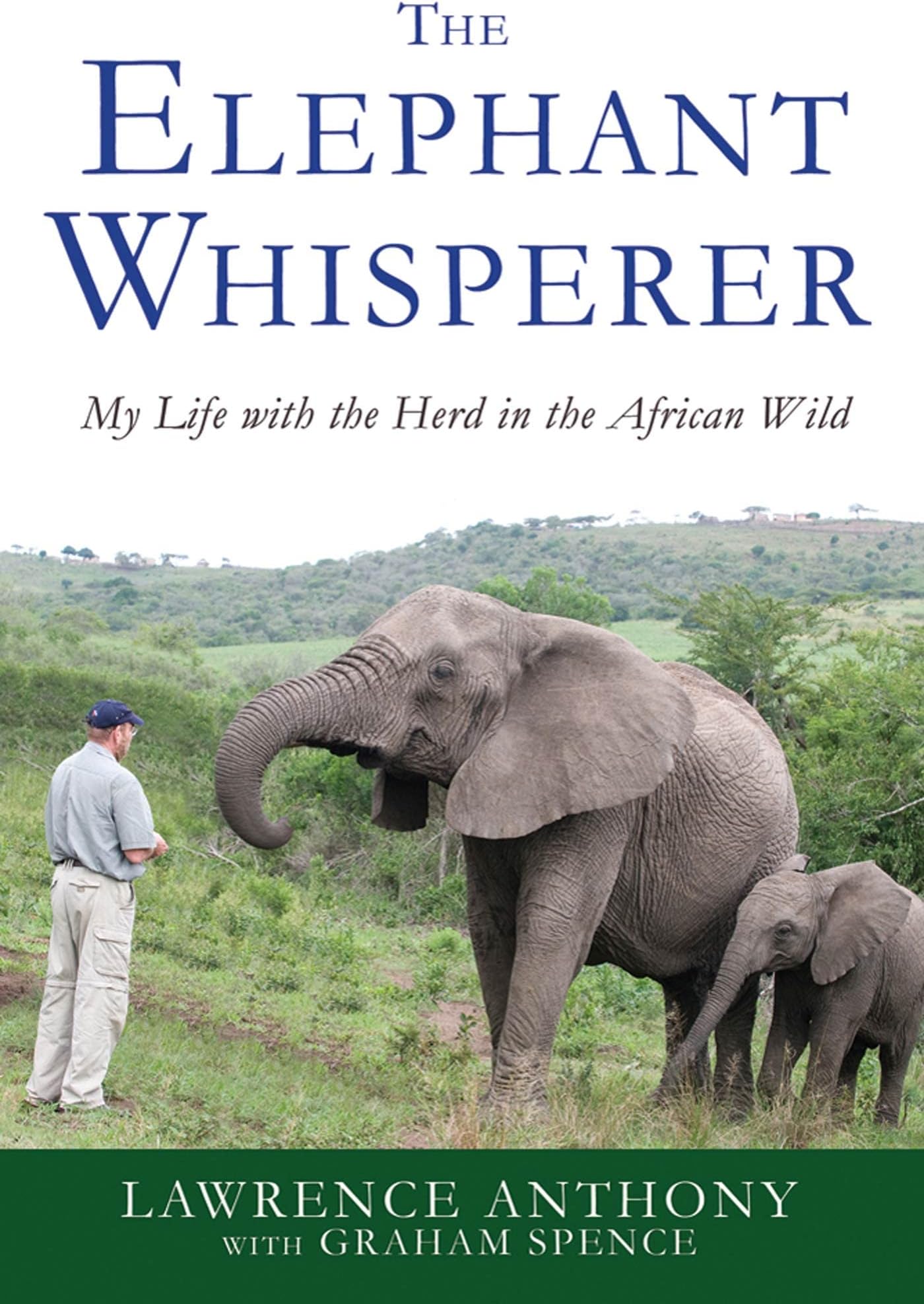
Buy anything from 5,000+ international stores. One checkout price. No surprise fees. Join 2M+ shoppers on Desertcart.
Desertcart purchases this item on your behalf and handles shipping, customs, and support to South Korea.
Buy The Elephant Whisperer: My Life with the Herd in the African Wild on desertcart.com ✓ FREE SHIPPING on qualified orders Review: So informative, Great True story! - I Love this Story!! Made me Happy, Sad, laughing, Crying!! One of the Best books I've ever read! Now I'm reading, ' There's An Elephant In My Kitchen ' I want to read All of the books He wrote!!! Review: Exceptional - First off, understand that the title of this book is highly misleading. This story is actually a balance of wondrous and woeful perspective of the reality of physical life, especially in the latter chapters, depicted through fascinating experiences. There is a powerful, elemental message threaded through this writing about all life forms journeying together, connected, and dependent on each other for existence, which includes humans. If strong emotions aren't aroused, then I suspect the reader may be blinded by their human bubble and/or have a heart of stone. "In our noisy cities we tend to forget the things our ancestors knew on a gut level: that the wilderness is alive, that its whispers are there for all to hear – and to respond to." "Living rough in the wilderness is a salve for the soul. Ancient instincts awaken; forgotten skills are relearned, consciousness is sharpened and life thrums at a richer tempo." "Under the microscope, living organisms are just a soup of chemicals and minerals. But what about what the microscope doesn’t see? That life force, the vital ingredient of existence – from an acacia to an elephant – can it be quantified? "My herd showed me that it can. That understanding and generosity of spirit is alive and well in the pachyderm kingdom; that elephants are emotional, caring and extremely intelligent; and that they value good relations with humans. "This is their story. They taught me that all life forms are important to each other in our common quest for happiness and survival. That there is more to life than just yourself, your own family, or your own kind." The story can be seen in one vein as the age old struggle between the primal savagery of trigger happy men killing for the thrill of it, and wiser minds trying to protect wildlife, knowing humankind's future is at stake. It perplexes me how our blinkered cognitive processes exhibit such vagaries, even though knowing of the fickleness of evolution's trials and the influences of subjective experiences. "It was something I simply couldn’t fathom … what type of person would shoot a terrified teenage elephant, and a female at that? For a tawdry fireside trophy? For the pleasure of the kill? And what kind of reserve owner would hawk a vulnerable young animal for such a reason?" The message comes through loud and clear, that to truly protect any life form is to protect all by living in respectful coexistence with all life forms in the natural world model of life fueled by life. In such, death and the recycling of essential elements is a necessary precursor to new life in Earth's closed system of physical life. "Death is an integral part of life. This is the dominant bush reality and I like it that way. It’s natural, uncluttered by materialism or artificial ethics and it helps me to maintain a wholesome perspective of my own existence and that of my friends and family." Yet, in this book I was also amazed by the cognitive processes of the wildlife, especially the elephants. Whatever the explanations, it is beyond doubt that these creatures have senses far superior to ours, and more acute life forces. What have we lost in our human bubble? "We also have to understand that there are things we cannot understand. Elephants possess qualities and abilities well beyond the means of science to decipher. Elephants cannot repair a computer, but they do have communication, physical and metaphysical, that would make Bill Gates’s mouth drop open. In some very important ways they are ahead of us." Lest one get the wrong idea, reading this story is definitely not wading through didactical musings. It is for the most part presented as an engrossing adventure in an edge of the seat manner. Could you retain your cool with a charging bull elephant bearing down on you, or for that manner on finding yourself face to face with a black mamba, or even confront poachers that would happily shoot you? What is depicted are varying mesmerizing situations the author has experienced that the reader may glean the relevance of. The occasional opining is hardly noticed as such. "Every wild thing is in tune with its surroundings, awake to its fate and in absolute harmony with the planet. Their attention is focused totally outwards. Humans, on the other hand, tend to focus introspectively on their own lives too often, brooding and magnifying problems that the animal kingdom would not waste a millisecond of energy upon. To most people, the magnificent order of the natural world where life and death actually mean something has become unrecognizable." In closing I should note that in March of 2012 the author Lawrence Anthony passed away. As reported by the CBC on July 25, 2012, "After his death, although they were not alerted to the event, a group of wild elephants Anthony helped to rescue and rehabilitate travelled to his house in the South African province of KwaZulu-Natal. They stood around the house in an apparent vigil for two days, and then dispersed. Today, the elephants are 'completely wild and doing fine' according to Graham Spence, Anthony's brother-in-law and co-author of three books." The imaginative concoctions of too much of storytelling these days don't elicit anyway near the real life emotional swings and metaphysical aspects inherent in this book. “How vain it is to sit down to write when you have not stood up to live.” ― Henry David Thoreau
| Best Sellers Rank | #19,468 in Books ( See Top 100 in Books ) #5 in Biology of Wildlife #16 in Environmentalist & Naturalist Biographies #302 in Memoirs (Books) |
| Customer Reviews | 4.7 4.7 out of 5 stars (13,192) |
| Dimensions | 5.45 x 0.95 x 8.25 inches |
| Edition | Reprint |
| ISBN-10 | 125000781X |
| ISBN-13 | 978-1250007810 |
| Item Weight | 12.1 ounces |
| Language | English |
| Part of series | Elephant Whisperer |
| Print length | 384 pages |
| Publication date | May 22, 2012 |
| Publisher | St. Martin's Griffin |
N**R
So informative, Great True story!
I Love this Story!! Made me Happy, Sad, laughing, Crying!! One of the Best books I've ever read! Now I'm reading, ' There's An Elephant In My Kitchen ' I want to read All of the books He wrote!!!
L**S
Exceptional
First off, understand that the title of this book is highly misleading. This story is actually a balance of wondrous and woeful perspective of the reality of physical life, especially in the latter chapters, depicted through fascinating experiences. There is a powerful, elemental message threaded through this writing about all life forms journeying together, connected, and dependent on each other for existence, which includes humans. If strong emotions aren't aroused, then I suspect the reader may be blinded by their human bubble and/or have a heart of stone. "<i>In our noisy cities we tend to forget the things our ancestors knew on a gut level: that the wilderness is alive, that its whispers are there for all to hear – and to respond to.</i>" "<i>Living rough in the wilderness is a salve for the soul. Ancient instincts awaken; forgotten skills are relearned, consciousness is sharpened and life thrums at a richer tempo.</i>" "<i>Under the microscope, living organisms are just a soup of chemicals and minerals. But what about what the microscope doesn’t see? That life force, the vital ingredient of existence – from an acacia to an elephant – can it be quantified?</i> "<i>My herd showed me that it can. That understanding and generosity of spirit is alive and well in the pachyderm kingdom; that elephants are emotional, caring and extremely intelligent; and that they value good relations with humans.</i> "<i>This is their story. They taught me that all life forms are important to each other in our common quest for happiness and survival. That there is more to life than just yourself, your own family, or your own kind.</i>" The story can be seen in one vein as the age old struggle between the primal savagery of trigger happy men killing for the thrill of it, and wiser minds trying to protect wildlife, knowing humankind's future is at stake. It perplexes me how our blinkered cognitive processes exhibit such vagaries, even though knowing of the fickleness of evolution's trials and the influences of subjective experiences. "<i>It was something I simply couldn’t fathom … what type of person would shoot a terrified teenage elephant, and a female at that? For a tawdry fireside trophy? For the pleasure of the kill? And what kind of reserve owner would hawk a vulnerable young animal for such a reason?</i>" The message comes through loud and clear, that to truly protect any life form is to protect all by living in respectful coexistence with all life forms in the natural world model of life fueled by life. In such, death and the recycling of essential elements is a necessary precursor to new life in Earth's closed system of physical life. "<i>Death is an integral part of life. This is the dominant bush reality and I like it that way. It’s natural, uncluttered by materialism or artificial ethics and it helps me to maintain a wholesome perspective of my own existence and that of my friends and family.</i>" Yet, in this book I was also amazed by the cognitive processes of the wildlife, especially the elephants. Whatever the explanations, it is beyond doubt that these creatures have senses far superior to ours, and more acute life forces. What have we lost in our human bubble? "<i>We also have to understand that there are things we cannot understand. Elephants possess qualities and abilities well beyond the means of science to decipher. Elephants cannot repair a computer, but they do have communication, physical and metaphysical, that would make Bill Gates’s mouth drop open. In some very important ways they are ahead of us.</i>" Lest one get the wrong idea, reading this story is definitely not wading through didactical musings. It is for the most part presented as an engrossing adventure in an edge of the seat manner. Could you retain your cool with a charging bull elephant bearing down on you, or for that manner on finding yourself face to face with a black mamba, or even confront poachers that would happily shoot you? What is depicted are varying mesmerizing situations the author has experienced that the reader may glean the relevance of. The occasional opining is hardly noticed as such. "<i>Every wild thing is in tune with its surroundings, awake to its fate and in absolute harmony with the planet. Their attention is focused totally outwards. Humans, on the other hand, tend to focus introspectively on their own lives too often, brooding and magnifying problems that the animal kingdom would not waste a millisecond of energy upon. To most people, the magnificent order of the natural world where life and death actually mean something has become unrecognizable.</i>" In closing I should note that in March of 2012 the author Lawrence Anthony passed away. As reported by the CBC on July 25, 2012, "After his death, although they were not alerted to the event, a group of wild elephants Anthony helped to rescue and rehabilitate travelled to his house in the South African province of KwaZulu-Natal. They stood around the house in an apparent vigil for two days, and then dispersed. Today, the elephants are 'completely wild and doing fine' according to Graham Spence, Anthony's brother-in-law and co-author of three books." The imaginative concoctions of too much of storytelling these days don't elicit anyway near the real life emotional swings and metaphysical aspects inherent in this book. “How vain it is to sit down to write when you have not stood up to live.” ― Henry David Thoreau
S**B
Changes the way you think about animal intelligence.
Though Anthony is a conservationist and not a writer by trade, he tells a multitude of fascinating, tear-jerking, and evocative stories about the herd of elephants he adopted to save from execution. They were described as a rogue herd for their aggression and amazing escape artistry. It didn't surprise me that elephants could push over a tree to break an electric fence, but I had no idea they can actually feel along just under the top wire of an electric fence for breaks in the current, or that they had the uncanny ability to know when Anthony was going to return from a trip while he was still miles away. It turns out that elephants use a combination of intuition and a very low frequency noise emitted from the stomach to communicate over incredibly long distances and keep tabs on their loved ones. Unless Anthony is really embellishing and I don't think he is, he's convinced me elephants are as intelligent as humans in many ways, and that they are often braver and more noble. It turned out that rogue was entirely the wrong word for Anthony's herd. The elephants had been continually traumatized and betrayed by watching their family members get shot for disobedience, and had resolved always to escape, and never to trust another human. Anthony turns this distrust around over the span of years, and the way that the elephants react to him evidences their incredibly complex intelligence. What I love about this book is that it's about so much more than a single herd of elephants. Anthony situates his stories in the complex ecosystem of a game reserve, showing we city-dwellers the incredibly delicately balanced and orchestrated system that operates just below the surface of any outdoor environment. His years of experience are rich with insight, and every story was page-turning. The game reserve's tenuous status among local Zulu tribes was also fascinating. Many of the surrounding people had never even seen an elephant or a rhino, so long had they been disconnected from the land of their birthright, so long had poaching and human encroachment caused wildlife at every level to dwindle dangerously low. This would have been a life-changing 5-star book for me; the only downside is the occasionally distracting machismo and bravado in Anthony's description of his exploits on the reserve, and the fact that the writing could have been better in places. However, I defy anyone to read this and not care about conservation or be completely floored by the intelligence of elephants.
K**A
This is a wonderful book written by the man who became world famous after having very humbly and non-ostentaciously cared for endangered animals. The reader learns a lot about elephants and their ever- diminishing world - but in a sort of adventure style! It has its sad moments but is not a "tear jerker". Just true, enjoyable, and well worth the experience of reading it. This is definitely not a book for children! The title may suggest this, but it is definitely an adult book .
U**R
Touching story. Love elephants now even more. Learnt a lot about life in South Africa.
P**E
Sigh an enjoyable read about Africa and its wildlife, and I mostly appreciated all that concerned the elephants. Highly recommended.
J**I
Mais uma obra fantástica do Lawrence Anthony. Conta toda jornada dele recebendo essa manada de elefantes que ninguém queria. Se ele não os aceitasse em sua reserva, provavelmente seriam mortos. A história parte daí e te envolve em toda relação que Lawrence desenvolve com os elefantes, principalmente com a matriarca. Super recomendo!
B**N
The Elephant Whisperer is an amazing book. To think that such a huge animal can become close to the author. Beautiful
Trustpilot
1 month ago
3 weeks ago