Some deliveries may take a little longer than usual due to regional shipping conditions.

DOWNLOAD THE APP


Customer Services
Copyright © 2025 Desertcart Holdings Limited
DOWNLOAD THE APP

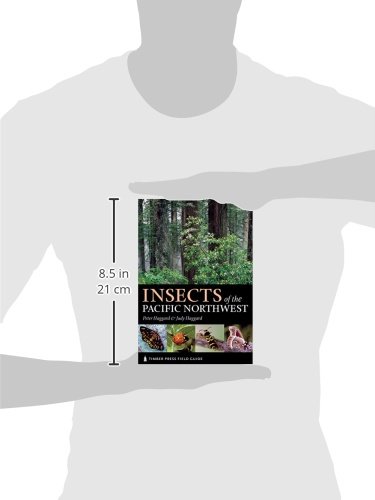
Full description not available
A**R
Alright field guide.
This is an alright field guide. It seems to mainly focus on butterflies and moths, and doesn't have enough beetles. Beetles are by far the most common insect, and yet the section on them is only the second largest. The section on flies seems a little small. Also the section on bees, wasps, and ants was small, although they had a lot of galls, which is very helpful. Even the sections on true bugs was a little small. What disappointed me the most was the section on Orthoptera; there were only 3 grasshopper species, 1 cockroach (doesn't even belong there...), 1 kadydid species (Mormon Cricket), and a Jerusalem cricket. No field crickets, tree crickets, grigs, or camel crickets just to mention a few. I guess I emphasize this section in particular because it is my favorite section, but still, the field guide is quite lacking in this area. The organization is also a bit strange. Butterflies and moths are mixed together, as well as the bees, wasps, and ants. The field guide overall is good. It gives good information on the species it does include. The kind of information it gives includes: Adult, Larva, Lenth, Wingspan, Food, Location, etc. The section on butterflies and moths (which are not found in butterfly field guides) is quite helpful and more exhaustive than anything else I have; also includes some pictures of catepillars and caccoons. This is prabably the section I'll be using the most. If you are looking for a field guide for identifying insects, I would recommend "Kaufman's field guide to Insects of North America" Kaufman Field Guide to Insects of North America (Kaufman Field Guides) . Even though it covers many species found elsewhere, it covers far more species than this one, and if you can't find the exact species, you can at least identify it down to the family and possibly the genus. Far more comprehensive and easier to use. If you already have that book, get this one, as it has information Kaufman lacks.NOTE: One of the reviews said just buy a butterfly book. Please don't. Do buy a butterfly book, but not instead of this guide. This guide has a lot on moths which are not included in butterfly books. Also, I'm sure you can use the other sections, even if they are lacking to someone like me.
I**L
Great
This book insects of the Pacific Northwest was a gift, I understand that it was delivered on time and the recipient is enjoying learning about the insects of the area.
A**E
Lots of butterflies, short on native bees
It's a good book, I will definitely use it for reference, but was disappointed at the lack of bees and flies (pollinators). Lots of moths and butterflies, beautiful photos.
B**S
Well-done, but there's simply too many critters for just one guide to cover
To be honest, I was a little disappointed with this book, but I think it was because my expectations weren't correct and not because the book is bad. I believe there's just far, far too many kinds of insects, arachnids, and other critters to have one tell-all field guide describe them all. I was expecting something like the guide I have for plants, where if I see it along the trail, there's a 98% chance I can ID it. With this book, it seems I can only ID certain critters. The vast majority of the insects in the book I've never seen before.The book itself is beautifully well done, and it does have a lot of species included for the size (about 3 per page, almost all with a photo). Including ranges would have been be a nice touch. Looking through, I also realized that the huge difference between larval and adult stages, and also between male and female, puts a guide like this at a disadvantage as well since there's so much variation within a single species. Most photos are of adults, but some are of larvae (and may not include an adult photo).There's some oddities I noticed. There is exactly, precisely one ant species in this book. Weird--no carpenter ants, sugar ants, etc. I've only seen two of the 7-8 species of spider the book covers, and the ubiquitous daddy long legs, wolf spiders, and brown recluses aren't in there.But there's tons of varieties of ladybugs and butterflies/moths. And even of those, I don't think it covers some of the common moths I see here in Seattle.I would return this if it didn't cost $6 to ship it back. It's a well-done book, but I've learned there's far too much variety for one book to effectively ID all the critters we find up here.
L**E
Helpful in identifying common insects
I bought this for a Ecology class I took this summer. The book was very helpful in identifying the common insects up at Crater Lake in Oregon. The book has clear pictures and descriptions of what the insect looks like/what to look for because some species can look a like with just a small difference. It is small enough to carry around in a camel pack, so it is not too big, and it is not a hard back book (flexible). The pages are thick for a book, perfect for the out doors.
J**S
a ok read
The book is in great shape, got here on time. Not really recommend the book. Compared to other insect field guides/information guides this book is not great. The pictures are amazing, but small. There are a lot of species in this book not found in other field guides, but very little information is given about them. I love the personal notes the author and her husband has with each insect! :-) But, overall can not see much use out of this book. Some sections have one example. I thought it could have used a lot more examples and info in each order.
D**K
good PNW bug book
I found this book very useful for teaching myself some of the taxonomy and species of the PNW. It would be nicer if it included more species from each family, however I'd still recommend it to anyone who's new to entomology and wants to focus in the PNW.
B**H
Bugs
I purchased this book as a reference text. I am a Master Gardener and people bring in all sorts of insect critters for ID. Full color photos and lots of pertinent info will make the task a lot easier. I recommend it if you want to learn more about our insect friends and want to improve your PNW garden habitat to increase beneficials and pollinators.
A**N
This is not a usuable guide for general insect identification.
As a general guide this is almost completely a waste of time. Plenty of ladybugs and butterflies but sparse coverage of so many other species. For example, only one true wasp listed, and there are many other gaps, too many to mention. No idea what purpose this book serves as specialized guides on beetles and moths would be better alternatives. Comes across as a project published when the work was only half completed.
E**Y
This is by far the best insects book I have found so far.
This whole series of identification books is wonderful. I have three of them, and use them all the time. Awesome!
Trustpilot
3 weeks ago
1 month ago