We remain fully operational. Our teams are working around the clock to ensure your deliveries continue safely.

DOWNLOAD THE APP


Customer Services
Copyright © 2025 Desertcart Holdings Limited
DOWNLOAD THE APP
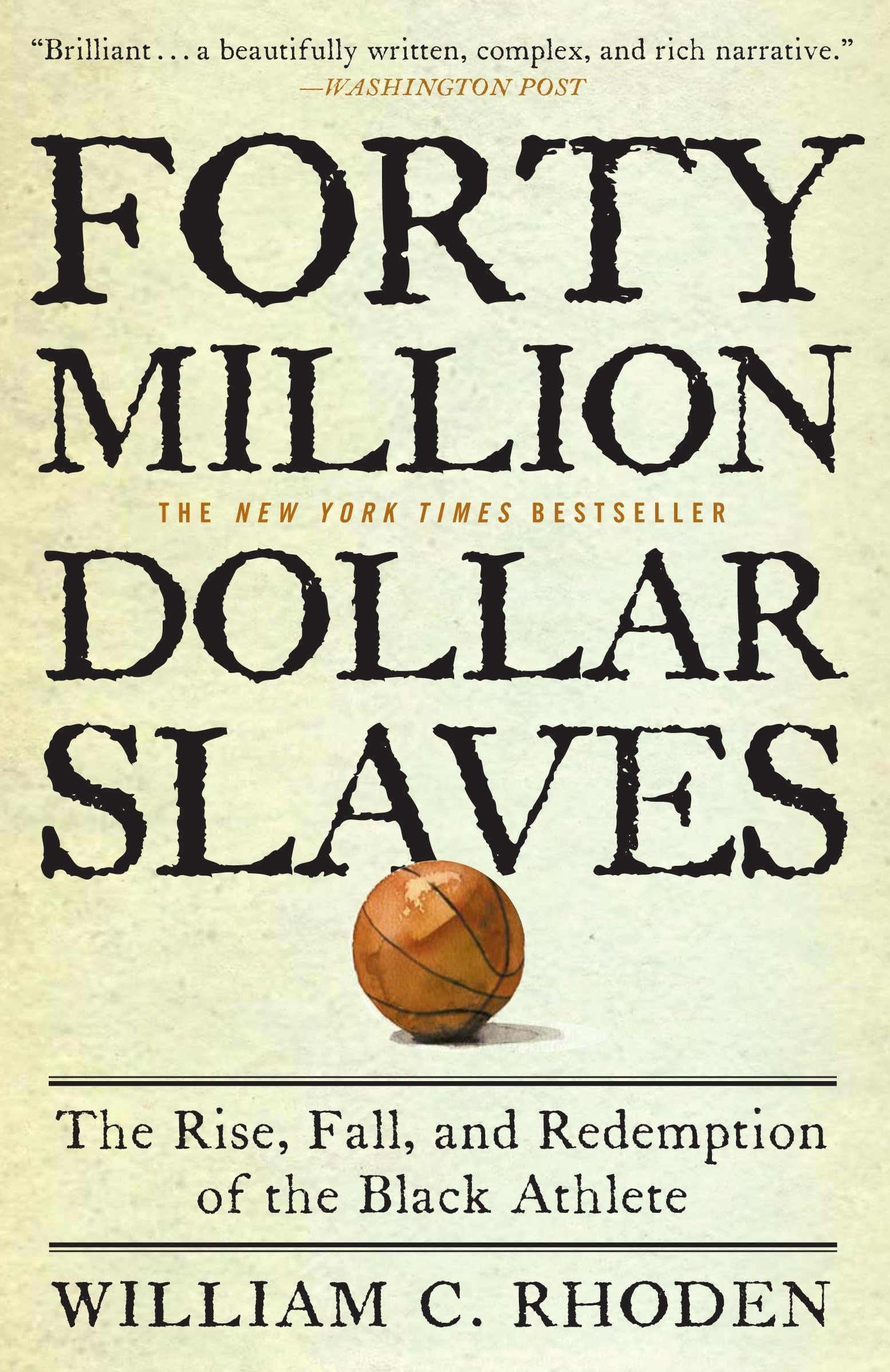
Forty Million Dollar Slaves: The Rise, Fall, and Redemption of the Black Athlete [Rhoden, William C.] on desertcart.com. *FREE* shipping on qualifying offers. Forty Million Dollar Slaves: The Rise, Fall, and Redemption of the Black Athlete Review: The Paradox of the "Slave Athletic Celebrity" - Rhoden's aim in this finely written and very readable screed is to explore the African American star athlete's paradoxical dilemma: On one hand, he is worshipped for his athletic prowess and is lavished with millions of dollars. On the other hand, he is beholden to white team owners, white league administrators, and as such is limited to the role of a super-paid lackey. Some reviewers object to the slavery analogy and the exodus from the plantation to the Promised Land that is heavily used in Rhoden's argument. But Rhoden is correct to point out that the slavery is both spiritual and power-based. Spiritual because too many African American athletes, Rhoden charges, are so busy micromanaging their careers that they have no sense of the broader context, of African American history (one star athlete was shocked with disbelief when he discovered that blacks were once banned from Major League Baseball). Power-based because too many blacks are relegated to "black" roles and forget the larger mission of making more opportunities for blacks in positions of privilege. Whether or not you agree with Rhoden's analogy, I would argue that the book is nevertheless very readable and entertaining, giving us powerful narratives of how black men, starting with the emancipated slave fighter Tom Molineaux, left America to fight the English champion Tom Cribb and showed whites that blacks' athletic performance defied stereotypes about being dense, ignorant, maladroit, etc. By studying Molineaux, Ali, and other African American greats, Rhoden shows how black athletes who see themselves as symbols of black power help forge the way for other black athletes. On a personal note, Rhoden, an African American, explains in his own life growing up in Chigaco in the 1950s and 1960s, that sports are a great avenue for learning about race and American history. I am no exception. As a child, I loved Hank Aaron and one day as I read about the way he was bullied and denied white restaurants and hotels, I got a bitter taste of what this country was like for people of color and contemplated the hideous color divide. Sports is a powerful metaphorical arena for talking about race and Rhoden has done an exemplary job of developing that metaphor in a book that is always engaging and provocative. Review: 40 million blacks should read $40 million dollar slaves!! - Every black person and every black athlete should read this book. Words really can't describe how good this book really is. It's a history lesson with the same old saga in this world we live in. From a history major, I can really appreciate this work. What Rhoden does is takes us on a time machine into America's sports culture and sees how African American's have influenced and changed how we view sports today. He also presents challenges to black athletes of this generation. Blacks in general have to look at "game film" history, the past to prepare for the future as Rhoden says so often. I love how he symbolizes the Rhoden's main theme is for blacks to gain power within the community as a whole and not individually. I read about Rube Foster and the Negro Leagues but, his research and point about what Foster really wanted was a rude awakening. Also the taking of most of the great talent from HBCU's (who were being drafted into pro football) to the big D1 schools points out the plantation system is still going on. The Jockey syndrome was amazing story of how black jockeys were over 90% of the jockeys in the early Kentucky Derby's. Today's jockey syndrome are the caddies in golf a couple decades ago, who now make 100k and blacks are no where near to be found. The system has shut them out. But it wasn't as forceful as it was 100 years ago. The story about Tom Molineaux was awesome and needs to be put into a movie. A black slave boxing in England in the first fight of the century (before Jack Johnson). He also uses the examples of Larry Johnson and the legendary Curt Flood to further exemplify his thesis. The book is a little repetitive in some areas, but he's just trying to prove his point which he does so well. There are a lot of things he didn't mention to go along with his points. He could write a volume 2 concerning other black athletes that changed things and prove his point. I agree and disagree about his views on Jordan and his neutrality. Rhoden would be glad that Jordan is now a NBA owner and WInslow Jr. is playing for a black head coach in the NFL. He discusses the pros and cons of integration. I mean, it was necessary, but it put a dent on black america at the same time. To read this book, you have to understand where Rhoden comes from, all black community, black college, child of the 60's etc. I agree with 95% of the book, because you have to understand that now that you have integration, blacks come from all parts of the country and he understands that but sees integration as not benefiting the majority of blacks. Rhoden views the struggle today is for blacks to be owners (masters) of their own talents and styles and not remain servants (slaves) to mainstream America which is exploiting them, like what was done over 300/400 years ago. And the sobering thing that Rhoden and many others have seen before him is how blacks who once dominate in a articular sport are becoming less represented. Racism still exist, and in the media you can still sense it. What we need is more guys like Rhoden in the media to expose and tell it the way it is. He doesn't address what the black america's community problem is: and that is the black man being the head of his family. Once that ownership is taken care of the rest is history, but that's another saga that has lasted over 300/400 years. And the people who know "game film" (history) know where that came from. Bring on volume 2 Rhoden, please. As some other viewer wrote what a saga!


| Best Sellers Rank | #36,391 in Books ( See Top 100 in Books ) #5 in Sociology of Sports (Books) #53 in African American Demographic Studies (Books) #213 in Sociology Reference |
| Customer Reviews | 4.8 out of 5 stars 1,034 Reviews |
M**N
The Paradox of the "Slave Athletic Celebrity"
Rhoden's aim in this finely written and very readable screed is to explore the African American star athlete's paradoxical dilemma: On one hand, he is worshipped for his athletic prowess and is lavished with millions of dollars. On the other hand, he is beholden to white team owners, white league administrators, and as such is limited to the role of a super-paid lackey. Some reviewers object to the slavery analogy and the exodus from the plantation to the Promised Land that is heavily used in Rhoden's argument. But Rhoden is correct to point out that the slavery is both spiritual and power-based. Spiritual because too many African American athletes, Rhoden charges, are so busy micromanaging their careers that they have no sense of the broader context, of African American history (one star athlete was shocked with disbelief when he discovered that blacks were once banned from Major League Baseball). Power-based because too many blacks are relegated to "black" roles and forget the larger mission of making more opportunities for blacks in positions of privilege. Whether or not you agree with Rhoden's analogy, I would argue that the book is nevertheless very readable and entertaining, giving us powerful narratives of how black men, starting with the emancipated slave fighter Tom Molineaux, left America to fight the English champion Tom Cribb and showed whites that blacks' athletic performance defied stereotypes about being dense, ignorant, maladroit, etc. By studying Molineaux, Ali, and other African American greats, Rhoden shows how black athletes who see themselves as symbols of black power help forge the way for other black athletes. On a personal note, Rhoden, an African American, explains in his own life growing up in Chigaco in the 1950s and 1960s, that sports are a great avenue for learning about race and American history. I am no exception. As a child, I loved Hank Aaron and one day as I read about the way he was bullied and denied white restaurants and hotels, I got a bitter taste of what this country was like for people of color and contemplated the hideous color divide. Sports is a powerful metaphorical arena for talking about race and Rhoden has done an exemplary job of developing that metaphor in a book that is always engaging and provocative.
S**S
40 million blacks should read $40 million dollar slaves!!
Every black person and every black athlete should read this book. Words really can't describe how good this book really is. It's a history lesson with the same old saga in this world we live in. From a history major, I can really appreciate this work. What Rhoden does is takes us on a time machine into America's sports culture and sees how African American's have influenced and changed how we view sports today. He also presents challenges to black athletes of this generation. Blacks in general have to look at "game film" history, the past to prepare for the future as Rhoden says so often. I love how he symbolizes the Rhoden's main theme is for blacks to gain power within the community as a whole and not individually. I read about Rube Foster and the Negro Leagues but, his research and point about what Foster really wanted was a rude awakening. Also the taking of most of the great talent from HBCU's (who were being drafted into pro football) to the big D1 schools points out the plantation system is still going on. The Jockey syndrome was amazing story of how black jockeys were over 90% of the jockeys in the early Kentucky Derby's. Today's jockey syndrome are the caddies in golf a couple decades ago, who now make 100k and blacks are no where near to be found. The system has shut them out. But it wasn't as forceful as it was 100 years ago. The story about Tom Molineaux was awesome and needs to be put into a movie. A black slave boxing in England in the first fight of the century (before Jack Johnson). He also uses the examples of Larry Johnson and the legendary Curt Flood to further exemplify his thesis. The book is a little repetitive in some areas, but he's just trying to prove his point which he does so well. There are a lot of things he didn't mention to go along with his points. He could write a volume 2 concerning other black athletes that changed things and prove his point. I agree and disagree about his views on Jordan and his neutrality. Rhoden would be glad that Jordan is now a NBA owner and WInslow Jr. is playing for a black head coach in the NFL. He discusses the pros and cons of integration. I mean, it was necessary, but it put a dent on black america at the same time. To read this book, you have to understand where Rhoden comes from, all black community, black college, child of the 60's etc. I agree with 95% of the book, because you have to understand that now that you have integration, blacks come from all parts of the country and he understands that but sees integration as not benefiting the majority of blacks. Rhoden views the struggle today is for blacks to be owners (masters) of their own talents and styles and not remain servants (slaves) to mainstream America which is exploiting them, like what was done over 300/400 years ago. And the sobering thing that Rhoden and many others have seen before him is how blacks who once dominate in a articular sport are becoming less represented. Racism still exist, and in the media you can still sense it. What we need is more guys like Rhoden in the media to expose and tell it the way it is. He doesn't address what the black america's community problem is: and that is the black man being the head of his family. Once that ownership is taken care of the rest is history, but that's another saga that has lasted over 300/400 years. And the people who know "game film" (history) know where that came from. Bring on volume 2 Rhoden, please. As some other viewer wrote what a saga!
G**Y
WE HAVE COME SO FAR WITH A LONG WAY TO GO
This book has been on my reading list for a few years, and it is one of the most profound books I have read in a long time, and it did not disappoint! The research for the book was exceptional coupled with his own lived experiences made it even better. Overall a must read for any black aspiring athlete and their loved ones, or even for a white person looking to get a perspective outside of their inherent privilege. A definite recommendation and hope to read more from this author!
P**R
Damaged book
I only gave it a 4 because the book arrived somewhat damaged
P**G
Well Paid Slaves Are Still Slaves
I’d known of this book for some time and never got around to reading it until now and it was well worth the wait. William Rhoden’s writing style is very engaging which allows the reader to go through this book pretty fast. Rhoden is a man that clearly understands racism better than most and his critiquing of the plight of the Black male athlete has many dimensions to it. The love that although he is critical, his writing does not devolve into simply anti-Black ranting (like so many Black authors and so called race scholars). He devoted a chapter to Michael Jordan and gives a pretty good summation of what Michael Jordan has meant to sports, Black people and white people. Rhoden acknowledges that Jordan always avoided taking a stand for his people, but also acknowledges a personal experience he had speaking with Jordan, where Jordan seemed to be aware of how careful a Black male has to be with his image in the white media. Rhoden does not call Jordan names, but doesn’t let him off the hook either. Most of the book is devoted to Black athletes and entrepreneurs the general public knows very little about like Tom Molineaux, Rube Foster and many others. This book is incredibly informative and expertly details the mistakes Black people continuously make in the athletic arena under white control. I recommend this book to all Black people. You will not regret it. All sports fields that Black people dominate are nothing but plantations with powerless slaves making money for rich white men. The slaves might make more money that they did in the past, but their numbers are small and the masses of Black people still suffer in a society of vast economic inequality across racial lines. The athletes that prosper under white institutions are nothing but FORTY MILLION DOLLAR SLAVES.
F**F
eye opening
The amount of things that’s still relevant to this day is crazy to think about. Book really breaks the racial dynamic at play in sport by the owners and players. Great book
G**N
Fascinating Sociological Read
Sociology can be a very dry subject but told with sports as the backdrop, the metaphor is eye opening. I am not a sport fan but I did appreciate the deep examination of American history as experienced by a community. The evolution of the African American sports "hero" over the course of over a century. How while many things have changed, some things remain the same. I was particularly pleased with the how the book is structured. Each chapter builds on the previous linking behaviors and events. It was written nearly a decade ago but I cannot help but wonder if the author were to update it with current events in sports what conclusions he might draw.
B**L
Challenge Your Views
For those in the media who have written about the book, commented on its contents or have interviewed William C. Rhoden: 1. Did you read the book or the brief excerpts that are typically part of the release sent to possible reviewers? 2. To "stimulate" debate - especially on talk radio - have you simply joked about the book's title in hopes of getting a few callers before the top of the hour news, weather and traffic report? 3. Did you give Mr. Rhoden time to discuss portions of the book or did you simply attempt to debate him based on your ignorance on the contents of the book? I stongly urge those interested in African American heritage to read Forty Million Dollar Slaves. In under 300 pages, Rhoden packages a wealth of material based on his research, interviews and - importantly - as a black man who came of age during the Black Power movement of the 1960s. Will every reader agree with Rhoden's historical outlook on the plight of the African American athlete in the white-dominated power structure? No. But it just may be the first time for the reader to be challenged concerning the "conventional" views on race & sports. Until America confronts the ramifications of slavery, it can never truly be free from the sordid past and the rewriting of history that plagues education today. Rhoden lays down the challenge....and the truth isn't the neat package the mainstream media loves to recite.
Trustpilot
2 weeks ago
5 days ago