

Desert Online General Trading LLC
Dubai, United Arab Emirates
Desert Online General Trading LLC
Dubai, United Arab Emirates
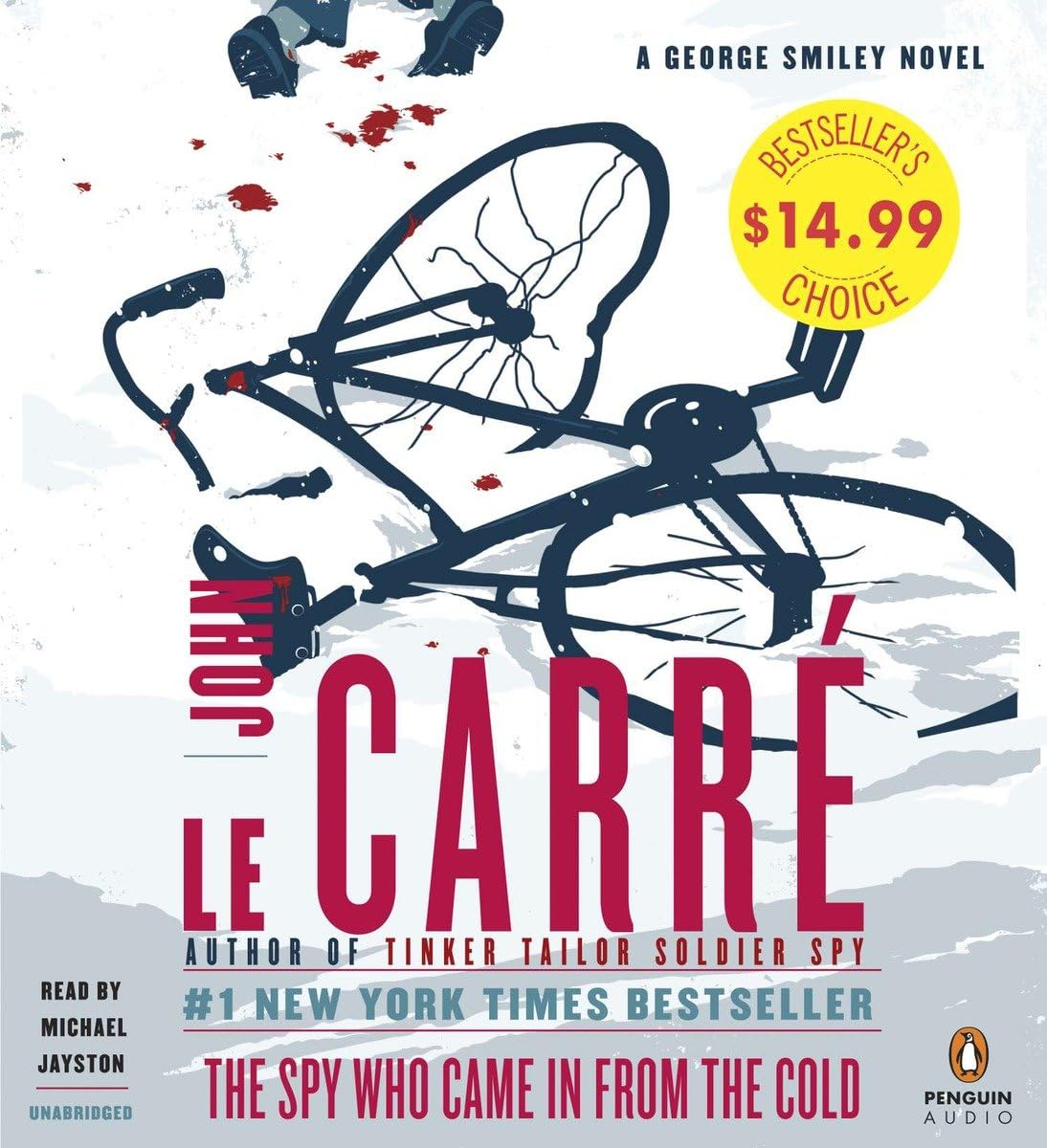
Full description not available
D**R
Brilliant and Bitter Spy Novel
“The Spy Who Came in From the Cold” is a bitter and angry novel about Cold War spies that refuses adamantly to glorify or glamorize their activities and that digs beneath the patriotic ideologies in the name of which secret agents act to uncover the morally troubling effects their plots have on real people.It begins with a scene of maximum tension at the Berlin Wall. Alec Leamas, a British agent responsible for a network of spies in East Germany who are being rounded up, is waiting in a checkpoint in West Berlin, hoping that the last of his agents will be able to escape. After that agent gets shot down before his eyes just before crossing the border, Leamas retreats to London in a fog of bitter disillusionment.The rest of the novel narrates an increasingly complex plot hatched by the Circus, the British spy agency Leamas works for, to recover from the elimination of their spy network by getting back at the German spymaster responsible - Mundt.The plot begins with Leamas acting the part of a disgruntled agent, shortchanged for his service to his country and vulnerable to defection. He is contacted by agents for East Germany and agrees to supply them with information, but not before he takes a job in a library where he meets and becomes lovers with Liz Gold, a character who will come to represent the innocent bystanders who get pulled into the world of morally questionable espionage with tragic results.Almost everything that happens in this novel is morally questionable on both sides and that is what provides a good bit of the intellectual stimulation of the book. John Le Carre always keeps the big picture ideology within the frame of the story by having his characters invoke Communist ideology alongside ideas of Democracy. Without going too deeply into political science, politics is always a reasonable topic of conversation here whether it’s pillow talk between Alec and Liz or a discussion of their greater mission between Alec and his Communist counterparts.But Le Carre’s focus is always on real people and he loves to explore the way that the idealism of the East and the West get twisted and distorted in their effects on both those spies who must compete aggressively for their “side” as well as the innocent people who are just doing their jobs. At one point Alec refers to this as “turning the plan into people,” in other words, to achieve some results in intelligence work, agents must be used and people will die and these deaths flatly contradict the western democracies’ ideological support for the freedom of the individual.These moral concerns fit neatly into a novel which is full of betrayals and double-crossings. The way information is doled out as the plot unfolds changes the way you see the characters and what you make of their motives but it all circles back to the Berlin Wall and an ending which parallels the opening.Leamas’s bitterness proves to be wholly justified, but his downfall is brought about by his inexplicable hunger for “operational life.” His embittered attitude is perhaps most directed at his own profession, one to which he is drawn like a magnet. Of spying he has this to say: “What do you think spies are: priests, saints and martyrs? They’re a squalid procession of vain fools, traitors too, yes; pansies, sadists and drunkards, people who play cowboys and Indians to brighten their rotten lives.” It’s a great diatribe which encapsulates the mood, the atmosphere, the tensions, and the overriding philosophy of this novel.Coming in from the cold has many meanings here. Leamas comes in from the cold when his East German network gets wrapped up and he flies back to London, he comes in from the cold when he leaves the Circus to work at the library as a discarded alcoholic former spy, he comes in from the cold when he agrees to sell information to the East Germans, and finally he comes in from the cold when he ends up back at the Berlin Wall in the final scene. With shifty characters, a torturous plot, and a warm core of humane sympathy this novel is an entertaining and philosophical spy novel for the thinking reader.
T**R
Great ending
This book still holds up decades later. It is a slow burn for a modern reader, but the end is worth it. I imagine it was very groundbreaking back in the day, but if it was released as a new novel today it would probably get overlooked.
K**U
READ "SPY WHO" BEFORE READING 2017'S "LEGACY OF SPIES"
This is about the 3rd time I have read Le Carre's "The Spy Who Came In From The Cold" (SW) since it was first published in 1963. It was Le Carre's (David Cornwell) 3rd book and is generally regarded, at its meager 212 pages, as one of the greatest spy fiction novels of all time. His most recent novel, "Legacy of Spies" (LS) will be released tomorrow, 9/5/17, and since it is strongly tied to events in SW, I felt a quick re-reading was in order. Though I have not read Le Carre's recent novels - more on that later - I just got dinged by Amazon that my copy of LS will arrive very soon.Reading some advance reviews of LS, I became aware that a significant part of its plot was an investigation of Peter Guillam's and George Smiley's involvement in SW. I had forgotten this and as I read SW I paid more attention to their mentions; they are numerous and critical not only to LS but also SW. For example, Smiley's name pops up on the very last page of SW.I have read many Le Carre novels, and his prose has been sterling in each and every one of them. What set SW and the Smiley threesome apart for me were the excellent characters LC constructed for those four books, not just the protagonists, but the supporting casts as well. And the plots were incredible, particularly SW and "Tinker Tailor...". Over the years I have finally come around and agree that SW is Number One. It is the ultimate spy novel of betrayal with such a grand twist that it can be re-read and re-read and still survive the span of fifty years plus.I remember my first reading, how stunned I was when hearing Alec Leamus's explanation to Liz of what had happened. In my recent reading, as the courtroom scene wound down and knowing the twist that was coming, I sat and wondered when Leamus was going to get it. When? Then Bam! as I turned the page, "And suddenly, with the terrible clarity of a man too long deceived, Leamus understood the whole ghastly trick."As Leamus and Liz race to the Wall, Leamus shares some (Le Carre's) core beliefs: "What do you think spies are: priests, saints, and martyrs? They're a squalid procession of vain fools, traitors too, yes; pansies, sadists and drunkards, people who play cowboys and Indians to brighten their rotten lives." In his post-Smiley books, Le Carre takes a lot of shots at the CIA and America in general. He's not the first to do so; I'm a big boy and it usually doesn't bother me. See the very first sentence in SW. A rather green (not in the eco sense), inept character is continually referenced by nationality and not by name; when he leaves the room, Leamus and his other companions share a laugh. There are other needles, e.g."Alec doesn't seem to like our American cousins".Post-Smileyand starting with "Little Drummer Girl" I feel that subsequent Le Carre books were clunkers. There was never a protagonist that came close to rivaling Leamus or Smiley. The books seemed to get grumpier and angrier, and I found the plots boring. So, looking at his total works I feel Le Carre is somewhat over-rated, but I still tip my hat and am exceedingly grateful for the those fantastic four books he wrote so many years ago. I hope LS will be a fifth.
Trustpilot
2 weeks ago
2 days ago
1 month ago
3 weeks ago