

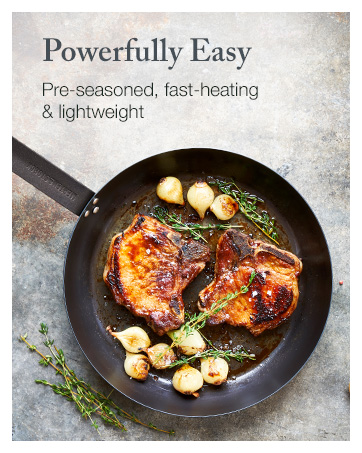
🔥 Elevate your kitchen game with the lightweight carbon steel skillet that’s always ready to sear, grill, and thrill!
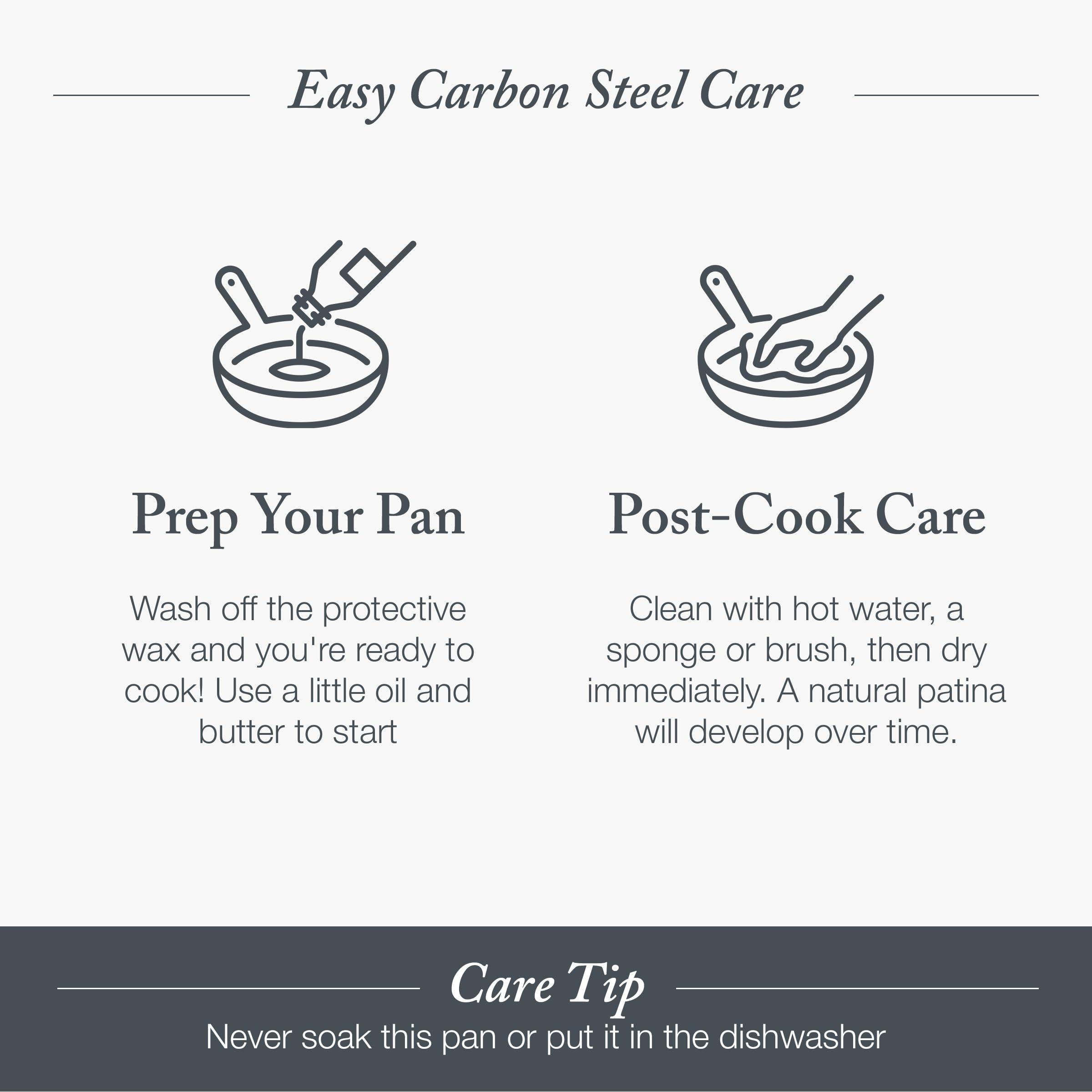
The Merten & Storck 12” Pre-Seasoned Carbon Steel Frying Pan combines the heat retention and durability of cast iron with a lighter, faster-heating design. Pre-seasoned for immediate use, it offers natural nonstick performance and is compatible with all cooktops including induction, oven, grill, and campfire. Its ergonomic triple-riveted handle ensures a secure grip, while the scratch-resistant surface withstands metal utensils. Ideal for professional-quality searing, grilling, and frying both indoors and outdoors.

| ASIN | B08CZWT4XD |
| Additional Features | Gas Stovetop Compatible, Induction Stovetop Compatible, Lightweight, Oven Safe, Scratch Resistant |
| Best Sellers Rank | #1,696 in Kitchen & Dining ( See Top 100 in Kitchen & Dining ) #15 in Skillets |
| Brand | Merten & Storck |
| Brand Name | Merten & Storck |
| Capacity | 4 Cups |
| Color | Black |
| Compatible Devices | Electric Coil , Gas, Smooth Surface Induction |
| Customer Reviews | 4.2 out of 5 stars 5,178 Reviews |
| Global Trade Identification Number | 00885837022131 |
| Handle Material | Alloy Steel |
| Has Nonstick Coating | Yes |
| Included Components | 12" Frying Pan Skillet |
| Is Oven Safe | Yes |
| Is the item dishwasher safe? | No |
| Item Height | 4 inches |
| Item Type Name | Pre-Seasoned Carbon Steel Frying Pan Skillet |
| Item Weight | 1.5 Kilograms |
| Manufacturer | Merten & Storck |
| Material | Carbon Steel |
| Material Type | Carbon Steel |
| Maximum Temperature | 600 Degrees Fahrenheit |
| Model Name | Carbon Steel |
| Product Care Instructions | Hand Wash Only |
| Recommended Uses For Product | Indoor cooking, outdoor cooking, searing, grilling, camping |
| Special Feature | Gas Stovetop Compatible, Induction Stovetop Compatible, Lightweight, Oven Safe, Scratch Resistant |
| Specific Uses For Product | Fajita, Omelet |
| UPC | 885837022131 |
| Unit Count | 1.0 Count |
M**S
Overall great pan, good value
1 year update: I happen to stumble across this listing again and it seems like the reviews are very polarized so I want to do an update and share a tip for people having sticking issues. Firstly, this is still my daily driver in the kitchen. In regards to this pan specifically, I think it's a perfectly good carbon steel and reasonably priced. That said, I have struggled with the non-stick performance and was nearly ready to give up on it before stumbling upon a "hack". So like I said originally the factory seasoning works quite well. However, that started to fade after a few weeks or so. After awhile I got annoyed and tried to apply new layers of seasoning. This is my first carbon anything pan so these attempts had varying success (seems like the best was leaving it in the oven for a good 20-30 mins and leaving it in there to slowly cool). Regardless, even if it worked great for a few days or couple weeks, it always faded again. Seemed like the "gets better with time" didn't apply to carbon steel or I was doing something wrong. I started calling it the "all stick pan" and at one point was trying to apply a seasoning layer every week or two. I bought a flexible metal spatula and this was a big upgrade. Much more effective at releasing stuck on food. Annoying that it's necessary but hey it works right? However, I noticed that simply running that spatula over the pan to remove food bits made the pan more non-stick the next time I used it. This was my first clue that I wasn't cleaning aggressively enough. Now I have a friend who loves his cast iron and he's anti-soap. He does what I'm now calling a "hot water deglaze". As soon as you're done cooking and the pan is still piping hot, throw a splash of hot water in so that it boils very vigorously. I'd only very seldom done this bc the instructions say let it cool slowly (presumably to prevent warping). However, one night I deglazed while making a pan sauce. I'd made the "mistake" of not using my stainless for that. The pan was being pretty sticky at that point. But the next morning I made eggs and boom! Super non-stick as if I'd just seasoned it. So it seems like the issue is thin layers of baked on food residue that don't come off with normal scrubbing. I've noticed some foods are more problematic than others (eg meats, and I think mushrooms). The hot water deglaze removes the remaining grime layer. Now whenever the pan starts getting a little sticky I just do a hot water deglaze after cooking and it's been great. Some of my excess seasoning layers have flaked off and it's forming a nice patina (black area) underneath. Hopefully this tip helps for some of the people struggling with sticking issues. To address warping: I did have an issue with that and I ended up pounding it out with a rubber mallet (while hot). It sits flat and stable now but does have a high spot in the middle and the oil pools around the edges as others have shown. Don't really want to pound it the other way so idk what to do about that. I just try to tilt the pan a bit to spread the oils before tossing food in. Doing the hot water deglaze hasn't caused any warping. Since I pounded it out it's been stable. Original review: Was shopping around for a cast iron and discovered carbon steel. Never heard of of it before, nor owned a cast iron, but I like the idea of it being lighter weight and heating up faster for daily use. I like the idea of a smooth surface too. Note that probably a lot of my comments pertain more to carbon steel in general than this specific pan. Pros: pre-seasoning is great. The pan is very nonstick right out of the box, on par with typical nonstick pans. It's very light and responds quickly to changes in heat. The instructions say you don't need to oil it regularly but I'm doing it anyway. But I like knowing that if that step gets skipped on occasion it's no big deal. It has a smoother surface and requires less oil than cast iron. Also, the handle doesn't get hot under normal usage which is nice. Cons: I think the biggest con here is that the pan is actually too thin. Great for lightness and responding to heat, but it warps very easy. Won't matter much on a gas stove but I have a glass top and that means poor contact, hot spots, and being annoyingly unstable (always wants to spin). You have to try to heat the pan slowly to avoid warping. And of course lack of thermal mass isn't as good for searing meat (cast iron is better for that). It's actually thinner and lighter than my stainless pan (has layers of copper and such). Also, the first time I used it I was using metal tongs and I ended up getting a nick in the bottom of the pan. Hasn't adversely affected anything but it seems like I'll have to stick to silicone cookware or flexible metal. Overall great pan and is now my go to.
J**.
Being a lover of cast iron pans, I love these pans even more. Seasoning is necessary for both.
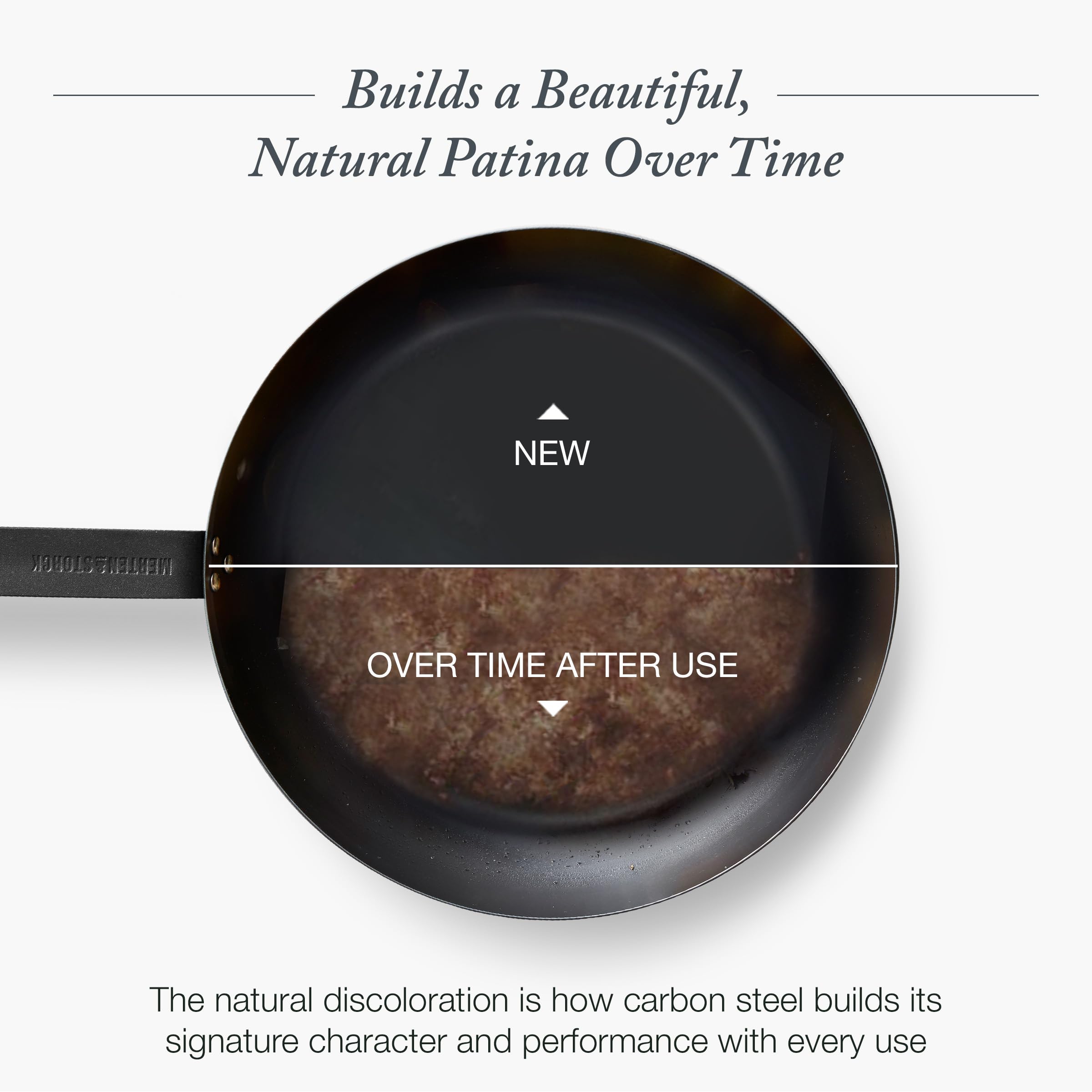
I have been a user of cast iron pans for over 15 years. Many of the cast iron pans I have are very old, and were crusted pans that I had to strip the crud off them and season them before they could be used. Some are newer preseasoned pans that I often stripped the seasoning from them to season them again. When I discovered the carbon steel pans, I was intrigued as these pans are much lighter than cast iron. As a point of reference, I also have a number of Le Creuset and Staub pans and Dutch ovens that I love, but are also very heavy and relatively expensive. Before buying, I usually do research to find out about products I am not familiar with. In my research, I found out that materials used in carbon steel and cast iron pans are basically the same except that carbon steel contains 99% iron and 1% carbon vs. cast iron that contains 2%-3.5% carbon and less iron. The additional carbon causes cast iron to be more brittle, so pans are made thicker to help prevent breakage which also makes them much heavier. Since both have a high iron content, they must be oiled to prevent oxidation and rust. Both have pores that absorb oil when heated, hence the creation of the non-stick properties through "seasoning", but the pores in carbon steel are microscopic and much smaller than the pores in cast iron. Because of this, much less oil should be used to season carbon steel than cast iron. If you use too much oil, or do not remove the excess oil as the pans cool, you will end up with a sticky residue on the pan. This is true for both carbon steel and cast iron, and both require some simple maintenance by heating them and coating them with oil after each use. I, personally, use Crisco All Vegetable shortening. A couple reviews mentioned flaking of the surface after use. These pans come preseasoned and coated with a layer of wax to prevent oxidation (rust). The layer of wax must be cleaned off per the instructions before the first use. This is done by washing them in warm soapy water and wiping them with a scrubby sponge to get all the wax off. If this isn't done, the wax will flake off when used the first time. At this point, I truly love these pans and will likely sell some of my treasured cast iron. So, what do I love about these pans. 1 - They are so much lighter in weight than cast iron. 2 - These pans are nonstick with the seasoning already on the pans and only gets better with time and proper seasoning after each use. 3 - Carbon steel, as well as cast iron, will continue to look like new if cleaned and seasoned after each use. 4 - Heats and cools much faster than cast iron. For both, medium to medium high heat is all that is needed. 5 - Can be used on the stove and in the oven as well as an induction cook top. 6 - Since carbon steel cools faster than cast iron, it is less likely to burn foods that are not immediately removed. 7 - Nest together well and take less storage space than most other pan. 8 - Can stack together and use metal utensils without the fear of scratching them. In conclusion, I would definitely recommend these pans if you are willing to take the time to maintain them. If you can do this, they will last for years to come. UPDATE 03/31/22: I have 3 of these pans in 8", 10", and 12" sizes, and the two pictured are the ones I have used the most. In the last 4 weeks, I have used these pans quite often, and so far, they are totally non-stick and have not changed in color as I expected them to. Maybe it is something in the way I take care of them. After using them, they are washed with soap and water without any scrubbing. I totally dry them by heating them on the stove to open the pores of the pan, and then add a very small amount of Crisco oil on a paper towel to coat them with oil. After a couple more minutes of heating, I use a paper towel to remove any excess oil. As they cool, more oils beads on the surface of the pan, and this is again wiped off. Before I store them, I wipe them again with a kitchen towel. Although I fully expect these pans to change color over time, it's possible they stay looking nice by not letting excess oils stay on them. I do know that leaving excess oil on these pans or on cast iron pans will cause a sticky residue to develop. Built up oils on these pans or cast iron will cause them to look really cruddy and will reduce the nonstick capabilities of both. UPDATE 4/07/22: Today, I found out something about carbon steel pans the hard way. Cooking acidic foods in a carbon steel pan removes the seasoning. I made brats with sauerkraut in one of my carbon steel pans. I browned the brats, and then added the sauerkraut to the pan to heat it with the brats. The pan was fine until I cleaned it and found that part of the seasoning was gone. The pan was down to the bare grey metal in spots. Although this doesn't damage the pan, it has to be heated, oiled, and cooled a couple of times to season it again and regain the nonstick qualities of the pan. I also want to mention that when searing meat, you need to get a good sear on the meat before turning it. If you don't, the meat will stick. UPDATE 5/13/22: I have added pictures of my 8" and 10" pans that have been used quite a lot since I got them a couple of months ago. I am extremely happy with the nonstick quality of these pans and that they are so very much lighter than my cast iron pans. After every use, I season them as described previously, and so far they haven't changed in color. Personally, I believe this is because I don't let the oil burn on the pan when I season it as I have also found this to be true with my cast iron pans. All of my cast iron is an even dark black color and also nonstick. In the past, I have had a couple of cast iron pans change color when oil had been left on it for too long and burned. Although the color of the pans will get darker with use and seasoning, I don't think they have to become ugly if the patina is developed evenly. I hope this review was helpful for you. I will update the review if my opinion changes.
J**.
It's everything they say, in context.
This review is of the 10 inch frying pan pros: It really comes with all the promises that they make. It is pre-seasoned, really. It is just as good as nonstick as long as you use oil, not butter only, to cook anything. It is lighter than cast iron by a good bit. It is heirloom quality. You could dent this pan or even fold it in half and still heat it back up, bang it back into shape re-season it and it will still work. If the rivets got damaged you could grind them off and re-rivet the handle and it would work just fine. The very first try out of the box I cleaned it up and I heated it up to very hot to burn off any contaminants that might have been on it and then I proceeded to fry not one but 6 eggs with less coconut oil and butter than I use in my normal Teflon pens (I combine the two because butter keeps the oil from beating up and spreading evenly across the pan surface). Not only did the eggs not stick, I mean I didn't even have to use a spatula for any small stuck areas, it simply slid around in the pan like a brand new ceramic. Not only did it perform perfectly but it also flipped all six eggs, perfectly. Because of the taller sides and steeper angle of the sides I didn't think it would work but again to my amazement it worked perfectly. Can't really say enough positive about my experience so far. These cons are not really cons in context. But to provide a good context you need to know that carbon steel is substantially heavier than stainless steel or aluminum but on the plus side much lighter than cast iron even "lighter built" cast iron. The handle is a very heavy duty steel handle (and here's the only thing I can say that's negative about the pan is that the handle is not really that comfortable to hold, but I knew what the shape was going in and that's on me) and probably didn't need to be that heavy duty, but it is and it does get hot is if its under heat for quite a while or at high heat. I'm going to make some slide on wooden covers but that's because I can. The pan heats up way faster than our cast iron stuff and does hold its heat for quite a while. The texture is very smooth compared to cast iron and I'm very happy with it. If you're looking for a way to buy once and own forever. Looking for a way to get away from repurchasing ceramic and eating ceramic and Teflon when they break down then I can't recommend anything better than this pan for its shape and consistent durable construction, this company For availability and price. I'm not excited about having to re-season and pay attention to that process. But everything has a pain, pick your pain. I'm no longer interested in wondering if I'm eating Teflon or having to repurchase 30 to 40 dollar pans every couple of years or as soon as my children or others who use the pans cause a scrape.
A**R
Well made and great value for money
I purchased two. They are my first experience with carbon steel and there is something of a learning curve. The searing qualities are great. They are extremely responsive to heat, so they get hot fast, and because these have carbon instead of stainless steel handles as pictured, it's in your best interest to get silicone covers. The preseasoning works really well, and I have few concerns about maintaining the nonstick properties. My main complaint (besides the handles) is that the surface got scratched up from using a fish spatula. This shouldn't be a problem because of the effects of reasoning over time, but it was unexpected.
R**J
Glad I finally tried out these steel pans they're excellent
This pan works great! I'm seeing so many negative reviews from people who obviously haven't even looked at the instructions that came with the pan. Follow the instructions, or even better watch some vids on how to cook on carbon steel and you're good to go. This pan after a few uses is more non stick than teflon by far. I've not had 1 issue with rust, just put it back on the hot burner for a minute to dry after washing. Yes, the seasoning will show some scratches if you use metal utensils, but it's normal. It's normal for the factory seasoning to gradually be replaced with cooking patina that's also non stick. It's normal for some seasoning to be eroded away when cooking meats too. Always preheat the pan so there's that steam barrier between the pan and your food, and nothing will stick. It's light, heats up quick, and also cools down quick so you can wash it without waiting long. You always want to let it cool a bit so you don't warp it with cold water when it's hot. Then just wipe a thin layer of canola oil on it after washing (I just use one of those chain mail scrubbers) and before drying it on the burner and you've replenished the seasoning and ready for next time. Am overall really happy with replacing my "ceramic" cookware with these. Bought this one just to try out carbon steel and I am a believer!
D**K
So slippery that it's hard to flip food! How to Keep it Non-stick/UPDATED
UPDATE 12/20/2024: I loved the 10" skillet so much, I bought the 12". They are my goto skillets, without a doubt. I use them daily, many times more than once per day. These are the only pans that I use to make eggs. So, my Merten and Storck fry pans have been used dozens and dozens of times. I've ordered an induction range which will arrive day after tomorrow. These pans will work great on the induction cooktop. I'll update with info on how they do with induction and how I have to adapt. I was making tuna patties tonight in the 12" pan. To this day, both pans are non-stick, and I mean so darn slippery that it takes a spatula plus another implement on the other side to flip anything. Even fried eggs just slide around. The pans are almost too slippery. I detailed how to season the pans to keep them nonstick in my original review. I've learned that after reheating and rubbing oil on them a few times that it becomes unnecessary. They'll stop soaking up the oil. When you see this, then simply wash them under hot water (when they've cooled down) and dry. I rarely use dish detergent. I have a BLUE 3M scrubber that I use. I only use the BLUE, because it's non-scratch. If I think the pan needs more, I'll put a very small amount of Dawn on the scrubbing pad, wet it in hot water, wash, rinse, and dry. That's all there is to it. I've had no issues with rust. My pans hang on the wall. You can see where oil has polymerized in a couple of places on the cooking surface. This is correct and what it's supposed to do. Don't scrub it off! It's a part of the seasoning. There are 2 things I never do: 1. I never soak the pans. 2. I never run cool or tepid water into a hot pan to clean it. I always cool them down. Original review: I've read reviews where people think these pans are coated with a nonstick material; they aren't. I've also read that you should treat them like cast iron; you DON'T. Here's the right information. First, the pans may have a bluish hue. It's not from an applied finish. When you heat carbon steel, you get blue heat marks. Certain metals will so this when heated. You see it more readily in silver colored pans and it's natural. These pans are extremely preseasoned. I fried eggs over easy this morning, and they slipped around the pan so much, I had a hard time turning them! This is how you want these pans to perform. I have a carbon steel wok (that was Not pre-seasoned) and I've never had one thing stick in it. Unlike cast iron, you should wash your COLD carbon steel pan, using dish soap, rinsing well. Never ever put a hot pan in cool water; it'll warp. After washing and drying, sit your skillet back on the stove. Turn it on to medium-low. Heat the pan. When the pan is hot, use a paper towel to apply cooking oil. You can use olive oil. I think a higher temp oil is better, like corn or vegetable oil. Don't let the pan overheat. Just rub the oil around. You'll see it disappear into the pan. When the pan isn't taking anymore, turn off the burner. After the pan cools, simply wipe off any excess oil and put it away. That's all there is to it. Don't put in the dishwasher. Just hand wash with dish soap, dry it, heat on a burner and apply oil. It'll stay extremely slick. BTW, if you buy a pan that isn't seasoned, it'll come with a coating of shellac on it to protect against rust. You have to heat it on high heat and burn the shellac off, scrubbing the soot. When you're done, the pan looks like these pans, black with a bluish hue. The 10" skillet is a nice weight without being too heavy. The metal handle doesn't get hot when cooking on the stove. These are very nice pans!
R**D
8" - Amazing little egg pan! But doesn't seem like "raw" carbon steel
I bought the 8" on a whim after nuking years of carbon buildup off of my workhorse ~10" carbon steel pan (I don't know the brand, just that it was made in Japan, and that I bought it for around $37 at a local Japanese grocery chain in Southern California). My 10" was always just a bit too big for eggs and omelettes, and as it's slightly convex by design (intended to flatten out when heated), at lower temperatures it retains its convexness, causing eggs to make a run to the edges and making omelettes a bit awkward and uneven. Also in my arsenal is a smaller, 5" cast iron skillet, which is perfect size for a single egg, but it also takes forever to heat up and too small for omelettes. Enter this 8" Merten & Storck. I find it to be the perfect sidekick to my larger carbon steel pan. While small, the steel on the handle is quite thick, giving the whole pan a bit of heft. The pan definitely does not feel cheap, in fact, the fit and finish feels a bit nicer than my MIJ 10", which is quite spartan and no-frills in comparison--I'm guessing it was intended for use in Japanese commercial food service and not really in home kitchens. The size is great for omelettes, and I managed to do a perfect french-style omelette in it--no browning, slightly runny in the center! This speaks to its properties regarding thermal conductivity and retention. While some people have noted the thinness of the steel, I find it an advantage--it doesn't take long to evenly heat the pan up, though it won't retain heat as well as thicker carbon steel pans or cast iron. While on the topic of heat, since I'm mainly using this for eggs, omelettes, and the occasional stir fry, I haven't tried to use this pan with the burner on full blast like I would my thicker/larger 10" CS, cast iron skillets, or CS wok. Thus, I can't speak for how warp resistant it is, but I would be a bit wary. I'm guessing this was mostly intended for medium to low heat (though I'm sure it can handle more). Of note is the pan's finish. Merten & Storck claim that it comes pre-seasoned, but considering my previous Japanese carbon steel was preseasoned (which I'm 100% sure of, as I've stripped the seasoning down to raw steel and re-blued many times), I'm not convinced they're completely telling the truth. Rather than a dark, glossy finish, the Merten & Storck is rather matte, and considerably lighter--it's almost a cold, gunmetal grey, with a bit of blue in it. At first, I thought that I either didn't remove the protective wax coating completely, or that the pan was actually coated with Teflon, as water and oil beaded up much like you'd expect with other nonstick coatings. However, there is no horrific off-gassing when smoking hot, so I'm pretty sure that it _is_ raw carbon steel underneath. I'm convinced that the pan is actually nitrided carbon steel, which, from what I've read, tends to give the surface high lubricity (in other words, a naturally non-stick surface). After using the pan a fair amount for about a week, I've noticed some slight discoloration, which means that it _is_ developing a seasoning, albeit rather slowly. You just won't be able to season this pan as you would a traditional carbon steel pan, as any oil you try and spread on it will simply bead up and wipe away. Ultimately, I find this to be a non-issue. Since the point of seasoning is to offer corrosion resistance and to prep an even surface which will prevent sticking, nitriding should naturally accomplish both of these things. Just be aware that more care might need to be taken to retain the nitriding, as it seems it's less resistant to pitting than regular carbon steel. In other words, you probably don't want to be slamming metal utensils against it like you might do on a CS wok. Other reviewers have brought up the fact that this pan was made in China. I've no qualms with this, my carbon steel wok is Chinese made, and is a total workhorse. I find the pan to be a great value, and I'm quite satisfied with my purchase. If you just need a little pan to use and abuse, definitely consider this one. EDIT: OK, so I dry roasted some chiles, tomatillos, and tomatoes in this pan for salsa. Being acidic, the tomatoes and tomatillos definitely stripped away some of the surface steel, but I wasn't cooking a whole sauce so it only affected small areas. The pan is now taking seasoning properly on the bottom, but still exhibits some hydrophobic qualities on the sides and some areas on the bottom edge. Still wonderfully non-stick, and my eggs are turning out perfectly. Added some photos to show how it looks now, and in comparison to my Japanese CS pan.
S**Y
Lightweight carbon steel pan, see comparison to Lodge below
I have a bunch of carbon steel and cast iron pans so I thought I’d compare this to a similar sized pan, my 10 inch Lodge carbon steel pan. Here are some comparative stats: L is Lodge and MS is Merten Storck Weight: L 3 lbs 2 oz vs MS 2 lbs 10 oz (The MS is a much thinner gauge material and is noticeably lighter) Total diameter: L 10 “ vs. MS 10 3/8 “ diameter Cooking diameter: L: 7 3/8” vs MS 8 1/4” Cooking surface in square inches: L 85 vs. MS 107 (+25% more surface area) Heigh: L: 1 1/2 inch versus MS: 1 3/4 inch height L is flared and MS has more straight walls Both handles are 9 inches long I wanted to see how fast they heated up on full blast on my Viking stove. I used an infrared thermometer in the center of the pan. I measured the Lodge first and then I waited until the burner and grate were totally cooled down before I measured the MS. One minute L: 265 MS:245 Two minutes: L: 392 MS: 369 Three minutes L: 479 MS 449 They both heat up fairly quickly but Lodge was slightly higher but not enough to make a huge difference. Cooking performance Because the MS is larger you can cook larger chops, steaks, fish, etc. I have found that the MS is more smooth than the Lodge and almost approaches the smoothness of my Matfer 12 inch. But surprisingly I still get certain foods that stick a little to the MS such as scrambled eggs and fish where I don’t have this problem with Lodge or Matfer. Overall it is a useful pan, it fits somewhere between the 10 inch lodge and the 12 inch Matfer when I cook things that are too big for the 10 inch lodge and don’t want to deal the the much larger 12 inch Matfer. My 10 inch Wagner cast iron though is way better for searing than the MS but the MS is lighter and easier to deal with so I may use it on pork chops, burgers, and some veggies. I use the MS the least though because the Lodge has better cooking performance, better searing, less stick and I still have an 10 inch Lodge cast iron for ultimate searing. This pan is easy to clean if you use a chain mail scrubber. I use the one with the silicone sponge/support on all of my cast iron and carbon steel pans. Pictures 1. side by side with Lodge 2. After I scrubbed and cleaned. 3. After first seasoning 4. Putting oil on the pan after first seasoning. 5. 5 months later The first picture is side by side with the 10 inch Lodge carbon steel pan. Second is cleaned pan, third is first seasoning. As you can see whatever MS uses to season the pan is doesn’t even allow oil to stick (4rth picture). At this point foods won’t stick much either, but it does wear off as you use it more often and the patina builds up. Hopefully over time this will be more like my Matfer but we’ll see. The last picture is 5 months after using it occasionally. I also got this pan for $29.99 when they first came out. It's now up to $60. At that price I don't know if I would buy it. But at $30 it's an easy choice.
Trustpilot
3 weeks ago
1 month ago