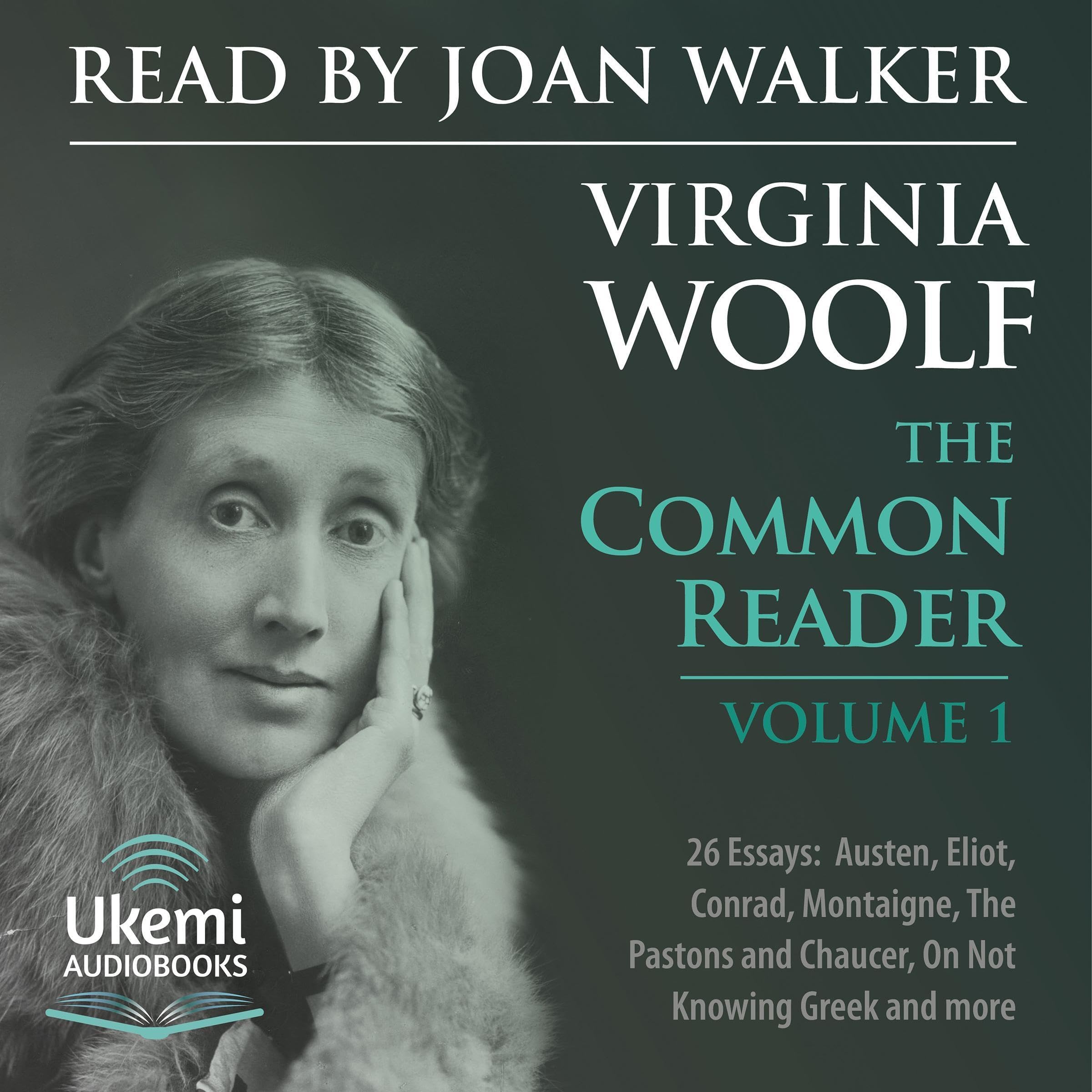

desertcart.com: The Common Reader Volume 1: 26 Essays on Jane Austen, George Eliot, Conrad, Montaigne and Others (Audible Audio Edition): Virginia Woolf, Joan Walker, Ukemi Audiobooks from W. F. Howes Ltd: Books Review: A marvellous collection of essays, 'The Common Reader', originally conceived in 1921, and referred to by Virginia Woolf as her 'Reading Book', took four years to come to fruition and first appeared in 1925, after her first three novels : 'The Voyage Out', 'Night and Day' and 'Jacob's Room' had already been published. Woolf compiled 'The Common Reader' in order to appeal to a wider reading public, and in these essays she attempts to see literature from the view point of the more ordinary reader; in her introduction, she refers to Dr Johnson and writes: " The common reader differs from the critic and the scholar...[and] reads for his own pleasure rather than to impart knowledge or correct the opinions of others." In this volume, Woolf has compiled an eclectic and wonderful collection of essays, covering medieval England, Elizabethan playwrights, Tsarist Russia, Victorian Novelists, modern essayists and more. Woolf has also included her observations and musings on the literature of the Ancient Greeks, where in 'On Not Knowing Greek' she shares with us her thoughts on Plato and Sophocles (amongst others), telling us how difficult it is for us here to think of Sophocles in "...the smoke and damp and the thick, wet mists" and compares the lightning-quick, sneering, out-of-doors manner of the Ancient Greeks with us and "...the brooding, introspective melancholy of people accustomed to living more than half the year indoors." She goes on to tell us of how there is a cruelty in Greek tragedy which is quite unlike our English brutality. In her essay: 'Jane Austen', Woolf makes some interesting observations, as she ruminates on the kind of writer Austen may have become had she lived longer; Woolf also shares with us her thoughts about Austen's unfinished 'The Watsons' where she says that the second-rate works of great writers are worth reading because they offer the best criticisms of their masterpieces. Woolf goes on to say how, although she greatly admires Jane Austen, the first chapters of 'The Watsons' show that Austen was not a prolific genius and that she was: "...one of those writers who lay their facts out rather baldly in the first version and then go back and back and back and cover them with flesh and atmosphere." In the essay 'Jane Eyre and Wuthering Heights' Woolf says that 'Wuthering Heights' is a more difficult book to understand than 'Jane Eyre', because Emily was a greater poet than Charlotte. All of which makes for very interesting and involving reading indeed, whether you agree with Virginia Woolf's ideas and opinions, or not. There is a huge amount more in this quite brilliant collection of essays written, of course, in Woolf's remarkable prose; I have the beautifully covered Harvest paperback edition and have recently downloaded this Kindle edition - but if it is the Kindle edition you are considering, please do take a look at: Complete Works of Virginia Woolf (Illustrated) I have just discovered this edition and it has absolutely everything in it, including Volumes One and Two of 'The Common Reader' and the brilliant A Writer's Diary which I reviewed in July. Although nothing can compare with the appearance, the feel and smell of a real book (I can imagine Virginia Woolf's opinion of the Kindle), to be able to have all of Woolf's work available, wherever I happen to be, is wonderful. 5 Stars. Review: sicuramente il prezzo pagato è adeguato a questa versione economica del libro, alla celerità della spedizione e all'incarto-regalo. Consigliato l'acquisto
S**B
A marvellous collection of essays, 'The Common Reader', originally conceived in 1921, and referred to by Virginia Woolf as her 'Reading Book', took four years to come to fruition and first appeared in 1925, after her first three novels : 'The Voyage Out', 'Night and Day' and 'Jacob's Room' had already been published. Woolf compiled 'The Common Reader' in order to appeal to a wider reading public, and in these essays she attempts to see literature from the view point of the more ordinary reader; in her introduction, she refers to Dr Johnson and writes: " The common reader differs from the critic and the scholar...[and] reads for his own pleasure rather than to impart knowledge or correct the opinions of others." In this volume, Woolf has compiled an eclectic and wonderful collection of essays, covering medieval England, Elizabethan playwrights, Tsarist Russia, Victorian Novelists, modern essayists and more. Woolf has also included her observations and musings on the literature of the Ancient Greeks, where in 'On Not Knowing Greek' she shares with us her thoughts on Plato and Sophocles (amongst others), telling us how difficult it is for us here to think of Sophocles in "...the smoke and damp and the thick, wet mists" and compares the lightning-quick, sneering, out-of-doors manner of the Ancient Greeks with us and "...the brooding, introspective melancholy of people accustomed to living more than half the year indoors." She goes on to tell us of how there is a cruelty in Greek tragedy which is quite unlike our English brutality. In her essay: 'Jane Austen', Woolf makes some interesting observations, as she ruminates on the kind of writer Austen may have become had she lived longer; Woolf also shares with us her thoughts about Austen's unfinished 'The Watsons' where she says that the second-rate works of great writers are worth reading because they offer the best criticisms of their masterpieces. Woolf goes on to say how, although she greatly admires Jane Austen, the first chapters of 'The Watsons' show that Austen was not a prolific genius and that she was: "...one of those writers who lay their facts out rather baldly in the first version and then go back and back and back and cover them with flesh and atmosphere." In the essay 'Jane Eyre and Wuthering Heights' Woolf says that 'Wuthering Heights' is a more difficult book to understand than 'Jane Eyre', because Emily was a greater poet than Charlotte. All of which makes for very interesting and involving reading indeed, whether you agree with Virginia Woolf's ideas and opinions, or not. There is a huge amount more in this quite brilliant collection of essays written, of course, in Woolf's remarkable prose; I have the beautifully covered Harvest paperback edition and have recently downloaded this Kindle edition - but if it is the Kindle edition you are considering, please do take a look at: Complete Works of Virginia Woolf (Illustrated) I have just discovered this edition and it has absolutely everything in it, including Volumes One and Two of 'The Common Reader' and the brilliant A Writer's Diary which I reviewed in July. Although nothing can compare with the appearance, the feel and smell of a real book (I can imagine Virginia Woolf's opinion of the Kindle), to be able to have all of Woolf's work available, wherever I happen to be, is wonderful. 5 Stars.
D**.
sicuramente il prezzo pagato è adeguato a questa versione economica del libro, alla celerità della spedizione e all'incarto-regalo. Consigliato l'acquisto
J**R
Awful condition.
S**.
If u want the complete set buy both the volumes
K**G
Highly entertaining essays on all kinds of literary topics. They're more conventional in style and tone than her later fiction, not surprisingly since they were largely published initially in periodicals. But they have the signature Woolf personal touch, often with humour and always showing insight and verve.
Trustpilot
2 months ago
1 week ago