We remain fully operational. Our teams are working around the clock to ensure your deliveries continue safely.

DOWNLOAD THE APP


Copyright © 2025 Desertcart Holdings Limited
DOWNLOAD THE APP
Buy anything from 5,000+ international stores. One checkout price. No surprise fees. Join 2M+ shoppers on Desertcart.
Desertcart purchases this item on your behalf and handles shipping, customs, and support to South Korea.
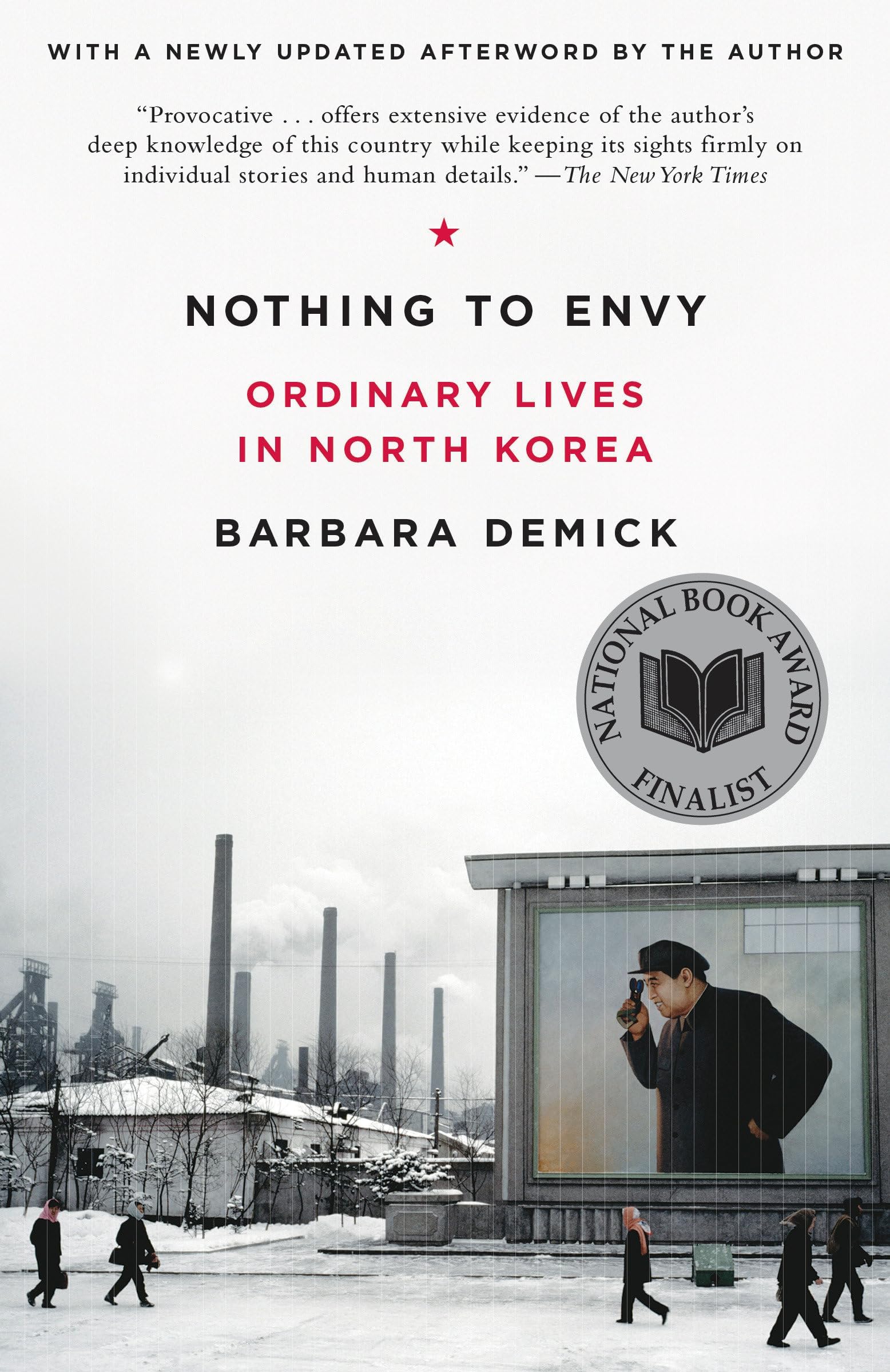
desertcart.com: Nothing to Envy: Ordinary Lives in North Korea: 9780385523912: Demick, Barbara: Books Review: A Showstopper of a Book - Many books about North Korea that I have read display the absurdity, pain, sadness, and blight existence of a nation gone rogue and gone wrong. Its blatantly obvious through these texts, histories, and other news outlets that North Korea is one of the most odd nations in surviving in a post-Communist world for so long at the cost of a miserable livelihood brought together by mismanagement, extreme repression, and an Orwellian control system. Testimonies, documentaries, and research, as well as visits to the low-key state bring about the same motifs of blind acceptance of their dear leaders, paradoxes in reality vs. what they are told, showcase capitals, and the true existence of North Koreans in the most heinous of circumstances all due to neglect. So coming to read "Nothing To Envy," I expected another matter-of-fact, been there, read that book that re-hashed these themes. Instead I was truly surprised that Barbara Demick goes beyond her journalistic tendencies to create one of the finest works on North Korea out there. If I were to recommend a book to someone who has never heard of North Korea, or is curious about it, I would drop this book on them. Demick's collection of testimonies of several recent refugees from NK, weaving them into a novel-like narrative, while dropping crucial information between each section of dialog and story, is one that she pulls off well and draws out raw emotion from the reader without getting throwing politics in it. Rather than Demick posing that North Korea is an evil state by giving her opinion like a sauce that she wants you to taste, she let's the testimonies themselves let you decide what to think, and there were times I shuddered at their former life and became thankful for what I do have, and pray for the people of North Korea. What Demick does rightly in the beginning of the book is to lay her cards on the table of how long the book took to research, interview, and compile the information together. Also, she wisely says that though she has wholesale relationships and stories from the defectors, there are moments where she cannot corroborate them because obviously it is difficult to get information from within North Korea itself. Then she begins her narrative. She runs through several refugees and their former lives, mostly from the city of Chongjin which is right near the Tumen River on the Chinese border. Demick describes a young couple, Mi-ran, coming from a low-class of North Koreans because her father was a South Korean, and her boyfriend Jun-sang whose family had come from Japan. Then she later tells the tale of Mrs. Song, a woman who was a stout believer in the Communist regime to the dotted i. She thought that nothing could go wrong with their 'eternal' leader Kim Il-sung. There's Dr. Kim, a petit trained physician with an iron will to do what is right. Demick describes these and others as normal human beings where they grow up and knew nothing else of their outside world and what they believed what was normal. In between each story and chapter Demick describes in more details/historical analysis of North Korea that gives background to each person's existence, such as the Communist nation's supposed equal status for everyone though they officially classify people based on their loyalty to the state, which has effects even on how much food rations that they could receive. Or what happened to Mi-ran's father, a former South Korean POW, and what happened to these people of circumstance who were not allowed to go back home. She describes in great detail the political state structure that creates an environment of mismanagement, like the infamous collective farms or the post-war fall of Communist regimes that led to less support of the Korean regime. Demick balances a human narrative with a historical background so that you identify with the palate of emotions these people go through while getting the necessary information of understanding their circumstances. The book climaxes with the disastrous famine that occurred around the time of Kim Il-sung's death and towards 1998. Millions died. Famine became noticeable when their food rations were cut. This is the most difficult part to read: there were moments I cringed on how hunger made people turn to beasts or opportunists at the expense of others. People of Dr. Kim's profession, a noble one, were forced to hunt in the mountains and hills for food and medicine. Or watching young children die of malnutrition. At the same time Demick doesn't write a section on blasting Kim Jong-il's regime. Yet the horror stories of lack of food and the absurdity of the government's "let's eat two meals a day" paints the worst sin a government will be ultimately judged by: inaction and neglect. At this time the author puts in a new view of how North Koreans survived, and it was at times ugly and illegal (at least according to their law), but they managed to survive. She describes Chongjin's citizens doing what it takes to trade, barter, or steal to put some substance in their bellies, even if it couldn't be digested. The section about orphans who pick up scraps off the ground was heartbreaking. The final sections of the book describe the the eventual danger and migration of the refugees out from North Korea to China to South Korea. The dangers of crossing, checkpoints of getting across to another country and their repatriation laws, surviving to the dangers of exploitation, finally to the promise land. And even there our North Korean friends we read about have more gut-wrenching moments of regret in leaving their homeland and the culture shock that follows from adjusting from state control, "you follow me" to land of opportunity. Again, one of the best reads on North Korea to date. I enjoyed reading Demick's writing style and putting together a story, not an informative, static, long newspaper article about North Korea. Its quality is renowned for good use of language, like describing the love story of Jun-sang and Mi-ran that makes you know that under the umbrella of repression and absurd rules, love abounds. How Demick describes how the darkness of night due to the lack of electricity proves to be the couple's ally in having an innocent love. Sometimes its what we don't have, or what we read others don't have, that makes us appreciate life and moves us to change for something better. Review: Demick is an amazing writer of a horrific story... - Have you ever wondered what life was like for the ordinary people of North Korea? We hear a lot about their politics and military, but very little about what life is really like there for people like you and me. This book takes a close look at a half dozen lives of ordinary North Korean citizens. The author interviews the (now) defectors and relays their stories to us as she peppers them with bits of Korean landscape and history. It's all compelling, but maddening at the same time. Demick's sole purpose of writing this book is to tell us in the masses what every day life is like in North Korea. She does exactly that in a clear, concise narrative of her subjects' lives over the course of a 15 year time period that includes the reign of Kim Il Sung and that of his son, Kim Jong Il. She is simply telling the stories of these families without any judgment at all. Just the facts are presented. As a reader though, you will judge. You will feel pity, you will be upset. I wanted to scream. But I hope the masses read it anyway. Many of the stories in this book take place in the 1990s. The 1990s! (I'm still shocked) This was a time when I was living in Chicago and living my version of the dream. It still astounds me that while I was living it up, people were living like this and not questioning it. In my lifetime. On our planet. It disgusts me. I knew nothing about North Korea before this book, other than what the news tells us. Lives there are horrific and people there are brainwashed into thinking their conditions are better than anyone else's in the world. Speaking of the world, there is no contact with it for a regular North Korean citizen. TVs and radios have all had their channel selectors welded to make only the government run channels available to residents. There is almost no electricity, very little running water and famine. Widespread famine. People do not have the luxury of meals, let alone access to the necessary food they need to live. You wouldn't believe what people there have had to do just to eat something. Adults are dying, children are dying. Demick thoughtfully interviews people of different ages, romances and education. Things that are normal to everyone, right? But, they happen in a world that is very much like Nazi Germany. With many, many rules. The maddening part of this is that many of the people of North Korea still worship "The Great Leader" or "The Marshal," as they're known, anyway. They don't know any different. They're told how evil the rest of the world is. They're constantly reminded of how poor the rest of the world is. They're even forced to keep and clean portraits of these men in their homes. (The government checks to make sure they're up and clean). At the least, their lives are a case study for brainwashing. The Great Leader forces them to work, without pay, because it's their "duty" to the Worker's party (that many of them can't be a member of anyway). He makes them wear certain types of clothes or hairstyles to make their "class" obvious to others. Class is a big thing to the North Korean leaders, and they use it to play against people constantly. It's an insane story, one that you might see in an apocalyptic movie. It is heartbreaking. It is maddening. But read it anyway. If there is any kind of happy ending to this book it's that the people Demick interviewed for it got out. Somehow they started thinking for themselves. They saw the hypocrisy. It took a lot of courage, bravery and sometimes quick thinking to literally save their lives and get out. Oh, and corrupt government "party workers" too. This might be the one time corruption may be helpful - hunger pains win over party loyalty I guess. The sad part for me is that this is all still going on for people who can't change (or don't see a reason to) their situation. I can't recommend this book enough. It's for anyone who is interested in North Korean life, international sociology, international politics or communism. This is the first book I've read on the subject, but it will not be the last. I appreciate how well this book has been written. Demick, an award winning writer AND reporter who now leads the Beijing Bureau of the Los Angeles Times, is an intelligent, gifted writer. She writes for us - the ordinary people who want to learn more. It's one of the best books I've read in 2013. But, warning: the story is horrific.


| Best Sellers Rank | #21,617 in Books ( See Top 100 in Books ) #2 in North Korean History #12 in Asian Politics #19 in Chinese History (Books) |
| Customer Reviews | 4.6 4.6 out of 5 stars (11,741) |
| Dimensions | 5.18 x 0.69 x 8 inches |
| Edition | Reprint |
| ISBN-10 | 0385523912 |
| ISBN-13 | 978-0385523912 |
| Item Weight | 2.31 pounds |
| Language | English |
| Print length | 336 pages |
| Publication date | September 21, 2010 |
| Publisher | Random House |
M**N
A Showstopper of a Book
Many books about North Korea that I have read display the absurdity, pain, sadness, and blight existence of a nation gone rogue and gone wrong. Its blatantly obvious through these texts, histories, and other news outlets that North Korea is one of the most odd nations in surviving in a post-Communist world for so long at the cost of a miserable livelihood brought together by mismanagement, extreme repression, and an Orwellian control system. Testimonies, documentaries, and research, as well as visits to the low-key state bring about the same motifs of blind acceptance of their dear leaders, paradoxes in reality vs. what they are told, showcase capitals, and the true existence of North Koreans in the most heinous of circumstances all due to neglect. So coming to read "Nothing To Envy," I expected another matter-of-fact, been there, read that book that re-hashed these themes. Instead I was truly surprised that Barbara Demick goes beyond her journalistic tendencies to create one of the finest works on North Korea out there. If I were to recommend a book to someone who has never heard of North Korea, or is curious about it, I would drop this book on them. Demick's collection of testimonies of several recent refugees from NK, weaving them into a novel-like narrative, while dropping crucial information between each section of dialog and story, is one that she pulls off well and draws out raw emotion from the reader without getting throwing politics in it. Rather than Demick posing that North Korea is an evil state by giving her opinion like a sauce that she wants you to taste, she let's the testimonies themselves let you decide what to think, and there were times I shuddered at their former life and became thankful for what I do have, and pray for the people of North Korea. What Demick does rightly in the beginning of the book is to lay her cards on the table of how long the book took to research, interview, and compile the information together. Also, she wisely says that though she has wholesale relationships and stories from the defectors, there are moments where she cannot corroborate them because obviously it is difficult to get information from within North Korea itself. Then she begins her narrative. She runs through several refugees and their former lives, mostly from the city of Chongjin which is right near the Tumen River on the Chinese border. Demick describes a young couple, Mi-ran, coming from a low-class of North Koreans because her father was a South Korean, and her boyfriend Jun-sang whose family had come from Japan. Then she later tells the tale of Mrs. Song, a woman who was a stout believer in the Communist regime to the dotted i. She thought that nothing could go wrong with their 'eternal' leader Kim Il-sung. There's Dr. Kim, a petit trained physician with an iron will to do what is right. Demick describes these and others as normal human beings where they grow up and knew nothing else of their outside world and what they believed what was normal. In between each story and chapter Demick describes in more details/historical analysis of North Korea that gives background to each person's existence, such as the Communist nation's supposed equal status for everyone though they officially classify people based on their loyalty to the state, which has effects even on how much food rations that they could receive. Or what happened to Mi-ran's father, a former South Korean POW, and what happened to these people of circumstance who were not allowed to go back home. She describes in great detail the political state structure that creates an environment of mismanagement, like the infamous collective farms or the post-war fall of Communist regimes that led to less support of the Korean regime. Demick balances a human narrative with a historical background so that you identify with the palate of emotions these people go through while getting the necessary information of understanding their circumstances. The book climaxes with the disastrous famine that occurred around the time of Kim Il-sung's death and towards 1998. Millions died. Famine became noticeable when their food rations were cut. This is the most difficult part to read: there were moments I cringed on how hunger made people turn to beasts or opportunists at the expense of others. People of Dr. Kim's profession, a noble one, were forced to hunt in the mountains and hills for food and medicine. Or watching young children die of malnutrition. At the same time Demick doesn't write a section on blasting Kim Jong-il's regime. Yet the horror stories of lack of food and the absurdity of the government's "let's eat two meals a day" paints the worst sin a government will be ultimately judged by: inaction and neglect. At this time the author puts in a new view of how North Koreans survived, and it was at times ugly and illegal (at least according to their law), but they managed to survive. She describes Chongjin's citizens doing what it takes to trade, barter, or steal to put some substance in their bellies, even if it couldn't be digested. The section about orphans who pick up scraps off the ground was heartbreaking. The final sections of the book describe the the eventual danger and migration of the refugees out from North Korea to China to South Korea. The dangers of crossing, checkpoints of getting across to another country and their repatriation laws, surviving to the dangers of exploitation, finally to the promise land. And even there our North Korean friends we read about have more gut-wrenching moments of regret in leaving their homeland and the culture shock that follows from adjusting from state control, "you follow me" to land of opportunity. Again, one of the best reads on North Korea to date. I enjoyed reading Demick's writing style and putting together a story, not an informative, static, long newspaper article about North Korea. Its quality is renowned for good use of language, like describing the love story of Jun-sang and Mi-ran that makes you know that under the umbrella of repression and absurd rules, love abounds. How Demick describes how the darkness of night due to the lack of electricity proves to be the couple's ally in having an innocent love. Sometimes its what we don't have, or what we read others don't have, that makes us appreciate life and moves us to change for something better.
S**S
Demick is an amazing writer of a horrific story...
Have you ever wondered what life was like for the ordinary people of North Korea? We hear a lot about their politics and military, but very little about what life is really like there for people like you and me. This book takes a close look at a half dozen lives of ordinary North Korean citizens. The author interviews the (now) defectors and relays their stories to us as she peppers them with bits of Korean landscape and history. It's all compelling, but maddening at the same time. Demick's sole purpose of writing this book is to tell us in the masses what every day life is like in North Korea. She does exactly that in a clear, concise narrative of her subjects' lives over the course of a 15 year time period that includes the reign of Kim Il Sung and that of his son, Kim Jong Il. She is simply telling the stories of these families without any judgment at all. Just the facts are presented. As a reader though, you will judge. You will feel pity, you will be upset. I wanted to scream. But I hope the masses read it anyway. Many of the stories in this book take place in the 1990s. The 1990s! (I'm still shocked) This was a time when I was living in Chicago and living my version of the dream. It still astounds me that while I was living it up, people were living like this and not questioning it. In my lifetime. On our planet. It disgusts me. I knew nothing about North Korea before this book, other than what the news tells us. Lives there are horrific and people there are brainwashed into thinking their conditions are better than anyone else's in the world. Speaking of the world, there is no contact with it for a regular North Korean citizen. TVs and radios have all had their channel selectors welded to make only the government run channels available to residents. There is almost no electricity, very little running water and famine. Widespread famine. People do not have the luxury of meals, let alone access to the necessary food they need to live. You wouldn't believe what people there have had to do just to eat something. Adults are dying, children are dying. Demick thoughtfully interviews people of different ages, romances and education. Things that are normal to everyone, right? But, they happen in a world that is very much like Nazi Germany. With many, many rules. The maddening part of this is that many of the people of North Korea still worship "The Great Leader" or "The Marshal," as they're known, anyway. They don't know any different. They're told how evil the rest of the world is. They're constantly reminded of how poor the rest of the world is. They're even forced to keep and clean portraits of these men in their homes. (The government checks to make sure they're up and clean). At the least, their lives are a case study for brainwashing. The Great Leader forces them to work, without pay, because it's their "duty" to the Worker's party (that many of them can't be a member of anyway). He makes them wear certain types of clothes or hairstyles to make their "class" obvious to others. Class is a big thing to the North Korean leaders, and they use it to play against people constantly. It's an insane story, one that you might see in an apocalyptic movie. It is heartbreaking. It is maddening. But read it anyway. If there is any kind of happy ending to this book it's that the people Demick interviewed for it got out. Somehow they started thinking for themselves. They saw the hypocrisy. It took a lot of courage, bravery and sometimes quick thinking to literally save their lives and get out. Oh, and corrupt government "party workers" too. This might be the one time corruption may be helpful - hunger pains win over party loyalty I guess. The sad part for me is that this is all still going on for people who can't change (or don't see a reason to) their situation. I can't recommend this book enough. It's for anyone who is interested in North Korean life, international sociology, international politics or communism. This is the first book I've read on the subject, but it will not be the last. I appreciate how well this book has been written. Demick, an award winning writer AND reporter who now leads the Beijing Bureau of the Los Angeles Times, is an intelligent, gifted writer. She writes for us - the ordinary people who want to learn more. It's one of the best books I've read in 2013. But, warning: the story is horrific.
J**N
intriguing and incredible opening to the lives of ordinary North Koreans
The book follows the story of a few lives of people who were born and started life in North Korea and eventually, after years of social and economic deterioration struggle to survive, made the sacrifices and decisions to live in a free world. The progression of the state of the country, the people, and the economy is well represented. The personal accounts of the politics, the culture, and ultimately, the large amount of people starving to death and lack of food in general in the country is shocking and gut wrenching. Countries have sent so much aid to no avail and yet it is a country that continues to close off to the rest of the world. It took a couple chapters to warm up but soon I was intrigued and wanted to keep reading. The subject is very relevant today in 2013 and the insights, perspectives, and feelings offer a wide perspective. I would highly recommended read for anyone into current events and searching for a better understanding of the political, economical, and cultural exploration and discovery. I found the stories a bit thrilling at times and sobering and solemn in following along with the stories and lives of real people, some of whom eventually who got out. The perspective is someone outside of the inner and closely knit circles of conversation and only touches on Korean culture and behaviorism but still an admirable reporting and account of stories put together to form a picture of North Korean lives and living from an objective perspective.
A**A
The book starts with an almost optimistic tone to it. While life is obviously far from ideal, people find ways to find joy and meaning in life. As the book progresses and covers the “Arduous March” the book takes a dark turn real quick. Any thoughts of how you could see yourself perhaps living a restrictive, but also a content life are quickly squashed. The book provides an accurate and nuanced insight into life in North Korea, doing so while telling the moving stories of the defectors that were interviewed for this book. I could not help but feel guilty everytime I’d get a glass of water from the tap, or take some fruit from the fridge to eat while reading about the horrible reality during the famine.
A**S
Interesting
Z**A
Un of the Most interesting Book ever.
F**R
I wish we could help them somehow! A VERY interesting read - and currently so relevant (as they point their weapons in our direction...) The author introduces us to several families and we get to know their struggles well. Most shocking: these events occurred while I was growing up safe and snug in Canada and worrying about hairstyles and home decor! The author cleverly weaves their stories seamlessly with the politics of the country and of the rest of the world in recent history - often jolting me to awareness with such recent dates that I only associated with things such as college in the 90's, my first job - all my glorious freedom to worry about stupid things. At times the book reads like a spy thriller full of danger and betrayal; At other times, like a tragic romance novel. The many details about everyday life and human ingenuity give light to shocking insight into human behavior (read "Life of Pi" before we judge the survival instinct), social structure, abusive government control, and systemic abuse. Difficult to read at times, but SO rewarding (a great book to toss at any discontented teenager for a quick lesson in gratitude for what we have and what we have the responsibility to protect). Makes me want to re-read V. Frankl's "Man's Search for Meaning". And by the way: is anybody going to do anything about this? I thought we cared about human rights...I guess it's too bad there isn't any oil in North Korea or we'd have beaten the Russians there and prevented this whole mess. *despondently rolling my eyes*
C**E
I would recommend this book to all those people that in spite of having good, job, family members all together still complains about life. There are horrible things happenning to some people around the world that we can't imagine.
Trustpilot
2 days ago
1 month ago