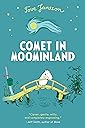
Comet in Moominland (Moomins, 1)
Product ID: 2223188
Desertcart purchases this item on your behalf and handles shipping, customs, and support to South Korea.
If you haven’t met a Moomin yet, you’re missing the most magical fun! Perfect for readers of all ages, join the beloved, world-famous characters of Moominvalley on an unforgettable adventure in Comet in Moominland ―includes black-and-white illustrations throughout. “Genius.” ―Philip Pullman “Clever, gentle, witty, and completely engrossing.” ―Jeff Smith, author of Bone When Moomintroll learns that a comet will be passing by, he and his friend Sniff travel to a mountain observatory to consult the Professors. Along the way, they have many adventures, but the greatest adventure of all awaits them when they learn that the comet is headed straight for their home in Moominvalley. In the 80 years since the first Moomin novel appeared, Tove Jansson’s timeless stories have continued to captivate audiences across the globe with their adventure, humor, and endless wisdom. Whether you’re a lifelong fan or a first-time visitor to Moominvalley, these classic books are a must-have for anyone who wishes the world was a bit more magical. The original Moomin novels by Tove Jansson: ● Comet in Moominland ● Finn Family Moomintroll ● Moominpappa’s Memoirs ● Moominsummer Madness ● Moominland Midwinter ● Tales from Moominvalley ● Moominpappa at Sea ● Moominvalley in November Books for the littlest Moomin fans, up to 3 years old: ● Moomin’s Lift the Flap Hide and Seek: with Big Flaps for Little Hands ● Moomin’s Little Book of Numbers ● Moomin’s Little Book of Words Review: Good, Wholesome, Exciting Fun for Younger Audiences - Oh, where to begin?! This book, and the others in the Moomin series (though I haven't read ALL of them, I can only surmise that the ones I haven't read are similar in greatness) are just wonderful. I am the mother of a bright six-year-old who has enjoyed having chapter books read to her since she was two. It has at times been difficult to find chapter books that meet my exacting discrimination. There are a few things that I look for (or look to make sure they aren't there) in these types of books, to wit: 1) Well-written. I want there to be good sentence structure, good grammar, and VOCABULARY. Many writers of young people's fiction tend to write down to the child's level; I believe that the child can rise to the level of the book's writing (obviously, to an extent - I wouldn't expect my kindergartner to understand Crime and Punishment ). And leave the slang, out please. 2) Timelessness. I am not interested in books that refer to pop culture, technology, current events, etc. Even books that were written eighty years ago, such as Swallows and desertcarts (Godine Storyteller) , can be utterly relevant, if they are focused on character and adventure instead of iPads and Justin Beiber (whoever he is). 3) Gentleness, Respect. I wouldn't want my child to hang out with an ill-behaved, discourteous, mean-spirited little brat, would you? So why spend time with them in books? For the life of me, I can't understand why anyone would want to read (or let their children read) something like Junie B. Jones and the Stupid Smelly Bus (Junie B. Jones, No. 1) , in which this utterly obnoxious child uses the word "stupid" about forty times on each page and is so rude and disrespectful to everyone around her that I couldn't get further than ten pages in before I threw the book away. Gag! Hey, writers - this is not funny! If you want to portray "real" children (who are by no means always walking around with their little halos saying "Yes, ma'am") and you want to be funny about it, take a lesson from Beverly Cleary in The Ramona Collection, Vol. 1: Beezus and Ramona / Ramona the Pest / Ramona the Brave / Ramona and Her Father [4 Book Box set ]. She manages to convey the reality of being (and parenting) a spirited child without making her character into an antagonist into the bargain. 4)Adventure, Excitement. Not much to add here. The plot has to keep moving. Often, this is best accomplished in books for younger children by making the book into a series of adventures, each one getting resolved as the book goes on. Well, "Comet in Moominland" has all of that and more (as does Finn Family Moomintroll (Moomintrolls) , book 2 in the series. The characters are all individual, unique "people" (imaginary creatures) with very distinct, yet believeable personalities. The main characters (Moomintroll, Sniff, the Snork and the Snork Maiden, possibly Snufkin) are all "children", and there are "adult" figures that come and go throughout the book as well, and they have a high degree of freedom. For example, when Moomintroll and Sniff (a small, treasure-obsessed animal reminding me somewhat of a rather feistier version of Piglet in The World of Pooh: The Complete Winnie-the-Pooh and The House at Pooh Corner (Pooh Original Edition) ) decide to go out on an adventure to the tallest mountain in the world, Moominmamma simply packs them a lunch and their "woolly trousers" and bids them farewell. It's fantasy fiction at its best, but for the 4-to-8 set. (Of course, adult lovers of juvenile fiction will adore the Moomins and the world Tove Janssen has created here.) This book has mystery, dangerous creatures, daring rescues, treasure, peril, friendship and delight by the bucketload. The dialog is superlative, the humor is wry and witty (and yet fully accessibly to children), and the meanness is kept to a minimum: the Snork can get a little snarky, and characters do occasionally tell one another to "shut up", which is unpleasant, but for this reader, those things were a small part of it, and served as "teachable moments" ("Gee, the Snork isn't acting very nice, is he?" and so forth). I highly recommend this book, and the next one in the series, and probably the rest of them as well, although I haven't read those yet. If desertcart had SIX stars, Comet in Moominland would get them all from me! (And my kid loves it too! She even ASKS to go to bed earlier so that we have more time to read!) Review: The Muskrat will find it unnecessary, but almost no one else will... Moomin-mania is no mystery - Most great children's literature wasn't written strictly for children. Think of A. A. Milne, L. Frank Baum, E.B. White, Dr. Seuss, Wanda Gag, Daniel Pinkwater and of course Tove Jansson. All of these authors share the ability to write books that not only appeal to children and young adults, but also to fully grown adults. Tove Jansson's Moomins remain Scandanavian icons to this day. Though not as immediately recognized in the United States as in some other countries, a Moomin renaissance of sorts has occurred in 2006 following Drawn and Quarterly's publication of the complete Moomin comic strips that ran from 1954 to 1974. A series of books predated these strips and after an initial flop, "The Moomins and the Great Flood" in 1945, Moomin-mania finally took the world by storm in 1946 with the unforgettable "Comet in Moominland." Though Jansson ceased the series in 1970, the momentum never let up. Moomin operas, animated television shows and even a theme park followed. Jansson, who would have turned 100 this year, passed away in 2001 as the Moomins continued to capture the imaginations of new generations. Anyone who reads "Comet in Moominland" will quickly discover the appeal of these marshmallowly hippopotamus-like creatures. Their strong personalities, endless curiosity and intrepid adventurousness take them and their friends everywhere, even into grisly danger. Things begin as Sniff, a ratlike creature that shares some of Piglet's traits, finds a mysterious path leading to somewhere so potentially interesting that he has to run and tell Moomintroll. Here they meet the silk monkey and eventually find a cozy cave. One night during a rain, Moominpapa lets in the muskrat, a pensive philosopher who claims to "sit and think about how unnecessary everything is." He tells of dark forebodings and of something "horrible and unnecessary" that will happen. All the while the Moomintroll, Sniff and the Silk-Monkey keep encountering symbols resembling stars with tails. The muskrat tells them of comets and that the Professors in the Observatory on the Lonely Mountains would know something about whether the comet would strike earth. Thus begins a grand Odyssean tale that leads them to aggressive crocodiles, Snufkin, a giant lizard, a deep watery hole, Hemulens who collect obsessively, a giant eagle and finally to the cigarette-laden Observatory (the professors like to smoke, how so 20th century). When they find out the comet will arrive in a short number of days, they head back home because "Moominmama," the matriarch, "will know what to do." Along the way Moomintroll saves a lovely Snork Maiden from a poisonous plant, they manage to buy items in a strange store despite the fact that they don't have a cent, they attend a dance lit by glow worms, cross the dried up ocean with stilts, nearly escape an octopus and arrive in Moominland just as everyone flees in terror away from it. Throughout, the comet looms over everything in a creepy, ominous way. It gets larger and larger and more and more intense. Yikes. Not to give anything away, but the comet does come to Moominland, Sniff spills his coffee, the cave really comes in handy and the Muskrat sits on the cake, though it was unnecessary anyway. Other things happen too, of course, such as the ending, but one must consult the book for succor. All along, the story moves with the pace of a hummingbird's heart and will even keep adults, supposedly secure in their maturity and dignified vintage, enraptured. Incredible fun. This series by Square Fish begins with "Comet in Moominland," even though it's technically the second Moomin book. The beginning even references the flood from the real first book "(which is another story)". But the spine has a "1" on it, signifying the first book. Go figure. The details probably lie outside of most people's pay scales, but, in any case, seven more Moomin books follow "Comet in Moominland," all equally acclaimed. They encompass adventure, morality, love, family, happiness, dread, philosophy, doom, insights into humanity, humor, sadness and just life in general treated in a fantastically addictive yet serious cartoony manner. Moomin-mania is no mystery.
| Best Sellers Rank | #29,671 in Books ( See Top 100 in Books ) #748 in Children's Classics #1,131 in Fantasy for Children #1,492 in Children's Action & Adventure Books (Books) |
| Customer Reviews | 4.8 out of 5 stars 1,274 Reviews |
M**R
Good, Wholesome, Exciting Fun for Younger Audiences
Oh, where to begin?! This book, and the others in the Moomin series (though I haven't read ALL of them, I can only surmise that the ones I haven't read are similar in greatness) are just wonderful. I am the mother of a bright six-year-old who has enjoyed having chapter books read to her since she was two. It has at times been difficult to find chapter books that meet my exacting discrimination. There are a few things that I look for (or look to make sure they aren't there) in these types of books, to wit: 1) Well-written. I want there to be good sentence structure, good grammar, and VOCABULARY. Many writers of young people's fiction tend to write down to the child's level; I believe that the child can rise to the level of the book's writing (obviously, to an extent - I wouldn't expect my kindergartner to understand Crime and Punishment ). And leave the slang, out please. 2) Timelessness. I am not interested in books that refer to pop culture, technology, current events, etc. Even books that were written eighty years ago, such as Swallows and Amazons (Godine Storyteller) , can be utterly relevant, if they are focused on character and adventure instead of iPads and Justin Beiber (whoever he is). 3) Gentleness, Respect. I wouldn't want my child to hang out with an ill-behaved, discourteous, mean-spirited little brat, would you? So why spend time with them in books? For the life of me, I can't understand why anyone would want to read (or let their children read) something like Junie B. Jones and the Stupid Smelly Bus (Junie B. Jones, No. 1) , in which this utterly obnoxious child uses the word "stupid" about forty times on each page and is so rude and disrespectful to everyone around her that I couldn't get further than ten pages in before I threw the book away. Gag! Hey, writers - this is not funny! If you want to portray "real" children (who are by no means always walking around with their little halos saying "Yes, ma'am") and you want to be funny about it, take a lesson from Beverly Cleary in The Ramona Collection, Vol. 1: Beezus and Ramona / Ramona the Pest / Ramona the Brave / Ramona and Her Father [4 Book Box set ]. She manages to convey the reality of being (and parenting) a spirited child without making her character into an antagonist into the bargain. 4)Adventure, Excitement. Not much to add here. The plot has to keep moving. Often, this is best accomplished in books for younger children by making the book into a series of adventures, each one getting resolved as the book goes on. Well, "Comet in Moominland" has all of that and more (as does Finn Family Moomintroll (Moomintrolls) , book 2 in the series. The characters are all individual, unique "people" (imaginary creatures) with very distinct, yet believeable personalities. The main characters (Moomintroll, Sniff, the Snork and the Snork Maiden, possibly Snufkin) are all "children", and there are "adult" figures that come and go throughout the book as well, and they have a high degree of freedom. For example, when Moomintroll and Sniff (a small, treasure-obsessed animal reminding me somewhat of a rather feistier version of Piglet in The World of Pooh: The Complete Winnie-the-Pooh and The House at Pooh Corner (Pooh Original Edition) ) decide to go out on an adventure to the tallest mountain in the world, Moominmamma simply packs them a lunch and their "woolly trousers" and bids them farewell. It's fantasy fiction at its best, but for the 4-to-8 set. (Of course, adult lovers of juvenile fiction will adore the Moomins and the world Tove Janssen has created here.) This book has mystery, dangerous creatures, daring rescues, treasure, peril, friendship and delight by the bucketload. The dialog is superlative, the humor is wry and witty (and yet fully accessibly to children), and the meanness is kept to a minimum: the Snork can get a little snarky, and characters do occasionally tell one another to "shut up", which is unpleasant, but for this reader, those things were a small part of it, and served as "teachable moments" ("Gee, the Snork isn't acting very nice, is he?" and so forth). I highly recommend this book, and the next one in the series, and probably the rest of them as well, although I haven't read those yet. If Amazon had SIX stars, Comet in Moominland would get them all from me! (And my kid loves it too! She even ASKS to go to bed earlier so that we have more time to read!)
E**K
The Muskrat will find it unnecessary, but almost no one else will... Moomin-mania is no mystery
Most great children's literature wasn't written strictly for children. Think of A. A. Milne, L. Frank Baum, E.B. White, Dr. Seuss, Wanda Gag, Daniel Pinkwater and of course Tove Jansson. All of these authors share the ability to write books that not only appeal to children and young adults, but also to fully grown adults. Tove Jansson's Moomins remain Scandanavian icons to this day. Though not as immediately recognized in the United States as in some other countries, a Moomin renaissance of sorts has occurred in 2006 following Drawn and Quarterly's publication of the complete Moomin comic strips that ran from 1954 to 1974. A series of books predated these strips and after an initial flop, "The Moomins and the Great Flood" in 1945, Moomin-mania finally took the world by storm in 1946 with the unforgettable "Comet in Moominland." Though Jansson ceased the series in 1970, the momentum never let up. Moomin operas, animated television shows and even a theme park followed. Jansson, who would have turned 100 this year, passed away in 2001 as the Moomins continued to capture the imaginations of new generations. Anyone who reads "Comet in Moominland" will quickly discover the appeal of these marshmallowly hippopotamus-like creatures. Their strong personalities, endless curiosity and intrepid adventurousness take them and their friends everywhere, even into grisly danger. Things begin as Sniff, a ratlike creature that shares some of Piglet's traits, finds a mysterious path leading to somewhere so potentially interesting that he has to run and tell Moomintroll. Here they meet the silk monkey and eventually find a cozy cave. One night during a rain, Moominpapa lets in the muskrat, a pensive philosopher who claims to "sit and think about how unnecessary everything is." He tells of dark forebodings and of something "horrible and unnecessary" that will happen. All the while the Moomintroll, Sniff and the Silk-Monkey keep encountering symbols resembling stars with tails. The muskrat tells them of comets and that the Professors in the Observatory on the Lonely Mountains would know something about whether the comet would strike earth. Thus begins a grand Odyssean tale that leads them to aggressive crocodiles, Snufkin, a giant lizard, a deep watery hole, Hemulens who collect obsessively, a giant eagle and finally to the cigarette-laden Observatory (the professors like to smoke, how so 20th century). When they find out the comet will arrive in a short number of days, they head back home because "Moominmama," the matriarch, "will know what to do." Along the way Moomintroll saves a lovely Snork Maiden from a poisonous plant, they manage to buy items in a strange store despite the fact that they don't have a cent, they attend a dance lit by glow worms, cross the dried up ocean with stilts, nearly escape an octopus and arrive in Moominland just as everyone flees in terror away from it. Throughout, the comet looms over everything in a creepy, ominous way. It gets larger and larger and more and more intense. Yikes. Not to give anything away, but the comet does come to Moominland, Sniff spills his coffee, the cave really comes in handy and the Muskrat sits on the cake, though it was unnecessary anyway. Other things happen too, of course, such as the ending, but one must consult the book for succor. All along, the story moves with the pace of a hummingbird's heart and will even keep adults, supposedly secure in their maturity and dignified vintage, enraptured. Incredible fun. This series by Square Fish begins with "Comet in Moominland," even though it's technically the second Moomin book. The beginning even references the flood from the real first book "(which is another story)". But the spine has a "1" on it, signifying the first book. Go figure. The details probably lie outside of most people's pay scales, but, in any case, seven more Moomin books follow "Comet in Moominland," all equally acclaimed. They encompass adventure, morality, love, family, happiness, dread, philosophy, doom, insights into humanity, humor, sadness and just life in general treated in a fantastically addictive yet serious cartoony manner. Moomin-mania is no mystery.
T**S
Normalcy and Empathy in the Face of Impending Doom...For Kids!
I recently got into the Moomin Book Series because I needed a break from all the doom and gloom of the usual suspense and horror novels I've read since I was a child. So naturally I picked up a book about a comet hurtling towards Moominland. Of course, it was a lot more than that. It's also about going on adventures, meeting new friends, encountering foes, and more! The story starts with Moomintroll and his friend Sniff going on a pearl-diving adventure and coming across a secret cave where they store the pearls. They come back the next day to find said pearls arranged in the shape of a star with a tail. The ominous patterns start to appear everywhere, from the trails of ants and birds to pears arranged into the very same shape. Moomintroll goes to the Philosopher Muskrat to find out what these symbols mean, to which the Muskrat informs him that a star with a tail is a comet and for all they knew, it could be heading towards them. Or not, as it's "all the same to someone who knows everything is unnecessary". This leads Moomintroll out on an adventure to see the Observatory on the Lonely Mountains and learn when the comet is destined to hit the Earth. Along the way they meet the careless wanderer Snuffkin and encounter crocodiles, a giant lizard guarding treasure, perilous underground rivers, an enormous eagle before they even get to the observatory! There, they found out the exact date and time when the comet will hit the Earth and from then on it's a rush back to Moominvalley to warn their family and friends. What surprised me the most about this book wasn't the rather grim topic of apocalyptic destruction but rather how the characters reacted to the knowledge of it. There never seems to be any outright panic like you see in movies. At least not from the main characters. There is a scene of characters moving their belongings and even whole homes out of the path of the comet. Moomintroll, Snuffkin, Sniff, and the Snorks do try to get back home quickly but they still make time to attend a party in the forest and visit a store! The air grows hotter, the flowers and leaves shrivel and the sea almost completely dries up. The morale of the characters doesn't seem to waver much, even under the menacing heat of the approaching comet and the changing landscape, as they still try to have fun when they can along their journey. I read this during the height of a certain global event, when I was feeling especially cut off from friends and family. When Moomintroll thinks about how much he'll miss things like the forest and the sea and tries not to worry, telling himself that his Momma will know what to do, I shed a few tears. There is strength in community and power in empathy. The goodnatured Moomintroll meets all new friends with humble openness, whether its the cantankerous, nihilistic Muskrat or the obsessive and uptight Hemulens. I would recommend this book for adults as much as I would children as the themes and lessons one can gain from a book like this spans generations. To treat other's with kindness and humanity, even in frightening and divisive times. The importance of remaining calm and helping those in need. And the love and support of family and friends. The writing is timeless and the illustrations are fantastic and silly and even gorgeous! And that's why I'm giving this story Five Stars with Tails out of Five!
T**S
Melancholy hippos and their friends confront the end of the world
I love reading to my children and hope that they will love to read all the days of their lives. Children's literature can be particularly enjoyable for adults and when it is done well it has its therapeutic qualities. Tove Jansson spins a tale of impending catastrophe and conjure the most sensitive emotions from adorable creatures that refuse to give up in the face of doom. Along the way they encounter all sorts of attitudes toward the world. The philosophers find almost everything unnecessary. The scholars obsess about minutiae. The poets rejoice in their impoverished freedom. Moomintroll (an innocent child) is in love with the beautiful Snork Maiden and feels sorrow at the loss of all of the lovely moments nature has to offer, yet he has faith that his mother will know how to save the world. This book explores the emotional landscape of being human. I worked on developing a k-12 literature, poetry, and writing curriculum, and I remember our director wanted to steer away from this rich emotional landscape. It seemed to be from an unarticulated fear that confronting the emotions of the human condition in this melancholy Scandinavian articulation might cause harm to his children. For whatever reason this attitude reminded me of the dilemma facing the father of the Buddha. It was prophesied his son would either become a great king or a great sage. His father feared his son becoming a sage so he did everything in his power to try to make certain his son would follow the path of a great king. In the end, his son became the Buddha. The Moomintroll books contain the spirit that reflects upon our tenuous and sincere connections to this world. The prominence of characters who represent all of the materially unprofitable pursuits of the human condition reveals the priority the books put upon the life of the spirit. This spiritual content makes the books rewarding for adults even as the adventures of the book grip the imagination of children. I love the Moomintrolls because of this combination of elements.
C**C
book vs edition
Best book ever; not the best paperback edition
D**T
Excellent Book for the whole family!!!
I first read Moomin when I was 6 years old. I am now 32 and still own the copy I read as a child. Moreover, I occasionally re-read it to comfort myself, when I want to feel cosy and positive. The Moomin characters are kind and goodhearted, they are adventurous and loyal to their friends. The Moomin family welcomes every guest, friend or neighbour into their home, they accept and embrace everyone oddities and offer every newcomer comfort, cookies, warm milk and a bit of constant adventure. This book has no malice in it, and non of the contemporary commercialism or greed. But it has plenty of what every kid needs: adventure, friendship and good heart. If your kids are anywhere between 5 and 12 you can wholeheartedly entrust them into the hands of the Moomins. This is really the best book one can get as a present. I think this is the first instalment of the Moomin stories. Moomin and his friend set off to an observatory in far away mountains in order to learn whether a Comet will crash into their favourite valley. On the road they meet adventures, challenges, strange creatures and make new friends. Will they make it home on time to warn everyone and take precaution against the comet? Will the comet crash into Moomin- valley? The readers are invited to hold tight as they follow Moomin, Snufkin and Sniff on a trip of adventures, exploration and friends making.
R**R
Wonderful Book
After years of eyeing the Moomins, I finally bit the bullet and bought Book One. And Im glad I did, because it was a delightful book. In fact I liked it so much I bought the Flood prequel and a full set of the eight books soon after. I will keep this one for lending. The prose itself is superb and at times very funny. The little girls story at the bonfire made me genuinely laugh out loud and it was a magical moment. Cant recommend enough! Also, no damage at all, arrived promptly 👍
M**I
Charming!
I can recommend this book for children or young adults. But even adults can enjoy. The story is simple, and you can enjoy Moomintroll and his friends go on a journey and find news about the coming comet. He also encounters many charming characters, and he makes friends. I cannot wait to try next book from the series.
L**A
and enjoy the story as something like an innocent romp
I do smile when people surprised by the darkness of Tove Jansson's final novel, Moominvalley in November, invoke this story as its antithesis and a light and cheerful Moomin story. It's a parable, as far as I can make out, for life under the early years of the newly realized threat of global nuclear annihilation: Moomintroll and Sniff discover that the earth lies in the path of a rapidly approaching comet that will destroy the planet, and the book documents their quest to grasp the threat and then, with ample helpings of pathos, their flight back home in hopes that Moominmamma will somehow make it all okay. So if you discount the threat of the imminent fiery destruction of the world, then sure, it's a lighthearted bedtime read. The thing is, the nature of Jansson's incredible writing is such that you actually almost CAN discount that threat, and enjoy the story as something like an innocent romp. It's punctuated with ample humour and plenty of derring-do, midsummer-night's dances and shopping expeditions. The characters are constantly distracted from the horror that threatens to overwhelm them, by the simple joys of life: Moomintroll snaps out of his torpor when he meets and falls immediately head over heels for the secretly rather capable Snork Maiden, the fearful Sniff is happy so long as there's a get-rich-quick scheme somewhere on the horizon, pedantry is its own reward for the pernickety Snork and even Snufkin, the closest the series has to a straight man, can set his growing dread aside for long enough to play harmonica for the tree-spirits. This is part of Tove Jansson's genius: her writing holds in tension genuine darkness and a boundless, bubbling joy, two sides of life, never allowing one to obliterate the other, never tempted to say that one is real and the other an illusion. Yes, this story has a happy ending, and it's full of the signature optimism and the loving handling of its characters' flaws that are the series's hallmark. Yes, Sniff totally fights a dragon (well, giant lizard) and there's plenty of lemonade and a fuddled Hemulen. But if this is the lighthearted end of the series's spectrum, that's just to illustrate how deep these books go. Anyway. My five-year-old loved it for the adventuring and exploring -- I don't want to make it sound as though the existential horror is laid on thick, or anything. But it's maybe the first bedtime story series that I've been as rapt with as she was.
J**E
My son is enjoying reading it
I would highly recommend this beautiful book to kids of all ages.
B**E
Comet in Moominland
It's the author's early work. Now I have the whole collection.
D**S
Marvelous story
My favourite books from childhood. Reading them again takes me back to summer holidays, freedom and adventures.
S**N
Ein zauberhaftes Abenteuer – Ein Muss für Mumin-Fans!
Comet in Moominland von Tove Jansson ist ein zeitloser Klassiker, der Leser jeden Alters in die magische Welt der Mumins entführt. Diese Collector’s Edition ist besonders schön gestaltet, mit liebevollen Illustrationen und hochwertigem Einband – ein echtes Schmuckstück für jede Sammlung. Die Geschichte selbst ist spannend und herzerwärmend zugleich. Die Reise von Mumin und seinen Freunden, um der herannahenden Gefahr eines Kometen zu begegnen, ist voller Charme, Witz und Lebensweisheit. Janssons einzigartige Fähigkeit, tiefe Themen auf eine leichte und poetische Weise zu behandeln, macht dieses Buch zu etwas ganz Besonderem. Perfekt für Fans der Reihe und für alle, die Märchen mit Tiefgang lieben. Absolut empfehlenswert!
Trustpilot
2 weeks ago
1 month ago