
DOWNLOAD THE APP


Customer Services
Copyright © 2025 Desertcart Holdings Limited
DOWNLOAD THE APP
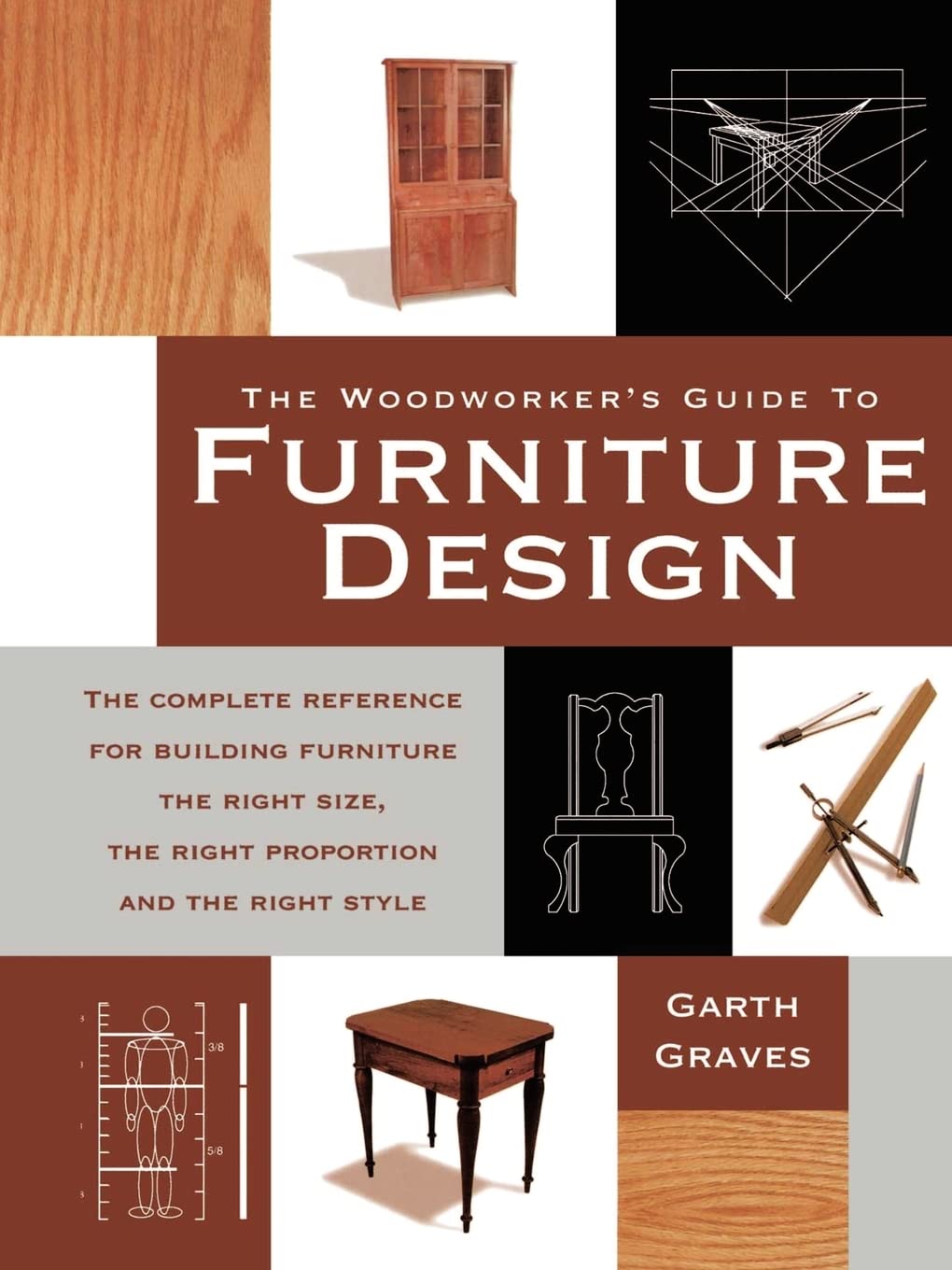
Woodworker's Guide To Furniture Design Pod Edition [Graves, Garth] on desertcart.com. *FREE* shipping on qualifying offers. Woodworker's Guide To Furniture Design Pod Edition Review: Amazing - Great Review: Very Helpful Book - If you are just starting out to design your own furniture you will find this book very helpful. It covers design from start to finish and provides a lot of thoughtful background info as well.
| Best Sellers Rank | #690,252 in Books ( See Top 100 in Books ) #163 in Furniture Design (Books) #733 in Woodworking Projects (Books) #26,985 in Crafts & Hobbies (Books) |
| Customer Reviews | 4.4 4.4 out of 5 stars (18) |
| Dimensions | 8.2 x 0.5 x 10.9 inches |
| ISBN-10 | 1558706402 |
| ISBN-13 | 978-1558706408 |
| Item Weight | 1.15 pounds |
| Language | English |
| Print length | 228 pages |
| Publication date | January 1, 2002 |
| Publisher | Penguin Random House LLC (F&w Media) |
E**Z
Amazing
Great
G**Q
Very Helpful Book
If you are just starting out to design your own furniture you will find this book very helpful. It covers design from start to finish and provides a lot of thoughtful background info as well.
K**E
I loved this book
I loved this book. I do woodworking on the weekends and consider myself reasonably good. But after reading this book I realized what was missing from my designs. I applied the principles described and now I really like them (and so does everyone else).
E**Y
Damaged
Book arrived with a damaged cover.
M**V
The title is misleading...
because it has a fair portion of material that a woodworker should already know--unless you define woodworker as someone who picked it up as a hobby yesterday. This book should be helpful to someone who is intelligent, thorough, has good research skills, knows very little woodworking theory, and has only basic knowledge of the process of design. In fact, this book is all about the design process as applied to making furniture. The author tells you everything you need to think about--the specific purpose for your project, ergonomics, matching existing decor, etc.--but does not tell you at all WHAT to think. For example, he tells you to develop good proportions and gives a good introduction to the golden ratio; but he doesn't go any further than that. You'll be told the most basic info about styles like Shaker, Period, etc., but it's up to you to get books that give you the specifics about those styles. Pay attention to the colour of your piece, but to know the principles you'll have to go and learn colour theory on your own. Don't look here for principles of visual hierarchy, line, negative space, etc.; do your own research. The book is something of a road map to open-ended problem-solving in a wood furniture making context: it tells you about all the places you should go and see, as well as a little about them; but you'll have to go get other books to really learn anything meaningful on each of those topics. A very valuable guide if you don't know all the factors to consider when designing something; mostly redundant if you already do.
J**.
This is another good book that my husband is always browsing. If I continue to buy books like this he will have to make me a bookcase. 'No problem ', says HIM OUTDOORS.
M**V
because it has a fair portion of material that a woodworker should already know—unless you define woodworker as someone who picked it up as a hobby yesterday. This book should be helpful to someone who is intelligent, thorough, has good research skills, knows very little woodworking theory, and has only basic knowledge of the process of design. In fact, this book is all about the design process as applied to making furniture. The author tells you everything you need to think about—the specific purpose for your project, ergonomics, matching existing decor, etc.—but does not tell you at all WHAT to think. For example, he tells you to develop good proportions and gives a good introduction to the golden ratio; but he doesn't go any further than that. You'll be told the most basic info about styles like Shaker, Period, etc., but it's up to you to get books that give you the specifics about those styles. Pay attention to the colour of your piece, but to know the principles you'll have to go and learn colour theory on your own. Don't look here for principles of visual hierarchy, line, negative space, etc.; do your own research. The book is something of a road map to open-ended problem-solving in a wood furniture making context: it tells you about all the places you should go and see, as well as a little about them; but you'll have to go get other books to really learn anything meaningful on each of those topics. A very valuable guide if you don't know all the factors to consider when designing something; mostly redundant if you already do.
A**S
ok
Trustpilot
5 days ago
1 month ago