We remain fully operational. Our teams are working around the clock to ensure your deliveries continue safely.

DOWNLOAD THE APP


Copyright © 2025 Desertcart Holdings Limited
DOWNLOAD THE APP


Buy anything from 5,000+ international stores. One checkout price. No surprise fees. Join 2M+ shoppers on Desertcart.
Desertcart purchases this item on your behalf and handles shipping, customs, and support to South Korea.
🌍 Rediscover the Wild: Because Every Child Deserves Nature!
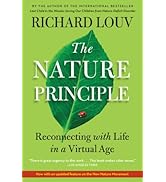
Last Child in the Woods explores the critical issue of nature-deficit disorder in children, offering insights and solutions to reconnect kids with the natural world. This compelling read combines research, expert opinions, and practical advice to inspire parents, educators, and communities to prioritize outdoor experiences for the next generation.




| Best Sellers Rank | #18,919 in Books ( See Top 100 in Books ) #29 in Hiking & Camping Instructional Guides #37 in Popular Child Psychology #46 in Anxiety |
| Customer Reviews | 4.6 4.6 out of 5 stars (1,493) |
| Dimensions | 5.5 x 1.05 x 8.25 inches |
| Edition | Updated and Expanded |
| ISBN-10 | 156512605X |
| ISBN-13 | 978-1565126053 |
| Item Weight | 2.31 pounds |
| Language | English |
| Print length | 416 pages |
| Publication date | April 10, 2008 |
| Publisher | Algonquin Books |
B**Y
Out of the Home and into the Great Outdoors
Last Child in the Woods is a very good book about social trends over the past couple of decades- trends that are taking children away from the great outdoors and back inside where electronic games, cell phones, televisions, and similar types of entertainment consume almost all of their time and attention. The book's intent is to illustrate the negative impacts of too little time spent in nature and what parents and even localities can do to get more nature in kids' lives and make inner cities more accommodating to natural activities. I'm not much of an outdoorsman, but I agree that exposure to natural settings is a positive experience for countless reasons. When you spend your time working and living in a city, an excursion into the countryside is good because it helps relieve stress, offers some fresh air, exposes you to wildlife, etc. and I would probably partake in these activities more often if my schedule permitted. Last Child in the Woods stresses that parents need to find a way make time, for the sake of their kids and themselves. The benefits from hiking, camping, and otherwise re-connecting with the outdoors are immeasurable and they apply to adults and kids alike. Most of Last Child in the Woods is dedicated to children and what needs to be done to help reverse the trends of the past thirty years and get kids to put down their cell phones, remote controls, and joysticks in favor of some time spent exploring a park, forest, or other natural setting. The consequences of too much time indoors include some obvious and not- so- obvious outcomes. The inactivity is part of the reason that child obesity is such a serious and growing problem. Too much time inside also leads to boredom and a reduction of creative and problem- solving skills. But as this book points out, the negative results extend into areas that many would not have even considered. One example is the growing problem with ADHD. Studies have shown that ADHD diagnosis is lessened with more exposure to natural settings and this trend toward less outdoor activity could be part of the reason that ADHD is more common today than in the past. Besides the emphasis on children and improving their outdoor IQ, this book is also about change on other levels. It talks about the role of cities in making the move toward a more nature- friendly urban and suburban setting. It talks about the movements in some large cities to establish more green space; construct buildings with green rooftops; plant more trees; and increase environmental education at the elementary and high school levels. These specialty schools are a great idea for the education they provide, but as the book points out, any school can take a step in the right direction by utilizing the outdoors as part of the educational process. Any school can talk about outdoors and even hold some of the classes in an outdoor setting. It can work wonders for children and can pay handsome dividends in the future. Last Child in the Woods is a thoughtful book with much to offer. Not only does the author make many good points about nature and its importance to children, he even includes several supplemental sections that offer good recommendations and advice. There is a section with 100 actions we can take to improve the recent trends; good books for kids and families; suggestions to transform communities; etc. The author really went beyond the call of duty with these extras. The main part of the book is already very good, but now you get all of this extra guidance and assistance. Anyone who is not sure where to start can benefit tremendously from reading these extra sections. The trend away from outdoor recreation has been going on for decades and while many may not think about a subject like this, it is certainly one that deserves our time and consideration. Today's children are far less inclined to spend time outdoors than their parents and grandparents and this lack of interaction with the natural world can have dire consequences. Everyone could benefit from more time outside and while this book could have benefitted from more official studies to back its claims and findings, it is still a very good, useful, thoughtful book that everyone should take the time to read.
T**E
Nature as a Necessity
This book looked intriguing as it sat on the "recommended" shelf of the bookstore, so I picked it up. I must say that I was very impressed at this book, its findings and implications. This book tells the reader not only how important and integral nature and natural settings are to healthy children, but how that's not very available to many kids today. It's full of anecdotes, scientific studies, and quotes from many experts, parents and educators. The author goes into the reasons why "nature" is hard to come by for kids these days. It's not only deforestation, but fear of strangers and injuries and a big increase in technology. I think some of the most fascinating and inspiring stuff in this book is the evidence that being in nature can help children with ADHD even in place of medication, and just seeing green space can create more productivity and happiness in both kids and adults. Along with that, Louv actually gives plenty of suggestions for both families and teachers to help better integrate nature into their lives and education. He also manages to not be all doom and gloom about disappearing nature as many other environmentalists are, and explains that while many things are disappearing, there's still plenty left and we just need to protect that and have a more "green" lifestyle. It dragged a tiny bit towards the end, but the book kept my interest for about 90% of it. If you have or work with children in any setting or are interested in animals, nature or the environment this is an excellent book. It's not just about kids connecting with nature, but people with all ages connecting with nature. Great read.
K**N
A must read for all parents
This book is a must read for any parent who is struggling with trying to find a way to get their kids outside. Nature and natural play has changed from what it was and access to truly natural settings is getting harder and harder. As a parent I desperately want to share my love for the outdoors but doing so in today's world proves daunting. Add to that the limited access to natural settings that are not legislated by Home Owners Associations, Parks Services, and the like, which only further limit a child's ability to play and experience the natural world freely, and it feels impossible. This book is devoted to explaining the benefits of access to natural settings with regards to health, mental wellness, holistic healing, and beyond. Secondly, this book confronts many of the current barriers to the shrinking and limited natural space and also the limitations we are self imposing on the remaining natural spaces we have left. The author offers a lot of research findings and professional interviews which support his claims. Finally he begins to offer solutions on how we can, even in our changing society, begin to shift our current paradigm. He offers solutions to common fears and also asks the parent to take some risks and let go a little. But most importantly he poses a very impassioned plea to each reader to no longer be passive, to no longer accept the shrinking natural areas but to find new spaces, to set aside spaces in new developments, and to be more intentional with urban and city planning. By doing these things we can still keep some natural spaces pure and offer our children natural places to play and we can share our love for the outdoors with many future generations. This book is a truly inspiring read and I strongly recommend it to anyone who still has a desire to be in nature and to share that love and to pass on that desire to your children and their children as well.
K**R
Great read but is falling apart.
Love the book so far. But while reading it some of the pages have come loose.
N**A
Excelente libro
中**司
迅速なご発送で満足しました。内容はゆっくりよんでいます。深い内容です
P**E
A must-read for all parents, teachers, mentors, researchers, educationists, and managers who are committed to ushering a sustainable future on our Planet. Very inspiring.
C**N
Es una pena que este libro tan interesante y práctico no esté en castellano. Nos recuerda lo importante que es estar en contacto con la naturaleza, en este mundo cada vez más tecnologico.
T**E
This book raises and discusses many issues regarding the closure and enclosure of previously open and available space in many of our neighbourhoods and communities, and how this has a negative effect on our health and wellbeing. It deals mainly with a U.S. scenario, but much of the concerns are applicable, if in less serious form, to my country, Ireland at least, and I am sure to many others too. Adults scold children for 'lounging' around the house and ask them to go outside and play, but where can they do this if not as part of some organised activity or sport? Everywhere they congregate they are accused of loitering and asked to move on. We are developing a de-natured society that is very unhealthy. While many people who stop to consider this situation may have a grasp of this situation, Louv brings a wealth of research and professional thinking together to make a compelling argument for his thesis. An excellent and easily readable book that I would recommend to anyone who is interested in our environment and everyone's,especially children's opportunity to experience it.
Trustpilot
4 days ago
2 weeks ago