We remain fully operational. Our teams are working around the clock to ensure your deliveries continue safely.

DOWNLOAD THE APP


Copyright © 2025 Desertcart Holdings Limited
DOWNLOAD THE APP
Buy anything from 5,000+ international stores. One checkout price. No surprise fees. Join 2M+ shoppers on Desertcart.
Desertcart purchases this item on your behalf and handles shipping, customs, and support to South Korea.
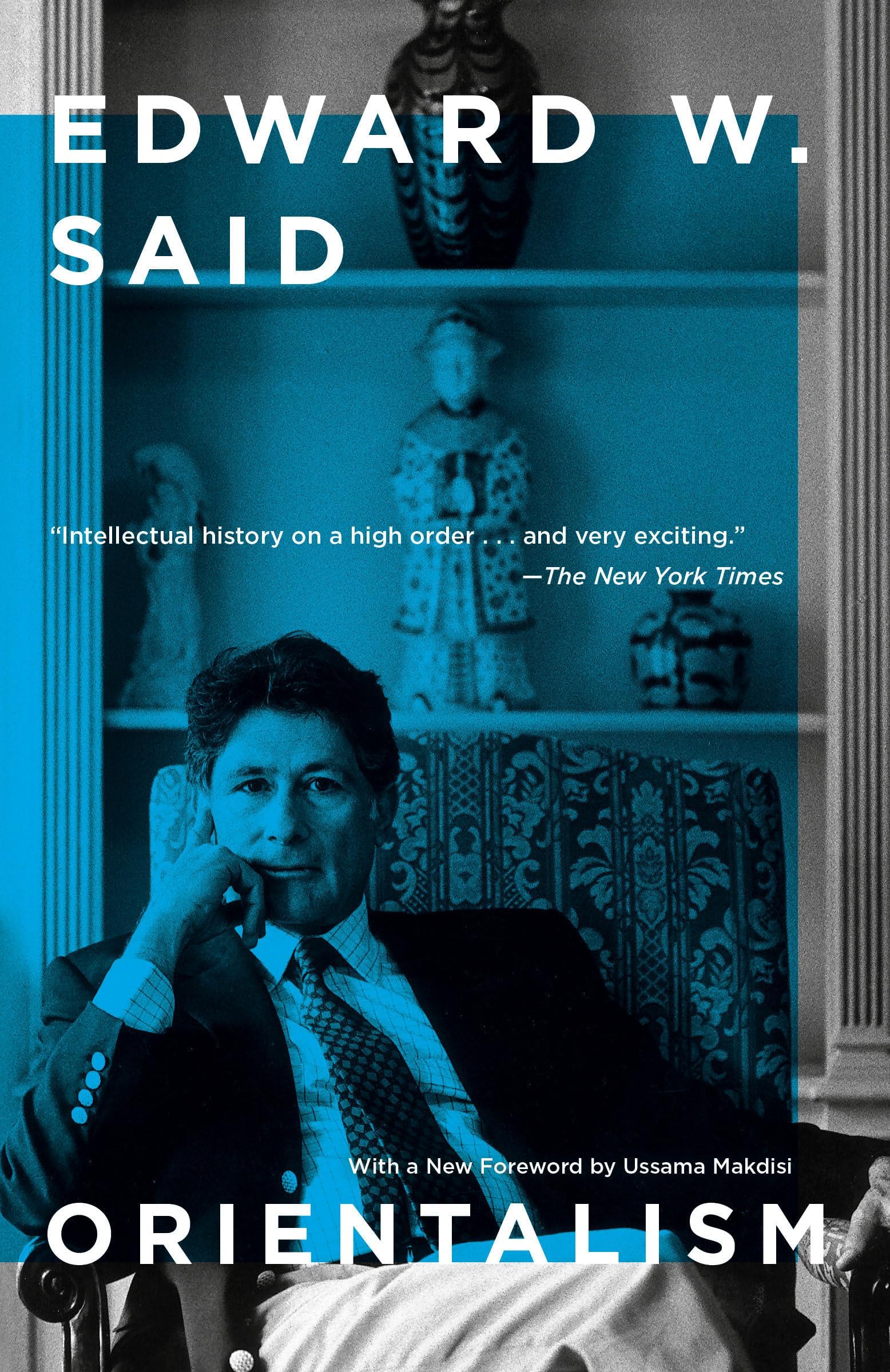
Orientalism [Said, Edward W.] on desertcart.com. *FREE* shipping on qualifying offers. Orientalism Review: A staple for any thinker today - Said’s Orientalism is a staple that bridges the gap between several discourses and academic studies including Post-colonial studies, Cultural Theory, Critical Theory, Literary Theory, and countless others. Paradoxically, however, Said’s main criticism is aimed at such cemented academic fields, epitomized by Orientalism, the field aimed at studying the Orient from a Western perspective. Said’s underlying question is stated near the end of the book (~p.300): “How can we come to understand other cultures?” This seemingly simple question proliferates a very dangerous assumption: that culture stands out there as some pre-social object waiting to be apprehended by the rational subject (namely, the Westerner). As Said shows, and in a way he explicitly states as being indebted to Foucault, that culture is constructed principally through the discursive operations of a particular subject. To *be* an Oriental is to embody certain assumptions which become proliferated by a discourse (Orientalism) whose construction is such that it is essentially unfalsifiable. As Said aptly points out, the Oriental (a term we stray from using today for its obviously racist undertones which Said carefully traces across modern history and in the history of colonialism) is put into a position where he is to embody contradictory qualities simultaneously such that his identity is always one of negativity, an instrumental object for the purposes of the Westerner’s use: lacking in rationality yet containing the birth of our modern sciences and religious traditions, disorganized yet forming vast networks of control (apropos the Caliphate), static and forever solidified as a continuous identity that can be understood whilst simultaneously being unwieldy and schizophrenic in their diversity. All of these are used to back the Oriental into a corner such that he is merely a tool which can be utilized by the Westerner. I think many of those who are keen on criticizing Said as “painting with too broad of strokes” (such was another review here on desertcart claiming that he was too harsh on Bernard Lewis’ appraisal of Arabic philologically) have not fully understood his project, which is that if we trace Orientalism back, understanding it as a *discourse* (in the Foucaultian sense), we are able to extrapolate certain recurring themes that identify why it seems that Orientals can always somehow appear as racist stereotypes — it is precisely because their image through Western blinders has manufactured the Oriental’s inevitability viz the image. All being said, this is an indispensable text for Post-colonial studies, as well as being instrumental for studies of literary theory, critical theory, and certain strands of poststructuralist/postmodern thought (Foucault, Derrida, even Deleuze). It ready fairly fast and, although it is slow at certain points when he starts to sound like a broken record, his prose is fairly consistent in being engaging and effectively communicating his desired point. An important positive that makes this book more accessible than other Post-colonial material is that it is not very theoretically dense as opposed to someone like Homi Bhabha. Instead, Said opts for a more historically vast characterization of the problem that still provides the same theoretical points whilst allowing the complexity of his point — that identity is not latent within objects and existing pre-socially, instead existing only within a discourse build on implicit power-imbalances — to shine through to those who may not want or be ready for a text of more abstract a nature. All and all, this is a great text that, even as a slow reader, was finished quickly and was extremely enjoyable and valuable, opening up a new area of study in a way that allows one to access a whole new problematic that may have previously appeared only as invisibility. Review: As important and relevant today as it's ever been - Written with both academic and intellectual bravery, Said lays out decades of analysis of a decrepit and western chauvinist discipline known as Orientalism. Effectively relegating it to where it belongs - the dustbin! Said walks you through the appropriation of the eastern world by oxidant imperial forces of the colonizing west to bring forth Orientalists clear motives - to lay claim to vast areas of cultural wealth for itself and only itself. Said demonstrates revolutionary epistemology with his approach to Orientalism and thus has reshaped how we should view the near, middle, and far east. The devastating impact of Orientalism can be seen writ large upon current events when one adapts Said's lens. Read this book! Share it with your friends!


| Best Sellers Rank | #5,219 in Books ( See Top 100 in Books ) #3 in Colonialism & Post-Colonialism #10 in Israel & Palestine History (Books) #11 in Middle Eastern Politics |
| Customer Reviews | 4.6 4.6 out of 5 stars (2,207) |
| Dimensions | 5.14 x 0.87 x 7.98 inches |
| Edition | First Ed. |
| ISBN-10 | 039474067X |
| ISBN-13 | 978-0394740676 |
| Item Weight | 2.31 pounds |
| Language | English |
| Print length | 368 pages |
| Publication date | October 12, 1979 |
| Publisher | Vintage |
G**G
A staple for any thinker today
Said’s Orientalism is a staple that bridges the gap between several discourses and academic studies including Post-colonial studies, Cultural Theory, Critical Theory, Literary Theory, and countless others. Paradoxically, however, Said’s main criticism is aimed at such cemented academic fields, epitomized by Orientalism, the field aimed at studying the Orient from a Western perspective. Said’s underlying question is stated near the end of the book (~p.300): “How can we come to understand other cultures?” This seemingly simple question proliferates a very dangerous assumption: that culture stands out there as some pre-social object waiting to be apprehended by the rational subject (namely, the Westerner). As Said shows, and in a way he explicitly states as being indebted to Foucault, that culture is constructed principally through the discursive operations of a particular subject. To *be* an Oriental is to embody certain assumptions which become proliferated by a discourse (Orientalism) whose construction is such that it is essentially unfalsifiable. As Said aptly points out, the Oriental (a term we stray from using today for its obviously racist undertones which Said carefully traces across modern history and in the history of colonialism) is put into a position where he is to embody contradictory qualities simultaneously such that his identity is always one of negativity, an instrumental object for the purposes of the Westerner’s use: lacking in rationality yet containing the birth of our modern sciences and religious traditions, disorganized yet forming vast networks of control (apropos the Caliphate), static and forever solidified as a continuous identity that can be understood whilst simultaneously being unwieldy and schizophrenic in their diversity. All of these are used to back the Oriental into a corner such that he is merely a tool which can be utilized by the Westerner. I think many of those who are keen on criticizing Said as “painting with too broad of strokes” (such was another review here on Amazon claiming that he was too harsh on Bernard Lewis’ appraisal of Arabic philologically) have not fully understood his project, which is that if we trace Orientalism back, understanding it as a *discourse* (in the Foucaultian sense), we are able to extrapolate certain recurring themes that identify why it seems that Orientals can always somehow appear as racist stereotypes — it is precisely because their image through Western blinders has manufactured the Oriental’s inevitability viz the image. All being said, this is an indispensable text for Post-colonial studies, as well as being instrumental for studies of literary theory, critical theory, and certain strands of poststructuralist/postmodern thought (Foucault, Derrida, even Deleuze). It ready fairly fast and, although it is slow at certain points when he starts to sound like a broken record, his prose is fairly consistent in being engaging and effectively communicating his desired point. An important positive that makes this book more accessible than other Post-colonial material is that it is not very theoretically dense as opposed to someone like Homi Bhabha. Instead, Said opts for a more historically vast characterization of the problem that still provides the same theoretical points whilst allowing the complexity of his point — that identity is not latent within objects and existing pre-socially, instead existing only within a discourse build on implicit power-imbalances — to shine through to those who may not want or be ready for a text of more abstract a nature. All and all, this is a great text that, even as a slow reader, was finished quickly and was extremely enjoyable and valuable, opening up a new area of study in a way that allows one to access a whole new problematic that may have previously appeared only as invisibility.
A**S
As important and relevant today as it's ever been
Written with both academic and intellectual bravery, Said lays out decades of analysis of a decrepit and western chauvinist discipline known as Orientalism. Effectively relegating it to where it belongs - the dustbin! Said walks you through the appropriation of the eastern world by oxidant imperial forces of the colonizing west to bring forth Orientalists clear motives - to lay claim to vast areas of cultural wealth for itself and only itself. Said demonstrates revolutionary epistemology with his approach to Orientalism and thus has reshaped how we should view the near, middle, and far east. The devastating impact of Orientalism can be seen writ large upon current events when one adapts Said's lens. Read this book! Share it with your friends!
D**S
Wonderful Work of Scholarship: a must read, and, really, a MUST OWN!
This is an excellent introduction to the scholarship of both Said's, as well as, questions of context --object, subject, definitions and "Enframing" of Otherness, to name but a few of the many topics. I describe this as an great introduction; however, this could mislead one from understanding that this volume vastly surpasses mere introduction. Said's volume is a superb scholarly work that even well-read academics can gain insight from as well as appreciate just as much as readers who are not as familiar with the scholastic issues. If one is seeking a single volume to both jettison into the historiography of Orientalism and the Orientalists approach and worldview, then this is a must buy! Said meticulously traces these themes from origins to proponents, as well as a convincing invective against the scholastic failures the Orientialists commit. Additional topics covered in this volume include views on area studies, historical method across time (one could say methodological historiography --but who needs jargon), and a nuanced perspective of European engagement with the East. This written, I have found that this is a volume that is both concise and pithy: a must have form anyone interested in expanding their understanding of history, philology, and Western confrontation and description of the Near East. Finally, I highly suggest one to buy the more recent publication over the (most likely) less expensive used copies: if you buy used, make sure that your volume includes the 25th anniversary edition introduction --it is quite helpful and an introduction in the most literal sense. Hope this helps people have a greater perspective of the contents and arguments of the book.
C**O
B**A
Per un graditissimo regalo
O**I
Tres bon livre d Edward said le result at de sa these Sur l orientalisme. Je le recommande vivement surtout en anglais.
P**N
I will highly recommend this book to anyone interested in Oriental Studies
A**A
El libro llegó antes de lo esperado y en muy buen estado. Está bien pero al leerlo mucho rato seguido se hace pesado y hay partes que no se entiende nada, es muy específico y hay muchos nombres y detalles.
Trustpilot
2 months ago
2 days ago