
DOWNLOAD THE APP


Customer Services
Copyright © 2025 Desertcart Holdings Limited
DOWNLOAD THE APP
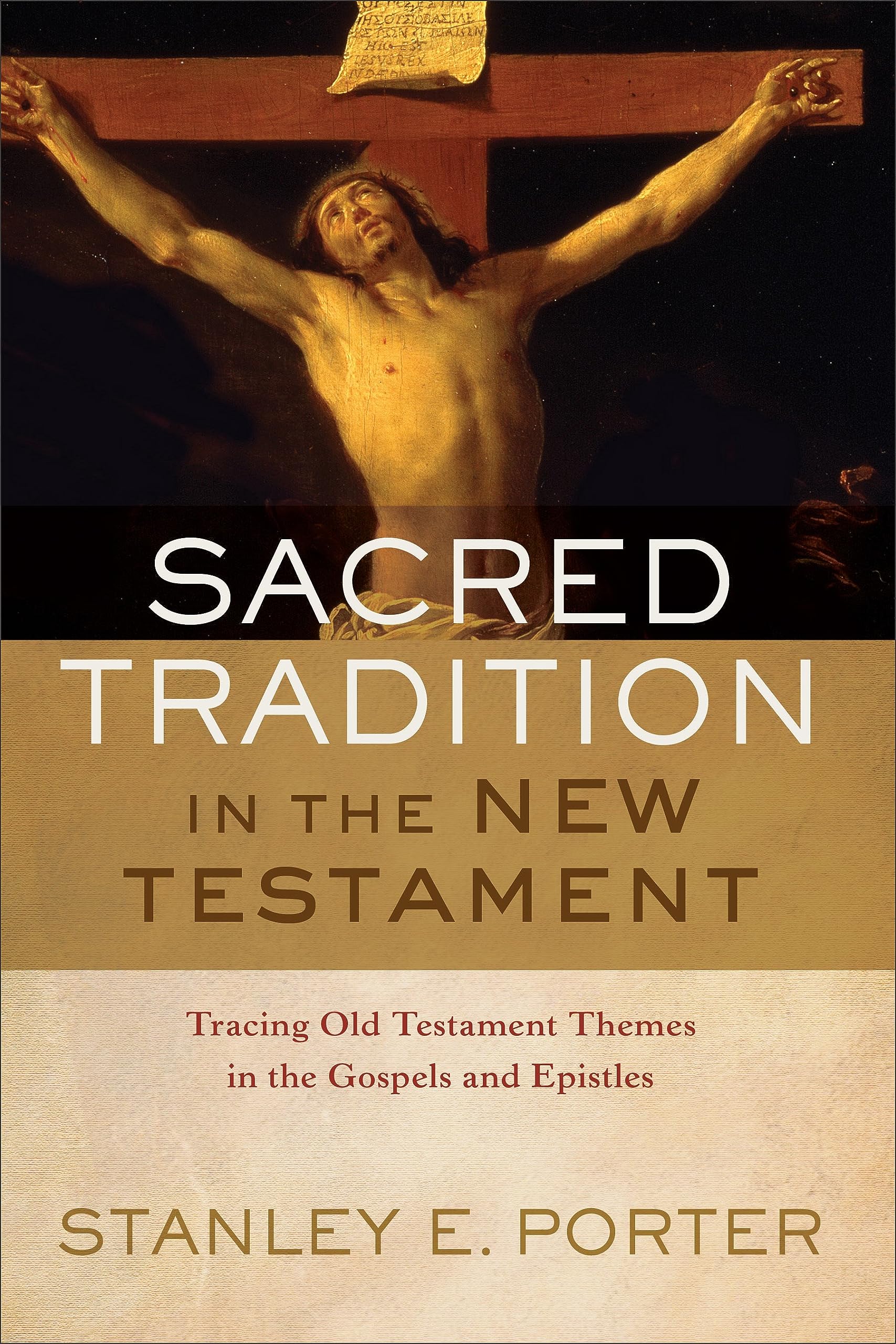
Sacred Tradition in the New Testament: Tracing Old Testament Themes in the Gospels and Epistles [Stanley E. Porter] on desertcart.com. *FREE* shipping on qualifying offers. Sacred Tradition in the New Testament: Tracing Old Testament Themes in the Gospels and Epistles Review: Exploring the Old in the New: A Review of Stanley Porter's "Sacred Tradition in the New Testament" - In Sacred Tradition in the New Testament, Stanley Porter takes an extended look at the use of Israel’s Scriptures in the writings of the New Testament (NT). It’s clear that the Old Testament (OT) was crucially significant for the NT’s authors. But even if that’s agreed upon, and despite the spilling of much literal ink and the shedding of much metaphorical blood, legitimate questions remain. What led the writers of the NT to interpret the OT in the ways they did? How should we determine when a passage from the OT is being used in the NT, especially if the reference is indirect or subtle? These are the kinds of questions that Porter, a professor at McMaster Divinity College, seeks to explore. Porter develops a number of proposals in Sacred Tradition in the New Testament. One of them is that the study of the OT’s use in the NT should shift away from the strict investigation of individual OT verses and onto broader themes, concepts and figures (p.49). In the introduction, he writes, “My approach to the use of sacred tradition tries to find more significant passages or themes within the OT and explore their use in the NT” (p.x). By sacred tradition, it should be noted that Porter basically means the OT, along with the Dead Sea Scrolls and some Hellenistic texts (p.3). Before he begins tracing the NT development of OT themes and figures, though, Porter first attempts to bring greater methodological precision and clarity to the conversation (p.2). Quotations, Allusions, and Echoes Surveying the current literature, Porter notes that “in more than a few instances, these studies have not so much advanced the discussion as muddied it by using imprecise, ambiguous, or otherwise problematic terminology” (p.xxi). Part of the problem lies in the sheer variety of terms available for use when describing the citation of OT texts by NT writers. For Porter, this leads to confusion since some people make important distinctions between terms while others use them interchangeably (p.6). Needless to say, that makes constructive dialogue between different scholars more difficult. Therefore, Porter raises two main questions: (1) How do we define the various terms used to label use of the OT in the NT, and why is the matter of definition important? Following from this, (2) what is the relation between direct quotation and other kinds of use of the OT in the NT, and how do these categories figure into estimations of the influence of the OT on a given NT writer? (p.6) In his discussion, Porter begins with the most obvious category of OT usage, “quotation,” and works from there to more indirect terms like “allusion” and “echo.” One would think that direct quotations would be easy to recognize, and in most cases they are. But how should a direct quotation be distinguished from other forms of scriptural citation? Does a direct quotation require an explicit introductory formula like “It is written” in order to count? If so, then what should we do with verses like Phil. 1:19 where an OT passage certainly seem to be quoted despite the absence of an introductory formula? There are also NT passages like Gal. 4:22 where an introductory formula is present but an allusion, rather than a direct quotation, follows it. Defining the relevant terms turns out to be harder than it looks. Porter separates the broad category of quotation into two subcategories: formulaic quotations (which have introductory formulas) and direct quotations (which lack them) (pp.33-34). Porter also constructs a new category, termed “paraphrase,” which differs from both formulaic and direct quotations. He describes a paraphrase as being “an intentional and specific invoking of a definable passage, even if it is made in other words and in another form” (p.36). The concepts of “allusion” and “echo” are even more controversial. Richard Hays is one of the most important NT scholars to study the language of echo and allusion, having been influenced by the work of Yale literary theorist John Hollander (p.9). In Echoes of Scripture in the Letters of Paul, Hays argues that “allusion is used of obvious intertextual references, echo of subtler ones” (p.29). However, Porter thinks that the boundaries between quotation, allusion, and echo set up by Hays become increasingly blurred throughout the book, to detriment of Hays’ argument (p.10). The criteria developed by Hays for the identification and interpretation of scriptural echoes are helpful, but Porter judges them to be too unclear and subjective, among other things. He believes that Hays ends up “using the concept of echo for a wide range of material, from reference to very subliminal citations to specific citation of a text,” which is much too broad and vague in Porter’s eyes (p.45). Consequently, he proposes some alternative definitions: Although I reject Hays’s definition of echo, I believe that retention of the two terms allusion and echo as names for separate and distinct forms of citation is probably warranted. Allusion is concerned to bring an external person, place, literary work, or similar entity into the contemporary text, whereas echo does not have the specificity of allusion and is reserved for language that is thematically related to a more general or abstract notion or concept. (p.46) It seems to me that the disagreement between Porter and Hays regarding the proper meaning of echo might come down to the fact that Hays seems at times to use “echo” both as a kind of reference and as a description of how OT meanings inform the dynamics of NT passages, while Porter doesn’t. That at least seems possible given Hays’ language regarding “how scriptural echoes lend resonant overtones to Paul’s prose” in Echoes of Scripture (p.21). I could be wrong, though. Having discussed his methodological proposal, Porter spends the rest of the book using this framework to explore some of the fascinating ways in which themes, figures, and concepts from the OT are developed and used in the writings of the NT (p.47). These studies range from an examination of the OT titles ascribed to Jesus in the Gospel accounts (like Son of Man, Suffering Servant, and Messiah) to the theme of Passover in the Gospel of John and the importance in the writings of Paul and James of Abraham as an OT figure. He also includes an interesting chapter looking at the figure of Esau in Romans and Hebrews penned by Bryan Dyer, one of Porter’s colleagues. In order to see how his proposal works out in more concrete terms, let’s now look at his study of Psalm 22 and the Passion of Jesus. Jesus’ Words on the Cross Psalm 22 is typically categorized as a psalm of lament, according to the classification scheme developed by the German scholar Hermann Gunkel (p.155). It begins with the famous line, “My God, my God, why have you forsaken me?” (v.1, NRSV). In verses 16-18, the sense of desolation continues: For dogs are all around me; a company of evildoers encircles me. My hands and feet have shriveled; I can count all my bones. They stare and gloat over me; they divide my clothes among themselves, and for my clothing they cast lots. (NRSV) However, “The second half of verse 21 is a turning point in the psalm” (p.157). There, the psalmist turns and declares, “From the horns of the wild oxen you have rescued me” (NRSV). By Ps.22:29-31, the emphasis, Porter notes, is now “on the vindication or exaltation of the sufferer and of God” (p.157). Looking at the psalm as a whole, he explains that it, like many other psalms of lament, shows a dramatic “movement from deep despair in the opening verses to overwhelming praises of deliverance by the end” (p.158). For both Matthew and Mark the first words of Ps. 22 are the only words of Jesus while on the cross, leading Porter to highlight the importance of the quotation (p.160). Suggestions for interpreting the meaning of Jesus’ quotation include that it was a cry of abandonment, the exclamation of a righteous sufferer, and even that He wanted to recite the whole psalm but collapsed in exhaustion (pp.162-164). Porter, however, gives an another explanation, “By simply quoting the beginning, Jesus is appealing to the entire psalm… As such, Jesus’s cry is not only one of desolation: it also points to future vindication as well” (p.165). Now, scholars like R.T. France and Morna Hooker disagree with this interpretation because they think it “mitigates the impact of the cry of agony” (p.165). In response, Porter asserts: By saying that Jesus is invoking all of Ps. 22 in his quotation, I am affirming the real torture and anguish that is expressed in his cry. However, I want to recognize that more is being stated than the expression of desolation, that all is not lost—in the same way that psalms of suffering, especially Ps. 22, descend into the depths of despair but only to ascend again. (p.166) The Gospel writers actually make additional allusions to Ps. 22 elsewhere in their narratives. Mark records in 15:24 that, “they crucified him, and divided his clothes among them, casting lots” (NRSV), which invokes the language of Ps. 22:16-18. According to Porter, Mark 15:29 also contains an allusion to Ps. 22:7. Finally, Porter brings up Matt. 27:43, where the high priests ridicule Jesus by declaring, “He trusts in God; let God deliver him now” and continue by tossing Jesus’ words back at Him, “for he said, ‘I am God’s Son'” (NRSV). These insults are strikingly similar to “the statements of the enemies that the sufferer describes in Ps. 22:8 (p.169). These notions of Jesus being God’s Son and the one in whom God is pleased show up earlier in the Gospels at both Jesus’ baptism and later transfiguration. Therefore, Porter suggests that these allusions to various points throughout Ps. 22 help influence the Gospel writers’ conception of Jesus: He is God’s Son, in whom God delights, and hence not one abandoned but poised for God’s ultimate overcoming of his enemies and triumphant victory. (p.169) The question of whether the original hearers of Matthew and Mark would have understood Jesus’ cry on the cross in this way, however, still remains. Porter cites the words of Joel Marcus in The Way of the Lord, “No matter what it meant in the original, Ps. 22 was often interpreted in later Judaism as a description of eschatological events, including resurrection” (p.180). Porter thinks that the Qumran writings and the Jewish Targum of Ps. 22. provide additional support (pp.171-172). So, where does this vindication of Jesus appear in the Gospel? Of course, Porter understands the resurrection to be Jesus’ ultimate vindication, even in Mark, where “the resurrection is not explicit” (p.173). Near the beginning of this review, we noted that Porter wants people to pay less attention to specific OT verses and more on themes, concepts and figures. His desire to employ a more integrative approach is still present, even in a chapter based on the study of a specific psalm: It has become clear that in order to understand Jesus’s utterance on the cross, we have to understand it in relation to who he was as the Son of Man. Jesus was not just some suffering righteous person or some man who feels the agony of the events of crucifixion. Rather, he is the Son of Man, the Messiah, the anointed one of God who is looking forward to his coming in exaltation. (pp.175-176) Conclusion Sacred Tradition in the New Testament is full of detailed analysis of both the Old and New Testaments, and Porter has carried his investigation out with impressive rigor. He works hard to sensitively define his terms and avoid linguistic confusion, and other NT scholars would do well to imitate him in this respect. That being said, I’m still not sure about the usefulness of Porter’s firm separation of allusion and echo into separate categories. It still seems plausible to me that echo might be better understood as a general, more abstract kind of an allusion. I wonder, for example, how many passages an allusion can invoke before Porter would identify it as an echo, or how he would consider citations that both reference specific OT passages and also seem to evoke wider themes. I found Porter’s work to be refreshingly constructive and full of interesting ideas. This book is not merely another study tracing the OT’s usage in the NT, it’s also an exploration of how to do that effectively. Even for those who struggle to accept all of Porter’s proposals, they will be better for having grappled with the questions raised by him. From my perspective, Porter’s chapter dealing with methodology alone is worth the price of the book. Hopefully, this work will help NT scholars break through the mud of terminological confusion and onto the firmer ground of real dialogue, because it’s a fascinating topic that needs continued study. *Disclosure: I received this book free from Baker Academic Publishing for review purposes. The opinions I have expressed are my own, and I was not required to write a positive review. **More theology book reviews can be found at Tabletalktheology.com Review: The Gospel according to 1 Cor 15. - Always expect Stan Porter to be informed and thorough. He likes the expression “sacred tradition” for the OT and any previous writings. He knows all the angles but always comes back to a high view of scriptural authority. Also, Stan always advances the discussion rather than just summarize the evidence. He does not disappoint.
| Best Sellers Rank | #1,916,961 in Books ( See Top 100 in Books ) #1,530 in Christian Bible Exegesis & Hermeneutics #2,121 in New Testament Criticism & Interpretation #18,698 in Christian Bible Study (Books) |
| Customer Reviews | 4.6 out of 5 stars 8 Reviews |
J**N
Exploring the Old in the New: A Review of Stanley Porter's "Sacred Tradition in the New Testament"
In Sacred Tradition in the New Testament, Stanley Porter takes an extended look at the use of Israel’s Scriptures in the writings of the New Testament (NT). It’s clear that the Old Testament (OT) was crucially significant for the NT’s authors. But even if that’s agreed upon, and despite the spilling of much literal ink and the shedding of much metaphorical blood, legitimate questions remain. What led the writers of the NT to interpret the OT in the ways they did? How should we determine when a passage from the OT is being used in the NT, especially if the reference is indirect or subtle? These are the kinds of questions that Porter, a professor at McMaster Divinity College, seeks to explore. Porter develops a number of proposals in Sacred Tradition in the New Testament. One of them is that the study of the OT’s use in the NT should shift away from the strict investigation of individual OT verses and onto broader themes, concepts and figures (p.49). In the introduction, he writes, “My approach to the use of sacred tradition tries to find more significant passages or themes within the OT and explore their use in the NT” (p.x). By sacred tradition, it should be noted that Porter basically means the OT, along with the Dead Sea Scrolls and some Hellenistic texts (p.3). Before he begins tracing the NT development of OT themes and figures, though, Porter first attempts to bring greater methodological precision and clarity to the conversation (p.2). Quotations, Allusions, and Echoes Surveying the current literature, Porter notes that “in more than a few instances, these studies have not so much advanced the discussion as muddied it by using imprecise, ambiguous, or otherwise problematic terminology” (p.xxi). Part of the problem lies in the sheer variety of terms available for use when describing the citation of OT texts by NT writers. For Porter, this leads to confusion since some people make important distinctions between terms while others use them interchangeably (p.6). Needless to say, that makes constructive dialogue between different scholars more difficult. Therefore, Porter raises two main questions: (1) How do we define the various terms used to label use of the OT in the NT, and why is the matter of definition important? Following from this, (2) what is the relation between direct quotation and other kinds of use of the OT in the NT, and how do these categories figure into estimations of the influence of the OT on a given NT writer? (p.6) In his discussion, Porter begins with the most obvious category of OT usage, “quotation,” and works from there to more indirect terms like “allusion” and “echo.” One would think that direct quotations would be easy to recognize, and in most cases they are. But how should a direct quotation be distinguished from other forms of scriptural citation? Does a direct quotation require an explicit introductory formula like “It is written” in order to count? If so, then what should we do with verses like Phil. 1:19 where an OT passage certainly seem to be quoted despite the absence of an introductory formula? There are also NT passages like Gal. 4:22 where an introductory formula is present but an allusion, rather than a direct quotation, follows it. Defining the relevant terms turns out to be harder than it looks. Porter separates the broad category of quotation into two subcategories: formulaic quotations (which have introductory formulas) and direct quotations (which lack them) (pp.33-34). Porter also constructs a new category, termed “paraphrase,” which differs from both formulaic and direct quotations. He describes a paraphrase as being “an intentional and specific invoking of a definable passage, even if it is made in other words and in another form” (p.36). The concepts of “allusion” and “echo” are even more controversial. Richard Hays is one of the most important NT scholars to study the language of echo and allusion, having been influenced by the work of Yale literary theorist John Hollander (p.9). In Echoes of Scripture in the Letters of Paul, Hays argues that “allusion is used of obvious intertextual references, echo of subtler ones” (p.29). However, Porter thinks that the boundaries between quotation, allusion, and echo set up by Hays become increasingly blurred throughout the book, to detriment of Hays’ argument (p.10). The criteria developed by Hays for the identification and interpretation of scriptural echoes are helpful, but Porter judges them to be too unclear and subjective, among other things. He believes that Hays ends up “using the concept of echo for a wide range of material, from reference to very subliminal citations to specific citation of a text,” which is much too broad and vague in Porter’s eyes (p.45). Consequently, he proposes some alternative definitions: Although I reject Hays’s definition of echo, I believe that retention of the two terms allusion and echo as names for separate and distinct forms of citation is probably warranted. Allusion is concerned to bring an external person, place, literary work, or similar entity into the contemporary text, whereas echo does not have the specificity of allusion and is reserved for language that is thematically related to a more general or abstract notion or concept. (p.46) It seems to me that the disagreement between Porter and Hays regarding the proper meaning of echo might come down to the fact that Hays seems at times to use “echo” both as a kind of reference and as a description of how OT meanings inform the dynamics of NT passages, while Porter doesn’t. That at least seems possible given Hays’ language regarding “how scriptural echoes lend resonant overtones to Paul’s prose” in Echoes of Scripture (p.21). I could be wrong, though. Having discussed his methodological proposal, Porter spends the rest of the book using this framework to explore some of the fascinating ways in which themes, figures, and concepts from the OT are developed and used in the writings of the NT (p.47). These studies range from an examination of the OT titles ascribed to Jesus in the Gospel accounts (like Son of Man, Suffering Servant, and Messiah) to the theme of Passover in the Gospel of John and the importance in the writings of Paul and James of Abraham as an OT figure. He also includes an interesting chapter looking at the figure of Esau in Romans and Hebrews penned by Bryan Dyer, one of Porter’s colleagues. In order to see how his proposal works out in more concrete terms, let’s now look at his study of Psalm 22 and the Passion of Jesus. Jesus’ Words on the Cross Psalm 22 is typically categorized as a psalm of lament, according to the classification scheme developed by the German scholar Hermann Gunkel (p.155). It begins with the famous line, “My God, my God, why have you forsaken me?” (v.1, NRSV). In verses 16-18, the sense of desolation continues: For dogs are all around me; a company of evildoers encircles me. My hands and feet have shriveled; I can count all my bones. They stare and gloat over me; they divide my clothes among themselves, and for my clothing they cast lots. (NRSV) However, “The second half of verse 21 is a turning point in the psalm” (p.157). There, the psalmist turns and declares, “From the horns of the wild oxen you have rescued me” (NRSV). By Ps.22:29-31, the emphasis, Porter notes, is now “on the vindication or exaltation of the sufferer and of God” (p.157). Looking at the psalm as a whole, he explains that it, like many other psalms of lament, shows a dramatic “movement from deep despair in the opening verses to overwhelming praises of deliverance by the end” (p.158). For both Matthew and Mark the first words of Ps. 22 are the only words of Jesus while on the cross, leading Porter to highlight the importance of the quotation (p.160). Suggestions for interpreting the meaning of Jesus’ quotation include that it was a cry of abandonment, the exclamation of a righteous sufferer, and even that He wanted to recite the whole psalm but collapsed in exhaustion (pp.162-164). Porter, however, gives an another explanation, “By simply quoting the beginning, Jesus is appealing to the entire psalm… As such, Jesus’s cry is not only one of desolation: it also points to future vindication as well” (p.165). Now, scholars like R.T. France and Morna Hooker disagree with this interpretation because they think it “mitigates the impact of the cry of agony” (p.165). In response, Porter asserts: By saying that Jesus is invoking all of Ps. 22 in his quotation, I am affirming the real torture and anguish that is expressed in his cry. However, I want to recognize that more is being stated than the expression of desolation, that all is not lost—in the same way that psalms of suffering, especially Ps. 22, descend into the depths of despair but only to ascend again. (p.166) The Gospel writers actually make additional allusions to Ps. 22 elsewhere in their narratives. Mark records in 15:24 that, “they crucified him, and divided his clothes among them, casting lots” (NRSV), which invokes the language of Ps. 22:16-18. According to Porter, Mark 15:29 also contains an allusion to Ps. 22:7. Finally, Porter brings up Matt. 27:43, where the high priests ridicule Jesus by declaring, “He trusts in God; let God deliver him now” and continue by tossing Jesus’ words back at Him, “for he said, ‘I am God’s Son'” (NRSV). These insults are strikingly similar to “the statements of the enemies that the sufferer describes in Ps. 22:8 (p.169). These notions of Jesus being God’s Son and the one in whom God is pleased show up earlier in the Gospels at both Jesus’ baptism and later transfiguration. Therefore, Porter suggests that these allusions to various points throughout Ps. 22 help influence the Gospel writers’ conception of Jesus: He is God’s Son, in whom God delights, and hence not one abandoned but poised for God’s ultimate overcoming of his enemies and triumphant victory. (p.169) The question of whether the original hearers of Matthew and Mark would have understood Jesus’ cry on the cross in this way, however, still remains. Porter cites the words of Joel Marcus in The Way of the Lord, “No matter what it meant in the original, Ps. 22 was often interpreted in later Judaism as a description of eschatological events, including resurrection” (p.180). Porter thinks that the Qumran writings and the Jewish Targum of Ps. 22. provide additional support (pp.171-172). So, where does this vindication of Jesus appear in the Gospel? Of course, Porter understands the resurrection to be Jesus’ ultimate vindication, even in Mark, where “the resurrection is not explicit” (p.173). Near the beginning of this review, we noted that Porter wants people to pay less attention to specific OT verses and more on themes, concepts and figures. His desire to employ a more integrative approach is still present, even in a chapter based on the study of a specific psalm: It has become clear that in order to understand Jesus’s utterance on the cross, we have to understand it in relation to who he was as the Son of Man. Jesus was not just some suffering righteous person or some man who feels the agony of the events of crucifixion. Rather, he is the Son of Man, the Messiah, the anointed one of God who is looking forward to his coming in exaltation. (pp.175-176) Conclusion Sacred Tradition in the New Testament is full of detailed analysis of both the Old and New Testaments, and Porter has carried his investigation out with impressive rigor. He works hard to sensitively define his terms and avoid linguistic confusion, and other NT scholars would do well to imitate him in this respect. That being said, I’m still not sure about the usefulness of Porter’s firm separation of allusion and echo into separate categories. It still seems plausible to me that echo might be better understood as a general, more abstract kind of an allusion. I wonder, for example, how many passages an allusion can invoke before Porter would identify it as an echo, or how he would consider citations that both reference specific OT passages and also seem to evoke wider themes. I found Porter’s work to be refreshingly constructive and full of interesting ideas. This book is not merely another study tracing the OT’s usage in the NT, it’s also an exploration of how to do that effectively. Even for those who struggle to accept all of Porter’s proposals, they will be better for having grappled with the questions raised by him. From my perspective, Porter’s chapter dealing with methodology alone is worth the price of the book. Hopefully, this work will help NT scholars break through the mud of terminological confusion and onto the firmer ground of real dialogue, because it’s a fascinating topic that needs continued study. *Disclosure: I received this book free from Baker Academic Publishing for review purposes. The opinions I have expressed are my own, and I was not required to write a positive review. **More theology book reviews can be found at Tabletalktheology.com
W**R
The Gospel according to 1 Cor 15.
Always expect Stan Porter to be informed and thorough. He likes the expression “sacred tradition” for the OT and any previous writings. He knows all the angles but always comes back to a high view of scriptural authority. Also, Stan always advances the discussion rather than just summarize the evidence. He does not disappoint.
E**N
Very scholarly, but edifying?
This is a difficult book to review. If a book satisfies its thesis, then it deserves to be well rated, and the readers deserve to be well informed of that thesis. Often reviewers will rate a book poorly because it’s not the book they wanted to read; not based on whether it is the book the author actually wrote. And yet I feel myself torn between the fair and unfair review. It sounds like a simple case of ‘choose the better,’ but I feel the need to clarify why I feel this tension. First, it may be helpful to list the author’s self-proposed audience, thesis, and method. Audience: advanced students of the NT & scholars seeking a fresh examination of the topics Thesis: “Although the focus of all these lectures—now become written essays—is the use, development, and interpretation of sacred tradition, a major subtheme that emerges in many, if not all, of them is that of who Jesus is, that is, Christology. The essays of this volume, therefore, are formed around this core set of lectures, now essays; they are not, and never were, simply a collection of random thoughts put to paper. As a result, I believe this volume provides a clear set of essays that explore how sacred tradition of various types is developed in the NT, often, though not entirely, for Christological ends.” Method: We are trying to move away from mechanical and formulaic conceptions and toward an appropriation of important sacred traditions (not just verses) as they are developed further within the NT. The simple question: does the author support/accomplish his thesis? Yes, in a technical sense. Porter clearly articulates his method throughout his book and shows how the entire ethos of Jewish (and Greco-Roman) cultural history comes to bear upon and influence New Testament texts. And more times than not, these developments and conclusions directly influence Christology. So what’s the problem? I want to be generous and truthful, so if I seem to lack either, forgive me. In part, I think the problem lies with the intended audience. If by ‘students of the New Testament’ Porter intends those in seminary, pursuing a PhD in theology, then perhaps he meets them. Although, and I say this with somber caution, perhaps those students will not have had their love for Christ increased after these pages. I’m sure that Porter loves Jesus, and I’m sure he wants others to love Jesus too, but I fear this book does not stir up the affections as he would hope. I say this as someone who has pursued Christian higher education, who has a love for theology and academia, who understands that knowledge informs belief and affections; I consider myself in that class of [intermediate or] advanced students of the NT. But I feel (and it is mostly a feeling, so feel free to discredit it) that Porter absents the purposed conclusion to theology: doxology. I think there is room to call for more attention to the significance for Christian theology & the Christian life, not simply theology as an academic discipline & the thinking life. Well, you might say: perhaps he meets his second audience: NT Scholars looking for a fresh perspective on the topics. I would have hoped so too, but it seems that Porter focuses too heavily on the academic credibility, playing the ‘progressives’ game. As a result many of his statements, and conclusions are cautioned and left in a lake of insignificance: i.e. ‘this is what I think, and I think it influences the development of the NT in this way, but you might disagree, and it’s okay if you do; it doesn’t really change much.’ Absolutely there needs to be academic honesty and humility; a willingness to propose with an open hand—be willing to be proven wrong. But with so much qualification the reader is left to wonder, “If the conclusions are so tenuous, are they worth believing at all?” Indeed, without a clear purpose (namely, the discipleship of hearts and minds for Christ), we are left to wonder if there is any detriment at all to denying what he says or any benefit in believing. Porter undercuts the very significance his topic of discussion should invoke—we are talking about Christ Jesus, the incarnation of the living God! Does Porter really believe that Jesus is like a Son of Man; does he really believe Jesus is the Messiah Son of God who contends against Caesar; does he really believe that Jesus is the Suffering Servant, Passover Lamb, vindicated servant of Psalm 22, the man of history and faith? Porter’s attention to detail and careful exposition of the biblical text says, “Yes—of course.” But his caveats say, “Does it matter?” Perhaps I am being too harsh. Perhaps I’ve become too emotional. Perhaps if I reread the book, I would discover that Porter is both perfectly convincing to the scholars and perfectly edifying to the Christians. But I suppose that’s for you to decide. I began with stating that this review was difficult to write—that I felt a tension between a ‘fair’ review and an ‘unfair’ one. Well, I’ve given you the unfair first, so let me add a few words of fairness. Porter is extremely intelligent and well-studied. He not only draws upon the OT text with insightful exposition, but pays careful attention to the ideas and themes found in cultural theology surrounding the Jewish people. He shows the gravity of titles like Son of God and Son of Man. He really has offered me more substance and bolstered my defense for certain theological conclusions the NT leads us to believe. His introductory chapters on defining terms such as intertextuality, allusion, echo, and the like is exceedingly helpful; I hope that all scholars take his advice and clearly define their terms. Porter reminds them that at this stage of the game, it would be impossible to unify the language; but as long as each individual scholar declares their own definitions, much confusion can be avoided, and the discussions can be advance beyond the gridlock NT/OT relations are currently in. Porter’s brief critique of the way these studies have been approached so far (e.g. limiting them to strict formulaic quotations, atomized, and NT-OT only) is profitable. The cultural mind is not so atomized; it is helpful to remember that these texts were formulated by embodied persons. Porter offers a broader perspective than many textual commentaries by reminding us of this very fact—showing us the woven tapestry of ideas rather than individual texts and their cross-references. And his willingness to engage those ideas which remain outside of the biblical text improves upon studies which limit themselves to Christian scripture. All that being said, the book as a whole is pretty niche. The introductory sections are certainly worthwhile for any intermediate/advanced student of the Bible, but I think that the later chapters are primarily beneficial in a selective study. It might be nice to have this book on the shelf in order to reference whenever you encounter one of the primary themes Porter elucidates… but I don’t particularly recommend this book generally as a book to be read through cover-to-cover. I give the book 4/5 for the reasons mentioned above, and leave the prospective reader with a summary caution. Porter’s intelligent and scholarly work fills out the discussion of influences upon the New Testament after calling for clarity by all scholars. Yet, by playing the game of those who discount/discredit Divine authorship, Porter fails to help disciple the minds of most Christians, and fails to convince those not already on his side. This review is crosslisted on Goodreads, Amazon, NetGalley, and my blog. I received a free e-copy of this book in exchange for my honest review.
Trustpilot
3 days ago
2 months ago