
DOWNLOAD THE APP


Customer Services
Copyright © 2025 Desertcart Holdings Limited
DOWNLOAD THE APP



🌌 Own the night sky—track, explore, and impress with precision!
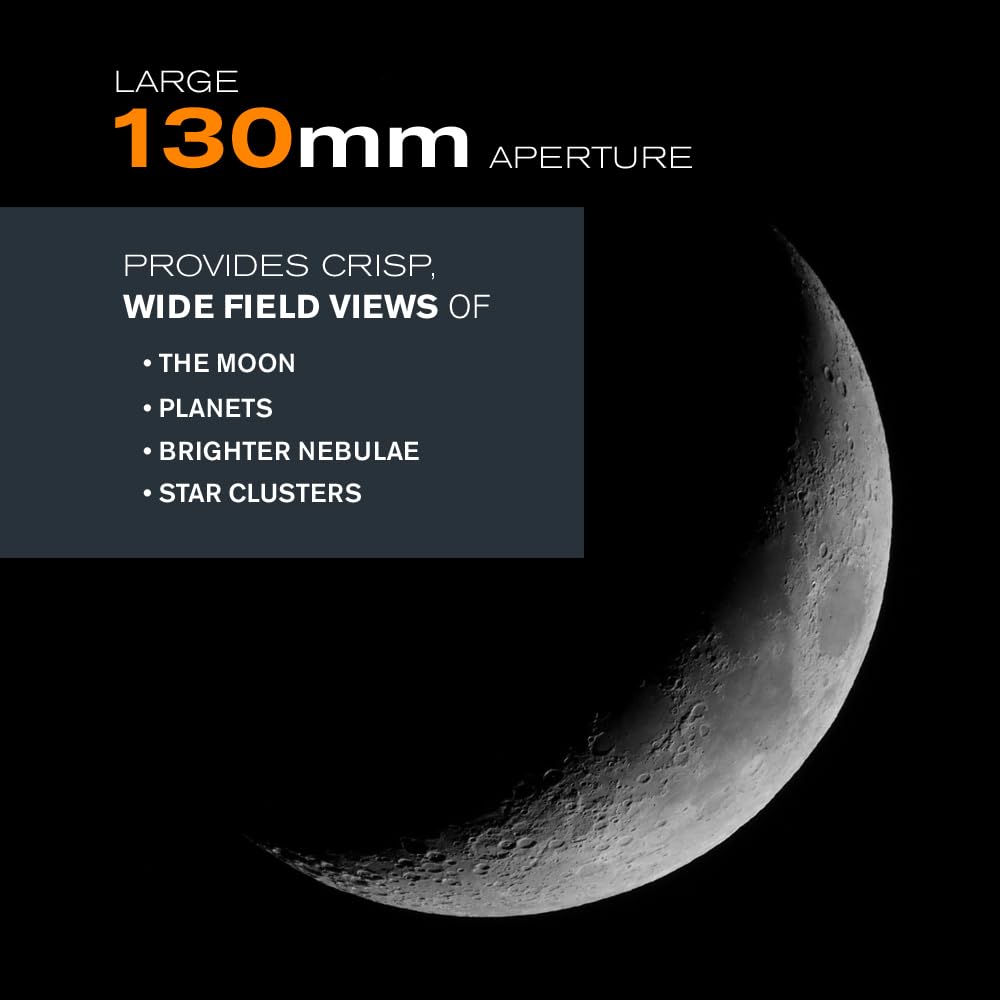
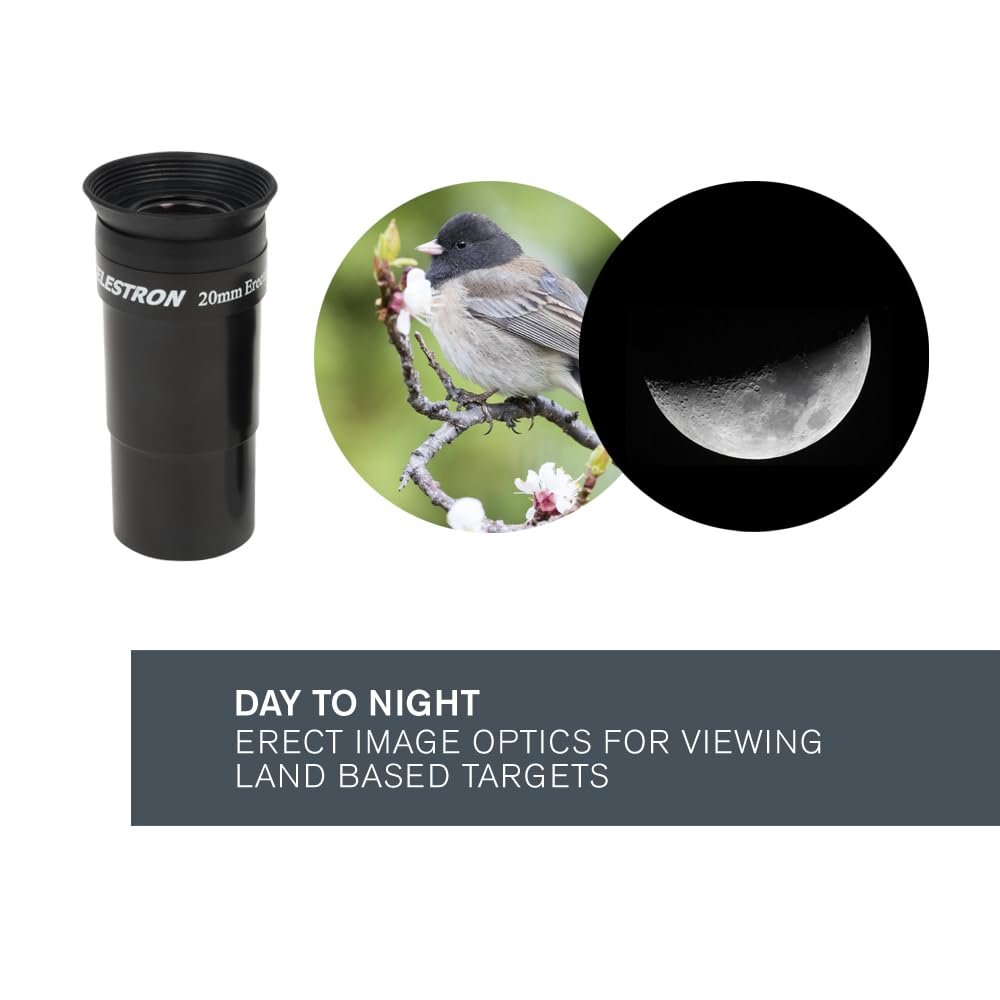
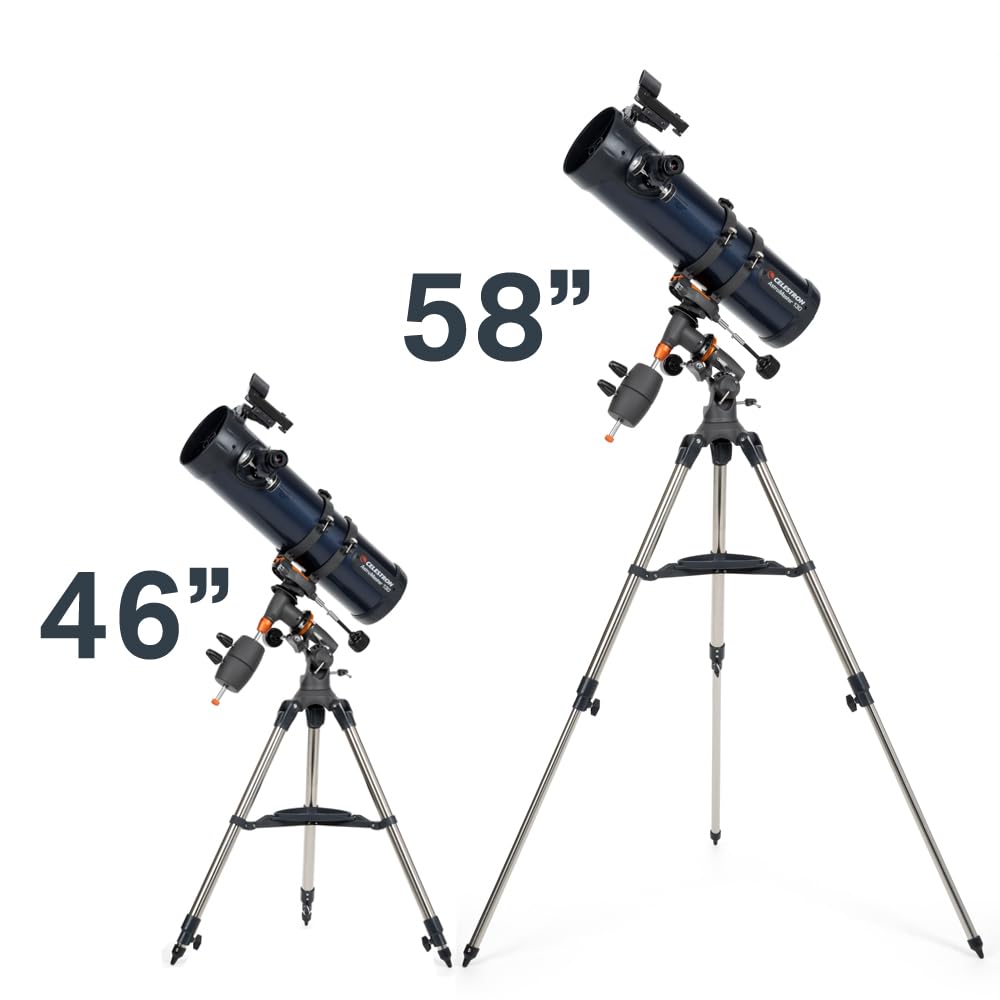
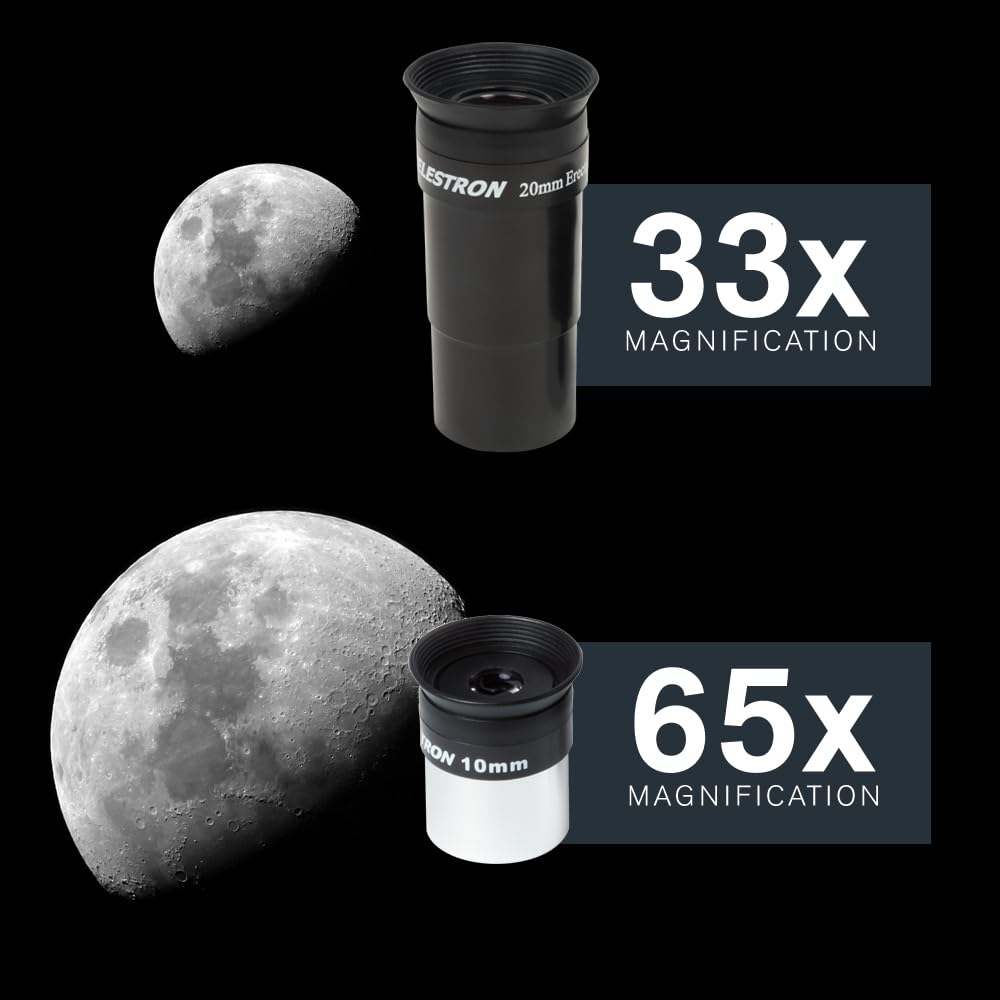
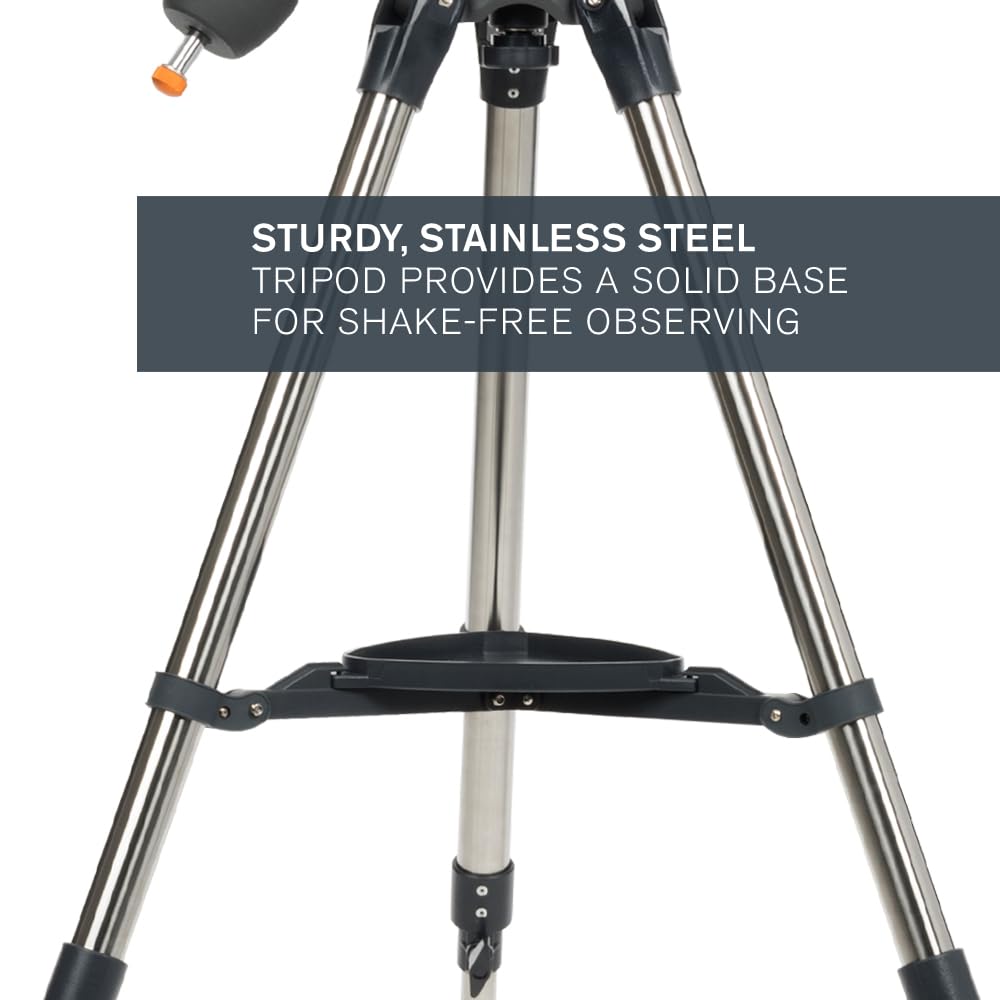
The Celestron AstroMaster 130EQ is a powerful Newtonian reflector telescope featuring a 130mm aperture and a motorized German equatorial mount that automatically tracks celestial objects. Designed for easy, tool-free assembly on a durable steel tripod, it includes two eyepieces and access to advanced sky mapping software. Ideal for millennial stargazers seeking a blend of precision, convenience, and immersive astronomy experiences.


| ASIN | B0013Z42AK |
| Batteries | 1 Lithium Metal batteries required. (included) |
| Best Sellers Rank | 6,082 in Electronics & Photo ( See Top 100 in Electronics & Photo ) 13 in Telescopes |
| Brand | Celestron |
| Colour | Grey |
| Country of Origin | China |
| Customer Reviews | 4.3 4.3 out of 5 stars (7,880) |
| Date First Available | 30 Sept. 2008 |
| Delivery information | We cannot deliver certain products outside mainland UK ( Details ). We will only be able to confirm if this product can be delivered to your chosen address when you enter your delivery address at checkout. |
| Focus type | Manual Focus |
| Guaranteed software updates until | unknown |
| Included components | see descritption |
| Item Weight | 17 Pounds |
| Item model number | 31051 |
| Min Focal Length | 650 Millimeters |
| Model year | 2012 |
| Objective Lens Diameter | 130 Millimetres |
| Package Dimensions L x W x H | 87.6 x 47.1 x 28 centimetres |
| Package Weight | 16.8 Kilograms |
| Part number | 31051 |
| Plug profile | CG-3 Equatorial |
| Product Dimensions L x W x H | 88.9 x 48.3 x 27.9 centimetres |
| Size | 130EQ Newtonian w/Motor Drive |
| Style | AstroMaster 130EQ MD Reflector |
| Telescope Mount Description | CG-3 Equatorial |
A**N
Recommended
Review of Celestron AstroMaster 114EQ Reflector Telescope: Update (July 2018): I've spent a lot of time with this telescope now, perhaps 100 hours, and have an even better opinion of it than before. As a cheap small telescope it is ideal for beginners like me and I couldn't ask for a better experience for the right-above £100 price I paid. It is one of the most cost effective pastimes I've enjoyed. With the telescope, I've observed: The Moon Venus Mars and its ice cap Jupiter, its cloud lines, and its big red spot Saturn and its rings Satellites Many open clusters Many globular clusters A few nebulas (The orion nebula is amazing!) The Andromeda Galaxy Over the past months I have gathered some tips for getting the most out of this telescope: * The 114EQ has a corrector lens built into the eyepiece tube that also acts like a 2x barlow lens, essentially "zooming in" by 2x power by default. This works well for planetary viewing, but for objects like open star clusters and the andromeda galaxy it can be too much magnification to get a wide enough view with a 20-24mm eyepiece. Also, for faint objects like nebulas it can reduce the exit pupil of the telescope to a very small size, which limits the ability of your eye to gather light. A solution I found is to use a 0.5x barlow lens to reduce the overall power to 1x. I recommend the Solomark 0.5x Focal Reducer available on Amazon, which screws into the bottom of your eyepiece. * I tried a number of different eyepieces, including moderately expensive ones. My favorite experience was the Seben 7.5-22.5mm Zoom Eyepiece. While being one of the least expensive eye pieces I used with the telescope also offered the most adaptable experience. I rarely use the other eyepieces now because the seben zoom allows me to spend more time viewing and less time fiddling. When paired with a 0.5x barlow, it gives the telescope a wide range of configurations that allow it to be a nice platform for viewing all objects below absolute magnitude 10. * The mount has a cheap bearing for the equatorial axis which has a bolt that both acts as the axle and as the tightener. This is where most of the vibration in the mount comes from. In order to make it work well, it is critical that the washers go in the correct order and that the bolt is torqued such that it is tight but not binding. The correct order is the metal washer first and the rubber washer second on the bolt. If they are reversed, the bolt will back its way out when turning the equatorial axis and lead to a lot of wobbling. * I removed the locking screws for the collimation knobs on the primary mirror. The telescope keeps its collimation well without the screws, and the knobs are much easier to adjust in the field without having to take the screws out first. Speaking of which, accurate collimation is critical for all reflector telescopes, so if you are not comfortable learning how to do this time consuming process, you should buy a refractor telescope instead, which does not require collimation. After learning the process, it is painless to do. Reflectors like the 114EQ are cheaper for better image quality than refractors, but collimation is the price you pay. * I switched to using Stellarium for my session planning instead of the included Starry Night. I find Stellarium easier to use, and it also allows me to plan which eyepiece configurations are appropriate for a particular object. The mobile version of stellarium is way better than the mobile version of starry night -- more stars included, and easier interface. Really love this telescope! While viewing feint objects like nebulas begs for a larger telescope, I have found my time with this scope highly rewarding at a fraction of the price. I highly recommend this telescope for budding astronomers. Original Review (March 2018): I spent some of my teenage summers with a cousin who loved astrology and introduced me to many of the concepts. Many years later I decided to invest in my own small scope, nothing like the big one my cousin had. After reading reviews and studying specs I picked the Astromaster 114eq for it's nice blend of small size, price, and performance. On our first night viewing, my girlfriend and I caught views of the Orion nebula and beehive cluster right out our apartment window. Wow! It made me realize what I had been missing out on! I am far from an astrological expert, but I can see that the EQ114 can go far, especially with the right adjustment. Collimation is difficult with the stock screws, but after spending several hours over multiple sessions I got it pretty darn good and the picture is nice to my uneducated eyes. The included software helped a lot to find things to view and to track them down in the sky. I don't want a big telescope due to storage, but I'd like to see how far my eq114 will go. To that end I bought a better eye piece than the cheap ones it comes with to see how far the little guy can stretch. The eye piece cost almost as much as the telescope, but I hear they make a huge difference so I am looking forward to trying it out. It's the kind of thing that will last for 50 years so I'm not worried about the investment. You shouldn't be either! Don't hesitate if you're on the fence, this is a good little scope I can fully recommend.
A**N
Great for first time users
After much searching and investigating I picked this telescope as it had the largest aperture for my price range. It is very well built and was easy to setup and build. The guide is useful, but ended up searching YouTube for a video guide - this also included how to balance the telescope [...]). The telescope itself was supplied with 2 lenses, a 20mm and a 10mm. The 20mm is plastic and I only use it as a starting lens to position the telescope first to what I want to see. The 10mm is a good little lens and give nice view of the stars and moon. I also purchased the 'Celestron AstroMaster Accessory Kit' at the same time - this included lens filters and additional 5mm, 15mm and 2x lenses. This gives more range of magnifications to use with the telescope. Viewing with the telescope is very good. The moon is amazing, but you will NEED a moon filter - it is very bright. You can clearly see the moons of Jupiter and with my additional 5mm lens I can just about make out the markings of Jupiter. As for the other planets they have not been visible in the evenings yet - but can't wait until Saturn appears! The only fault is the StarPointer. It's not that good, but you can work around/with it. I have even had my 4 year old daughter looking at the moon - which she found fascinating as she could see the craters very clearly. Since buying this, I have also contacted Celestron support (issue with the additional lens). They were quick and put me in touch with their local distributor (Hama) in the UK. Hama were also very helpful. All-in-all this is very good for the price it costs. I wanted a good telescope that would allow me to get started in Astronomy, without using it for a short while and having to replace it when I want more. This is a good start and with the right lenses will do for what I want it for. Good quality lenses are not cheap (it's the price of the telescope itself for a set), but I can now slowly upgrade this over time now that I have a decent telescope.
S**S
Good first telescope
This is my first Newtonian Telescope.Its not a bad beginner telescope but it needed collimating first which is easy to do also the tripod isn’t the best quality you get a shaky image which settles down after a few seconds. But once collimated the image quality is great
F**Z
Çok iyi bir teleskop. Başlangıç için 50AZ modelini almıştım ama arasında çok fark var. Andromeda, jüpiter, saturn ve niceleri telefonumda var ama "AMAZON TÜRKİYEDE RESİMLERİ AÇSA GÖSTERECEM!" Eğer çok üst segment alıp para basmayacam diyorsanız ideal. Çok ekmeğini de yedim ürünün ;) 2 eksisi var el ile taşınmaz çok ağır. Ekstra lens alıp geliştirmek lazım. Jüpiterin 2 büyük çizgisi ve büyük kırmızı gözü lens yardımı ile gözüküyor. Ayrıca fotozeynep ile 1 günde kapınızda.
R**A
5 estrellas banda, viene completo y cuidadosamente empacado, observe júpiter por primera vez y se ve hermoso (pequeño pero hermoso) aunque mi celular no capta bien se ve muy bonito y nítido :0
C**6
I wanted to get my feet wet in backyard astronomy, after getting bitten by the bug using a pair of Nikon 8x42 binoculars. The binoculars still are a must have item, but far to shaky and low magnification to get views of planets. So I researched telescopes, and decided on a refractor, due to having small children and little time to fiddle with collimation. My budget was low, to keep my wife happy. The 70EQ stuck out due to the sturdier CG-2 equatorial mount and tripod, and far more sensible and better eyepieces (Kellner) compared to the powerseeker models. I was able to assemble it in about 20min, got it outside, and found both Jupiter and Saturn in a few minutes. Absolutely amazing seeing both the Galilean Moons and Saturn's rings within minutes of getting it outside. The moon itself is spectacular through this scope at both 45X and 90X. The 10mm has considerably more chromatic aberrations than the 20mm, but it's not bad. After that first night, I got the mount set to my latitude, and polar alignment consists of setting the tripod up with the mount approximately facing North. For generally keeping Saturn in the viewfinder that's good enough. The EQ mount is a must have though. I love it. I have run into a problem with the red dot finder scope, it stopped working after about a week. I swapped in a couple of new batteries and still broken. So I quickly ordered a replacement for $14 and am back up and running. So far the new one hasn't faltered. I'd recommend this scope to anyone. It is usable right out of the box. I've seen all 8 planets through it. Uranus and Neptune are still tiny dots, but you can tell they're blueish color and that they are round, but that's about it. Saturn is my favorite, it's also tiny at 90X, but the rings are clearly visible and separate from the planet itself. Jupiter, I can faintly make out the cloud bands, the planet is small and contrast is low, but with patience and persistence they are visible. I haven't been able to make out the giant red storm, but I'm hoping to get a decent 7mm or possibly 5mm eyepiece to push into the very limits of this scopes capabilities and make it out, along with the Cassini division. But, if not, it gives me a reason to beg for an upgraded scope someday. I've also been mesmerized by the faint grey fuzzies that are up there. I've seen the Andromeda Galaxy, the Dumbbell Nebulae, and the Orion Nebulae, these are faint as the scope is a slow f/12.9, but again, with patience they are there yo see. Have fun, and get something, you can't see Saturn's rings without some sort of scope. 73
K**.
Fungerade precis som jag hade förväntat mig, bra produkt
S**P
Amazing is just not enough to describe what you see and feel looking through the eyepiece. Venus was my first stop, "wow" was the word that came out when the image got focussed for the first time. I could see the phases of venus with just the 20mm eyepiece. 10mm made the image a bigger one and astonishing. Moon was playing hide and seek with the clouds but when it was well above the horizon and shining brightly, I was spell bound with its beauty. Honestly you could spend hours just looking at the moon. 10mm eyepiece gave an even closer look at the Carter's, the shadows casted by the craters and the mountain ranges on the moon. Jupiter looks like a 2mm ball with very faint bands of methane distinguishable if observed for longer durations. The four moons of Jupiter are just a very minute dots if observed very minutely. But I felty it requires more magnification power to observe Jupiter with it's methane bands and the giant red spot. (May be collimation issue is there) Couldnot see the most beautiful planet Saturn as clouds came in hope to see it when conditions are perfect. These were my first experience of amature astronomy with my first telescope. I don't write reviews at all but this Celestron Astromaster 130eq is such amazing piece that it made me to write such a review. Though there are some points which I would like to list to get the most out of the telescope. 1. Lots of patience is required to be able to see what you actually want to see, trust me patience will give you all that you want from this telescope. 2. Try to see the videos and go through the instructions manual before beginning assembly of the telescope as it's quite critical for one who has no idea of any such kind before. 3. Lot of things has to go right to get the perfect views, if not getting the perfect view wait for the perfect condition to occur. 4. The equatorial mount is very heavy and of solid built quality but the pointers are just not right and you can't be sure which degree u are setting on it. 5. The tripod is also of heavy construction but if expanded fully it feels more shakey so I don't expand it. 6. The secondary mirror was dangling loose when I first unpacked the telescope which totally dishearted me but I did manual collimation as per the instructions manual provided and it was fairly accurate but will eventually require a lazer collimation which again costs around Rs 6000/- to get more sharper images. 7. The telescope is very heavy (around 16kgs) and very difficult to move it around in assembled condition. It gave me body pains the next morning after my first setup and observations. 8. There are no cromatic abbrations as it is relfector telescope and the optics are of very good quality Those who are still reading this review and disheartened because I didn't post any pictures of moon or Jupiter for them I just want to tell that pictures just don't do justice to what you can actually see with your naked eye because human eye has 1000 times better dynamic range than any camera. Even I have gone through all the pictures posted in the other reviews. Trust me you are going to see 1000 times better with your naked eye that any of those pictures. If you want to go for this telescope go for it without any hesitation as it will finally give you and out of the world experience.
Trustpilot
5 days ago
3 days ago