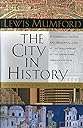
The City in History: Its Origins, Its Transformations, and Its Prospects
Desertcart purchases this item on your behalf and handles shipping, customs, and support to South Korea.
Description
WINNER OF THE NATIONAL BOOK AWARD. A definitive classic, Lewis Mumford's massive historical study brings together a wide array of evidence — from the earliest group habitats to medieval towns to the modern centers of commerce — to show how the urban form has changed throughout human civilization. Mumford explores the factors that made Greek cities uniques and offers a controversial view of the Roman city concept. He explains how the role of monasticism influenced Christian towns and how mercanitile capitalism shapes the modern city today. The City in History remains a powerfully influential work, one that has shaped the agendas of urban planners, sociologists, and social critics since its publication in the 1960s.
Specifications
| Dimensions | 5.25 x 1.92 x 8 inches |
| Isbn 10 | 0156180359 |
| Isbn 13 | 978-0156180351 |
| Item Weight | 10.4 ounces |
| Language | English |
| Print Length | 657 pages |
| Publication Date | October 23, 1968 |
| Publisher | Mariner Books |
| Reading Age | 14 years and up |
Reviews
User
A comparative analysis of cities
Lewis Mumford deftly explores the formation and development of the city from its early Mesopotamian and Egyptian roots to its modern day manifestations. It is the logical extension of his earlier works on the subject, in particular "The Culture of Cities," which has been partially absorbed into this volume. Of particular interest to meis his analysis of the walled versus open cities, and the sharply opposing world views of the progenitors of these cities.Mumford was particularly drawn to the early Hellenic and later medieval town planning ideals. He noted how the early cities knew their limits, and established satellite communities, rather than continually extend their boundaries. Loose-knit federations were formed, which were much more democratic than were the Roman and Baroque regimental cities.He charts the evolution of modern city planning ideals, very critical of Le Corbusier's "Radiant City" and other megalomaniac ideas which arose in the 20th century. Mumford favored the "garden city" ideals of Ebeneezer Howard, which recognized the destructive impact of industrialization on urban centers; rather than those schemes which extolled the industrial city as the city of the future.Mumford is careful not to over reach, or at least let you know when he is forming suppositions. His annotated bibliography is immense, and probably the single most compelling aspect of this book for those who want to read more on the subject. The new Harcourt paperback edition, which came when I ordered this volume, has a more handsome cover than that shown in this listing.
User
A must read book!
I couldn't find this book in Europe. They told me that it was finished it would never be reprinted again!When I had the chance to buy it form Amazon, I took it in a minute!Mumford's opinion for the "City" is so clear and yet so original that even people with no scientific intrest in this book, will enjoy reading it.He has wonderful examples and detailed studies on the history of cities starting from Egypt, Greece Rome and Middle Ages.Its a unique historical work that everybody should have it in their library!
User
A Real Reference work.
A thicker volume than expected, packed with information. A reference work for the student of History.
User
A very presentative work of research in the field
A definitive classic, a must read from a brilliant mind. The book was a national book of the year back in the early sixties and is still avant garde. It should be required reading for all leaders in society of both the private and public sector. There should be an ethical requirement as well as one of profit when designing our modern cities and this book provides the windows for the proper viewing!
User
Origins and future of cities
Great book on the origins and evolution of cities from ancient to modern times. Skips the early modern period
User
Mumford's book should be mandatory for all architects and engineers
A read this the second time as this was a mandatory read for my engineering degree. It is a classic, a penetrated history of Cities starting from the beginning of cities. An important read to understand the ingredients for a successful city.
User
As primers go.
The basic review of Architectural history as tied to human settlement. Read this book and go talk to the city council.
User
Excellent service!
Success! Thanks for sending this remarkable book, which arrived exactly as described. I'd be glad to do business with you again.
User
Tem que ler de lupa
Péssimo tamanho de letra. Péssimo papel. Tamanho de pocket book. Pelo preço, merecia uma edição mais caprichada. Sobre o conteúdo, é especial. Um clássico da área.
User
Five Stars
Masterpiece.
User
Testo fondamentale
Molto interessante e completo
User
A great book which works methodically through its subject
A great book which works methodically through its subject. The development of man's co-habitation and development has been handled so well and interestingly.
User
Five Stars
amazing book!!
Common Questions
Trustpilot