We remain fully operational. Our teams are working around the clock to ensure your deliveries continue safely.

DOWNLOAD THE APP


Customer Services
Copyright © 2025 Desertcart Holdings Limited
DOWNLOAD THE APP
Buy anything from 5,000+ international stores. One checkout price. No surprise fees. Join 2M+ shoppers on Desertcart.
Desertcart purchases this item on your behalf and handles shipping, customs, and support to South Korea.
🏍️📚 Unlock the road to wisdom — where philosophy meets the open highway!
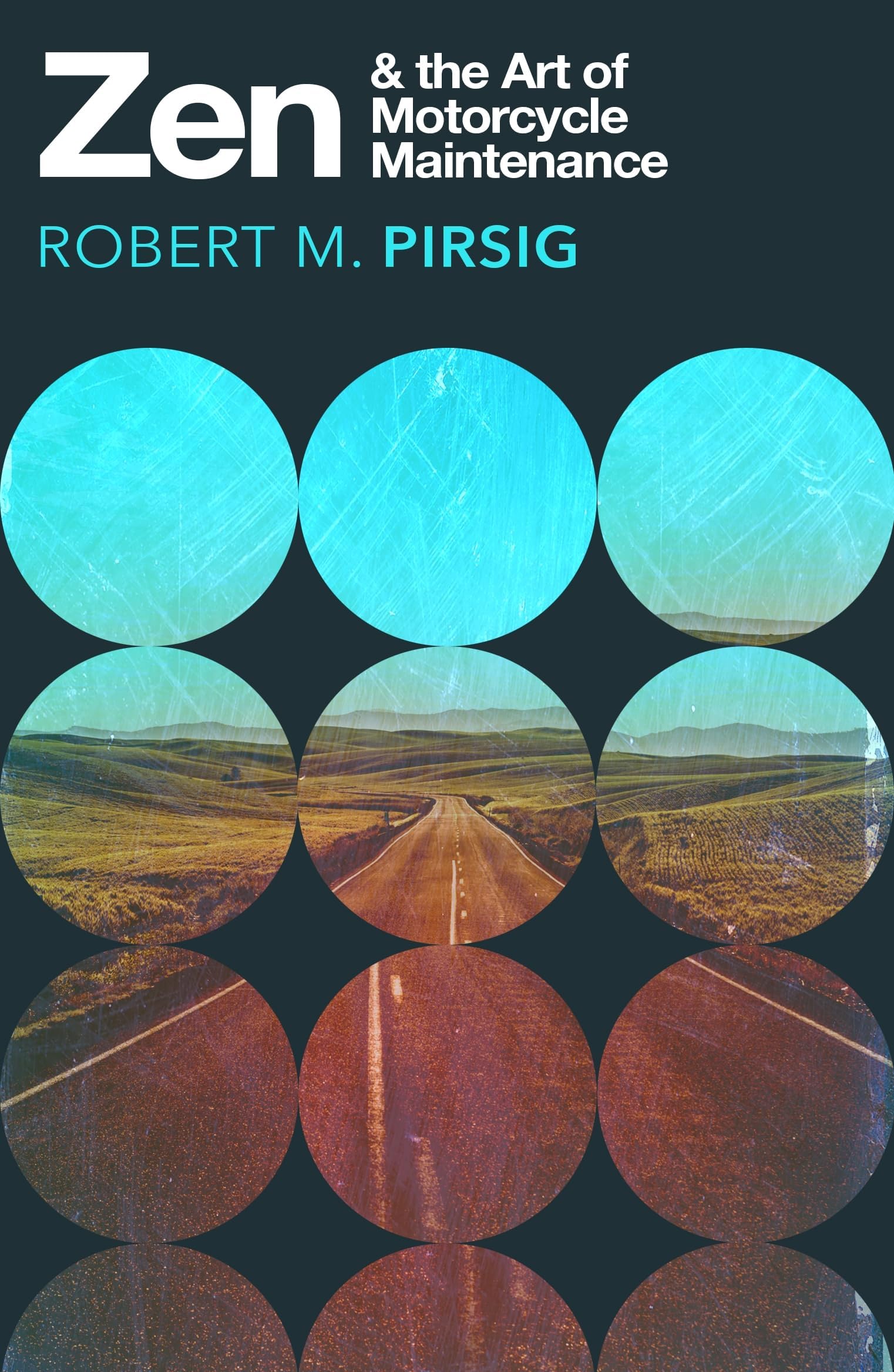
Zen and the Art of Motorcycle Maintenance is a vintage classic blending a father-son motorcycle journey with a deep philosophical inquiry into quality and values. Celebrated for its intellectual rigor and accessible style, it ranks top in Philosophy and Travel categories with over 12,000 reviews averaging 4.4 stars, making it a must-read for thoughtful professionals seeking to challenge their perspectives.


| Best Sellers Rank | 6,301 in Books ( See Top 100 in Books ) 9 in Philosopher Biographies 17 in Fatherhood (Books) 43 in Travel Writing (Books) |
| Customer reviews | 4.4 4.4 out of 5 stars (13,110) |
| Dimensions | 13 x 2.8 x 19.8 cm |
| Edition | 1st |
| ISBN-10 | 0099786400 |
| ISBN-13 | 978-0099786405 |
| Item weight | 302 g |
| Language | English |
| Print length | 432 pages |
| Publication date | 6 Jun. 1991 |
| Publisher | Vintage Classics |
A**R
A quality book (sorry).
A quick scan of the online reviews available for this book will quickly show you that it provokes strong reactions in those that read it - there aren't many 3* ratings here! While at first glance these ratings might appear to be indications of the inate quality of the book itself, they would better be thought of as indications of the quality of the experience that each reader had when interacting with the book. Each reader will bring something of themself to the book, and so the quality of this experience will be influenced both by the book and also by the reader. When you look at it like this, it is obvious that how much you like this book will depend on yourself as much as on the book itself. However, since people's reactions to it seem generally to tend towards the extremes, it seems probable that you too will either have a great, or a terrible experience. In order to help you make an informed judgement on this, a few observations, in which I will attempt to approach as near to objectivity as possible: - It is not a 'hippy bible', as one earlier contributer suggested. It is a book about philosophy which blends discussions about the nature of peoples interactions with the world around them with a story of a road trip taken by a father and son. - It is entirely rational. There's no new-age mysticism, no real discussion of sprituality - rather a critique on how you look at things and interact with them. - It is fairly intellectual, but necessarily so. The author has a very clear, conversational style of writing, and the ideas he attempts to express are not difficult, but nonetheless the reader is required to think during the reading process. I suggest that you read this book. It has certainly influenced my thinking on the world, probably more than any other single book I've read. However, if you really hate it as much as the contributor 'blowski', I certainly would suggest that you stop reading before you get two thirds of the way through. No point in getting as mad as he did about it.
J**J
Thought provoking
Listened to the audiobook a couple of times already. I would recommend this to anyone looking for a thought-provoking read. 📚
E**X
Challenging read
This is a challenging book to read and I admit it took a while to 'get to grips with it'. I feel; personally speaking, that this is a book I will need to re-read to fully understand all that it offers, but I can understand the criticism offered by others who find it puzzling, banal or just self-indulgence by the author. The author was clearly very intelligent and well versed in Classical literature Having completed the book, I found this to be one of, [if not the hardest book I have ever read]. The author seemingly was dealing with his own intellectual struggles with the duality of life and this is the context of the book, set within a motorcycle journey that he took previously and which he now repeats with his son and a couple of friends. It is my take, that it was written to illustrate both the perspectives of himself now when 'recovered'; and also his recollections of earlier perspectives of his mind whilst he was facing these challenges. We would label these mental health challenges, [I think he records it as catatonic schizophrenia], but I like the alternative supposition posed by the author when he suggests a Zen perspective for the dichotomous struggles of his mind/personality. He uses motorcycle maintenance as a metaphor for some of the aspects of our man-made constructs of human life and learning. I have learnt from reading this book and would like to see it made into a film, if someone intuitive enough had the capacity to properly demonstrate the meanings and the lessons that Mr Pirsig was trying to tell us about.
M**D
Zen and the Art of Motorcycle Maintenance - 25th Anniversary edition
This is an interesting book - no, really. Despite the title it is not really about Zen Buddhism nor is it really about motorcycle maintenance, although both these topics feature. It begins with the narrator (his name is never supplied directly) motorcycling through parts of North America with his son, Chris, and two friends, John and Sylvia. The topic of maintaining motorcycles comes up and it is clear that the narrator has a totally different attitude from his companions. There is a tension that becomes stronger as time passes. The friends depart, their journey completed, but the narrator and Chris continue. As the book proceeds it becomes clear that there is not a single story here, there are at least two. There is the motorcycle journey, which provides the structure for the book, and there is the story told in memory-fragment flash-backs of an 'other' called Phaedrus. Suddenly, it is apparent that the narrator and Phaedrus are one and the same, yet different. This difference and what caused it are the main thrust of the book. Phaedrus was seeking the truth about excellence, quality, what is is, how it is defined, how to achieve it. His search took him into philosophy where he was overwhelmed. He was declared insane and subjected to ECT (electro-convulsive therapy - shock treatment) which stripped his memories. Somehow, the book doesn't define how, he survives for years with his early memories gone but Chris remembers the way he was and resents the present condition. Along the journey, the narrator remembers being in various places before as Phaedrus and the feelings become stronger as the journey nears its completion. The end of the book is almost as expected, but not quite. This book contains many thoughts and insights into attitudes about excellence and the approach to quality that impinge on every aspect of modern life. Don't read it expecting to learn about Zen Buddhism, nor about motorcycle maintenance, except in very general terms (it is notable that the author's bike always seemed to need work done on it to keep it running whilst John and Sylvia's bike was never touched yet they had no problems with it), just read it. It is a wonderful book.
B**N
Ich habe das Buch dreimal gelesen. Einmal als junger Mann auf meiner Muttersprache Dänisch, später nach meiner Auswanderung nach Deutschland auf Deutsch, und jetzt als alter Mann nochmal auf Englisch. Die Übersetzer haben hervorragende Arbeit geleistet und die Übersetzungen sind genau so gut wie das Original. Trotzdem gibt das Lesen auf der Originalsprache den letzten Pfiff dazu. Wer kann, sollte es auf Englisch lesen. Das Buch an sich ist von derart vielen Menschen rezensiert worden, die insgesamt alles erzählt haben, was es darüber zu sagen gibt. Ich kann kaum noch etwas dazu beitragen. Das Buch hat drei Themen. Das erste Thema. Das Buch besteht aus einer Rahmengeschichte, die die Form eines Romans hat, und die beschreibt, wie jemand, der eine Elektrotherapie bekommen hat, nach und nach einen Teil seiner früheren Gedanken und seiner früheren Persönlichkeit wiedergewinnt. Allein diese Geschichte ist interessant auch für Ärzte und Psychologen und gibt Anlass zu allerlei Diskussionen. Das zweite Thema. Eingebettet in dieser Rahmengeschichte ist die Verfolgung der Gedanken, die der Verfasser früher gedacht hat, die sich auf einem sehr hohen intellektuellen Niveau mit Literatur, Rhetorik und Philosophie beschäftigen und ähnlich wie Einstein, der in der Straßenbahn seine allgemeine Relativitätstheorie ausgedacht hat, hier eine allgemeine Theorie beschreiben, über etwas, das der Verfasser Qualität nennt. Dieses Thema ist an sich ein sehr interessantes Thema, das mit der Rahmengeschichte überhaupt nichts zu tun hat, sodass das Buch tatsächlich zwei unabhängige Themen behandelt. Der Verfasser ist ein überaus bescheidener Mensch, der nicht behauptet, den Stein des Weisen gefunden zu haben, obwohl die Gedanken, die hier vorgelegt werden, durchaus völlig neu sind und den Blickwinkel des Einzelnen vollkommen ändern dürften. Dadurch dass er die Gedanken einfach nur so vorlegt, als jemand, der geisteskrank ist und nach sich selbst sucht, spielt er seine Neuentdeckung höflich herunter und stellt sich nicht wie ein philosophischer Erneuerer vor. Obwohl er das eigentlich ist. Wie wir wissen, hat es seit langem Strömungen, zum Beispiel in der "Antipsychiatrie", gegeben, die meinen, dass Schizophrenie aus Erlebnisse oder fehlgeschlagenem Denken entstehen kann und auch mit Gedanken und Gesprächen wieder gebessert werden kann. Andere meinen, dass Schizophrenie eine körperliche Krankheit ist (irgendwelche Verbindungen im Gehirn seien falsch verdrahtet), die mit chemischen oder physikalischen Mitteln behandelt werden soll. Das Buch hat damit als drittes Thema, ganz höflich, vorsichtig und unaufdringlich, wie dieser Mann so ist, und ohne Gehässigkeit, die Verbitterung über die erlittene Elektroschocktherapie. Das Buch versucht aber keineswegs allgemein eine Stellungnahme für oder gegen die Psychiatrie als solche zu machen.
湯**き
不思議な自伝小説。まずタイトルがミスリーディング。ZENなんてほとんど一瞬しか出てこない(2箇所か)。次にモーターバイク・ツーリングはやってるが、MOTORCYCLE MAINTENANCE程のものでもない。しかも、1章から22章位までは、何を目的で書いてるのか、全然解らない。途中から始まるプラトン、アリストテレス、ソクラテスの話もどこの方向に向かってるのか解らない。そう、バイク・ツーリングでどこに向かってるのか解らないのと同様、本の行き先もわかない。「なんで、この本がこんなに評価されたんだろう?」と読みながら疑問になったりする。でも、読み進める事が出来たのは、私に若い頃に英語を教えてくれた若いアメリカ人女性が学校で与えられた英語教材のテキストを「こんなの読んでも面白くないでしょ?私、ホントは別の本を考えてたのよ。その本の題名はZEN AND THE ART OF MOTORCYCLE MAINTENANCE。高校生の時に読んでショックを受け感動した。それをクラスで使って皆で読んで欲しかった」と言ったことが頭から離れなかったから。実際には、学校の教材に適していたかは疑問ではある。この本を読み切るには普通の学生レベルの英語力以上の語彙力が必要かもしれない。それに場面の展開でなく、思考の展開でストーリーが進んでいくから、著者の独特な英語の言い回しの文章を味わう余裕(丁度、バイク・ツーリングで風切る感触を味わうような余裕)がないと続けられないかも そのように半信半疑ではあったが、なんとなく先の展開を期待していた。そしたら、23章あたりから、私には俄然、面白くなっていった。読後感は「読み切った」という達成感が半分、「結局、面白かった」という満足感が半分 個人的な事情だが、この本を読んだ数か月前にBERTRAND RUSSELLのHISTORY OF WESTERN PHILOSOPHYを読んでいて、これも、西洋哲学史というよりはBERTRAND RUSSELLの思想家としての個人的な評価をバンバン書いてる本で、そこにあったギリシャ哲学と比べながら読めたので、良かったかもしれない いずれにせよ、最後まで読み切って損はない、と思う本
G**L
Some sections of this book required energy for me personally to get through, discussions of technical Greek philosophy and such, but I assure you, the whole book is so so worth it.
L**D
Looking at the reviews here, this book is loved by hundreds and reviled by a small percentage. I wonder what causes so much passion? It's wonderful that we have, among those who gave the book just one star, so many people who are so far above it intellectually -- too familiar with philosophy, too personally enlightened, perhaps -- to find any value in it. But I would like to point out to the subset of our best and brightest, those who tell everyone else not to waste their time reading it, that just because you got nothing out of the book doesn't mean no one else will. One of the complaints I see here is that there isn't much of the title's Zen nor much motorcycle maintenance, either -- and I note that the author says something about this in his introduction, so it must be true, right? -- yet I believe there is plenty of both. If the reader is expecting an introduction to Zen or a How To manual on motorcycle maintenance, those will not be found. It's not even the author sharing his enjoyment of either of the two fields with his audience. But the themes that run throughout the book explore many of the same ideas the Buddha did, and several concepts important to motorcycle maintenance that will not be found in manuals are discussed throughout the work. But the title really represents the duality that Pirsig puts under his microscope: Zen represents the hippie "go with the flow" attitude that is contrasted to the "slice and dice" schemes of technology, via motorcycle maintenance. And in the end, the title doesn't say just motorcycle maintenance; it's the "Art " that's critical, because one thing the book is aiming for is to show us that the science of technology is an art -- or at least should be an art -- and that the two ways of looking at life don't need to be in opposition, but can be quite naturally blended, to the benefit of all concerned. It might seem like the novel is caught in its time, with language about those who see things as "groovy" vs. "the squares" but the dichotomy between the two has been under discussion in various forms for centuries: romanticism vs. empiricism, passion vs. logic, science vs. religion. The same split is found today underlying two sides of the debate over climate change. If the book is not approached as being literally about Zen and motorcycle maintenance, but as using these as stand-ins for concepts that can be much larger -- or even much smaller -- there is a lot to be gained here. Another complaint is that the protagonist is not sympathetic, but that's because this isn't a novel written from the romantic side, nor, really, the empirical side -- it's not even a novel, though it reads a lot like one -- it is a true-enough tale of relationships between two related men, and a father and a son, and a road trip that carries with it time for plenty of slow discussion of philosophy. The book takes its time putting the pieces together, and the author isn't trying to win our love -- if you can approach the book on its own terms rather than with a whole load of expectations about what it should do and how it should do it, you may get something out of it -- but to truly enjoy it, you've got to go with the flow, you know? I know I get a lot out of it every time I read it. I love road stories, and this one is paced just like a real long-distance trip, with long stretches of time to think things through interspersed with short breaks for taking care of the business of life. That what's going on in the environment, relationships, and other encounters reflects what's being thought through in the long stretches is a small bonus. The writing is clean and evocative, enjoyable. For the most part, the carefully constructed introduction to all the elements needed to understand the philosophy is gentle enough to be clear and not overly taxing, at least until the deepest parts, which can be hard to follow (and for good reason). The elements of psychological mystery captivate me each time. I first read ZAMM the year it was released, in the mid-70s, and have read it at least every five years since then, and each time I thoroughly enjoy it. The first time through, I could not follow the philosophy all the way down into the descent into madness it brought on. Five years later -- with time for the ideas to be examined through my own life -- I got it, even agreed with it. This time, this reading, is the first time I ended up doubting the validity of the greatest philosophical insights the story offers. Ironically, it's my deepening understanding of Buddhism that changed my mind. There really is a lot of Buddhism in this book, and not specifically Zen, either, but the deepest themes common to all forms of Buddhism. The questions about the wisdom of dividing the world up into a duality of the physical vs. the mental, of seeing ourselves as somehow separate from everything else, these were explored by the Buddha, too, though the framework he used to discuss these ideas was -- obviously -- nothing to do with motorcycles. In Dependent Arising he, too, considers how it comes to be that we split the world in two. "Name and form" he calls this split, and later thinkers have described what he was talking about as the same subject-object division that Pirsig is mulling over in ZAMM. The Buddha, though, says that it is "desire for existence" -- not quality -- that, to borrow Pirsig's phrase, "is the generator of everything we know". I tend to agree with the Buddha because I can see in our lives, and through our sciences, what that desire for existence is and why it drives us to divide the world up the way we do, and exactly how it leads us into trouble. I can't say the same for Pirsig's metaphysics, but that doesn't stop me from deep enjoyment of the book. I hope to have another half-dozen five-yearly reads, if I'm lucky, and -- who knows -- maybe I will come around again to see it the way he does.
S**Y
I first read this book when I was 18 and it had quite an impact on me. The book contains easily digested philosophical ideas, woven into an intriguing story about a father, son and a motorcycle journey. These ideas are ones I've found myself reflecting upon, time and time again throughout my life. I'm now purchasing it for a younger sibling and would recommend it to any young woman or man. I specifically purchased this version rather than the version available in Australia as this one comes with a much nicer cover - I'm happy with the product delivered.
Trustpilot
2 days ago
1 month ago