We remain fully operational. Our teams are working around the clock to ensure your deliveries continue safely.

DOWNLOAD THE APP


Copyright © 2025 Desertcart Holdings Limited
DOWNLOAD THE APP
Buy anything from 5,000+ international stores. One checkout price. No surprise fees. Join 2M+ shoppers on Desertcart.
Desertcart purchases this item on your behalf and handles shipping, customs, and support to South Korea.
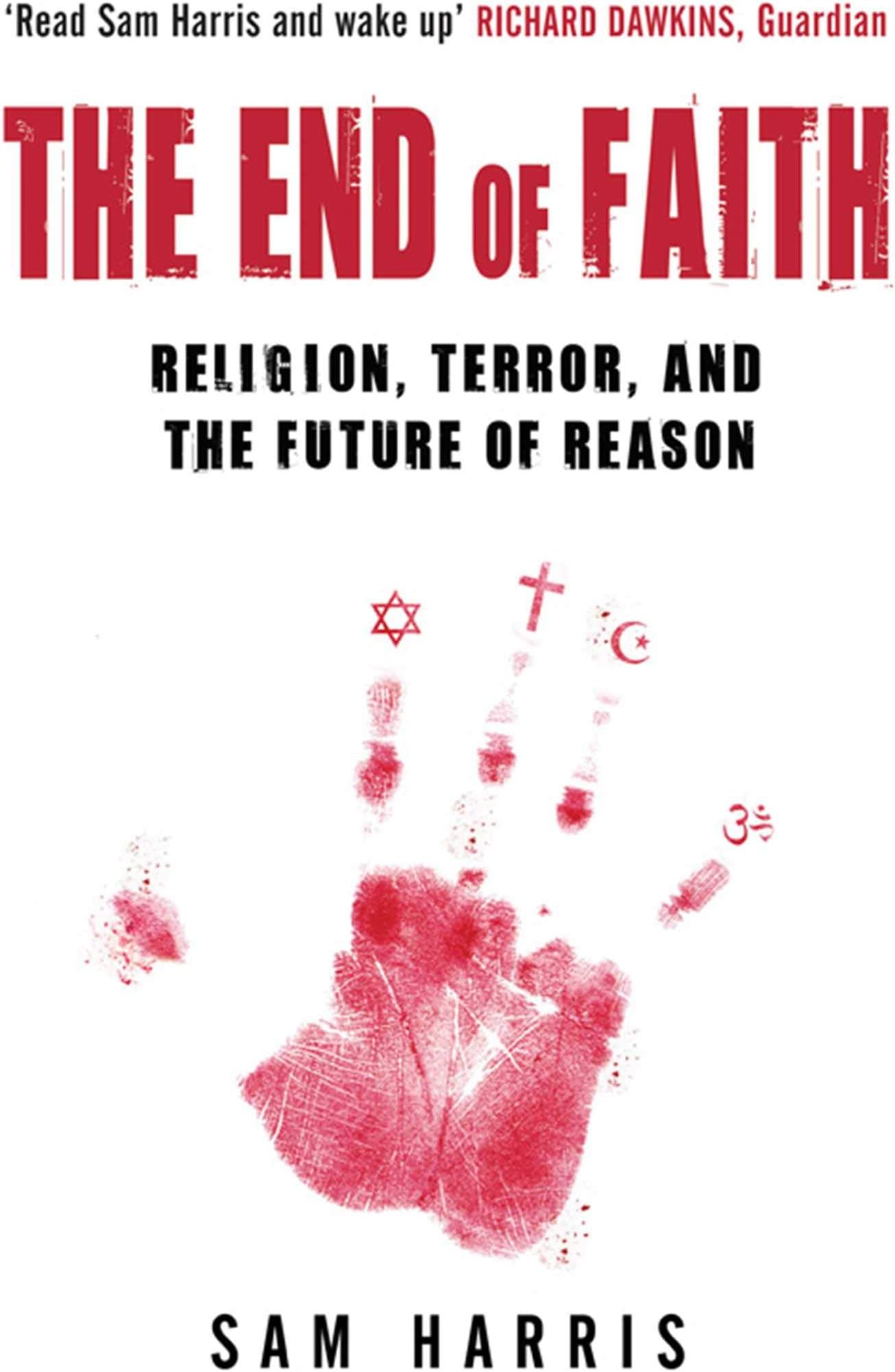
The End of Faith: Religion, Terror, and the Future of Reason : Harris, Sam: desertcart.co.uk: Books Review: Pow! Biff! Zap! Bonk! Someone dial 911 for religion! - Ouch! I thought I'd read it all in the science/religion fracas and then I picked up Harris's book. I've never seen an opinion quite like this, it is truly unique-- as some other reviewers note, it's hard to classify. It's just pure Sam. There are few things one cannot really deny about this book: 1. Just about anyone will find something here they are shocked by. [The Buddhist stuff at the end came out of left field, although I kinda liked it still, and I was amazed that he could support the Iraq War] 2. You'll disagree with at least one point in the book, and get angry at some points (even atheists will!), but that will vary depending on your personal bias. [I'm amazed Harris managed to pull off his argument without contradicting himself; he has reasoned himself into a unique niche.] 3. It is incredibly well written and passionate; almost every page has a well-crafted quotable phrase or two. Swift reading too. A roller coaster ride through Harris's personal views, fears, and his quest to find solutions. [A few phrases left me in fits of giggles, a few others I wished I could commit to memory to use later, and a few others had my jaw drop in amazement that he dared to say them in today's volatile political climate-- I suppose he's not on the radar of the fundies quite enough yet for death fatwas and such] 4. People should read this regardless of how they feel about the state of the world today. It's an crucial book that raises important questions, and to deny the importance of debate about these issues would show more about your own bias and dogmatism than anything else. Fiery and clad in the armor of reason, yet not afraid to be very human and even flawed, this book in some ways is better than anything Dawkins, Dennett, or Wolpert have put out recently. Massively original, very personal and honest, and a real page-turner. I had a hard time putting it down. I rarely give books a second read but now, a few weeks later, I'm thinking of diving back in. Review: The End of Faith by Sam Harris - Review: The End of Faith by Sam Harris Sam Harris book illustrates the irrationality of "religious faith" based on "beliefs" of unsubstantiated facts and yet such myths have been sheltered from criticism from every corner. I have rated it with 5 stars because the book is contemporary, very readable, credible and timely and most of all fearless of "political correctness." The book illustrates that anti-Semitism is integral to both Christianity and Islam and shows the barbarity of Christian who, butchered thousands in the name of God in the Inquisition and the Holocaust. That tribalism, exclusion, racism and savagery is laced throughout the scriptures of all the Abrahamic faiths. Fundamentalist Christian scriptures were protected from inquiry with harsh and uncompromising diktats like that from Pope Pius X in 1907 who declared modernism a heresy. In Islam, it is also heretic to question the Quran or the hadiths. Thus intelligent inquiry into both the Bible and the Quran were stifled for many centuries in Christianity and still does in Islam. Hence the rejection of the modern scientific theories and hypothesis of the 20th and 21st centuries into Abrahamic faith considerations. Such stifling of intellectual exegesis from the highest authorities of the Abrahamic religions has prevented the evolution of modern religious doctrines. Harris' intimate knowledge of Islam also allows him to express his views on the rigidity of the Islamic faith and to express his views on Islam's conflicts with that of Christianity without being hog-bound with `political correctness,' is a bold step in modern 21st century literature. Harris also openly discusses the political correctness in the assessment of our conflicts with Islam. Let me quote his words, "We are war with Islam. It may not serve our immediate foreign policy objectives for our political leaders to openly acknowledge this fact, but it is unambiguously so. It is not merely that we are at war with an otherwise peaceful religion that has been "hijacked" by extremists. We are at war with precisely the vision of life that is prescribed to all Muslims in the Koran, and further elaborated in the literature of the hadith, which recounts the sayings and actions of the Prophet. A future in which Islam and the West do not stand on the brink of mutual annihilation is a future in which most Muslims have learned to ignore most of their canon, just as most Christians have learned to do. Such a transformation is by no means guaranteed to occur, however, given the tenets of Islam." Written with such frankness, it is a stimulating book, and well worth reading
| Best Sellers Rank | 46,884 in Books ( See Top 100 in Books ) 77 in Philosophy of Theology 140 in Religious Philosophy (Books) 1,314 in Philosophy (Books) |
| Customer reviews | 4.6 4.6 out of 5 stars (2,777) |
| Dimensions | 13.3 x 2.2 x 19.7 cm |
| Edition | 2nd Edition |
| ISBN-10 | 0743268091 |
| ISBN-13 | 978-0743268097 |
| Item weight | 1.05 kg |
| Language | English |
| Print length | 336 pages |
| Publication date | 6 Feb. 2006 |
| Publisher | Simon & Schuster UK |
M**R
Pow! Biff! Zap! Bonk! Someone dial 911 for religion!
Ouch! I thought I'd read it all in the science/religion fracas and then I picked up Harris's book. I've never seen an opinion quite like this, it is truly unique-- as some other reviewers note, it's hard to classify. It's just pure Sam. There are few things one cannot really deny about this book: 1. Just about anyone will find something here they are shocked by. [The Buddhist stuff at the end came out of left field, although I kinda liked it still, and I was amazed that he could support the Iraq War] 2. You'll disagree with at least one point in the book, and get angry at some points (even atheists will!), but that will vary depending on your personal bias. [I'm amazed Harris managed to pull off his argument without contradicting himself; he has reasoned himself into a unique niche.] 3. It is incredibly well written and passionate; almost every page has a well-crafted quotable phrase or two. Swift reading too. A roller coaster ride through Harris's personal views, fears, and his quest to find solutions. [A few phrases left me in fits of giggles, a few others I wished I could commit to memory to use later, and a few others had my jaw drop in amazement that he dared to say them in today's volatile political climate-- I suppose he's not on the radar of the fundies quite enough yet for death fatwas and such] 4. People should read this regardless of how they feel about the state of the world today. It's an crucial book that raises important questions, and to deny the importance of debate about these issues would show more about your own bias and dogmatism than anything else. Fiery and clad in the armor of reason, yet not afraid to be very human and even flawed, this book in some ways is better than anything Dawkins, Dennett, or Wolpert have put out recently. Massively original, very personal and honest, and a real page-turner. I had a hard time putting it down. I rarely give books a second read but now, a few weeks later, I'm thinking of diving back in.
M**E
The End of Faith by Sam Harris
Review: The End of Faith by Sam Harris Sam Harris book illustrates the irrationality of "religious faith" based on "beliefs" of unsubstantiated facts and yet such myths have been sheltered from criticism from every corner. I have rated it with 5 stars because the book is contemporary, very readable, credible and timely and most of all fearless of "political correctness." The book illustrates that anti-Semitism is integral to both Christianity and Islam and shows the barbarity of Christian who, butchered thousands in the name of God in the Inquisition and the Holocaust. That tribalism, exclusion, racism and savagery is laced throughout the scriptures of all the Abrahamic faiths. Fundamentalist Christian scriptures were protected from inquiry with harsh and uncompromising diktats like that from Pope Pius X in 1907 who declared modernism a heresy. In Islam, it is also heretic to question the Quran or the hadiths. Thus intelligent inquiry into both the Bible and the Quran were stifled for many centuries in Christianity and still does in Islam. Hence the rejection of the modern scientific theories and hypothesis of the 20th and 21st centuries into Abrahamic faith considerations. Such stifling of intellectual exegesis from the highest authorities of the Abrahamic religions has prevented the evolution of modern religious doctrines. Harris' intimate knowledge of Islam also allows him to express his views on the rigidity of the Islamic faith and to express his views on Islam's conflicts with that of Christianity without being hog-bound with `political correctness,' is a bold step in modern 21st century literature. Harris also openly discusses the political correctness in the assessment of our conflicts with Islam. Let me quote his words, "We are war with Islam. It may not serve our immediate foreign policy objectives for our political leaders to openly acknowledge this fact, but it is unambiguously so. It is not merely that we are at war with an otherwise peaceful religion that has been "hijacked" by extremists. We are at war with precisely the vision of life that is prescribed to all Muslims in the Koran, and further elaborated in the literature of the hadith, which recounts the sayings and actions of the Prophet. A future in which Islam and the West do not stand on the brink of mutual annihilation is a future in which most Muslims have learned to ignore most of their canon, just as most Christians have learned to do. Such a transformation is by no means guaranteed to occur, however, given the tenets of Islam." Written with such frankness, it is a stimulating book, and well worth reading
J**L
Al mio aviso dobbiamo tutti leggere questo libro. Il signore Harris offre una spiegazione del problema il più grave del nostro mondo e della nostra sopravivenza - anzi del rischio di non sopravivere. Sam Harris goes beyond the liberation of previous text which discuss why we should all liberate ourselves from religion. It is not an easy read, but he using a clear, wonderfully logical, and also enteretaining style explains the grave risks that we face from groups with faith based views of the world comparable to the frightenting mentality of the Middle ages but with access to even more frightening armaments of the twentieth century. We are just starting the descent from a politcally based atomic standoff only to face an even more frightening religiously based beligerence. I think everyone should read this book.
T**M
Sam Harris is one of the leading proponents of what has been dubbed the 'New Atheist Movement', in good company with the likes of Richard Dawkins, Penn Teller, Lawrence Krauss and the late Christopher Hitchens--not even a movement, per say, but rather a like-minded bunch of non-believers who just happen to feel the same about religion, whether it be through their intellectual reason, their scientific backgrounds, or quite often both. Like his atheist friends he has written and spoken extensively on the topic, to much acclaim from people like myself--once too afraid to 'come out' about our atheism. For The End of Faith, Harris tries something quite refreshing and bold. Many before him have argued that morality is not the exclusive domain of the believer, but here the author dares to suggest that, along with our right to claim a religion-free morality, perhaps spirituality is not really a bad word at all. Nor is it, like the moral codes of societies, the property of churches, mosques, synagogues, shamen, priests, and mullahs. By first overcoming the shackles of irrational faith, the individual can employ reason to reach a clarity of mind and self. Essentially, it’s a kind of spirituality that can be found beyond the barriers of centuries old beliefs and impositions that merely hinder mental freedom. Of course, the task Sam Harris achieves with this book is to carefully, and necessarily at great length, mine the sources of the very hindrances that have battled to enslave the voices of reason. These sources are of course the holy books that have inspired both compassion and irrational passion, The Holy Bible and The Quran. We have been constantly assured, Harris reminds us, of how these are religions of peace, despite the centuries of bloodshed spilled in their names. And yet the evidence of the horrors, the 'god'-sanctioned violence, the injustices and the enslavement of the free--physically and mentally, are all there in these holy books. No matter than much of the contents of these powerful scriptures has been twisted and interpreted, and reinterpreted to a great fault, resulting in the endless suffering of millions upon millions of innocents. It's bad enough that the pious cherry-pick the good bits in their favour; but then they simply go and ignore the ugliness, or use it to support their acts of violence on others. One of the points that Harris raises is how liberals, people much like himself, like me as well, have failed by granting religion its very own raison d''tat, all because of a comfy multiculturalism--however well-meaning, and not necessarily failed, but abused by the very individuals we have sought to protect from persecution. A bit of biting the hand that feeds. We liberals, Harris asserts, have misguidedly felt that the good folks among the religious can reign in the bad. Unfortunately it has not usually worked out this way, and perhaps reducing it all down to religion as a cultural right, a custom, is where the left has failed. All it takes is a young boy to strap on some explosives, walk into a market full of innocents, children naturally included, and blow himself up with the promise of greater things in the afterlife. So his elders, his religious leaders, his holy book, tell him so. In an instant scores of lives are destroyed in this single act. Sam Harris, like anyone on the left or right, calls this terrorism, which it is. However, he insists that the sole drive of the modern-day terrorist is his faith. Where I partly disagree with his criticism of people like Noam Chomsky, who have long-argued that foreign policy is at least in part responsible for many acts of terrorism, I do find his argument that religion is a potent force that drives people to commit terrorist acts. Harris provides faith driven examples of terror from the Inquisition through to and including what is commonly perpetrated by those of the Muslim faith. The evidence of the required punishment for straying from or offending faith litters both the Bible and the Quran, but it would seem that Islam's holy book is likely the nastier in terms of the sheer volume of calls to death to the infidel. To be fair, he raises a very good point, with citation after citation from the Quran, which do nothing to back the claim that Islam is a religion of peace. Another thought-provoking point Harris addresses, and perhaps cleverly avoids taking sides, is how torture against alleged terrorists is surely no different from the horror we politely label collateral damage in times of conflict and war. It's hard not to come away with a feeling that Harris thinks torture, long considered precisely not what civilized nations ought to be engaged in, might at times be acceptable--especially when comparing it to the usually unintended civilian losses of war. How can we not call both horrors, when lives are damaged or lost all in the name of a good fight? I personally fall on the no-torture side, but his examples give good cause to think deeply about the end results of both collateral damage and pain-inflicting interrogation. The conclusion is really up to you, the reader, to decide. Sam Harris has a very lucid style of writing, and a tireless attention to detail, leaving no stone unturned in his effort to champion reason over faith. The at times lengthy footnotes are excellent proof of this. The End of Faith is built upon extensive research, and the very tool he champions, which is at our disposal from the moment we are aware of our thoughts. Refined, reason is a powerful foe to the centuries-old burdens of sin, promises of paradise beyond death, the miracles that never seem to take place in the modern era, but remain the stories of old, stories that increasingly have lost their weight. Up against the mighty tripartite of world religions, Harris also proves, Buddhism is virtually free of the calls to death, the enslavement of other, the vengeful, wrathful sky-god. Here is where he suggests spirituality can be a reachable goal. You don't have to be a Buddhist, but you do have to be aware, in tune with your inner self. There, you will find the building blocks of a faith-free existence. Morality, well, we get that already. The End of Faith: Religion, Terror, and the Future of Reason is a compelling read, particularly but not exclusively to the atheist. For the believer, it presents a challenge that is still surmountable; for the atheist, it is both comforting and enlightening. This book is a powerful and necessary argument for reason over faith
M**R
Sam Harris diskutiert und belegt ausführlich, daß der Islam eine totalitäre Gefahr für die moderne Welt darstellt und einer toleranten Uminterpretation größere Schwierigkeiten im Weg stehen als bei anderen Religionen. Als Kernproblem des islamischen Terrorismus wird die lebensverachtende Jenseitsorientierung unnachgiebig bloßgestellt, denn nur sie erklärt, warum auch gut ausgebildete und sozial gut situierte junge Menschen zu fanatischen Selbstmordattentätern werden können. So weit,' so wenig ungewöhnlich, wenn auch hier besonders überzeugend dargestellt. Aber Harris geht in erfrischender Weise weiter: Er attackiert das religiöse Denken als solches. Die religiös Moderaten tragen eine Mitschuld daran, daß wir der Expansivität des Islam nicht überzeugender entgegentreten, denn ihr Denken ist von der gleichen Art: Glauben an den Orientierungswert alter Bücher, Annahme von Überzeugungen ohne oder gar entgegen guter Gründe. Ich sehe das genauso. Die Appeasement-Politik gegenüber der Religion à la Habermas ist nur zeitgeistige political correctness. Aber was erhofft sich Harris? Glaubt er wirklich, unter der Bedrohung durch einen expansiven Islam werde sich die Menschheit in kurzer Zeit von ihrer evolutionär und kulturell so tief verankerten tribalistischen Religiosität abwenden? Radikale Religionskritik ist richtig. Harris geizt auch nicht mit Beispielen für negative Auswirkungen religiösen Denkens in unseren westlichen Gesellschaften. Aber er verkennt, daß die religiös Moderaten trotzdem unsere Verbündeten bei der Erhaltung und Ausbreitung freiheitlich-pluralistischer Gesellschaften sind. Ein wenig illusionär ist auch sein ethischer Objektivismus, der uns Ethik und Moral als Wissenschaften präsentiert, die schließlich Erkenntnisse liefern werden, deren Überzeugungskraft naturwissenschaftlichen Fakten vergleichbar sei. Harris Attacke gegen einen indifferentistisch getönten ethischen Relativismus ist sympathisch und verdienstvoll. Und zweifellos kann die Vernunft eine auf ideologischen Vorurteilen basierende Moral unterminieren. Aber wir dürfen das Element von Entscheidung nicht unterschätzen, ohne das auch der unvoreingenommen Urteilende nicht auskommt. Unser evolutionäres und kulturelles Erbe besteht nun einmal leider nicht nur aus Mitmenschlichkeit. Harris Überlegungen zur Rechtfertigung der Folter von Gefangenen in extremen Fällen sind logisch konsequent, aber sie greifen zu kurz. Gerade die amerikanische Ambivalenz in diesem Punkt im Gefolge von 9/11 lehrt uns, daß die Aufweichung des Folterverbots die leider in jeden Militärapparat zu findenden Sadisten ermutigt, die Demokratie diskreditiert und die Menschen und Bürgerrechte einer Vielzahl von Gefangenen längerfristig beschädigt, ohne die gewünschten Erfolge zu erzielen. Trotz solcher Schwächen: ein unbedingt lesenswertes Buch, das nach allen Seiten austeilt, je nachdem wie die Konsequenz des Denkens es verlangt und dennoch keineswegs bei der Kritik stehen bleibt, sondern dem religiösen Denken einen positiven säkularen Lebensentwurf gegenüberstellt.
C**N
Un peu trop dans la vindicte par moment, ce livre reste néanmoins clair et bien mené. Certaines idées se retrouvent notamment de par chez R. Dawkins. Finalement optimiste.
J**D
A factual account of tolerated self destruction of humanity. Should be made available in all educational institutions regardless of class, colour or creed.
Trustpilot
3 days ago
1 month ago