Some deliveries may take a little longer than usual due to regional shipping conditions.

DOWNLOAD THE APP


Customer Services
Copyright © 2025 Desertcart Holdings Limited
DOWNLOAD THE APP
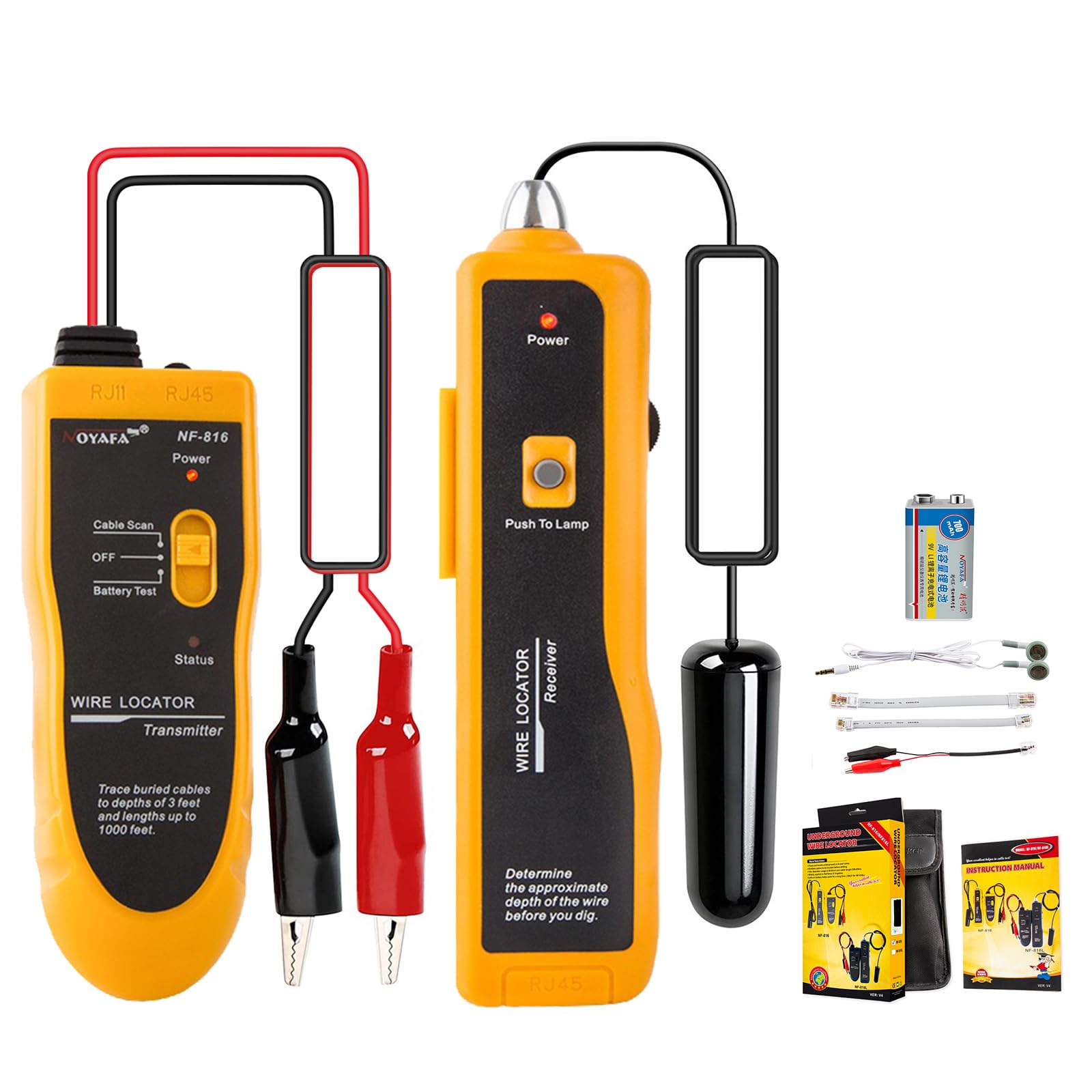
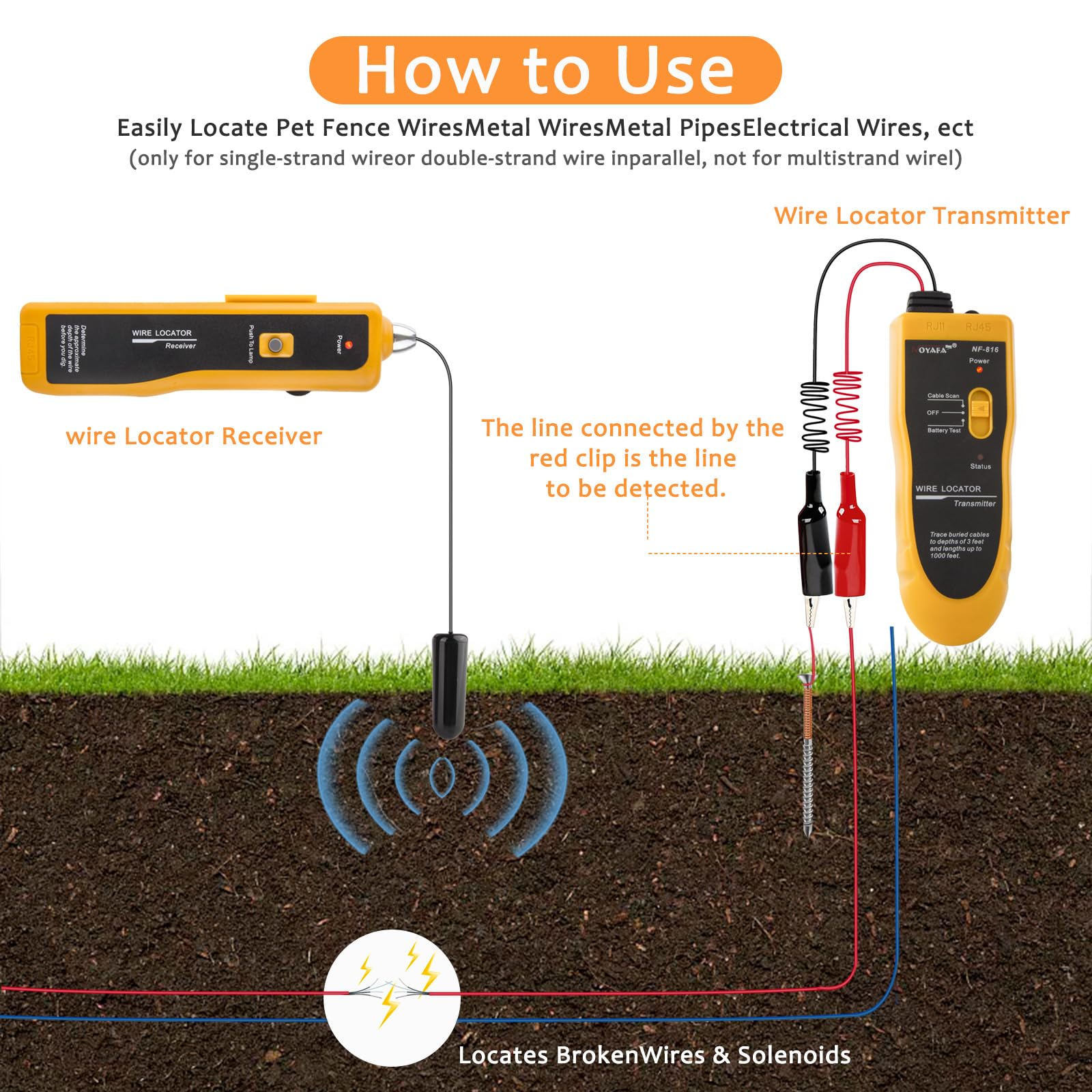
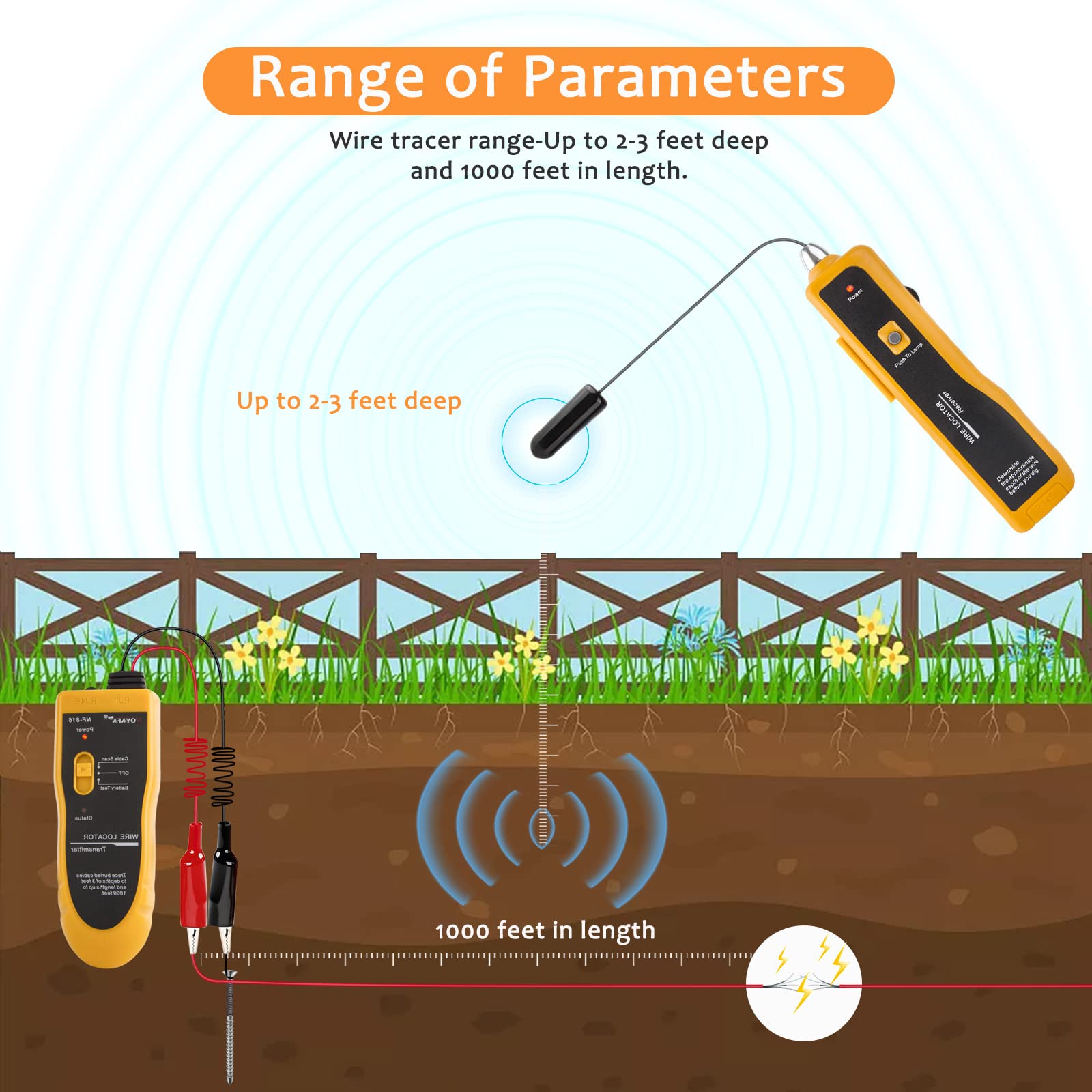
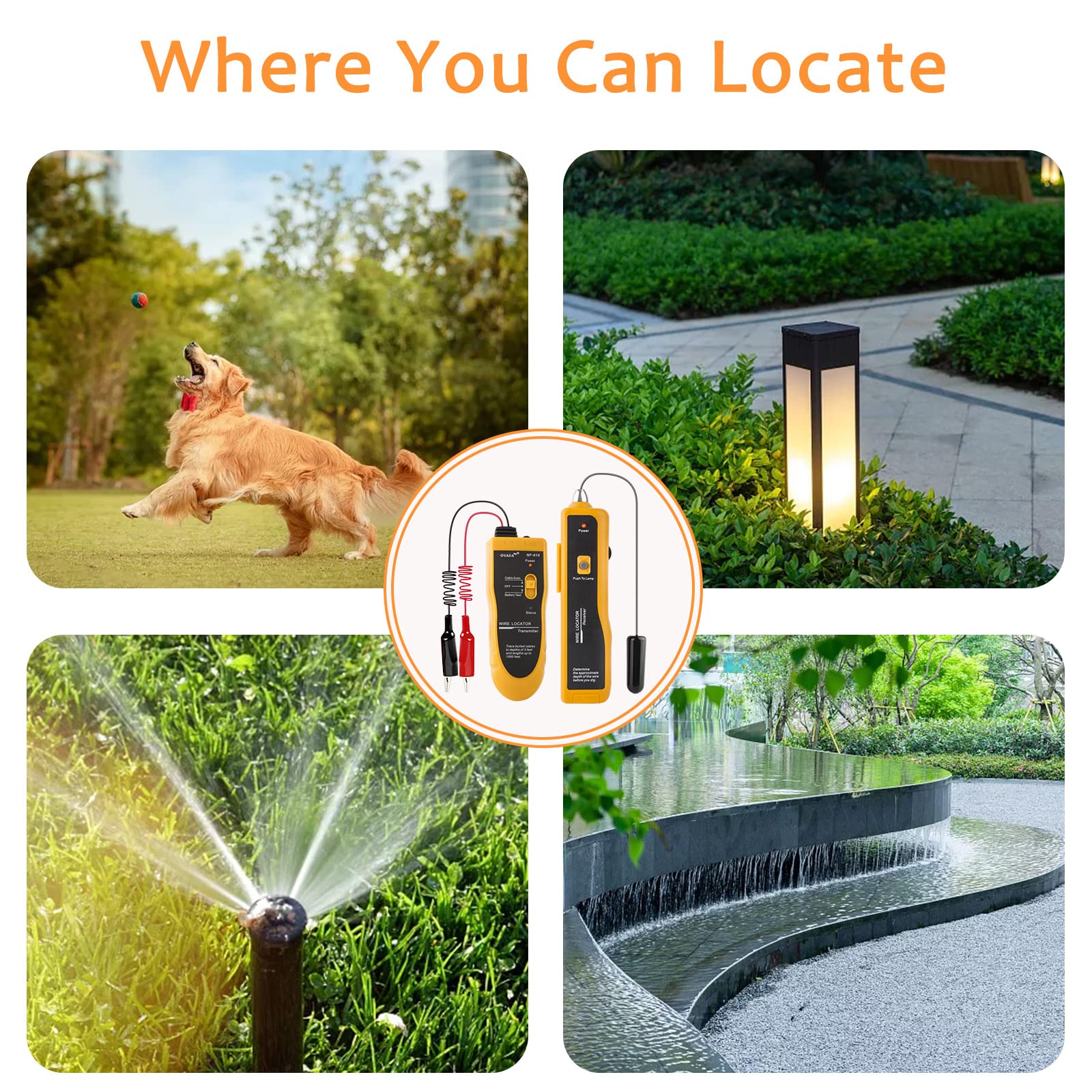

🔦 Illuminate Your Wiring Woes!
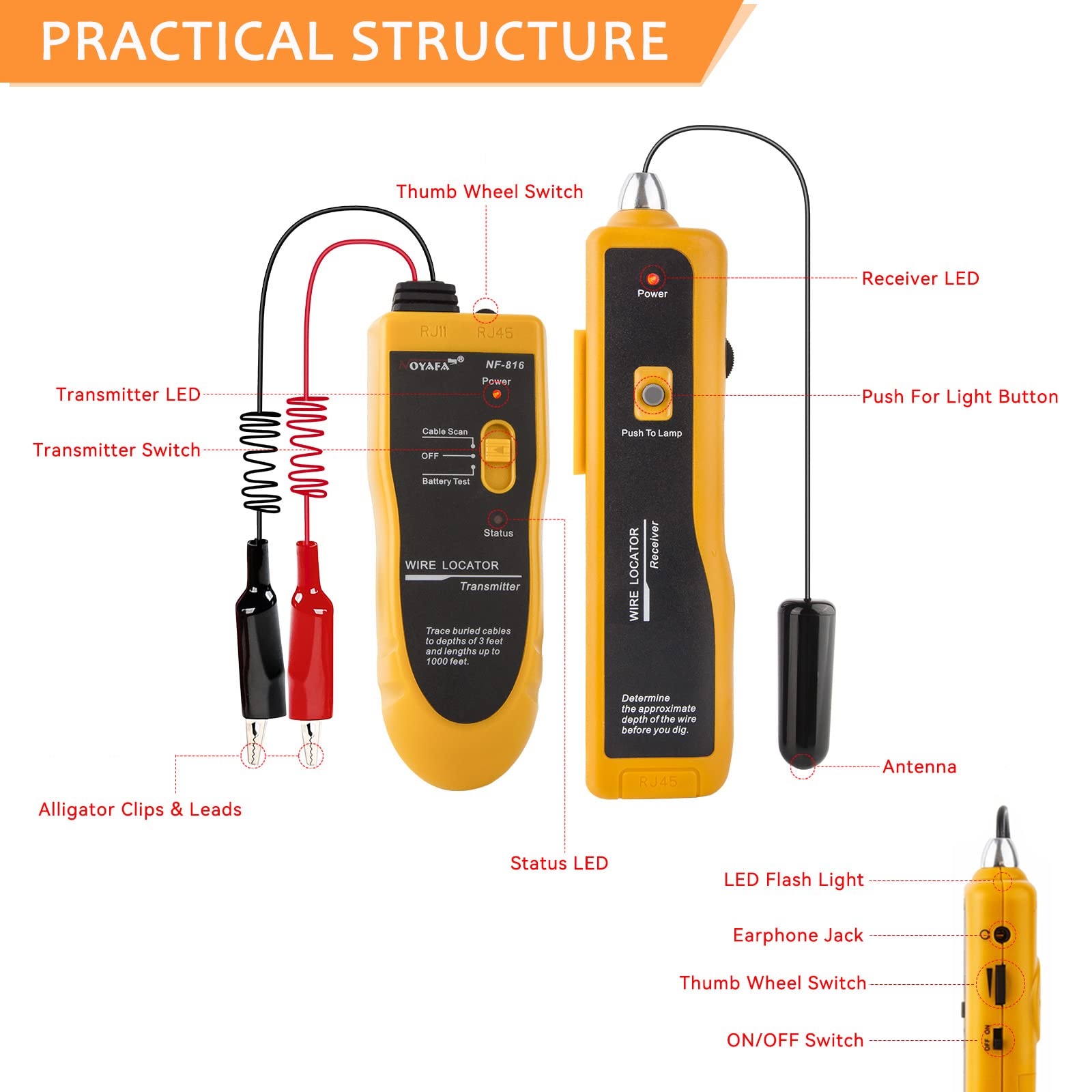
The NOYAFA NF-816-C Underground Cable Wire Locator is an essential tool for anyone needing to locate buried wires and cables. With a detection range of up to 1000 feet and a depth of 2 feet, this device is perfect for identifying pet fence wires, electrical cables, and more. Designed for ease of use, it ensures safety by only working on non-energized cables, making it a reliable choice for both professionals and DIY enthusiasts.
A**R
Perfect for finding the dog fence break
Worked like a charm!This is a radio transmitter and receiver. The transmitter connects to the fence wire, and the receiver is an antenna that you wave over the wire. If the wire isn't broken, there's a radio signal for the receiver to pick up and it makes a tone. When you find the spot with no signal, that's the broken spot. Simple and quick.You disconnect the wires from your fence transmitter. Select one of the wires and connect the red alligator clip to it, and connect the black alligator clip to ground (you might need to stick a metal spike in the ground to clip to).Turn on the transmitter and there's a "volume" dial on the side. The transmitter turns the wire into a broadcast antenna. I cranked the volume up better than halfway, which was probably more than necessary.Turn on the receiver and let the cord dangle. There's a "volume" knob on the side for sensitivity. Let the receiver cord and receiver (the "plumb bob) wave over the wire and you'll hear a tone. The tone stops when the receiver is DIRECTLY OVER the wire. That's how you know exactly where the wire is.Let the plumb bob swing and listen to the tone as you walk around the perimeter of the yard. When the tone goes away COMPLETELY, you know you're past the break. A little bit of walking and swinging and it's a piece of cake to find the broken end of the wire within a few inches. It took longer to hook everything up than it did to find the break.Well worth the $$ for a fraction of the price of the name brand pet fence break detector.
S**K
This really works on sprinkler control valve and connecting wire to it from controller.
Best money I spent in a while. I had a buried 20 year old sprinkler valve about a foot underground for the control wire. My irrigation guy used a $1000 locator, and had zero luck finding the valve. Under about 6 inches of grass/mulching accumulation, etc. As a last resort, I pulled this out of the Amazon box and hooked it up. Had to try a few different settings, but found the best for me to be the red wire to the control valve wire, and the black wire to an earth ground on the electrical panel..not stuck in the ground with a screwdriver, etc. Then, playing around with the control on the sender I found a position where I got good clear tone, no static, and a NULL when passing over the wire, which I knew at least where it was starting at the control box where the wires went into the ground. Then I clearly followed it about 100 feet in the yard, getting clean tone-null-clean tone. Either side of clean tone of course was nothing/quiet. So I guess it was quiet-tone-null (nothing)-tone-quiet. MUST look for a null this way...NOT the loudest. If no null, you are not over wire. And no static way off wire.Manual does not address this. Anyway, went directly to the box and lost null if past it.Hit it first time with the diving rod. Dead solid perfect. This thing is great, but have to know how to use it I guess by trial and error. Once you do it, and get moving, easy to find exact final box location by the sound changes there at the box. Kind of hard to explain but the probe was directly over the box where I had the guy test probe. Bingo. And I moved pretty fast following the wire swinging the probe back a forth. And the null is pretty precise so do not swing past it side to side. You will get the feel. I did.This is totally true. Love this as saved me a fortune. Now.....make a drawing and store somewhere as to where the boxes are!!!
D**W
It works, but requires patience and practice.
I used this to find 5 missing sprinkler valves on my 16 zone system. The missing valves were buried under 2-3 inches of dirt and sod. Even found a buried junction box and a zone that had 2 valves on it. Of course the last valve found was the broken one.Many reviews say it doesn’t work for sprinklers valves but it does. Just takes patience and time and practice and more patience, but it does work! My wife had previously paid a “professional” who was unable to find the valves. Charged me $300 for the pleasure of telling me I had a crap system. So for me this wasn’t about saving money, but the challenge.It works by the First Unit sending a signal down the wire, which the second unit picks up. You move the probe horizontally across the path of the wire listening for the null (break in signal) which occurs right over the wire. My missing valves (solenoids) were all found in areas with a loud and wide spread signal but the wire itself was pretty consistent, with increasing tone, null, then decreasing tone. I located the boxes by probing the ground with a metal rod around the areas with a loud and wide spread signal. Feeling and listening for a thud on the box lids.Reviews say it works best with pet wires and other single wire setups. Makes sense that one wire would be easiest to trace. Problem with sprinkler wires is that they are bundled and the signal leaks to the other wires so impossible to track a single wire. I quickly found two valves at the end of my system, but it took another 5-6 hrs to find those in the middle. One problem was my shrub and flower beds are edged with a metal strip which also picked up the signal , amplified it, and misled me multiple times.Also, my valves were not in one neat area, but spread out over my entire lot. They were not in order. I spent hours looking for missing valve 7, looking between known 8-9 and 5-6, but found it eventually closer to valve 12. The one clue that helped is that installers tend to follow a single line so to use the least wire and pipe. Tho I chased a lot of false leads, in the end, all my valves were on one single line that looped around my house.I found the single strength control useless. Signal bled to all wires on even the lowest setting. I also found no difference when connecting the black clip to a ground (screw driver in the ground) or to the common wire as suggested in the instructions. I just left it dangling and only had the red clip connected to the wire being traced.I’ve also now used it to trace some CAT 5e wire. It’s not designed for that but worked.
J**H
Works fine, missing parts
The device seems to work ok; I was able to find the cable I was seeking. The case material is VERY thin and cheap, and the test leads are starting to fray after one use. Definitely not the quality I was expecting for the price. So overall I guess I'd rate it as "fine." I am disappointed, however, that the RJ11 and RJ45 test leads pictured are not included, nor is there anywhere to plug in such leads.
T**E
Funkar bra
Den gjorde sitt jobb Tyvärr så var marken fuktig så det tog en stund att hitta rätt. Men det är ju inte apparaten fel.
A**O
consigliatissimo
Favoloso dopo anni e anni a rifare i cablaggi più volte con questo strumento ho risolto in 5 minuti, all’inizio bisogna prenderci un po’ la mano, ma poi si risolve in un attimo 👍
P**U
Pas évident à réglé
Pas évident à réglé
M**T
works well when you understand how to use
Brilliant device once i mastered the the proper set up and sound recognition .the instruction manual is pretty useless but there are plenty of you tube videos which are excellent. Saved me whole lot of grief digging around for a damaged guide wire in my lawn!
H**I
Good for locating underground boundary wires
I have a Husqvarna robotic lawnmower and was looking to purchase a MS6812 cable detector to identify where the cable cut(s) are located, but some googling revealed that product is not going to detect anything underground. So after some brief research I found and ordered this one and it did exactly what I expected. I needed to look up 4-5 YouTube videos how people have used it and fixed broken cables but after 15min of videos everything was clear and the device super easy to use. The instructions that come with it are not the greatest, YouTube ones are much better, just search for the device name. And do NOT set the sound too high, otherwise you get easily confused. Also, the closer you get to the break the better it is to use the headphones (some random ones come included) to pinpoint exactly where the break is - even if it’s underground.
Trustpilot
2 weeks ago
3 weeks ago