☀️ Power your freedom with Renogy’s foldable solar innovation!
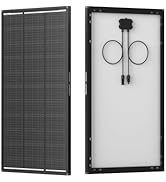
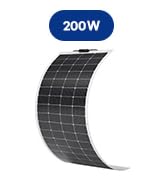
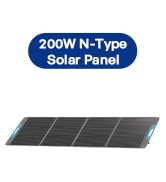
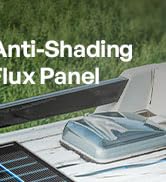
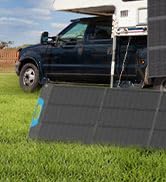
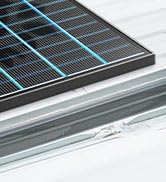
The Renogy 200W Portable Solar Panel delivers cutting-edge 25% efficiency via advanced 16BB N-Type monocrystalline cells, all packed into a lightweight (13.9 lbs), foldable design with magnetic closures for effortless transport. Engineered for off-grid professionals and weekend warriors alike, it features IP65 waterproofing, UL safety certification, and versatile charging options including USB-C PD and MC4 outputs. Adjustable kickstands and rugged build ensure stable, optimal solar capture anywhere—from RVs and camping to emergency backup—making it the ultimate power companion for the millennial manager on the move.



| Brand | Renogy |
| Efficiency | 25% |
| Included Components | 1 x 200w EFLEX portable solar panel |
| Item Weight | 13.9 Pounds |
| Material | Monocrystalline Silicon |
| Product Dimensions | 23.72"L x 1.97"W x 22.99"H |
Z**K
Great value - running 2 in series - explaining why
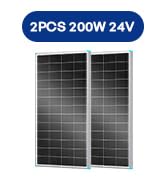
I bought two, 100 watt panels. Why not just buy the single 200w? I wanted higher voltage. I'm running in series (be careful with this) to achieve the higher voltage = lower line losses and perhaps better MPPT efficiency. AND, I have an Anker C-1000 power station that clips to 10a at lower voltage. So, buying one 200w panel (low voltage) or running two 100w panels in parallel still would clip at 10a even when the panel(s) supply more than the 10a. So, for me, running in parallel wastes some power. Not good. So.. the two 100w matched pair are delivering, at max solar irradiance, about 38v and the 5.34a to the MPPT which is max rated at 12.5a @ 60v -- so I'm well under the ceiling of the power station. BUT this would not be so with some other power stations, so be careful to read specs as you could over-volt your power station and ruin it. My setup for camping: The two panels, the Anker C-1000, 10' 12ga solar MC4 to XT60 connector. (No coupling cables needed for series.) Net output (input at solar station) after panels heat up, is 195 watts. This *could* mean the panels are under spec-ed just a little since I'd expect more like 180 - 185 watts. I'm mostly powering a 12v fridge that has an average draw of about 25 watts. In my state, depending (hugely dependent) on solar irradiance, could hit 1.2kw / day. *Could.* This means I can tolerate a rainy day here and there and still be above water - or perhaps just net-zero, which would be fine, since the power station has 1,000 watts and the watt-hours for the fridge is 600w / 24 hours. So, after about 40 hours and no solar power, I'm out of power. Redundant plan: Two days of rain, I drive to some place and do a fast charge on the power station. These are nice panels for very low cost. IP65, nicely built, great performance, light weight, very easy to deploy. On the IP65, probably not the best idea to get those USB jacks wet. Lastly on the deploy, I stake them out to avoid a gust of wind blowing them over and killing output or worse, destroying the panels.
J**S
Light, small, portable, but not without shortcomings...
The panel is great. But, is it for you? That depends.... It is well built, reasonably small and portable, it has magnets in the handles, so it snaps shut. There is no carrying case like with the large glass Renogy panels, but it doesn't need one. I charged a 10k power bank with this, a laptop, a camera, a large Anker C1000X power station and it works really well, and given the price I think this is a really good value. The pocket where the hookups are zips on three sides and the zipper is shielded (not fully waterproof, but pretty tight seal, similar to what you see on a high quality rain jacket.). I only wish the pocket was bigger to accommodate larger power banks. This is a 5th Renogy portable panel we have in the house and all of them work flawlessly - we also have the big and heavy 200W Renogy Briefcase panels, which are amazing, but super heavy. I also have a 400W version of this light panel, which is equally amazing and puts out juice close to its rated capacity - I was able to bet 385W from it. That cannot be said of this 100W panel - no matter what I do, I never get over 87W, even on a beautiful clear day with sun directly overhead. That's not the main issue though, it is to be expected as the panel heats up it slightly drops its output and I've yet to find affordable portable panels which reach over 80% of their rated capacity on a clear summer day here in Chicago area. The panel comes with permanently mounted MC4 cable, which is only 3 feet long, give or take. No other cables or adapters are included, so if you power station takes a 9mm barrel, XT60, Anderson, or any other type of solar input socket, be sure to also buy a proper MC4 adapter with this panel... My stations take XT60, but I luckily already had one on hand, yet I bought extras. This is a low voltage panel (See attached pictures for specs) with VOC of 23.4V, so good for charging 12V systems, but not much more than that. And since this is a low voltage panel, if you are planning to buy a long MC4 extension cable to keep the panel in the sun and your device farther away in the shade, get the heaviest and thickest MC4 cable you can stomach. You will thank me for it later. I have a 30 ft 10 gauge pure copper cable and my wattage drop at that distance is less than 10 watts. I also tried a 14 gauge and was barely getting half of the rated power. So, if you buy an MC4 extension, go as short as you possibly can and as heavy gauge as you can afford. 30 feet is way too long for a 20V panel, I know... I bought it, because I double our other panels in series to 45V and get much less power loss. Still the 10ga 30 foot cable weighs almost as much as this panel! So, that's something to consider too, if you wre weight conscious... What I absolutely love about this Renogy 100W is the size and light weight. Would I take it backpacking? No. Would I take it car camping, backyard partying, afternoon picnic or a weekend trip? Any day... and when paired with a decent power station, like my Anker C1000X, this thing can be thrown in the trunk or a car seat and go with you anywhere your car goes. While you are at it, get some bungee cords and ground stakes. The panel has two flimsy adjustable bendy legs, which keep it tilted, but if it gets windy, you will need to stake this down. Because as light as it is, this thing will become a sail on a windy day. Don't ask how I know... What is much more concerning for you as a potential buyer is the output from USB. If you think you can easily power your MacBook Pro with this, don't be fooled. The 100W output is available only via the MC4 connectors, what you will get from the USB-C is 45W (I was never able to get it over 40W) and the other two USB-A ports are less than 15W each when hooked up to a shunt and tested. So, the only way to power a hungry laptop is to have good power station hooked to your laptop and the solar panel charging that station via the MC4 cables at the same time. A clumsy solution, but workable. Would I recommend this panel, despite these shortcomings? 100% yes, any day. I would buy a second one, if I actually needed one. Of course, you could buy cheaper knock offs, which look jut like this, but I'm not sure about their quality, let alone being able to claim any warranty.
A**O
Title: Excellent Portable Solar Panel!
Review: I’m very impressed with this Renogy portable solar panel. It’s well built, lightweight, and super easy to set up. The charging performance is excellent — it delivers power consistently even on partially cloudy days. I’ve used it for camping and road trips, and it has worked perfectly every time. Definitely a reliable and efficient product. Highly recommended for anyone looking for a quality solar solution on the
C**N
Lightweight, pretty efficient and a bit clunky
These panels are far better than the Bluetti disasters I bought. They're definitely not hitting 200 W or anywhere near it but they are bringing in around 150W - which is fine for me. They're also nice and light. My only beef is the ridiculous clingly pads on the backs of the panel that the legs, when they are not upright, attach to. Putting these panels up is a chore because once you put one side up, the other legs flop down and get stuck to the pads - so you move to the other end to unstick the pads - only to have the others flop down and get attached to the pads. I can't imagine that whoever put these together field-tested them. It's about the worst design I can think of. (I'm going to cover the stickum pads with tape. Otherwise they're must better than the Bluettis. and I'm fine with them.
A**P
Well thought out
Well made and perform as advertised, less expensive than the power station manufacturer
B**N
Pretty Impressive
So far, so good. Although I've only had this in the (partial) sun for a short time (at my home), it's working well. I was actually surprised by it because it reached a peak of 155 watts under less than optimum circumstances with our current light cloud cover. I topped off my Bluetti EB3A in much less time than I expected. My EL100V2 is currently receiving 135 watts of charge. These figures are pretty good in my opinion, considering that it is November and we do not have unfiltered sun at the moment. Time will tell how it durable it is, but first impressions are good.
K**K
Great Solar Panels as an alternative to RV generators!
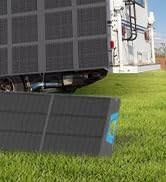
We have been using this portable 200W panel as a way to keep our RV house batteries charged during our 2 month tour of the country! So many camper owners use noisy gasoline-powered generators to recharge their batteries while in campgrounds that it is impossible to escape the man-made noises we thought we left behind. Our motor home has permanently-installed solar panels on the roof, but if we park in the shade or have an overcast day, we could not get the batteries charged fully. This portable Renogy unit does the trick by allowing us to position it so it gets the maximum possible energy from the sun, thereby ensuring that the RV batteries are always full to the brim! Even on cloudy days we are able to top off the batteries by using the Renogy. The built-in kickstands work well, but we frequently just lean the unit against the RV or a picnic table to make it even easier to set up. The zippered pocket to contain the cord is wonderful - no dangling or dragging cords when moving or storing it. This is a well-built unit that can withstand the rigors of long-term use. I sincerely wish that other campers would consider this Renogy unit instead of noisy, stinky generators!
R**R
This works great!
Let me start with this product is awesome. Not only does a deliver, it goes above and beyond. I'm using this product for my vehicle. Because I live in the vehicle. And it folds up where I can use it In my vehicles windshield Fitz perfect. I also unfold that all the way when I'm in my vehicle. And I put it on top of my Cheap cherokee let me tell you this the wind Blew it off the top of my car It did not Break, it landed on asphalt. The only thing that happened was the connector cables. Pull the wires out just a little bit. I was able to push them back in and I got power again. I lost power when this Happened only with the connector cables. The USB still had power. So I took a butterlook at the cables that was powering. My charger controller from Renogy Once I pushed the wires back in power down through the main cables. If this happened to you just looking side the connectors And you can tell if the cables are been pulled out a little bit. Highly recommend this project
Trustpilot
1 month ago
4 days ago