We remain fully operational. Our teams are working around the clock to ensure your deliveries continue safely.

DOWNLOAD THE APP


Copyright © 2025 Desertcart Holdings Limited
DOWNLOAD THE APP
Buy anything from 5,000+ international stores. One checkout price. No surprise fees. Join 2M+ shoppers on Desertcart.
Desertcart purchases this item on your behalf and handles shipping, customs, and support to South Korea.
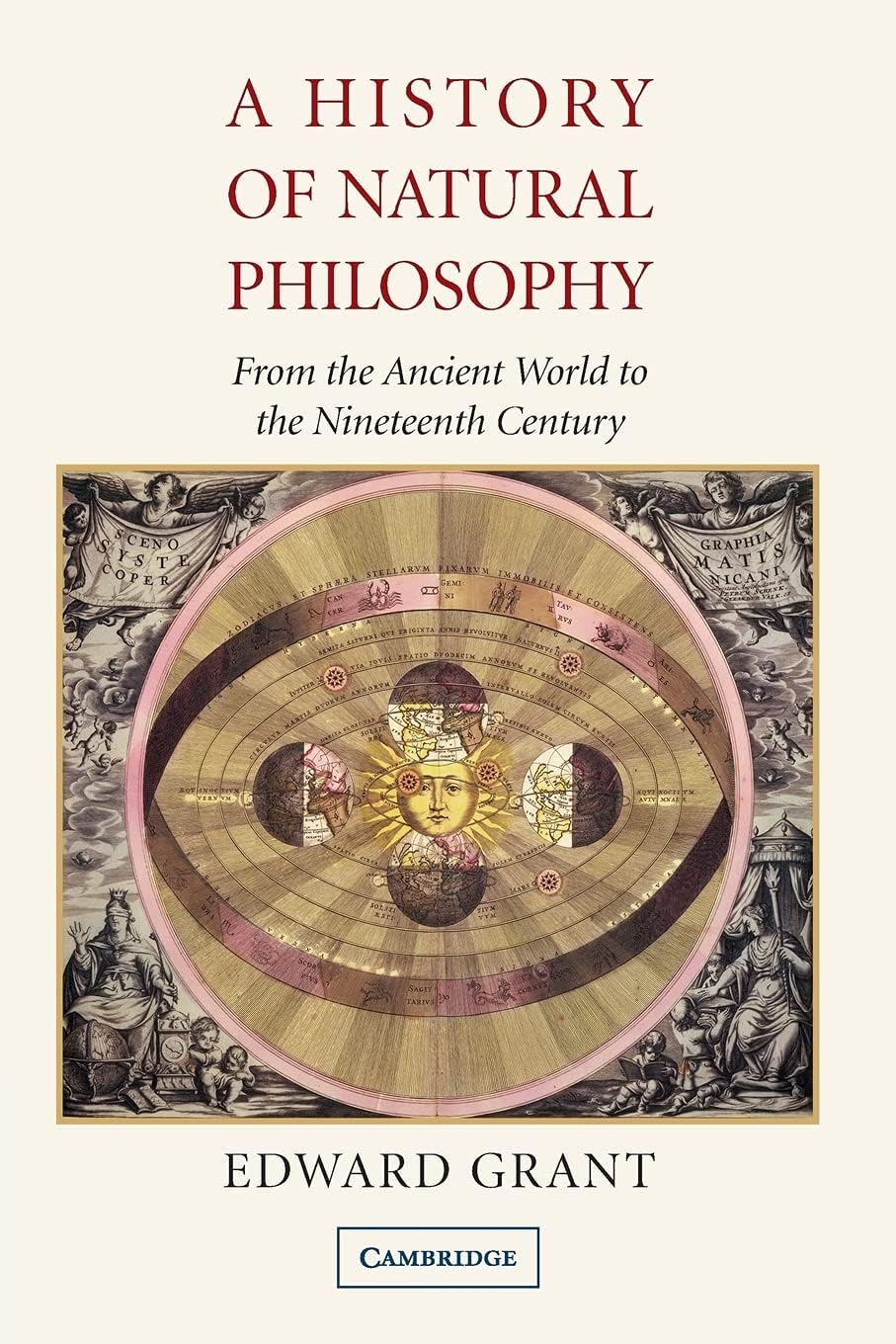
A History of Natural Philosophy: From the Ancient World to the Nineteenth Century [Grant, Edward] on desertcart.com. *FREE* shipping on qualifying offers. A History of Natural Philosophy: From the Ancient World to the Nineteenth Century Review: A History of Science (aka "Natural Philosophy") From Antiquity to the 19th Century - This book is a very good history of Natural Philosophy (what we call "Science" today). It begins in antiquity with the early writings and cultures that engaged in inquiries and investigations of nature and things that we associate with "science" such as mathematics, chemistry, physics, geology, biology, zoology, etc. The book proceeds to late antiquity and the medieval period and finishes off with the time of the "Scientific Revolution" to the 19th century. The biggest chunks of the book however are with antiquity and the whole medieval period. Clearly "Natural Philosophy" was a common term that was used to describe the whole concept of "science" and all of its branches and fields up to the 19th century. Two simple examples that show the common usage of the term in different centuries are Newton's work on gravity and mechanics (called "Mathematical Principles of Natural Philosophy" published in 1687) and Lord Kelvin & Tait's work that helped shape modern physics (called "Treatise on Natural Philosophy" published in 1867). It should be noted that the term "scientist" did not emerge until 1834 when the naturalist-theologian William Whewell coined the term to describe the people who studied aspects of nature. For an extensive look at the transition from "natural philosophy" to the modern concept of "science" (which occurred in the 19th century) see From Natural Philosophy to the Sciences: Writing the History of Nineteenth-Century Science . The book is organized chronologically, thematically, and biographically where important figures in the history of science are noted for their contributions and advancements. It also has many primary source material and extensive quotes throughout to get a direct context of the themes in the history of science. The Greeks, the Arabs, the Western and Eastern Europeans get their history and interactions with science told. As a result, Grant debunks many negative and oversimplifying stereotypes that people have on ancient and medieval people and science. For example, the supposed "conflict" people think existed between theology and science throughout the history of science is shown to be pretty much bogus since from early on Christians adopted a "handmaiden" mentality to secular studies in logic and studies in nature. Concerning the myth of the "Dark Ages", one thing I learned well was that during this supposed period, Syrian Christians from Eastern Europe such as Nestorians and Monophysites were the ones that translated much of the important Greek science texts from Greek to Syriac and the later on they translated many of the works into Arabic and other languages under Islamic rule (62-67). At this time the Latin West was split to many small nations from the Fall of the Roman Empire with some preserved writings of science such as the encyclopedias of Isidore of Seville. Apparently the Romans before the Christians did not translate many scientific works from the Greeks. Still, the work of the Syrian Christians pretty much preserved much of the Greek learning in Arabic. Later on it was returned to the Latin West and thus much previous scientific knowledge was recovered and built upon as usual. Islam gets a good amount of attention along with notable figures and its development of higher education in the Madrasas. The University system that emerged in Europe gets some attention also. One thing that is noted is that theologians made many contributions to natural philosophy and that they used imagination to make hypothetical situations which added more of an element of hypothesis and simulation to science. Aristotle gets quite a bit of attention especially since he is one of the main consolidators of the concept of natural philosophy. His "scientific method", which is noted in his work "Posterior Analytics", which is part of his "Organon", played a major role as it did emphasize inductive reasoning and demonstrations. But it required using those particulars from experience to make universal principles and looking for causes of phenomena. Later on, Francis Bacon re-oriented studies in nature with his method of induction, or as we know it the modern "scientific method" from his The New Organon and Related Writings , and in it he emphasized that studies in nature should be harnessed specifically to benefit humanity rather than just being about looking for abstract explanations and theories on natural phenomenon. One interesting fact was that the mechanical universe (like a clock) mentality of Newton was visible in the medieval period such as by Nicole Oresme (284). Another interesting thing was John Buridan's view of possibility of other worlds existing if God so willed it. Many other interesting facts can be found in the book... but I leave it for people to discover them. Overall, the history of science shows a complex relationship of methodologies and approaches to questions on natural phenomenon. For an anthology of writings in Greek science : A Source Book in Greek Science (Source Books in the History of the Sciences) For a more in depth background on medieval science please see an anthology of primary sources: A Sourcebook in Medieval Science (Source Books in the History of the Sciences) For further reading on Islamic science: 1001 Inventions: The Enduring Legacy of Muslim Civilization Even though china is not mentioned in the book its good to get their history of science also for perspective : The Genius of China: 3,000 Years of Science, Discovery, and Invention For cross-cultural comparisons on different cultures and why the sciences developed more in some cultures more than others one can read: The Rise of Early Modern Science: Islam, China and the West for the medieval period and Intellectual Curiosity and the Scientific Revolution: A Global Perspective for the scientific revolution. The Dialogue of Civilizations in the Birth of Modern Science pins the transcultural ideas that were used by Europeans that brought about modern science. Review: Does as it says on the tin..... - Self explanatory, 'A History of Natural Philosophy' is a useful guide to the history, development, key figures and issues of the discipline which played such a major role in the intellectual milieu of Medieval Universities. Accessible writing style and headed sections make for a relatively simple read, though those of us unfamiliar with Aristotle may be a little confused about the complex unfolding of his core writings. However, the author did seem to be his best to unfold these for the uninitiated. Worth a read and certainly a book to consult if one is seeking a good but relatively easy to read introduction to the subject.
| Best Sellers Rank | #1,651,838 in Books ( See Top 100 in Books ) #678 in History of Engineering & Technology #1,276 in History of Technology #4,499 in History & Philosophy of Science (Books) |
| Customer Reviews | 4.3 4.3 out of 5 stars (35) |
| Dimensions | 6 x 0.85 x 9 inches |
| Edition | 1st |
| ISBN-10 | 0521689570 |
| ISBN-13 | 978-0521689571 |
| Item Weight | 1.1 pounds |
| Language | English |
| Print length | 376 pages |
| Publication date | March 29, 2007 |
| Publisher | Cambridge University Press |
C**G
A History of Science (aka "Natural Philosophy") From Antiquity to the 19th Century
This book is a very good history of Natural Philosophy (what we call "Science" today). It begins in antiquity with the early writings and cultures that engaged in inquiries and investigations of nature and things that we associate with "science" such as mathematics, chemistry, physics, geology, biology, zoology, etc. The book proceeds to late antiquity and the medieval period and finishes off with the time of the "Scientific Revolution" to the 19th century. The biggest chunks of the book however are with antiquity and the whole medieval period. Clearly "Natural Philosophy" was a common term that was used to describe the whole concept of "science" and all of its branches and fields up to the 19th century. Two simple examples that show the common usage of the term in different centuries are Newton's work on gravity and mechanics (called "Mathematical Principles of Natural Philosophy" published in 1687) and Lord Kelvin & Tait's work that helped shape modern physics (called "Treatise on Natural Philosophy" published in 1867). It should be noted that the term "scientist" did not emerge until 1834 when the naturalist-theologian William Whewell coined the term to describe the people who studied aspects of nature. For an extensive look at the transition from "natural philosophy" to the modern concept of "science" (which occurred in the 19th century) see From Natural Philosophy to the Sciences: Writing the History of Nineteenth-Century Science . The book is organized chronologically, thematically, and biographically where important figures in the history of science are noted for their contributions and advancements. It also has many primary source material and extensive quotes throughout to get a direct context of the themes in the history of science. The Greeks, the Arabs, the Western and Eastern Europeans get their history and interactions with science told. As a result, Grant debunks many negative and oversimplifying stereotypes that people have on ancient and medieval people and science. For example, the supposed "conflict" people think existed between theology and science throughout the history of science is shown to be pretty much bogus since from early on Christians adopted a "handmaiden" mentality to secular studies in logic and studies in nature. Concerning the myth of the "Dark Ages", one thing I learned well was that during this supposed period, Syrian Christians from Eastern Europe such as Nestorians and Monophysites were the ones that translated much of the important Greek science texts from Greek to Syriac and the later on they translated many of the works into Arabic and other languages under Islamic rule (62-67). At this time the Latin West was split to many small nations from the Fall of the Roman Empire with some preserved writings of science such as the encyclopedias of Isidore of Seville. Apparently the Romans before the Christians did not translate many scientific works from the Greeks. Still, the work of the Syrian Christians pretty much preserved much of the Greek learning in Arabic. Later on it was returned to the Latin West and thus much previous scientific knowledge was recovered and built upon as usual. Islam gets a good amount of attention along with notable figures and its development of higher education in the Madrasas. The University system that emerged in Europe gets some attention also. One thing that is noted is that theologians made many contributions to natural philosophy and that they used imagination to make hypothetical situations which added more of an element of hypothesis and simulation to science. Aristotle gets quite a bit of attention especially since he is one of the main consolidators of the concept of natural philosophy. His "scientific method", which is noted in his work "Posterior Analytics", which is part of his "Organon", played a major role as it did emphasize inductive reasoning and demonstrations. But it required using those particulars from experience to make universal principles and looking for causes of phenomena. Later on, Francis Bacon re-oriented studies in nature with his method of induction, or as we know it the modern "scientific method" from his The New Organon and Related Writings , and in it he emphasized that studies in nature should be harnessed specifically to benefit humanity rather than just being about looking for abstract explanations and theories on natural phenomenon. One interesting fact was that the mechanical universe (like a clock) mentality of Newton was visible in the medieval period such as by Nicole Oresme (284). Another interesting thing was John Buridan's view of possibility of other worlds existing if God so willed it. Many other interesting facts can be found in the book... but I leave it for people to discover them. Overall, the history of science shows a complex relationship of methodologies and approaches to questions on natural phenomenon. For an anthology of writings in Greek science : A Source Book in Greek Science (Source Books in the History of the Sciences) For a more in depth background on medieval science please see an anthology of primary sources: A Sourcebook in Medieval Science (Source Books in the History of the Sciences) For further reading on Islamic science: 1001 Inventions: The Enduring Legacy of Muslim Civilization Even though china is not mentioned in the book its good to get their history of science also for perspective : The Genius of China: 3,000 Years of Science, Discovery, and Invention For cross-cultural comparisons on different cultures and why the sciences developed more in some cultures more than others one can read: The Rise of Early Modern Science: Islam, China and the West for the medieval period and Intellectual Curiosity and the Scientific Revolution: A Global Perspective for the scientific revolution. The Dialogue of Civilizations in the Birth of Modern Science pins the transcultural ideas that were used by Europeans that brought about modern science.
G**N
Does as it says on the tin.....
Self explanatory, 'A History of Natural Philosophy' is a useful guide to the history, development, key figures and issues of the discipline which played such a major role in the intellectual milieu of Medieval Universities. Accessible writing style and headed sections make for a relatively simple read, though those of us unfamiliar with Aristotle may be a little confused about the complex unfolding of his core writings. However, the author did seem to be his best to unfold these for the uninitiated. Worth a read and certainly a book to consult if one is seeking a good but relatively easy to read introduction to the subject.
S**A
A good historical overview, but has conceptual problems
Edward Grant notes explicitly that his history of natural philosophy will not cover the German Naturphilosophen, but he would have done well if he had spent some time studying Fichte, Schelling, and Hegel. For while his historical overview is quite useful in itself (I believe it's the only general history of natural philosopy available in English), Grant does sucumb to some serious conceptual failings in attempting to characterize natural philsophy. He begins the book, for example, by noting that "Natural philosophy may be said to have begun with the first efforts to understand the world by the earliest human beings in their fight for survival", a claim that is about as useful as stating "The automobile was invented when the first civilizations began to attach a wheel to a cart." He quickly corrects himself by quoting the great historian of Greek science Geoffrey Lloyd, "But to have the idea of the nature of some particular object is not to have the general conception of a domain of nature...", which is to say that one cannot have natural philosophy until a corresponding domain of thought has been explicitly conceptualized as natural philosophy. For this to happen an idea of nature must first be conceived, and of course there must be a discipline generally recognized as philosophy. Even the Greeks had no generalized idea of nature, with physis being only a very distant approximation. In other words, an automobile does not become an automobile until all the components are brought together to create a machine generally recognized--and known--as an automobile. Because of this equating natural philosophy with any kind of reflecting on nature, Grant misleadingly expands his narrative to include virtually all of world history, which is a far cry from the generally understood formal beginnings of natural philosophy with Jacopo Zabarella and his chair in natural philsophy at Padua in the 16th century (with direct roots going back to Aristotle). If Grant had spent some time with the ontological analysis of the Naturphilosophen (and not necessarily incorporating them explicitly into his history), his general study of natural philosophy would have been much better. As the only general history of natural philosophy in English, however, it does perform worthwhile service and is otherwise both interesting and useful.
M**S
A interesting history book on a topic not everyone probably thinks about. Natural philosophy. If you haven't read the book that means science.
Trustpilot
1 day ago
3 weeks ago