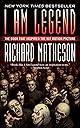

📚 Survive the night, own the story — become a legend in your own right.
I Am Legend by Richard Matheson is a 320-page mass market paperback published in 2007 (revised edition) that blends science fiction, horror, and psychological thriller. It follows Robert Neville, the last human survivor in a world overrun by vampiric beings, exploring themes of isolation, survival, and humanity’s fragility. This cult classic has inspired multiple film adaptations and remains a must-read for fans of dystopian and post-apocalyptic fiction.
| Best Sellers Rank | #8,911 in Books ( See Top 100 in Books ) #22 in Ghost Fiction #76 in Contemporary Literature & Fiction #86 in TV, Movie & Game Tie-In Fiction |
| Customer Reviews | 4.3 out of 5 stars 18,756 Reviews |
T**D
I enjoyed both films greatly
I Am Legend has been on my list for years. I am not sure why I let it go for as long as I have. I enjoyed both films greatly, although I hold a particular fondness for Omega Man (1971) with Heston. I feel it holds a bit truer to the actual book, but there are a few more adaptations in existence (so I am told). I Am Legend follows protagonist Robert Neville after a plague has swept through, claiming the entirety of mankind and leaving nothing but vampiric beings in its wake. It is the end of times. Yet somehow, Neville remains. Alone and outnumbered, he must fight for survival and try to establish a life of solitude. I want to note that for a brief portion of this story I actually listened to the audio book narrated by Robertson Dean. I can safely recommend it, as I found the narrator’s tone to be reminiscent of the actual film, Omega Man. It was nostalgic. So If you are in search a shorter audio book, this might be an ideal option. You could certainly knock this one off of your TBR in a matter of hours. Where to start? This is a brilliant read! Cleverly disguised as your run-of-the-mill science fiction, I Am Legend delivers a reading experience that goes well beyond the expected. This is not just a mere story of a virus and mankind’s end. This is a keen observation of humanity through the eyes of one desperate and desolate human being. “He stood there for a moment looking around the silent room, shaking his head slowly. All these books, he thought, the residue of a planet’s intellect, the scrapings of futile minds, the leftovers, the potpourri of artifacts that had no power to save men from perishing.” Our main character is everything you would come to expect him to be. He is angry. He is despairing. And he is forever seeking answers and solutions. It is through Neville that we exposed to the horrors of what it is to be the last surviving human. The psychological ramifications are endless, and I feel that the 3rd person narration seen through Neville’s eyes conveys this appropriately with well-timed emotional responses and outburst. The sense of desperation is forever present in his relentless studies and efforts to find a cure, a solution. The loneliness is experienced through his need to reside within his own memories of his wife and a life that was. The added element of his alcoholism and sporadic actions expose his weakness and ineffective coping, reminding us once again that this is more than a science fiction story. The writing is very impressive when you take into account that I Am Legend was originally published in 1954 and set with a futuristic Los Angeles during 1976. While the pace is somewhat slow, it is consistent and aids well in setting the atmosphere. I feel that it was a brazen decision on the author’s part to create a single character and leave him to his own devices while providing the reader with limited insight through the chosen narration. It is easy to see why this book has influenced multiple films. By the time you have completed Neville’s journey, I Am Legend will evoke a different type of fear that is very human and very real. “Full circle. A new terror born in death, a new superstition entering the unassailable fortress of forever. I am legend.” This is an ideal read for fans of the films, post apocalyptic settings and titles that take an abstract approach to exploring humanity. I found this to be a very solid first encounter with Matheson’s work, and it will certainly not be the end of the line in this new relationship. I walked away from I Am Legend with a real sense of why he is such a prolific name in science fiction.
R**Y
Even depression and alcoholism can’t defeat a vampiric-zombie apocalypse.
Despite its vampire origins, this book originated many medical, zombie, dystopian thrillers. Robert Neville is alone. Very alone. Well, not completely alone. His family, friends, and neighbors have all come down with a bad case of vampirism. However, this sickness more closely resembles zombism (without the brain eating). The vampires have an intelligence much closer to (but slightly above) your typical walking dead. The story opens with the protagonist literally boarded up in his home, living off a generator and the food he manages to pilfer during daylight hours. Over time, he has managed to find a way to survive in a world where people (and sometimes animals) are dying of this strange disease that very closely resembles vampirism. Despite the best efforts of the world’s scientists, everyone had gone to rot except Neville (or so we think). So he has shored up his existence with a greenhouse full of garlic, strategically placed mirrors and the occasional Christian cross. All this helps to keep the relentless vampire apocalypse at bay during the wearisome nights. During the day, Neville makes repairs to his fortifications, hunts downed weaken vampires and dispatches them with wooden stakes and picks up supplies around the Los Angeles metropolitan area. The author brings a nice sort of thriller-suspense element to the table as he plays with this constant cycle of safety and danger as the sun rises and sets. The nights are where the fun begins. At sundown, Neville must be back home safe and sound or risk being overwhelmed by the masses. The vampires are not too strong physically, but at night they are at full strength and they come out in never ending swarms. Every single evening, Neville sits in his home stares at a mural of some nameless and beautiful landscape of a long forgotten time of yore and drinks himself into numbness at he listens to the vampires throw rocks at his windows and mirrors, beat on his walls and (in a particularly chilling way) call out his name. The author makes interesting leaps into scientific plausibility for this plague that has besot mankind. He mixes in classic vampire legend with microbiology and psychology. It’s a great mix for pleasing modern readers. The theories for how some of the vampire legends evolved from truth (like the chemical qualities in garlic scent being repellent to the vampire germ) and some are just psychological (the Christian vampires fear a cross because somewhere in their infected brains they have memories that tell them they should be). The main character is just a plant worker, an everyman. Yet, we follow along with him over the months as he educates himself with library books on how to learn about microbiology and test out theories and hypothesis on the vampires so that he can learn what happened and why its happened, and see if maybe he can change the course of things. He’s pretty much alone with a lot of time on his hand (in between vampire slayings), but it may be a bit of stretch given that he does have daily maintenance on his home/fortress to keep up and supplies to obtain (and there is nobody around to help him). Still these ideas of working science into legend really help to build up the mystery, suspense, and tension. They are also the precursor elements for many similar books to come. The true story is here. It’s not about vampires, zombies, or zombie-vampire hybrids. It’s about a man who thinks he’s the only person left in the world. Who has buried and reburied his loved ones. A man utterly broken and alone, fueled on fumes of whisky to carry out the primal instincts of his body. Survival. Some reviews may disagree, but the book has real strength here. We get inside this man’s head and really feel his struggle and his sense of hopelessness. We follow his ups and downs as little glints of hope dash past him and then are snatched away by the cruel reality of this dystopian world: his mind’s struggle with his body’s desire—the impetus of life. Of particular note, is Neville’s struggle with carnal temptation when the female vampires outside his house try to tempt him with their attributes of flesh, his spiral into deeper and deeper alcoholism and his violent lashings of frustration at the trappings of his environment. All of this is felt and related to the reader in a very compelling way. This, my fiends, is the heart of the story. The ending, which is a bit of a twist, sets a nice perspective on things. It’s dark and sort of unsuspecting. The author goes from spending a vast majority of the book, zoomed tightly and claustrophobically on a sole protagonist to suddenly panning wide and taking in a much broader view. Sort of inline with the Twilight Zone style that the author helped create when he wrote for that show. Podcast: If you enjoy my review (or this topic) this book and the movie based on it were further discussed/debated in a lively discussion on my podcast: "No Deodorant In Outer Space". The podcast is available on iTunes or our website.
L**R
The Monster
Despite it's deliberate slow pacing this is one of the most chilling novels of the 20th Century. Written in 1954 by Richard Matheson "I Am Legend" takes a close look at what it means to be human and what it takes to become inhuman. Robert Neville is the last man on Earth, but he is not alone! The rest of the human race has died, victims of a mysterious plague that has infected everyone and has a 99% fatality rate. The problem is, the dead won't stay dead! Urban legends of The Undead, Vampires, have been with us for centuries, is it possible that these legends have a basis in scientific fact? Matheson explores that possibility from the viewpoint of one man, while also delving into that man's troubled mind. Beyond the mundane problem of just staying alive; getting enough food, water and shelter, there is the very real problem of being totally alone. Alone, with his dark thoughts, fighting alcoholism, painful memories of his past life and how his wife died, twice, all combine to threaten his sanity and his life. But there are external threats to his life as well. The Undead, hungry for Neville's living flesh and blood, surround his fortified house each night where they fight among themselves and seek access to his home. During the day things are reversed. Unlike the Undead, Neville can come out in the sunlight and is free to roam the city looking for the sleeping Undead and to drive wooden stakes through their hearts. But even as he wages his pointless war against the Vampires, Neville realizes that his vendetta can't go on forever, he must find another way. Questions fill his mind. Why are the Vampires repulsed by things like garlic and the Holy Cross? What is it about the sun light that burns their flesh? If this is a plague then there must be a cure, someway to save what is left of humanity, if there is any humanity left to save. Dark, brooding and, at times, depressing "I Am Legend" is a true classic of Horror Fiction. Richard Matheson's low key prose dominated the Speculative Fiction field from the mid 20th century to the early 21st century. Weather it was a shrinking man, a terrified airline passenger at 20,000 feet or a lonely traveling salesman being stalked by a psychotic trucker, this author excelled at placing ordinary men into extraordinary situations. "I Am Legend" is such a novel and Hollywood was quick to see it's potential with three different films: The Last Man on Earth 1964, The Omega Man 1971 and I Am Legend 2007. While all three were faithful to the original story, each one deviated from the novel in its own special way to create a unique take on the "Last Man" scenario. In the novel, as well as the screenplays, I wondered why the central character did not just pack up and leave the city, seek out an isolated place in whatever wilderness there was and find some measure of peace. Neville himself had no answer for that question, but maybe you will. I first read this in my early teens, so reading it now is like revisiting an old friend, but I wonder how modern readers will take to it. In this day of high-action entertainment like "The Walking Dead" some readers might get impatient with "I Am Legend's" low-key approach but, I think, if they give it a fair chance they may find it to be an important look at the human phyche and what happens when things go terribly wrong. I had no technical or formatting problems with this Kindle edition. Last Ranger
Z**9
An OK read
Of course, most of us have seen the film "I am Legend" starring Will Smith. I liked most of the movie well enough, but wasn't very satisfied with the ending, so I thought I would give the book it was based on a try. Robert Neville is the sole survivor of a plague that has transformed the population into vampire-like creatures. Set in a California suburb in the mid seventies, this book chronicles Robert's daily activities of survival and understanding of the disease. He spends his days refortifying his home, restocking supplies, and exterminating any hibernating infected he comes across. By night, he hunkers down inside his home while the infected swarm outside, reminiscing about his deceased family, and studying the disease. He lives this way for several years when he encounters a woman out during the day, alone and wandering the town. Desperate for companionship, he makes a decision that changes everything and goes after her. The beginning of the book is very interesting. The reader is intrigued by what has happened that led to the current events of the story. The history behind the plague is revealed in bits and pieces, hooking the reader along. Robert's personal losses to the plague make the story much more compelling. The reader learns the nature of the disease alongside Robert, who is no doctor or scientist and after observation and trial and error, comes to his own conclusions about the plague. The final third of the book slows down a lot. By this point, all that there is to learn about the disease has been revealed and all the reader is left with is Robert and his loneliness, his own dehumanization as he lives in solitude. The book ends differently than the film, but is not really any better. The story was an okay read, but I feel I overpaid for it, especially for how old the story is. The story wasn't as good as I had hoped it would be. If you can acquire this book for free or for fairly cheap, then I would recommend it. But at the current kindle price of nearly six dollars, it is too much for a mediocre story.
A**N
An incredible Dystopian Sci-Fi novel from the 1950s
Wow, what a story, complete with an unexpected twist in the end.. I haven’t seen Will Smith’s movie of the same name, but it sounds like a typical Hollywood treatment of a story that already has two other movies based on it. To expect the MC of the book to behave like a heroic character in a 2007 movie does the book an incredible disservice. The MC has faced horrors enough to result in a major traumatic stress syndrome. To face the distinct possibility of being the last person on earth not affected by a bacteria which has turned everyone else into vampires- both the dead and a not quite living. These are not glamorous “Twilight” vampires, but more like the creatures from Bram Stokers novel, with similar powers and weaknesses. One or two are people Robert Neville, the main character, knew before they were infected. Now every night they gather outside his barricaded house and try to entice him outside. Initially, Robert drinks himself into oblivion every night. As the book progresses the things has gone through are revealed- I’ll try to avoid spoilers here, but the MC’s actions are understandable. He also is trying to figure out how the plague spread. Not a trained scientist, he makes use of daylight hours when the vampires are hiding from the sunlight to take books from the library and try to understand. He also actively seeks out the vampires who are weak and lethargic in the daytime and kills them, initially with wooden stakes which were mentioned in Brampton Stoker’s Dracula. The MC has an electric generator to power his home and especially keep food from spoiling. He also has a car which he keeps maintained so he can drive to half destroyed supermarkets for food, as well as ammunition. The vampires cannot be killed by bullets, but it slows them down when the MC is in a tight spot. I had to take a break from reading about halfway as the story is really intense. If you approach the novel as the original, written half a century before the movie of the same name, before Anne Rice’s novels and tough movie heroes who can handle almost anything, the MC becomes more understandable, having gone through the collapse of civilized society.
7**N
A true classic
When the modern film adaptation I Am Legend came out in 2007, many people were annoyed or angered by the movie. I heard things like, "it's nothing like the book", "the ending sucks" and "it misses the point". Now I know why. Let me just tell you, the movie does miss the point, particularly with the theatrical ending. That version of the film misses the point like the missing the broad side of a barn with a tactical nuke at point-blank range. That's not to say I dislike the movie. I thought that, with the alternate ending, it was pretty good. I still think that. However, reading the original story has changed my feelings about it a bit, namely that I like certain things about it less than the novel. Now, I don't remember if the credits say "based on I Am Legend by Richard Matheson", but if they do, I believe they definitely commit the crime of false advertising. The most it should say is "inspired by..." The only similarities I can think of between the book and what I remember of the movie are: The main character is named Robert Neville There is a plague of vampires that led to the collapse of civilization The main character is a human man, ostensibly the last on earth, who is immune to the disease The main character lost his wife and child after/during the outbreak of the disease There is a dog There is a woman There is science But enough about the film! Overall, I enjoyed the novel. I was not initially aware that the novel I purchased contained I Am Legend in addition to several short stories, because it was not clearly advertised on my edition. Thus, I was surprised that the story was as short as it was. I only read I Am Legend from the bunch, because that is the reason I purchased it. I feel like Matheson could have made the book longer, and fleshed out the world, the situations, and Neville's past quite a bit more. One thing about the story that I wasn't a huge fan of was how little actually happened in the book. A big portion of the narrative was devoted to the more mundane events and inner monologues in the post-apocalyptic life of Robert Neville. On the other hand, much of the narrative dealing with Neville's inner thoughts helped vastly with the world-building. Through Neville's erratic, desperate, hopeless thoughts, the reader developed a taste for what it felt like to be the last man on earth, living a daily battle for existence in the midst of a plague of vampires, having lost everyone and everything you once loved. However, that brings me to my next point -- Neville was surprisingly unfeeling. I don't know if the reader was supposed to chock that up to him being a man who doesn't want to display feelings, his being a man that has given up hope, or what. He faced situations with very little sympathy, or even horror, and seemed largely apathetic about what was happening to him and what he was doing. Throughout several places in the story, I got the idea that Matheson has issues with women. I know that authors don't always write their thoughts into their characters, but it didn't seem like Neville was supposed to be especially misogynistic, because the author wrote it strictly as if his thoughts were fact and entirely acceptable. There were some things I really liked about I Am Legend. First off, it is number one on my list for most scientific books about vampires I have ever read. As a biology major and pharmacy student, I found it incredibly interesting to read about Neville's discoveries and experiments as he uncovered the origin of the disease. That Matheson invented a somewhat scientifically sound background for the existence of vampires, debunking some elements of mythology and supporting others was original and pleasing to me. The thing I liked most about the novel (especially compared to the movie) was the ending. The events of the ending portion of I Am Legend really came out of left field for me. I wasn't expecting what happened, at all. It is very much the most important part of the novel. It leaves us with a message, questioning what we have known and what we believe. I thought it was poignant and powerful, and it certainly left me thinking. It is an unimportant detail, but I also enjoyed that the last line of the novel was "I am legend." I love when books really come full circle, and when they have their title worked into them somehow. Matheson managed to do both, and it brought a smile to my face.
G**E
Excellent
Though this novel is certainly quite well known, particularly amongst horror fans, it's not quite as famous as I'd imagine it would be, or as it ought to be, for that matter. It's pretty damn influential, particularly in films as it was a primary inspiration for 'Night of the Living Dead'. (And, it was adapted for film twice, first as 'The Last Man on Earth', then as 'The Omega Man' (which it resembles in only the vaguest manner.) But adaptations are quite entertaining I think, if far from truly satisfactory.) Anyway, this is definitely one of my favorite novels, horror or otherwise. (Well, I'd probably call it a 'novella', but whatever) Some negative reviews have complained about this novel from a stylistic of scientific standpoint, and while they may have a point, I think they're kinda missing the boat. Yeah, the whole scientific explanation for how vampires could exist doesn't work, but I've never heard of anyone saying they like this story because of the science. This ain't hard science fiction. In fact, it only loosely qualifies as sci-fi, as it is more sorta, 'apocalyptic horror'. (It is about *vampires*, for god's sake.) The only thing that bothered me much about the scientific aspect of this novel is that is comes as a sorta revelation to Neville that they could essentially be vampires, but that the condition was caused by disease. Well, duh. At it's heart, 'I Am Legend' is about isolation, and the key to whether or not you enjoy this novel comes from whether or not you can truly sympathize with Neville. (This is also true of Matheson's inferior but still enjoyable novel, 'The Shrinking Man', which contains even more improbable science.) Personally, I find Neville to be just about the most tragic character I've ever encountered in media of any sort. It may not seem too tough to make Neville sympathetic, as he's in an unimaginably bad situation,(everyone's dead but him, there are vampires, etc.) but Matheson makes the most of it, showing us his unspeakable loneliness, along with the crushing boredom and the dehumanizing brutality necessary to his new life. And his eventual transformation into something which is not quite a monster, but which is also definitely less than human is both convincing and shattering. And what can I say, I actually think this is a fairly cleverly written book, at least at times. Matheson is good at using sudden deflation and anticlimax, in terms of his prose. For example, I like how he writes about Neville's using all his stakes in his daily extermination, ending the section saying something like: `He had 37 stakes'. That's just an effective way of instantly juxtaposing the gruesome absurdity of his situation, along with the casual, repetitious way he goes about his business. Also (spoiler alert), the way he ends the long section describing his attempt to help a dog writing simply, `The dog was dead in a week'. (Or something like that.) Anyway, I'm done. I like this a lot. (The edition I've read doesn't come with the short stories after this, so I can't comment on them, naturally.)
K**N
As someone who reads nearly EVERY vampire novel that comes along...
That person wouldn't be me but happens to be my husband. He has a thing for vampire novels and vampire films. So I've heard and seen and read quite a lot about vampires, if only by default, not being nearly as obsessed as he is..at first. Then he got me hooked on Buffy The Vampire Slayer (tv show) and that's when I knew I was getting interested in the vampire thing, the pain of remembering what it was like to be human after crossing into the world of immortality, with its own set of pains. So I moved on from Buffy (and an interlude reading Interview with the Vampire) and went on to read this book. Couldn't put it down. It floored me. Yep, it IS that good. It isn't a long book so those of you who don't have the time to tackle a large work will be glad of that...but every word counts, every detail, every nuance. It is also highly original, from the " scientific explanation" of how vampires came to be to digressions about religion,etc. In the end, however, it is a good story that generally holds readers' attention and it was the plot that kept me intrigued. I also liked the apocalyptic elements (I'm a sucker for books about the apocalypse, end of the world,etc). The story? It focuses on a man who is the last guy on earth (but not the last "being") and his alienation and feelings as he (slowly) traces the history of his life and the deaths of those around him. I had to keep pausing at points in this book, lost in thought as the writer forced me to confront what it means to be "human" and the "meaning of life" (yep, I know that is pretty deep, but that's the type of book this is, that's where it takes you) and what I'd do in the face of all the obstacles that Neville faced, all the losses and his world gone awry, far off its axis. Make no mistake - this one has all the elements of good horror writing so if you want to stick to nonfiction or even fiction "based" on real life, fine... but if you're wishing to push your boundaries, you might find yourself pleasantly surprised (I did). It is one fine book an an excellent introduction to the vampire genre, even if it isn't predictable or "the norm".
Trustpilot
4 days ago
1 month ago