🌌 Elevate your night sky game with pro optics that won’t weigh you down!
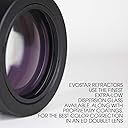
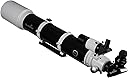
The Sky-Watcher EvoStar 120 APO Doublet Refractor is a compact, lightweight 120mm aperture telescope featuring expertly matched fluorite glass and advanced coatings for exceptional color correction and sharpness. Its 10:1 dual-speed Crayford focuser allows precise focusing for both visual astronomy and astrophotography. Designed for portability and durability, it includes a full accessory kit and a protective aluminum case, making it ideal for millennial professionals seeking a premium, versatile telescope that grows with their skills and fits an active lifestyle.


| ASIN | B004Q76Z5M |
| Best Sellers Rank | #2,643 in Camera & Photo Products ( See Top 100 in Camera & Photo Products ) #196 in Telescope Refractors |
| Customer Reviews | 4.4 4.4 out of 5 stars (169) |
| Date First Available | July 15, 2010 |
| Is Discontinued By Manufacturer | No |
| Item Weight | 13.9 pounds |
| Item model number | S11130 |
| Manufacturer | Sky-Watcher |
| Product Dimensions | 44 x 20 x 14 inches |
A**R
Best advice I have ever read regarding astronomy
Best advice I have ever read regarding astronomy? The best scope you own is the one you use the most. I wanted a good sized APO, but something easy enough to limit grab and go. All my searches kept pointing to the Skywatcher 120ED. Here were the deciding factors: Aperture: 120mm is a really nice spot. I have noticed a considerable jump in what you can see between 100mm vs. 120mm and having a good number of hours with 80mm, 100mm and 120mm refractors I really wanted the extra lightgrab Price: I did not have a budget. My first choice was an NP-101. However the $1550 price tag for the SW was simply too enticing to pass up Size: The SW is a doublet making it much lighter than 120mm triplets. In my research we are talking 11lbs vs. 20(ish) for 120mm triplets. That was a big factor. Also the 900mm focal length was still short enough to do some wide viewing (2.7degree true field with my 31mmT5) Reviews: Many satisfied users and while some had complaints the consistent theme was incredible optics for that price level. Trigger pulled. *** a note on the type of observing I do: I am a nature lover first, scientist second. I love scanning the skies for stuff, and enjoying the pretty views along the way. Living in a light polluted area I love the open clusters and planets the best, but when at dark sites those still tend to be my favorite targets. I do most of my observing at the lowest magnifications the scope allows. My 24mm Pan is the work horse EP in my rotation. I will have hour long sessions and that EP doesn’t leave the scope. Next would be the 31mm Nagler. The big fella gets tons of love, but does push the optics of the ST120 and 9.25inch Evo OTA so the immersive feel is nice but it’s a bit soft around the edges. This EP does plays wonderfully with the ED80. A dark site joy. After those EPs the others are when I want more detail and I feel like studying. My patio (aka observing site) has tons of obstruction, so I observe first with what sky is available, and focus on targets after. First light: How often in life are things great right away? No adjustments, no telling yourself you will learn to love this or work around that… bam, just awesomeness right out of the gate? Rare in life but the Skywatcher did it. My first “peek” was at the moon for about 10 minutes and it wasn’t this night. It was while I was building the mount and it was pretty cloudy, but I caught some light through the clouds and wow. So I will include that in the list… Moon – Well, the APO is supposed to be a clear, clean and crisp and the SW did not disappoint. No CA at all and razor tight outlines on craters and edges. My first thought was wow, my 2nd thought was at some point I should get a bino-viewer. I am really looking forward to more time on Luna M36 (Pinwheel), M38(Starfish) and M37 – My eastern sky points to NYC and light pollution. My western sky is over rural NJ so it’s much darker. Starting there and scanning Auriga I found the brightest 3 open clusters easily. M37 is like someone dumped a chest of tiny sparking jewels into the sky. In the 2350mm Evolution these targets fill the EP. In the SW they are obviously not nearly as bright, but lovely to view. The surrounding sky also frames them. “Cluster” is the perfect name. Rosette Nebula – Whiff on nebulosity. *Maybe* I caught a little but I would not swear on it. However the handful of NGC open clusters were great to pick out so this was still a rewarding view. M45 Pleiades – Stunning. The view in the 31mm was perfect to show the brightest stars, the whole cluster and enough of the surrounding space to frame it. If you didn’t know there was nebula you might have thought there was some haze around the brightest stars… I didn’t get any contrast but the nebulosity added to this lovely site. The overall contrast was stunning. The brighter stars were crisp, but easily seen were also the fainter stars, and while I don’t think they are any carbon stars there are a couple with a nice deep orange in the 5-6 mag range that showed nicely. This is what I mean by “nature lover.” Like looking out at the Grand Canyon… this is simply a lovely view with great optics. Double Cluster, Owl Cluster, Caroline’s Rose, M52 – Poking around Cassiopeia is another great area to simply get lost and find stuff. The Double Cluster is a great test for optics and EPs. These clusters have tons of stars with contrasting colors and luminosity. The SW and Nagler did not disappoint. The scope really shows off great contrast. Caroline’s Rose was perfect. Its large and lacks the bright stars like the Owl Cluster, but it was lovely none the less. Pinpoint delicate stars everywhere. Really rewarding views. M31 (Andromeda) – One of the best views I have had of this from my patio. It was cold and crisp which really helps with the light pollution and it showed this night. The core was an alien and exotic glow with the extended dust lanes showing plenty of luminosity as well. The pair of dwarf galaxies were easy finds and served to add contrast to our closest neighboring galaxy. Orion (the whole thing) – Like most I love this constellation. Everything about it. I love the bright stars. Betelgeuse is one of my favorite stars to look at. It just so bright and pretty and I love the color. Alnitak’s companions were easy to pick out and there was plenty of nebulosity in that area with some good contrast. M42, the great Nebula (see pic) was amazing. The milky bright layers of the nebula showed lovely contrast, and the stars in the trapezium were pristine pinpricks working hard to light the whole thing up. Sirius- Finally the dog.. I tried to split it and see if I could make out the little pup. The 7mm Delite showed the best contrast, but I didn’t get separation. It looked like a blazing star with a little pimple popping out, so it was there, but not what double star fanatics (Im not one) would call a clean split. Finally when I had my fill I popped off the diag and put on the wife’s DSLR. I am not an AP guy, but I do like to get some basic photos of bright things. Getting the data is fun, but I have no stomach for the post processing or setting up auto guiding. At least not yet anyway. In any case thanks for reading. I really look forward to many years under the sky with this scope. I was shooting for a nice mix of portability, aperture and great optics and I feel like I really made a great choice. Optically this scope far exceeds anything else I have. This is everything I could have expected. Great APO optics. Pin point stars across the entire FOV. Even the 31mmT5 showed perfect stars in 95% of the view… only at the very edges was there any softening and nothing distracting. With the rings, dovetail and diag its about 15lbs. Attached photo is Orion Nebula M42, 30 second exposure
J**E
A great deep space telescope
The Sky-Watcher Pro 120ED APO is very simply a first class telescope. I did a lot of research before purchasing and when I saw the amazingly low price on Amazon I jumped on it immediately. It comes in a first class aluminum carrying case that is well padded and includes a 2" diagonal and two eyepieces as well as the finder scope. Frankly I wish the finder had an illuminated reticle, but it is a good piece of equipment. Unlike Cassegrain reflectors there is no requirement to collimate mirrors or make other difficult adjustments. The Crawford two speed focuser works like a jewel. My final decision was made after reading a review on an astronomy website in which the reviewer had been using an 8" Cassegrain for years and at a star party got some time on the 120ED. He realized that he was seeing both moon images and deep space images better and easier on the 120 despite the smaller aperture. He reported doing some research and concluded that between the blockage that the front mirror causes in a short tube reflector and the light loss from the extra trips though glass at each reflection, the 120ED was actually transmitting more light to his eye than was the 8" Cassegrain! If there is a drawback it is that this scope is long. That means that in an overhead shot it is possible to have a camera or diagonal hit a tripod leg. That, of course, throws off the alignment and requires a complete new set of alignment shots. The problem is generated by a combination of the overall length and the need to extend the Crawford focusing tube, particularly when doing astrophotography. The solution is to balance the scope with the camera or diagonal mounted and the tube extended. That will move the scope forward in the mount and avoid the problem. If a person has been using a short reflecting tube the issue of scope balance is a whole new problem. The way the mounting rings are set up on this scope makes it a piece of cake. Just loosen the thumb screws a little and the scope slides smoothly up and down in the padded ring mounts. The perfectly machined and polished tube surface aids this process immensely. Overall the scope is very solidly built from the heavy metal dew shield to the Crawford mount and tube. This is a piece of craftsmanship on sale for about half what I would have expected to pay.
J**N
UPDATE Solid first scope. Arrived with a paint chip on tube. Case is garbage and shoudn't be trusted
Seems to be a great starter scope. I got the 100 due to the price vs the 80. It's not huge but not small either. Solid, but not lightweight. Overall it's a solid performer. The case is absolute junk. Not sure why they even include one since you're going to have to buy something else. As arrived the panels are separating the moment you lift it by the handle. Good for storage at home I guess, but don't trust it to use in the field. Not happy at all since now I'm going to have to spend another couple hundred to keep my investment safe. Will update more as I get familiar with it *UPDATE* after a couple days getting familiar I thought I'd add some updates. As can be seen with the test lunar pics taken to try the unit, it is clean clear and sharp. As I get more practice the potential for this scope will increase. Now the cons. The 100 is not a travel scope. The case is flimsy garbage that will fall apart if used as a field case. Why bother including if you can't rely on it. MAJOR problem. The hinge pins on the tube rings BEND AND FALL OUT. Once when the scope was being mounted on the tripod. Not sure how to resolve that problem but between the case and these pins, out of the box there are potential problems that could damage or destroy your investment. Mine arrived with a paint chip. Purely trivial, but annoying on something brand new. All said, I'm really enjoying it. I can't think of a better entry level astrophotography telescope. Solid, quality imaging, smooth focus, and includes everything to start using it for stargazing. One final comment. GET A SOLID TRIPOD. And don't go cheap. I have a heavy duty video tripod and it can even struggle
S**E
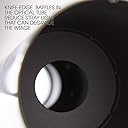
I find it to be a not well build refractor, the dew sheild was hard to get off, had to spray a little Inox mx3 on the thread and thump it and use two pipe wrench to finally get it off to clean the lens. Opening it up to get the double lens out to clean, as you will get moisture in there as it's not waterproof, the 2nd lens fell out less then 2inchs after the primary lens resulting in the glass getting a chip on the side and a scratch on the 2nd lens from the spacer, they were sopose to be held together with tape! So said Kevin from Sky-Watcher USA on a YouTube video about premium refractor. Mine wasn't! The light buffing don't work too well resulting in light streaks on brighter stars on a short exposure. My finder holder didn't hold well as it came of and hit the hard pavers when putting on the lens cap first night I had it. Plus the crayford focuser has issues too, gets stuck so you have to push it to help it along( needs adjusting). The Dielectric diagonal is good and the 25mm eyepiece but the 5mm could be better. I find Celestron Ultima Edge eyepieces give better results, 10mm with x cel3x barlow 270x nice. I had some ok views of Jupiter, could just see the great red spot and can see Sirius B too. But I can still see some chromatic Abbreviation too on Jupiter and when you take a photo of star Sirius you'll get purple fringe. Max magnification 270x I find on Jupiter and star Sirius so on a good seeing night, 60x per inch. As for deep sky photos I found that my Sky-Watcher 150p Newtonian reflector was alittle better (and alot cheaper too). I do feel a little ripped off abit with this scope. Beware! I though it would be alot better at this price, I also currently use a EVOSTAR-80ED, 150p, Celestron C90 and before all that a Celestron CR150 Achromatic Refractor 19y. To be honest I find I get better results on deep sky with exposures between 15 to 45 sec on my SKY-WATCHER 80ED and 150p on a Celestron AVX mount. Been casual amateur astronomer since 1988.
C**U
This is a very well constructed doublet by Sky-watcher... I have been impressed with the views I've had so far. Need more clear skies! The only criticism I have of the kit is the case is a wee bit flimsy, but it is functional. 2nd would be the finder scope prism has a lot of plastic and might not hold up over time. I think it used to ship with a field flattener too, now available separately. Small things and in no way take away from the overall rating.
J**N
100 ED APO- Astonishingly inexpensive via Amazon compared to other sellers (£370). Was half expecting it to be canceled as a pricing error, but the whole OTA and eyepieces/case etc was delivered promptly. Has subsequently given wonderful views of nebula, galaxies and our local planets, Jupiter was magnificent. Would recommend.
M**K
Superb value for money. I'm not sure how I managed to get this telescope for so much less than the retail price, but it is a superb performer with excellent quality optics and mechanical parts for the price I paid. The trick I used was to look for USA listings that have a slightly different product title from what they use here in Australia. It works if you happen to be in the right place at the right time!
R**R
Very nice telescope, But the price has doubled in less than 1 month. It’s way over priced now.
Trustpilot
3 weeks ago
1 month ago