
Buy anything from 5,000+ international stores. One checkout price. No surprise fees. Join 2M+ shoppers on Desertcart.
Desertcart purchases this item on your behalf and handles shipping, customs, and support to South Korea.
Maude [Mabry, Donna Foley] on desertcart.com. *FREE* shipping on qualifying offers. Maude Review: Better than expected-Great read! - After reading the synopsis, I thought this book would be like most biographies about women of this time period. I thought it would be political and full of rhetoric about women's rights and suffrage. I was so wrong. It was a touching story about a woman who voted in the first election that allowed women to vote, but it was so much more. World Wars happened and effected her life, but it wasn't a book about war. Certainly, rationing and the horrors of so many deaths effected her. Those were all things that happened, but this was Maude's personal story. It was refreshing to read a book that was purely that, one woman's incredible life full of ups and downs. I thank the writer for sharing the story without trying to make some political statement. Great book! Review: The book left me feeling conflicted about Maude, but also serves as a cautionary tale of marriage, motherhood and faith. - This review might be a little long but I had to really have time to come to terms with my feelings about this book after finishing it. I was really conflicted, not only in how I felt about the main character, but how I felt about the writing and what the author was trying to say. I read this on Kindle as the book intrigued me for several reasons: I love books written from a child or adolescent's point of view which is how this book begins. I love books that have a bit of history or represent an era in which I have an interest. Part of the book takes place in Detroit which is where my mother was born, and where my parents met at Wayne State University in the 1940s. I will say, I could not put this book down, but depending on where I was at in the book, the reasons were different. I'd say the first half of the book or until Maude and her family are settled in Detroit, I was fascinated by her life (though full of sadness and hardships) and how Maude coped with things in her life and her view of the relationships she had, and her faith. The latter half of the book I continued to read because I kept hoping that Maude would act on some of her thoughts and emotions or would show the compassion that she so much wanted from others. Also, I had come this far, and by golly, I was going to finish the book. The first half had me excited to give this book to my 22 year old daughter to read. I thought she'd find it very interesting. Later on, it was so depressing and the characters, even Maude, became so unlikable, that I didn't know if I wanted Blythe (my daughter) to read it, as it did not seem to present a very good light on marriage, motherhood, or Christianity. But after considerable reflection, I've decided I would recommend this book to her and to others. Not because the writing is necessarily great (although I thought the first half was done well), or it is a happy book (though there are moments of humor and happiness) but because it is a sort of "cautionary tale" to learn from. Here are my thoughts as far as the Pros of the book or lessons to be learned: 1) Maude says things in a humorous way. Her viewpoint is that of a young girl living in a hard world. She is a hard-worker and understands that we have responsibilities in life that we have to do whether we enjoy them or not. 2) It takes work to make a home, especially in those days. The skills that were required and the ingenuity to make a dollar go as far as possible, and the ability to sew, plant gardens, etc., are things that I believe are lost on later generations. I admire Maude's ability, work ethic and tenacity. 3) Its important to tell others what you feel, need or want, whether you believe you will receive it or not. I got angry with Maude that so often she had feelings that she would not express, and then be angry at an individual (her second husband for example) for not knowing or giving her what she needed. When Maude sees George (her second husband) being jovial and friendly with the people to whom he is selling off all their belongs for the move to Detroit, she "hates" him, but then, a few minutes after the last item is carried off, she sees him breakdown outside their barn and Maude SEEMS to realize his pain in the situation. WHY didn't she go down and put a hand on his shoulder or acknowledge his feelings. She always just left him alone with his grief, and would pat herself on the back for knowing he'd rather be alone. 4) Its important to really read and learn from the Bible. Maude kept stating that the preachers or "church" told her she shouldn't pray for herself, but this is not what the Bible says. Even Christ prayed for his Father to change what was about to take place with his arrest, although he would accept whatever the Lord decided. But Christ still asked. She seemed only to pray for her sons (that she didn't care for) because that is what she was supposed to do, not because she wanted her heart to really change. And for all the reading of the bible she supposedly did, she did not seem to learn from the stories of Isaac (who favored Jacob) and Rebekah (who favored Esau) and what "favoritism" did to their family, or Jacob later showing favoritism to Joseph (which led his brothers to sell him into Egyptian slavery). - In the first chapter of the book, Maude as a small child can tell that her mother favors her older sister. Why would she not realize or believe that Bud and Paul would be able to know or feel her unhappiness with them and their father. I believe she is just as responsible for how they turned out as she believed George was. 5) Showing love and mercy to people we may not care for is hard, but it is what we must do. Maude's story of how her first husband came home one night and wanted to make their "nightly relations" as enjoyable for her as they were for him, is an example of love and selflessness. It is a very sweet story and you can tell it meant a great deal to Maude all through her life. She kept waiting for her second husband to do the same, but she never showed him the same interest or love. What I mean is, she didn't seem to realize that it made her first husband (James) happy to please and make Maude happy (not just sexually but in all things). I think she saw a lot of what she did for George and her children as her duty or responsibility but did not think about what effect she could have if she just did things out of christian love, and because it feels good to treat others well, even if she was not feeling strong romantic or maternal love for certain individuals. Sure, we can get hurt feelings when we do something nice for someone and it goes unacknowledged or noticed, but deep inside it still feels better and rewarding to do good to someone anyway. To love is a choice. It doesn't always come naturally - even with those we DO love, we must love them in times of disappointment and anger. 6) It is important to find joy in each and every day - even if it is just something small in our lives or routines. We have only one life, and it is a reflection of the choices we make, so we should find a way to bring good and happiness from it. What I found to be negative about this book: 1) Most of this book is based on stories the author's grandmother told her about her life growing up in tough times. I think the voice of her grandmother comes through in the chapters about her life until they settle in Detroit. I imagine Maude spoke in great detail and with great emotion about those early years and because of this you can really visualize her life and hear the voices of the people. It doesn't seem that, once her children were adults and life became SO sad (although financial and comfort-wise it may have been easier), the later years were events Maude actually spoke about to her granddaughter and I believe it shows in the writing. At some point, it just became a series of statements or facts without any emotion. I read to get thru it, but Maude seemed to have left her body and was no longer there in the book. If seemed to be just the author's observations of Maude's later life. 2) Some awkward writing. Though some argue the writing was juvenile, I felt that in the first half of the book, the writing reflected the thought and speaking pattern of a young girl without much education. I knew it was Maude's way of speaking, not the author's. However, in those last chapters, there seems to be more grammatical errors, and incomplete sentences. One example is when Maude's younger daughter Betty was struck by a car. Thankfully, a copy of the actual newspaper clipping of the the car accident was included at the back of the book, because for the life of me, I was not sure what the author was trying to say about how Betty wound up in the backseat of the car that struck her (I was guessing, but it was NOT clear in the actual narrative). 3) Yes, Maude's second husband was not much of a worker or self-motivated. I think he favored Bud and Paul, because he knew they received about as much love and affection from their mother as he did. He loved them because Maude couldn't. Yeah, he did them more harm than good, but Maude did nothing to really help them either. I know she loved her other children a great deal, but they made some pretty stupid choices (over and over again) too.. 4) If you're a writer, its important to know where the real story ends. I think even the author lost interest or hope in writing this story. This book could have ended as they made their way to or arrived in Detroit. Although the author and her place in the story comes after they are in Detroit, I think what made Maude so delightful earlier in the book, was her hope or belief that things could get better. If things did get better or there were moments of happiness, the last half of the book doesn't reflect it. Maude just seemed miserable and unable to look beyond her own disappointments, personal views and opinions later on and was just bitter. Even the relationship with her granddaughter (who was actually a granddaughter by marriage, not by blood) seemed sort of disconnected. I didn't have much respect for Maude at the end, I just felt sad that she had wasted so much time waiting for others to change or say what she wanted to hear, instead of making those moves herself. Even if ending the story sooner would have left me wondering what became of Maude and her family, I think I would have liked that better than actually KNOWING.
| Best Sellers Rank | #987,515 in Books ( See Top 100 in Books ) #210 in Midwest U.S. Biographies #13,199 in U.S. State & Local History #21,358 in Memoirs (Books) |
| Customer Reviews | 4.1 4.1 out of 5 stars (43,336) |
| Dimensions | 6 x 0.89 x 9 inches |
| Edition | Illustrated |
| ISBN-10 | 1501086138 |
| ISBN-13 | 978-1501086137 |
| Item Weight | 1.16 pounds |
| Language | English |
| Print length | 395 pages |
| Publication date | October 16, 2014 |
| Publisher | CreateSpace Independent Publishing Platform |
A**R
Better than expected-Great read!
After reading the synopsis, I thought this book would be like most biographies about women of this time period. I thought it would be political and full of rhetoric about women's rights and suffrage. I was so wrong. It was a touching story about a woman who voted in the first election that allowed women to vote, but it was so much more. World Wars happened and effected her life, but it wasn't a book about war. Certainly, rationing and the horrors of so many deaths effected her. Those were all things that happened, but this was Maude's personal story. It was refreshing to read a book that was purely that, one woman's incredible life full of ups and downs. I thank the writer for sharing the story without trying to make some political statement. Great book!
J**I
The book left me feeling conflicted about Maude, but also serves as a cautionary tale of marriage, motherhood and faith.
This review might be a little long but I had to really have time to come to terms with my feelings about this book after finishing it. I was really conflicted, not only in how I felt about the main character, but how I felt about the writing and what the author was trying to say. I read this on Kindle as the book intrigued me for several reasons: I love books written from a child or adolescent's point of view which is how this book begins. I love books that have a bit of history or represent an era in which I have an interest. Part of the book takes place in Detroit which is where my mother was born, and where my parents met at Wayne State University in the 1940s. I will say, I could not put this book down, but depending on where I was at in the book, the reasons were different. I'd say the first half of the book or until Maude and her family are settled in Detroit, I was fascinated by her life (though full of sadness and hardships) and how Maude coped with things in her life and her view of the relationships she had, and her faith. The latter half of the book I continued to read because I kept hoping that Maude would act on some of her thoughts and emotions or would show the compassion that she so much wanted from others. Also, I had come this far, and by golly, I was going to finish the book. The first half had me excited to give this book to my 22 year old daughter to read. I thought she'd find it very interesting. Later on, it was so depressing and the characters, even Maude, became so unlikable, that I didn't know if I wanted Blythe (my daughter) to read it, as it did not seem to present a very good light on marriage, motherhood, or Christianity. But after considerable reflection, I've decided I would recommend this book to her and to others. Not because the writing is necessarily great (although I thought the first half was done well), or it is a happy book (though there are moments of humor and happiness) but because it is a sort of "cautionary tale" to learn from. Here are my thoughts as far as the Pros of the book or lessons to be learned: 1) Maude says things in a humorous way. Her viewpoint is that of a young girl living in a hard world. She is a hard-worker and understands that we have responsibilities in life that we have to do whether we enjoy them or not. 2) It takes work to make a home, especially in those days. The skills that were required and the ingenuity to make a dollar go as far as possible, and the ability to sew, plant gardens, etc., are things that I believe are lost on later generations. I admire Maude's ability, work ethic and tenacity. 3) Its important to tell others what you feel, need or want, whether you believe you will receive it or not. I got angry with Maude that so often she had feelings that she would not express, and then be angry at an individual (her second husband for example) for not knowing or giving her what she needed. When Maude sees George (her second husband) being jovial and friendly with the people to whom he is selling off all their belongs for the move to Detroit, she "hates" him, but then, a few minutes after the last item is carried off, she sees him breakdown outside their barn and Maude SEEMS to realize his pain in the situation. WHY didn't she go down and put a hand on his shoulder or acknowledge his feelings. She always just left him alone with his grief, and would pat herself on the back for knowing he'd rather be alone. 4) Its important to really read and learn from the Bible. Maude kept stating that the preachers or "church" told her she shouldn't pray for herself, but this is not what the Bible says. Even Christ prayed for his Father to change what was about to take place with his arrest, although he would accept whatever the Lord decided. But Christ still asked. She seemed only to pray for her sons (that she didn't care for) because that is what she was supposed to do, not because she wanted her heart to really change. And for all the reading of the bible she supposedly did, she did not seem to learn from the stories of Isaac (who favored Jacob) and Rebekah (who favored Esau) and what "favoritism" did to their family, or Jacob later showing favoritism to Joseph (which led his brothers to sell him into Egyptian slavery). - In the first chapter of the book, Maude as a small child can tell that her mother favors her older sister. Why would she not realize or believe that Bud and Paul would be able to know or feel her unhappiness with them and their father. I believe she is just as responsible for how they turned out as she believed George was. 5) Showing love and mercy to people we may not care for is hard, but it is what we must do. Maude's story of how her first husband came home one night and wanted to make their "nightly relations" as enjoyable for her as they were for him, is an example of love and selflessness. It is a very sweet story and you can tell it meant a great deal to Maude all through her life. She kept waiting for her second husband to do the same, but she never showed him the same interest or love. What I mean is, she didn't seem to realize that it made her first husband (James) happy to please and make Maude happy (not just sexually but in all things). I think she saw a lot of what she did for George and her children as her duty or responsibility but did not think about what effect she could have if she just did things out of christian love, and because it feels good to treat others well, even if she was not feeling strong romantic or maternal love for certain individuals. Sure, we can get hurt feelings when we do something nice for someone and it goes unacknowledged or noticed, but deep inside it still feels better and rewarding to do good to someone anyway. To love is a choice. It doesn't always come naturally - even with those we DO love, we must love them in times of disappointment and anger. 6) It is important to find joy in each and every day - even if it is just something small in our lives or routines. We have only one life, and it is a reflection of the choices we make, so we should find a way to bring good and happiness from it. What I found to be negative about this book: 1) Most of this book is based on stories the author's grandmother told her about her life growing up in tough times. I think the voice of her grandmother comes through in the chapters about her life until they settle in Detroit. I imagine Maude spoke in great detail and with great emotion about those early years and because of this you can really visualize her life and hear the voices of the people. It doesn't seem that, once her children were adults and life became SO sad (although financial and comfort-wise it may have been easier), the later years were events Maude actually spoke about to her granddaughter and I believe it shows in the writing. At some point, it just became a series of statements or facts without any emotion. I read to get thru it, but Maude seemed to have left her body and was no longer there in the book. If seemed to be just the author's observations of Maude's later life. 2) Some awkward writing. Though some argue the writing was juvenile, I felt that in the first half of the book, the writing reflected the thought and speaking pattern of a young girl without much education. I knew it was Maude's way of speaking, not the author's. However, in those last chapters, there seems to be more grammatical errors, and incomplete sentences. One example is when Maude's younger daughter Betty was struck by a car. Thankfully, a copy of the actual newspaper clipping of the the car accident was included at the back of the book, because for the life of me, I was not sure what the author was trying to say about how Betty wound up in the backseat of the car that struck her (I was guessing, but it was NOT clear in the actual narrative). 3) Yes, Maude's second husband was not much of a worker or self-motivated. I think he favored Bud and Paul, because he knew they received about as much love and affection from their mother as he did. He loved them because Maude couldn't. Yeah, he did them more harm than good, but Maude did nothing to really help them either. I know she loved her other children a great deal, but they made some pretty stupid choices (over and over again) too.. 4) If you're a writer, its important to know where the real story ends. I think even the author lost interest or hope in writing this story. This book could have ended as they made their way to or arrived in Detroit. Although the author and her place in the story comes after they are in Detroit, I think what made Maude so delightful earlier in the book, was her hope or belief that things could get better. If things did get better or there were moments of happiness, the last half of the book doesn't reflect it. Maude just seemed miserable and unable to look beyond her own disappointments, personal views and opinions later on and was just bitter. Even the relationship with her granddaughter (who was actually a granddaughter by marriage, not by blood) seemed sort of disconnected. I didn't have much respect for Maude at the end, I just felt sad that she had wasted so much time waiting for others to change or say what she wanted to hear, instead of making those moves herself. Even if ending the story sooner would have left me wondering what became of Maude and her family, I think I would have liked that better than actually KNOWING.
B**E
Absolutely Five Stars
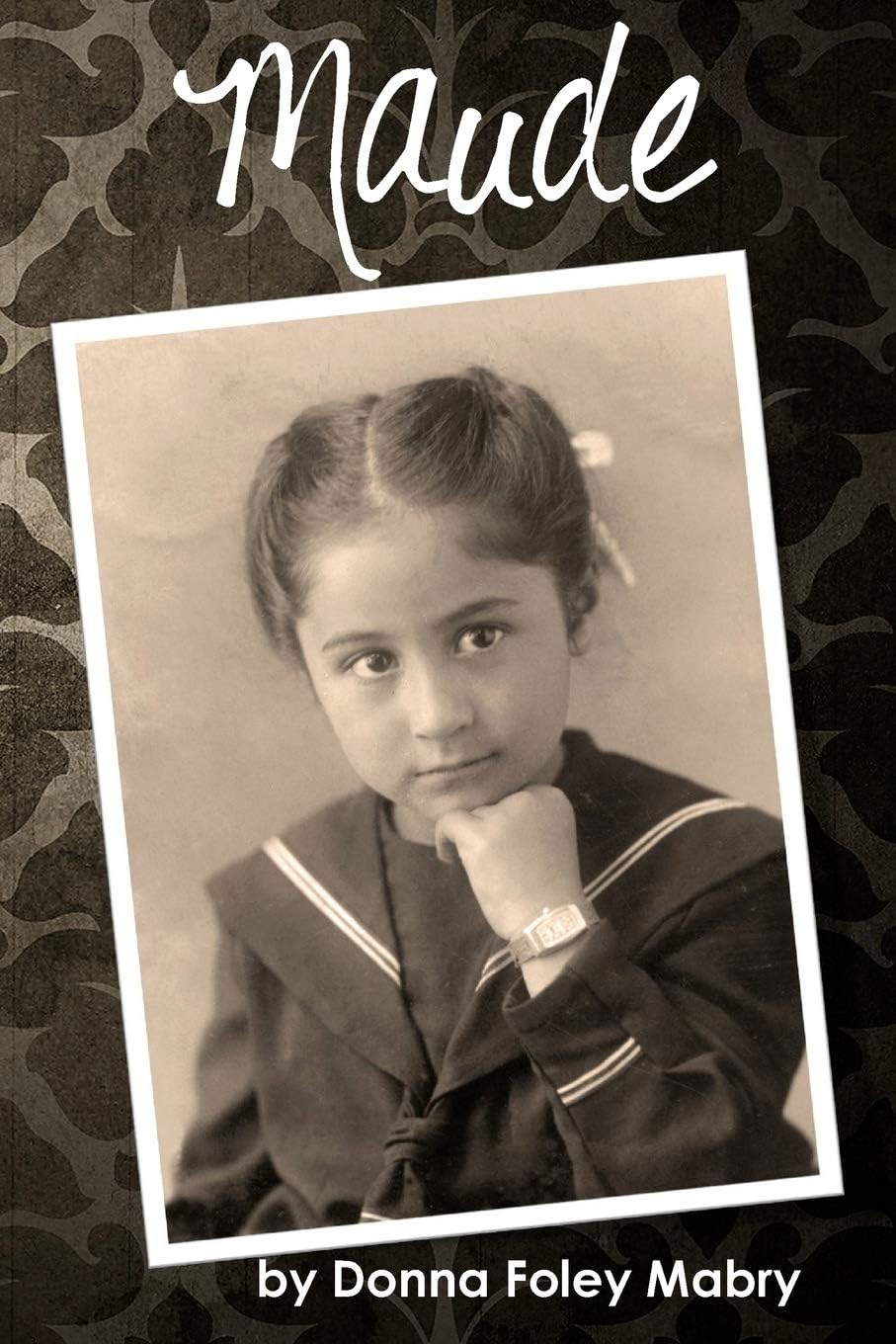
An Amazon email advert listed Maude along with other titles. The cover photo combined with the sample from the Look Inside program prompted me to read the entire book. The photo is compelling because it beautifully shows the innocence and playfulness inherent in childhood, before the world can do its damage. If you're looking for a Harlequin Hall of Fame, all's well that ends well story, this book is not for you. What Maude does so well, though, is preserve a history that needs preserving. A girl born in very small town America, pinned down on either end by church steeples (love that!) toward the end of the 19th century, Maude grows up in the early 20th century and becomes saddled with societal expectations that have little give in them on all aspects of life, especially for a girl and young woman. Marriage and housework trump schooling, religious requirements rule all aspects of life, and the hard-scrabble environment takes its toll when it wants to. Maude does share aspects with The Grapes of Wrath, and although not filled with the latter's detailed symbolism, Maude takes its reader past World War I, The Great Depression, into the 1960s, and through to Maude's death and beyond - to conclude with the life of the author, who finds plenty to admire in a woman who overcame tragedy in her own way, who died, in the end, with utmost dignity - Maude is honest about her faults and failings, she's true to herself and principles, a survivor with human dignity as well as modesty despite the multiple tragedies no daughter, mother, wife, or sister should face. And she faced them all. This is a true story, and Maude's lost feelings for two of her five children, although shocking to modern sensibilities, are sadly felt and lamented by her, for these feelings are the tragic results of her circumstances and the broken, unfeeling people around her. The story is well-told and paced. The words and structure do not get in the way of the power of human conflict. Without giving anything away, from the moment Maude got ______ down a flight of ______________ by _______________ - I could not put the book down at 4 pm, until I finished reading it at 10 PM. While certainly sad, the ending provides a lift, and whether the author intended this or not, it seems clear to me that the Maude lives on not only in the author's words, but also in her life. History preserved, a life preserved, Maude lives on, and is definitely worth the read.
M**A
一気に読みました。 一緒に悲しみ、喜び、怒り、失望し、疲れ果てて最後のページに たどり着いた感じ。
F**A
Scritto in prima persona da una donna forte e sensibile, ha la semplice sincerità’ di una vera autobiografia,, che attraversa tutto il corso di una lunga vita, nella quale si riversano momenti di educazione e crescita personale, attraverso reali eventi storici e problemi familiari, economici e sociali. Molto interessante la purtroppo limitata documentazione fotografica, in cui si riconoscono alcuni dei personaggi, che il lettore ha imparato a seguire con interesse e anche ad amare, condividendo i sentimenti della protagonista/narratrice.
R**O
A sad beginning to life, Maude left an orphan at 8 years old worked hard and at 16 years married the man of her dreams, James. Tragedy struck but she had a lovely little girl, Lulu. Life was made hard but gradually life changed again. Her granddaughter tells the compelling story of her grandmothers full life. Couldn't put it down.
K**R
I have not read such a good book in a long, long time! The story of Maude is a mix of emotions that kept me riveted. It is one of those books that you will finish, put away and want to read again in the years to come!
N**G
Donna Mabray shares her grandmother's story with astounding vision and sensitivity. It is a fabulous read and it made me so grateful that people continue to tell the stories of their ancestors. It is a great book, told in the first person, in the voice of Maude. It's an honest book, written in plain words that you would use to talk to your friend over a cup of tea. It covers 1906 through the late 1960s. I found the time span interesting to see Maude go from using horses for transportation and using an outhouse to finally having her husband work for an automobile plant in Detroit and having indoor plumbing and electricity. The books spans the lives of her children and grandchildren and is very relatable. We need to be reminded again and again of the suffering others endured that have made our lives so much richer. Other reviewers have written this book is somewhat depressing, I see it as a triumph of spirit. Despite loss, grief, and endless hard work, Maude kept to her values. Indeed, her values are all that she had any choice in making. That and her gifts to others...her entire life was given to caring for others, even those who hurt her and tried to destroy her. 5 stars.
Trustpilot
2 days ago
2 weeks ago