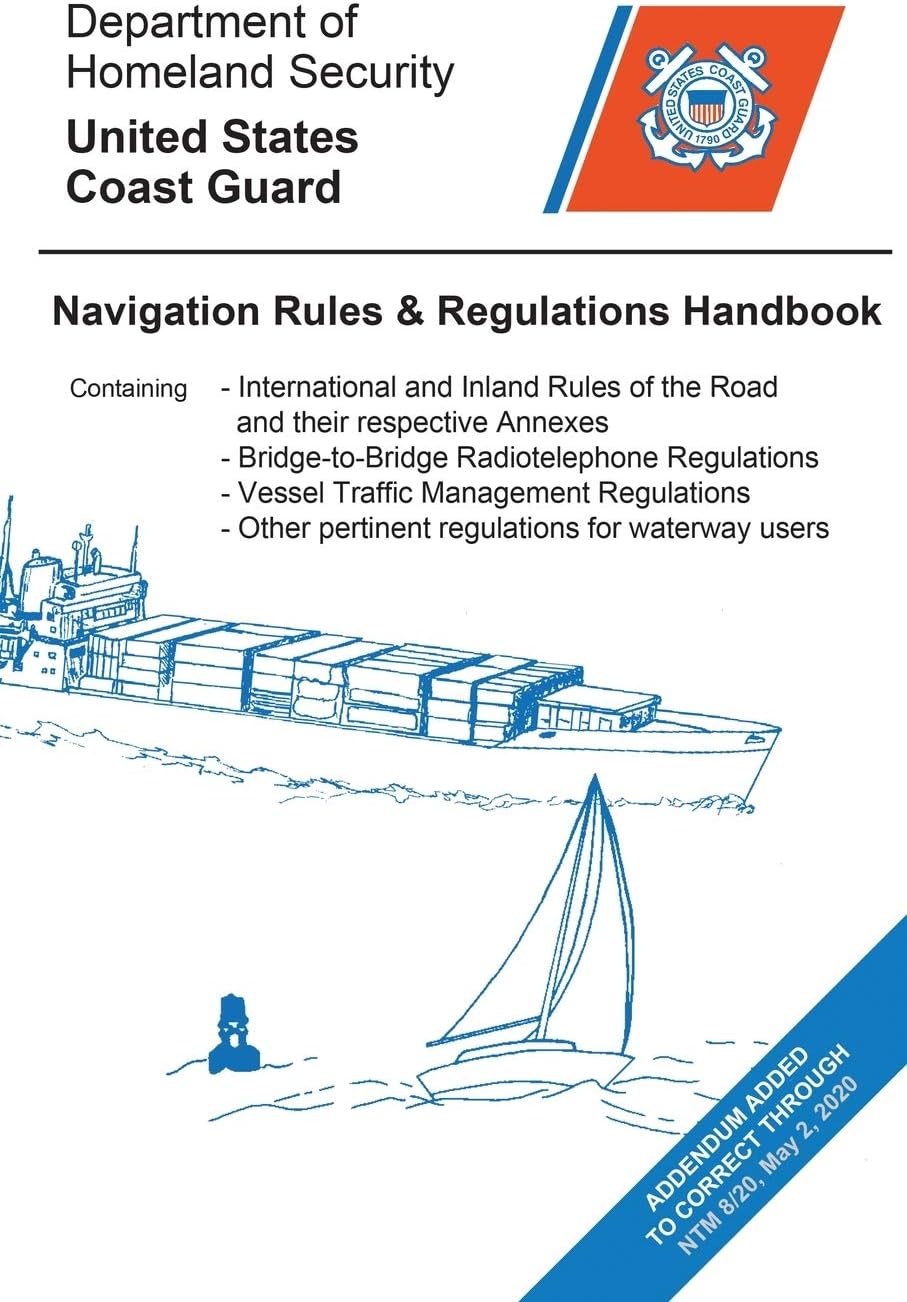
Navigation Rules and Regulations Handbook: PUBLICATION DATE 2024
Product ID: 13051404
Desertcart purchases this item on your behalf and handles shipping, customs, and support to South Korea.
PUBLICATIONS DATE 2024. This book was checked for updates in March 2024 prior to printing. Current edition of Navigation Rules & Regulations Inland and International colregs. This book meets USCG carriage requirements, REQUIRED on-board all vessels over 12 meters, approximately 39 feet in length. Covers Inland Navigation Rules and Current edition of Navigation Rules & Regulations Inland and International colregs. Used for USCG licensing exams, the principles described in this book are critical for safe navigation. Paradise Cay Publications offers Notice to Mariners changes incorporated within the text for the best up-to-date version of this publication. MORE ABOUT NAV RULES: International Regulations for Preventing Collisions at Sea. Used for USCG licensing exams, the principles described in this book are critical for safe navigation. Paradise Cay Publications offers Notice to Mariners changes incorporated within the text for the best up-to-date version of this publication. The Navigation Rules & Regulations Handbook (Nav Rules) contains the essentials of boating protocol and safety. It is the reference manual every boat should carry and every skipper should be intimately familiar with. So valuable in fact the US Coast Guard REQUIRES a copy on board all vessels 12 meters (approximately 39') or more in lenght: 34;33 CFR 83.01(g) requires: 'The operator of each self-propelled vessel 12 meters or more in length shall carry, on board and maintain for ready reference, a copy of these Rules.' This handbook is a compendium produced by the U.S. Coast Guard Navigation Standards Branch, U.S. Coast Guard Headquarters, Washington, DC, of the: International Regulations for Preventing Collisions at Sea, 1972 (72 COLREGS); Inland Navigation Rules (33 CFR 83); their respective technical annexes (33 CFR 84-90); COLREGS Demarcation Lines (33 CFR 80); Vessel Bridge-to-Bridge Radiotelephone Regulations, (33 CFR 26); Vessel Traffic Management Regulations (33 CFR 161); and, various other pertinent provisions of the U.S. Code and Code of Federal Regulations regarding compliance and penalties associated with the Navigation Rules. Review: COLREGS/Inland Rules - Bought this as a maritime academy student. If you’re working on a USCG license, this book is a must have. Know it, learn it, live it, love it. Review: Navigation Rules and Regulations Handbook - The Federal Register published a final ruling on changes to the Inland Navigation Rules effective 1 August 2014. These changes have NOT yet showed up on the National Geospatial-Intelligence Agency (NGA) website as a Notice to Mariners. There is the new Navigation Rules Book published and supersedes the current Commandant Instruction, COMDTINST M16672.2D. There will not be another COMDINST issued in its stead, but rather this handbook. Rule 25 is being amended so that sailing vessels less than 7 meters and vessels under oars can now display an all-around white light or an electric torch or lighted lantern. (i) A sailing vessel of less than 7 meters in length shall, if practicable, exhibit the lights prescribed in paragraph (a) or (b) of this Rule, but if she does not, she shall have ready at hand an electric torch or lighted lantern showing a white light which shall be exhibited in sufficient time to prevent collision. (ii) A vessel under oars may exhibit the lights prescribed in this Rule for sailing vessels, but if she does not, she shall have ready at hand an electric torch or lighted lantern showing a white light which shall be exhibited in sufficient time to prevent collision. The INLAND lighting scheme for fishing vessels in close proximity that was formerly located in Annex 2 is now located under Rule 26, Fishing Vessels, right after lighting for a vessel engaged in fishing. The dredge pipeline lighting scheme that was formerly located in Annex 5 is now located under Rule 27, Vessels not under command or restricted in their ability to maneuver, right after lighting for dredges. INLAND Rule 30, Anchored Vessels and Vessels Aground, was changed to read: (g) A vessel of less than 20 meters in length, when at anchor in a special anchorage area designated by the Coast Guard, shall not be required to exhibit the anchor lights and shapes required by this Rule. (h) The following barges shall display at night and if practicable in periods of restricted visibility the lights described in paragraph (i) of this Rule: (i) Every barge projecting into a buoyed or restricted channel. (ii) Every barge so moored that it reduces the available navigable width of any channel to less than 80 meters. (iii) Barges moored in groups more than two barges wide or to a maximum width of over 25 meters. (iv) Every barge not moored parallel to the bank or dock. (i) Barges described in paragraph (h) of this Rule shall carry two unobstructed all-round white lights of an intensity to be visible for at least 1 nautical mile and meeting the technical requirements as prescribed in Annex I (33 CFR part 84). INLAND Rule 30, Anchored Vessels and Vessels Aground, was changed to read: (j) A barge or a group of barges at anchor or made fast to one or more mooring buoys or other similar device, in lieu of the provisions of this Rule, may carry unobstructed all-round white lights of an intensity to be visible for at least 1 nautical mile that meet the requirements of Annex I (33 CFR part 84) and shall be arranged as follows: (i) Any barge that projects from a group formation, shall be lighted on its outboard corners. (ii) On a single barge moored in water where other vessels normally navigate on both sides of the barge, lights shall be placed to mark the corner extremities of the barge. (iii) On barges moored in group formation, moored in water where other vessels normally navigate on both sides of the group, lights shall be placed to mark the corner extremities of the group. (k) The following are exempt from the requirements of this Rule: (i) A barge or group of barges moored in a slip or slough used primarily for mooring purposes. (ii) A barge or group of barges moored behind a pierhead. (iii) A barge less than 20 meters in length when moored in a special anchorage area designated in accordance with § 109.10 of this chapter. (l) Barges moored in well-illuminated areas are exempt from the lighting requirements of this section. These areas are as follows: Vessels < 20 meters are no longer required to carry a bell. To account for this change: INLAND Rule 33, Equipment for Sound Signals, was changed to read: A vessel of 12 meters or more in length shall be provided with a whistle, a vessel of 20 meters or more in length shall be provided with a bell in addition to a whistle, and a vessel of 100 meters or more in length shall, in addition, be provided with a gong, the tone and sound of which cannot be confused with that of the bell. The whistle, bell and gong shall comply with the specifications in Annex III to these Rules (33 CFR part 86). The bell or gong or both may be replaced by other equipment having the same respective sound characteristic Rule 35, Sound Signals in Restricted Visibility, was changed to read: A vessel of 12 meters or more but less than 20 meters in length shall not be obliged to give the bell signals prescribed in paragraphs (g) and (h) of this Rule. However, if she does not, she shall make some other efficient sound signal at intervals of not more than 2 minutes. The handbook will now include VESSEL TRAFFIC MANAGEMENT 33 CFR 161 information. This is complimentary information to the listing of Vessel Traffic Service (VTS) areas located in the original Commandant Instruction.


| Best Sellers Rank | #53,027 in Books ( See Top 100 in Books ) #238 in Transportation (Books) #3,201 in Reference (Books) |
| Customer Reviews | 4.8 out of 5 stars 1,347 Reviews |
K**.
COLREGS/Inland Rules
Bought this as a maritime academy student. If you’re working on a USCG license, this book is a must have. Know it, learn it, live it, love it.
R**I
Navigation Rules and Regulations Handbook
The Federal Register published a final ruling on changes to the Inland Navigation Rules effective 1 August 2014. These changes have NOT yet showed up on the National Geospatial-Intelligence Agency (NGA) website as a Notice to Mariners. There is the new Navigation Rules Book published and supersedes the current Commandant Instruction, COMDTINST M16672.2D. There will not be another COMDINST issued in its stead, but rather this handbook. Rule 25 is being amended so that sailing vessels less than 7 meters and vessels under oars can now display an all-around white light or an electric torch or lighted lantern. (i) A sailing vessel of less than 7 meters in length shall, if practicable, exhibit the lights prescribed in paragraph (a) or (b) of this Rule, but if she does not, she shall have ready at hand an electric torch or lighted lantern showing a white light which shall be exhibited in sufficient time to prevent collision. (ii) A vessel under oars may exhibit the lights prescribed in this Rule for sailing vessels, but if she does not, she shall have ready at hand an electric torch or lighted lantern showing a white light which shall be exhibited in sufficient time to prevent collision. The INLAND lighting scheme for fishing vessels in close proximity that was formerly located in Annex 2 is now located under Rule 26, Fishing Vessels, right after lighting for a vessel engaged in fishing. The dredge pipeline lighting scheme that was formerly located in Annex 5 is now located under Rule 27, Vessels not under command or restricted in their ability to maneuver, right after lighting for dredges. INLAND Rule 30, Anchored Vessels and Vessels Aground, was changed to read: (g) A vessel of less than 20 meters in length, when at anchor in a special anchorage area designated by the Coast Guard, shall not be required to exhibit the anchor lights and shapes required by this Rule. (h) The following barges shall display at night and if practicable in periods of restricted visibility the lights described in paragraph (i) of this Rule: (i) Every barge projecting into a buoyed or restricted channel. (ii) Every barge so moored that it reduces the available navigable width of any channel to less than 80 meters. (iii) Barges moored in groups more than two barges wide or to a maximum width of over 25 meters. (iv) Every barge not moored parallel to the bank or dock. (i) Barges described in paragraph (h) of this Rule shall carry two unobstructed all-round white lights of an intensity to be visible for at least 1 nautical mile and meeting the technical requirements as prescribed in Annex I (33 CFR part 84). INLAND Rule 30, Anchored Vessels and Vessels Aground, was changed to read: (j) A barge or a group of barges at anchor or made fast to one or more mooring buoys or other similar device, in lieu of the provisions of this Rule, may carry unobstructed all-round white lights of an intensity to be visible for at least 1 nautical mile that meet the requirements of Annex I (33 CFR part 84) and shall be arranged as follows: (i) Any barge that projects from a group formation, shall be lighted on its outboard corners. (ii) On a single barge moored in water where other vessels normally navigate on both sides of the barge, lights shall be placed to mark the corner extremities of the barge. (iii) On barges moored in group formation, moored in water where other vessels normally navigate on both sides of the group, lights shall be placed to mark the corner extremities of the group. (k) The following are exempt from the requirements of this Rule: (i) A barge or group of barges moored in a slip or slough used primarily for mooring purposes. (ii) A barge or group of barges moored behind a pierhead. (iii) A barge less than 20 meters in length when moored in a special anchorage area designated in accordance with § 109.10 of this chapter. (l) Barges moored in well-illuminated areas are exempt from the lighting requirements of this section. These areas are as follows: Vessels < 20 meters are no longer required to carry a bell. To account for this change: INLAND Rule 33, Equipment for Sound Signals, was changed to read: A vessel of 12 meters or more in length shall be provided with a whistle, a vessel of 20 meters or more in length shall be provided with a bell in addition to a whistle, and a vessel of 100 meters or more in length shall, in addition, be provided with a gong, the tone and sound of which cannot be confused with that of the bell. The whistle, bell and gong shall comply with the specifications in Annex III to these Rules (33 CFR part 86). The bell or gong or both may be replaced by other equipment having the same respective sound characteristic Rule 35, Sound Signals in Restricted Visibility, was changed to read: A vessel of 12 meters or more but less than 20 meters in length shall not be obliged to give the bell signals prescribed in paragraphs (g) and (h) of this Rule. However, if she does not, she shall make some other efficient sound signal at intervals of not more than 2 minutes. The handbook will now include VESSEL TRAFFIC MANAGEMENT 33 CFR 161 information. This is complimentary information to the listing of Vessel Traffic Service (VTS) areas located in the original Commandant Instruction.
A**S
Good Quality
Same as description 🫶🏻
N**E
Good quality for half price! 👍🏼
Good quality for half price!
R**R
Rules of the road
A must have for rfpnw
R**P
Must have for a boater
A must have for boating in America. I wish every boaters had to read and know. The world would be safer on the water.
R**Y
Boating rules
These regulations have to be on a boat as part of the safety equipment.
R**Y
Captain Verified
As a licensed OUPV Captain, the U.S.C.G. requires me to carry the most current Navigation Rules and Regulations Handbooks on board my vessel. Unlike the Nav. Rules and Regs that you can print for free directly from the Coast Guard's website, I needed one that was not only durable but could be left on a boat without getting destroyed in a salt water environment. I was a little apprehensive about ordering the handbook at first because after an exhaustive internet search, many that I found were either out of date or to expensive to purchase. But when I stumbled upon this version, I read its description and it appeared to have everything I was looking for. So, I decided to purchased it through Amazon Prime and after anxiously waiting for it, I received it on my door step on-time as expected. As I open the package and pulled out the book, I immediately went onto the Coast Guard's website to cross reference all the revisions with this book. Much to my amaze, I was shocked to see that as of April 2017, the handbook was up to date! Thank you Amazon...
H**7
Great Product :) :D
Great Book , Best Egyptian Regards
A**O
Excelente livro.
Imprescindível para quem navega.
Trustpilot
5 days ago
2 months ago