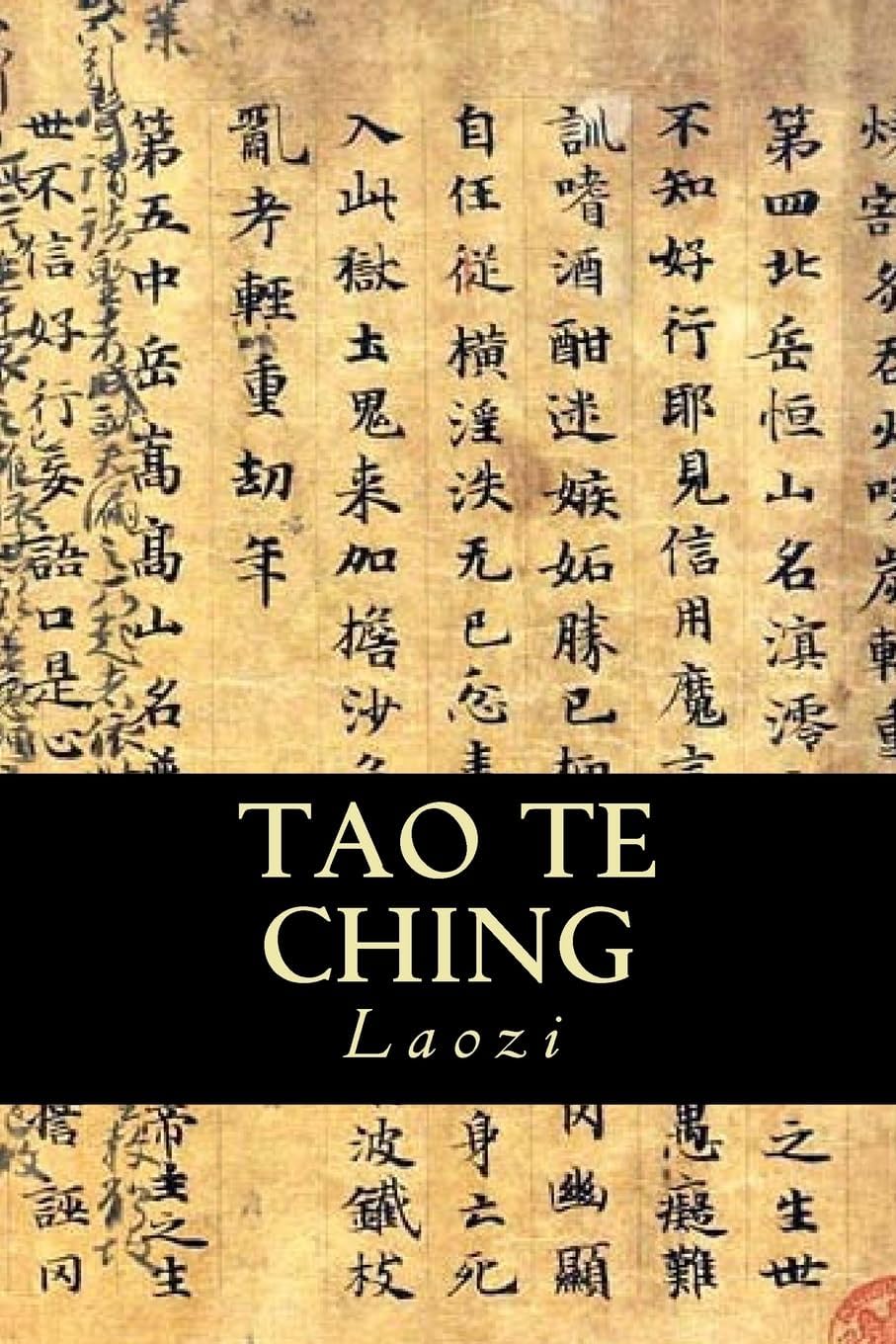
Tao Te Ching
Product ID: 146783713
Desertcart purchases this item on your behalf and handles shipping, customs, and support to South Korea.
Laozi was an ancient Chinese philosopher and writer. He is known as the reputed author of the Tao Te Ching and the founder of philosophical Taoism, and as a deity in religious Taoism and traditional Chinese religions. Although a legendary figure, he is usually dated to around the 6th century BC and reckoned a contemporary of Confucius, but some historians contend that he actually lived during the Warring States period of the 5th or 4th century BC. A central figure in Chinese culture, Laozi is claimed by both the emperors of the Tang dynasty and modern people of the Li surname as a founder of their lineage. Laozi's work has been embraced by various anti-authoritarian movements as well as Chinese Legalism. Review: A Book for the Ages - This book, translated by Stephen Mitchell, is a work of art. Some Chinese scholars have criticized Mitchell's translation as not being "true" to the original Chinese text. However, for the lay reader, this criticism misses the mark. First, any ancient work relies on manuscripts that were written well after the original texts and during this gap the original text(s) were undoubtedly edited or suffered transcription errors. This is as true of the Tao Te Ching as it is for the Gospels. Secondly, the original manuscripts very likely relied on an oral history which is forever beyond our reach. In this sense, the Tau Te Ching might be compared to "Q" in the Gospels. Thirdly, and this applies to all ancient books of wisdom, it is not possible for a person of the twenty-first century to place themselves in 5th century BCE China (or first century Palestine for that matter). There are just too many fundamental differences, including but not limited to language, science and technology, life span, economics, customs, values, and social organization. We experience the world in a particular context and our cultural lenses limit our capacity to perceive the world the way others who lived in a vastly different culture did. So, from my perspective, it is as futile to seek the original and "true" meaning of the Tao Te Ching as t is try to understand what it is like to be a bat (Thomas Nagle). Mitchell is sensitive to the mountain of challenges in translating this ancient text and candid regarding the methods and texts he relied on. Among all of these methods he shares it was his fourteen years of intensive Zen (Ch'an) training, which "...brought me face to face with Lau Tzu and his true deciples and heirs, the early Chinese Zen Masters". He never tried to merely translate Lau Tzu's words but rather to translate his "mind". In the end, each reader will have to decide for themselves the value that this book holds for them. There are many translations to chose from and it is prudent to read others as well. For me, this translation is a masterpiece, a book that I treasure, and one that I will read again and again... Finally, I want to comment on this particular publication of the Tao Te Ching. This hard bound, illustrated volume was published in 1999 by France's Lincoln Ltd. The most complementary thing I can say is that the publisher produced a book that is worthy of the text. The illustrations, compiled by Stephen Little, beautifully compliment the text and provide an ambiance for contemplation. I almost never purchase a physical book and rely on my tablet for virtually all of my reading. But not this time. This is a book to hold in your hands and savor. Review: Brought me to tears - I LOVE this book. Unlike some other reviewers, who have read several translations of the Tao Te Ching, I have read it for the first time. While I was reading, a thought crossed my mind, "Under which rock have I been hiding for sixty years? Why have I found this book only now?" Of course that judgmental thought in itself is out of sync with the Tao which, like the ocean, accepts whatever flows into it, whenever that may happen. Suffice it to say, I am extremely grateful to have stumbled on the wisdom of Lao Tzu. There are so many compliments to pay this book. Where to begin? Lao Tzu provided the content, which is simple yet profound. Stephen Mitchel has provided a translation that is elegant and poetic. I was going to say that this would be my choice if I was allowed to take one book to that proverbial desert island. But then it occurred to me that, having read this one, I would have no need of books. Its message is inscribed in my heart - and that always goes with me. All the same, as long as I haven't yet been stranded on that island, I'm sure I'll return to this gem repeatedly, to savour its beauty and no doubt to discover fresh insights on subsequent readings. Potential customers who, like me, have not read the Tao Te Ching, may be interested to know how I found out about it. I'd read "A Thousand Names for Joy : Living in Harmony with the Way Things Are" (Byron Katie's commentary on excerpts from the Tao Te Ching) and, before that, "Loving What Is : Four Questions That Can Change Your Life" (which describes 'The Work' of Byron Katie). I'd found those books supportive too.
| Best Sellers Rank | #214,710 in Books ( See Top 100 in Books ) #24 in Tao Te Ching (Books) #29 in Taoism (Books) #45 in Taoist Philosophy |
| Customer Reviews | 4.4 out of 5 stars 1,150 Reviews |
C**B
A Book for the Ages
This book, translated by Stephen Mitchell, is a work of art. Some Chinese scholars have criticized Mitchell's translation as not being "true" to the original Chinese text. However, for the lay reader, this criticism misses the mark. First, any ancient work relies on manuscripts that were written well after the original texts and during this gap the original text(s) were undoubtedly edited or suffered transcription errors. This is as true of the Tao Te Ching as it is for the Gospels. Secondly, the original manuscripts very likely relied on an oral history which is forever beyond our reach. In this sense, the Tau Te Ching might be compared to "Q" in the Gospels. Thirdly, and this applies to all ancient books of wisdom, it is not possible for a person of the twenty-first century to place themselves in 5th century BCE China (or first century Palestine for that matter). There are just too many fundamental differences, including but not limited to language, science and technology, life span, economics, customs, values, and social organization. We experience the world in a particular context and our cultural lenses limit our capacity to perceive the world the way others who lived in a vastly different culture did. So, from my perspective, it is as futile to seek the original and "true" meaning of the Tao Te Ching as t is try to understand what it is like to be a bat (Thomas Nagle). Mitchell is sensitive to the mountain of challenges in translating this ancient text and candid regarding the methods and texts he relied on. Among all of these methods he shares it was his fourteen years of intensive Zen (Ch'an) training, which "...brought me face to face with Lau Tzu and his true deciples and heirs, the early Chinese Zen Masters". He never tried to merely translate Lau Tzu's words but rather to translate his "mind". In the end, each reader will have to decide for themselves the value that this book holds for them. There are many translations to chose from and it is prudent to read others as well. For me, this translation is a masterpiece, a book that I treasure, and one that I will read again and again... Finally, I want to comment on this particular publication of the Tao Te Ching. This hard bound, illustrated volume was published in 1999 by France's Lincoln Ltd. The most complementary thing I can say is that the publisher produced a book that is worthy of the text. The illustrations, compiled by Stephen Little, beautifully compliment the text and provide an ambiance for contemplation. I almost never purchase a physical book and rely on my tablet for virtually all of my reading. But not this time. This is a book to hold in your hands and savor.
J**S
Brought me to tears
I LOVE this book. Unlike some other reviewers, who have read several translations of the Tao Te Ching, I have read it for the first time. While I was reading, a thought crossed my mind, "Under which rock have I been hiding for sixty years? Why have I found this book only now?" Of course that judgmental thought in itself is out of sync with the Tao which, like the ocean, accepts whatever flows into it, whenever that may happen. Suffice it to say, I am extremely grateful to have stumbled on the wisdom of Lao Tzu. There are so many compliments to pay this book. Where to begin? Lao Tzu provided the content, which is simple yet profound. Stephen Mitchel has provided a translation that is elegant and poetic. I was going to say that this would be my choice if I was allowed to take one book to that proverbial desert island. But then it occurred to me that, having read this one, I would have no need of books. Its message is inscribed in my heart - and that always goes with me. All the same, as long as I haven't yet been stranded on that island, I'm sure I'll return to this gem repeatedly, to savour its beauty and no doubt to discover fresh insights on subsequent readings. Potential customers who, like me, have not read the Tao Te Ching, may be interested to know how I found out about it. I'd read "A Thousand Names for Joy : Living in Harmony with the Way Things Are" (Byron Katie's commentary on excerpts from the Tao Te Ching) and, before that, "Loving What Is : Four Questions That Can Change Your Life" (which describes 'The Work' of Byron Katie). I'd found those books supportive too.
R**N
The most powerful book I have seen.
I have read this through many times and will keep on reading it. This wisdom is so powerful that it truly changes the way you look at the world. Before reading this book I didn't know what wisdom was. It seems that wisdom is stepping back and seeing through the eyes of compassion. Seeing like an infant that doesn't even know what vision is. The Tao Te Ching is filled with paradoxical truths. Prepare for your ego to be vanquished and you true self released. This version by Stephen Mitchell is my favorite. He didn't try to translate the words but instead the wisdom. English and Chinese just aren't very compatible. I will trade accuracy for readability any day, especially when I am giving this book away to people all the time. The hardcover and the presentation are beautiful making it an excellent gift. People give me a lot of feedback when I give this to them, they aren't just putting in on the shelf. When they quote it I know it is making a difference in their lives. Having access to Lou Tzu's wisdom is kind of like being in a club that is special because you become immune to the endless attempts by the mind to deceive you.
J**Y
A beautiful and reader-friendly translation
Each of the many translations of this Taoist classic has its own slightly-different spirit and meaning. If you're new to the Tao Te Ching, this is a good version to read, and you'll probably feel it was time well spent. The original text contains many mystical, paradoxical statements which pose certain translation challenges, as well as some passages that were intended as advice for powerful rulers that seems cynical, not spiritual. For instance, the first thing the text tells us that the Way that can be told is not the Way, which can sound ridiculous if badly expressed. And we're told that rulers should do as little as possible to avoid conflict, and should keep their subjects' brains empty and their stomachs full to prevent them from rebelling. This version works harder than some others to make the whole thing seem understandable, beautiful, and spiritual, and it largely succeeds. I don't read Chinese and am not a scholar, so I don't know which translation is most accurate. This one is pleasant and has beautiful pictures. I use it sometimes in the morning as part of preparing for the day.
A**I
Great Gift of Love for life and the Soul
I treasure this book which I bought on Amazon in hardback 2 years or so ago. I still pick it up almost daily, and miss it when I leave it behind. I get new and deeper meaning from the vibration of the words each time. I just read a review that rated it as 1 star-- I, myself, could care less about its technical aspects being 'right' or 'wrong' or whatever else--all I know is it keeps helping me open my heart more and more--accepting all things, all people, and life as it is, as all is one. I have recently spent a lot of time with Byron Katie's "A thousand names of Joy" -- as she translates this book into her own enlightened version -- I could embody the gift of the Tao much deeper -- I am grateful for this husband and wife team! A Thousand Names for Joy: Living in Harmony with the Way Things Are I also bought the CD, as I am on the road a lot and can listen over and over until the deepest essence of the words/vibration sink in. When I hear it I know it is truth... it is just being able to live it always.
H**T
Beautiful and wise book, but smaller than expected
This is a beautifully illustrated and very wisely written book. I bought this with a free gift certificate and was very happy with my purchase, but if I would have spent the $25 out of pocket honestly, I would have expected a larger book with bigger illustrations. This book is hardcover, but pretty small. That is my only complaint. Other than that, just magnificent. I will enjoy it for years to come. Thanks for reading and good luck.
H**S
An Excellent Rendering For The 21st Century
Several centuries back Basho wrote a haiku about a frog jumping into a pond. Today you can find literally dozens of English translations of this poem stretching back across the centuries, and many of them (though different) are very good though each revision is in some fashion or another grounded in the place and time of its translator. I start this way so that I can suggest that Stephen Mitchell's translation is a very modern one...it is written for us in this century. I do not agree with all of Mitchell's substitutions, his "betrayals" if you will, but what results, I feel, is a book that excellently encapsulates the essence of the Way in words and phrases that we moderns can readily grasp on to. It is also a beautiful book. I would not want to have it as my only copy of the Tao Te Ching, but I would want to have it.
M**E
A top version of the Tao Teh Ching
Very carefully made book, translations and interpretations are not very literal/word-for-word, but this is neither good nor bad, it is both. John C. Wu, I feel has a more accurate and literal translation that is typically more thorough. However, Mitchell seems to be quite familiar with Eastern thought as a whole, not just in Taoism, but also Zen Buddhism. Therefore, in some way this may add or take away from the Tao Teh Ching. Some of his interpretations are quite simple and beautiful. However, when I compare some passages to Wu's version, he seems to have left out a lot of content. It is unclear, however, if Wu even has the "correct" or "original" version of the Tao Teh Ching to translate in the first place. It is my understanding that there many different versions and interpretations of this book even among Buddhists in Asia. The extra you get with this book is the Asian art and it feels larger and richer than other books I've browsed.
T**N
I did not expect this to be like this at all
than you, Mr Lao Tzu for all this wisdom, i’ll keep coming back to this book until i remember all of this
G**N
Libro para colección
Más allá de la importancia de su contenido, esta edición está integrada por bellas ilustraciones y una edición artística bastante cuidada. Bueno para reflexionar y para la contemplación estética.
R**N
It's the way
Very nice pictures, I like the paper quality. Super cool book, very happy, great delivery.
C**R
Beautiful illustrations and simple translation.
I habe had a few different translations of this book over the years, what I especailly liked about this one is the translation is easy to read and think about the deeper meaning and in addrion has wonderful art work to add beauty to the book.
N**B
Wonderful
I love this translation, and the illustrations in the book are lovely.
Trustpilot
1 month ago
3 days ago