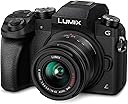
Desertcart purchases this item on your behalf and handles shipping, customs, and support to South Korea.
📸 Elevate your creative game with Panasonic LUMIX G7 — where pro-level meets pocket-friendly!
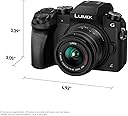
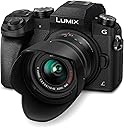
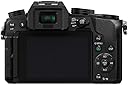
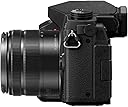
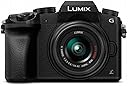
The Panasonic LUMIX G7 is a lightweight, mirrorless 16MP camera featuring a Micro Four Thirds sensor without a low pass filter for sharp, high dynamic range images. It offers 4K UHD video recording with unique 4K photo extraction modes, a high-resolution OLED electronic viewfinder, and a 3-inch tilt/swivel touchscreen. Designed for prosumers and content creators, it includes Wi-Fi connectivity, multiple ports for audio and video accessories, and supports fast UHS-II SD cards, making it a versatile tool for photography and vlogging.

| ASIN | B00X409PQS |
| Age Range Description | Adult |
| Aperture modes | F2.2-F5.6 |
| Aspect Ratio | 16:9, 3:2 |
| Auto Focus Technology | Contrast Detection, Multi-area, Selective single-point, Single, Tracking |
| Autofocus Points | 49 |
| Best Sellers Rank | #106,185 in Electronics ( See Top 100 in Electronics ) #274 in Mirrorless Cameras |
| Bit Depth | 12 Bit |
| Brand | Panasonic |
| Built-In Media | Camera Body & Lens |
| Camera Flash | Hotshoe |
| Camera Lens | 14-42mm |
| Color | Black |
| Compatible Devices | Micro Four Thirds compatible cameras or lenses |
| Compatible Flash Memory Type | SD, SDHC, SDXC |
| Compatible Mountings | Micro Four Thirds |
| Connectivity Technology | HDMI, USB |
| Continuous Shooting | 7 frames_per_second |
| Customer Reviews | 4.6 out of 5 stars 1,505 Reviews |
| Data Transfer Rate | 480 megabits_per_second |
| Digital Scene Transition | false |
| Digital Zoom | 2 |
| Display Fixture Type | Articulating |
| Display Maximum Resolution | 320 x 32 |
| Display Resolution Maximum | 1040000 |
| Display Type | LCD |
| Dots Per Screen | 2360000 |
| Effective Still Resolution | 16 mp |
| Expanded ISO Minimum | 100 |
| Exposure Control | Aperture Priority, Manual, Program, Shutter Priority |
| File Format | RAW, RAW + Fine, RAW + Standard, JPEG Fine, JPEG Standard, MPO + Fine, MPO + Standard (with 3D lens in Micro Four Thirds System standard) |
| Flash Memory Bus Interface Type | UHS-II |
| Flash Memory Speed Class | UHS-I (U1, U3), UHS-II |
| Flash Memory Type | SDXC |
| Flash Memory UHS Speed Class | UHS-I U1, UHS-I U3, UHS-II |
| Flash Memory Video Speed Class | UHS Class 3 (U3) |
| Flash Modes | Automatic, Slow Shutter |
| Flash Sync Speed | 1/160 sec |
| Focal Length Description | 14 to 42mm (35mm Equivalent Focal Length: 28 to 84mm) |
| Focus Features | Contrast Detection |
| Focus Mode | Continuous-Servo AF (AF-C), Manual Focus (MF) |
| Focus Type | Manual Focus |
| Form Factor | Mirrorless |
| Generation | 7 |
| Global Trade Identification Number | 00885170250710 |
| HDMI Type | Type D Micro HDMI |
| Hardware Interface | AV Port |
| Image Capture Type | Stills |
| Image Stabilization | Optical |
| Image stabilization | Optical |
| Item Weight | 1.6 pounds |
| JPEG Quality Level | Fine |
| Lens Construction | 9 Elements in 8 Groups |
| Lens Correction Type | Aspherical, Image Stabilization |
| Lens Type | Standard Zoom |
| Manufacturer | Panasonic |
| Manufacturer Part Number | DMC-G7KK |
| Maximum Aperture | 5.6 f_stop |
| Maximum Focal Length | 8.4 centimeters |
| Maximum Image Size | 0.35 inches |
| Maximum Shutter Speed | 1/16000 seconds |
| Memory Slots Available | 1 |
| Metering Methods | Multi, Center-weighted, Spot |
| Minimum Focal Length | 14 millimeters |
| Minimum Shutter Speed | 60 seconds |
| Model Name | Panasonic Lumix G7 |
| Model Number | DMC-G7KK |
| Model Series | Lumix G |
| Number of Diaphragm Blades | 7 |
| Number of Items | 1 |
| Number of Packs | 1 |
| Optical Zoom | 3 x |
| Photo Filter Size | 46 millimeters |
| Photo Filter Thread Size | 46 millimeters |
| Photo Sensor Resolution | 16 mp |
| Photo Sensor Size | Four Thirds |
| Photo Sensor Technology | CMOS |
| Real Angle Of View | 75 degrees |
| Recording Capacity | 30 minutes |
| Screen Size | 3 inches |
| Self Timer | 10 seconds |
| Sensor Type | CMOS |
| Series Number | 7 |
| Shooting Modes | Silent Shooting |
| Skill Level | Intermediate |
| Special Feature | Free-angle TFT-LCD with 920K dots, wide-viewing angle and 7 brightness, contrast and saturation, red-tint and blue-tint levels |
| Specific Uses For Product | Vlogging |
| Supported File Format | RAW, RAW + Fine, RAW + Standard, JPEG Fine, JPEG Standard, MPO + Fine, MPO + Standard (with 3D lens in Micro Four Thirds System standard) Supported File Format RAW, RAW + Fine, RAW + Standard, JPEG Fine, JPEG Standard, MPO + Fine, MPO + Standard (with 3D lens in Micro Four Thirds System standard) See more |
| Supported Image Format | JPEG, MPO, Raw |
| Total Still Resolution | 16 mp |
| Total USB 2.0 Ports | 1 |
| Total USB Ports | 1 |
| Total Video Out Ports | 1 |
| Touch Screen Type | Yes |
| UPC | 885170250710 841434102355 |
| Unit Count | 1 Count |
| Video Output | Micro-HDMI |
| Video Resolution | 4K UHD 2160p |
| Viewfinder | Electronic |
| Viewfinder Magnification | 1.4x |
| Warranty Description | 1 year manufacturer |
| White Balance Settings | Auto, Cloudy, Color Temperature, Daylight, Flash torch |
| Wireless Technology | BuiltIn |
| Write Speed | 8 fps |
| Zoom | Digital Zoom |
A**E
Canon Fanboy is now a convert
I am still a Canon guy at heart, but I must say that Panasonic has a winner in this camera. There are many, many reviews and guides on Youtube on how great this camera is, and the fact that this is now considered a "late" model creates the opportunity for el-cheapos like me to enter the 4k world. I do not personally have a GH4 to compare this to, but from my understanding this camera provides comparable 4K footage with better low-light performance to the GH4. It definitely out-performs my Canon's in low-light situations. I would not dare shoot over 800 ISO on my T3i or T6s due to serious grain. I shot a video at 1600 and the grain was near imperceptible to me. The attached shots are not a perfect comparison, as the T3i is using a flat color profile, and I have not found the flat color profile on the G7 yet. The greatest difference is the amount of grain between the two. The t3i is at ISO 800, and the Panasonic is at ISO 1600. This is concerning given the T3i APS-C sensor is bigger than the Micro 4/3 sensor in the Panasonic. The Panasonic has a ton of knobs and buttons that make switching exposure settings a breeze. The biggest "feature" is a hidden "unlock" that allows you to film without a limit in 4k (Check Youtube for tutorial on unlocking the G7 - this is not a hack, but a button sequence). I use Magic lantern on my T3i to get this, and this does not exist on the t6s (limited to 30 min video). The G7 can capture well over an hour of 4k footage on a battery charge without interruption, and seamless video between files. (the T3i hack skips a few frames to continue) Other features: Mic Jack, Micro HDMI Jack, continuous autofocus, small footprint, Biggest con: If you have invested in Canon glass, you will have to pay $$$ to get the right speed booster/adapter to connect to this camera. There are many inexpensive options out there, but with those you have to be willing to set focus manually, and I have no idea on how you would set aperture. Message to CANON - Get the hint! your fans are being pulled away! Create an entry level 4k option that is not crippled! I am not sure why anyone would look at any of the entry level Rebel cameras with this camera on the market!
V**N
Still a great camera in 2024
With prices of today's cameras so high, the G7 can be found for around $250 used and it is plenty of camera for most people. I highly recommend it. I've had the camera since 2017 and it is my only m43 camera. I use it with the 14-140ii, 9-18mm, 25mm/1.7 and 43/1.8 primes. It has been a great reliable camera through the years taken to hikes in the mountains, vacations and family gatherings - always delivering good pictures and videos. I think that the shutter shock issue was a little overblown. It has never been an issue for me even keeping the camera in mechanical only shutter. Not saying it does not exist but it is not something that had bothered me. I used the G7 to record my daughter's soccer games for a couple of years and it performed well there as well managing to keep up focus with the action. I used only FHD 60fps so cannot comment on the 4K video. The microphone port made a huge difference in recording good sound. The body is very light at only 400g which keeps the package easy to carry for extended periods of time. With the 14-140 lens the combo weights almost the same as my Sony A57 DSLR alone. The newer upgrades G85 and G95 have gotten bulkier and heavier. Adding image stabilization is probably the main reason for that. With the 14-140 having IOS and the prime lenses being fast I have not missed the in-body image stabilization of the newer models, hence never upgraded. The ergonomics are great with two control dials and plenty of customizable buttons. I love the well placed quick focus mode selector switch and the touchscreen focus select area while looking through the viewfinder. I like the power slider next to the mode dial on the right side of the camera allowing one hand operation when needed. The power switch being on the left side of the camera is what I did not like on all Olympus bodies when I was deciding which brand to go with. I have a small Meike tilt and swivel TTL flash that works really great with the G7. It makes for a light combo at family gatherings for high quality bounced flash pictures. I use only RAW so cannot comment on the JPEG engine. The RAW files allow lots of latitude during processing. Lifting shadows and lowering highlights works very well. ISO up to 3200/6400 is perfectly usable when processed properly.
D**R
The G7 is one HECK of a nice camera!
EDITED 8/17/2015: I recently received a Panasonic G7 from Amazon, and I have already shot over 20,000 frames with it during the seven weeks I've had it (with many different lenses, and with mostly using the electronic shutter), plus a few video tests. Since I already own the Panasonic G5, and GH4 (and I also had the G6), and have shot over 125,000(!) photos with these MFT cameras, I was familiar with Panasonic cameras, and also with the menu settings changes I generally make to get what I want in the images. The G7 fits “neatly” between the very small and light G5/6 bodies and the considerably larger and heavier GH4 (although that one is still relatively compact compared with most dSLRs, and its MFT lenses are also generally very compact and light – and this gear is FUN to carry and use!). I value the GH4 for its excellent EVF, great grip (it is easy and secure to use one-handed), its excellent set of useful external controls, its wide range of useful options in its easily-used menus, the excellence of its stills-quality (with selected type and sample of lenses, and with customized menu settings), and its great video capabilities. I value the G5 for its sharp EVF (the one on the G6 has better color and contrast, but it is not as sharp), its miniscule size and weight, its very good external controls and menus, and the excellence of its stills and video (although the G5, unlike the G6, has no external mic input, and it is without focus-peaking). The G7 is a nice combination of the good qualities of both the G5/6 and the GH4, at a lower price in size, weight, and cost compared with the GH4 - although it is without weather-sealing and high data-rate and slow-motion 1080 video options (but it does have 100Mbps 4K-24/30P video plus “4K-Photo” options). The excellent EVF is similar to the one in the GH4, the grip is almost as good, the external controls (both buttons and knobs) are unusually numerous and useful, and the menus are similar to, and consistent with, those of the other models in the line. A few items have been added to what the G5 had: 4K-Photo/Video, the tone-curve adjustment shared with the GX7/8 and GH4 (I find this very useful!), “Diffraction Compensation” (I briefly tried this and decided to leave it “Off” – it progressively sharpens the image as the lens is stopped down to its smallest stops to offset the softening normally resulting from diffraction, but this can result in excessive noise even in good light - and this sharpening can be done better during editing), and an external mic input similar to the one on the G6 (but missing on the G5 and GX7). Using the G7's electronic shutter, leaving the EVF and camera always-on during shooting sessions, and using no flash, I get well over 600 JPG highest-quality frames per battery charge. As for color and other photo characteristics, I appreciate having the ability to adjust EVERYTHING on these Panasonic MFT cameras (color balance and saturation, contrast, color-curves, sharpening and noise-reduction levels, etc.) - and I also appreciate being able to match surprisingly well the EVF's characteristics with those of my reference computer monitor so that I get very useful and accurate previewing while using the EVF (with a floppy wide-brimmed hat worn while outdoors to shade the EVF). These cameras are a "tweaker's" (read, "perfectionist's"...;-) dream come true...! Overall, I have no real complaints with the G7, although a few things bothered me very slightly at first. As with the GH4, the rear “dial” (which on the G7 is a circle of buttons as with the G5, rather than a wheel as with the GH4) gets somewhat “hidden” below the rear surface of the camera toward the “dial’s” upper right – but this is to keep it from being unintentionally pressed/moved by the right hand gripping the camera. It took me a bit of time to remember the new way to access exposure bias adjustment (I generally use A-Priority, setting the aperture for best lens performance with each lens and/or for best DOF for what I want in the image – and I often adjust exposure-bias as I shoot, using the excellent EVF as a guide), and it required a button-push to access this on the G7 (the G5/6 and GH4 can be left with the rear thumb-wheel needing only to be moved in order to adjust exposure bias). But, I discovered that with going into "Dial Set" in the menus, I was able to enable exposure biasing with a simple turn of the rear wheel (no button press required!;-). Also, the image resolution is very slightly smaller than that of the other Panasonic cameras I've used, but this is of little practical consequence. And, as others have noticed, the G7's (and also my GH4's) serial number tends to "evaporate" - and with my G7, there is now no trace remaining of that number. Panasonic has recognized this issue, and if both the box label with the serial number and the purchase invoice are retained, and if the camera is registered with Panasonic, the warranty will be honored. Bottom line: this is one HECK of a nice camera, at a very decent price! Highly recommended! (A few photos taken with the G7 are attached...) --DR
J**S
4K quality and great versatility
The Panasonic LUMIX G7KS impressed me from the very first use. The 4K image quality is excellent, and the 16 megapixels deliver sharp, detailed photos. The included lens kit covers a wide range of situations well, from close-ups to wider shots. Furthermore, the camera body is lightweight and easy to handle, making it ideal for shooting videos or taking on trips. In short, a versatile camera with great performance, perfect for those looking to take their photography and videography to the next level.
A**R
Great camera for the price. Just know its limitations.
This is a hyper solid camera for the price. If you're looking to dip your toe into the Panasonic ecosystem this is a solid intro. I bought it to experiment with Micro4/3 and Panasonic lenses without dropping $2,000 on a GH5. It has some HARD limitations but you can account for a lot of them. I have a couple uses: 1. In studio web shows. 2. Smallscale short film production. --- In studio it's a beast. With good lighting and audio input this thing looks/sounds amazing. Even the kit lens. It's simple and straightforward, and the recording time/file sizes are super manageable. Additionally with an Elgato HD60s you can run the camera directly into a PC to use it for live streaming. I use it to record format shows/podcasts and run my audio directly into the camera. It's a super simple workflow made possible by how solid this camera is. As a film production camera, this is where the limitations come into play. It doesn't handle low light too well. In my experience, the image was barely usable at 1600 ISO if you're trying to make a decent looking film. That was on my Rokinon 35mm T1.5. It just gets grain and distortion really easily. Additionally the focus/autofocus isn't the most intuitive. The auto focus is practically nonexistent. I could never get a sharp image with it. On top of that, the focus peaking just didn't seem to do its job. With some practice you can get better at focusing this camera, but other cameras don't take the work. This issue was fairly consistent with different lenses and setups. With all that said, depending on your use case you really can't beat it for the price. The 4K is solid and when you can get everything to come together you can make ridiculously good looking projects with this.
I**G
Panasonic Lumix G7KS : A Sweet Spot of Value and Performance
The Panasonic G7KS a nice addition to their G series lineup, and it feels like they've really hit a home run this time. It sits in that perfect spot – powerful enough to handle a variety of tasks, but still compact and affordable. While it's categorized as a mid-level camera, its capabilities rival some higher-end models. Here's what impressed me most: Image Quality: The 16MP sensor delivers impressive high ISO performance, and the RAW files are easy to edit for even more creative control. Stellar Video: The headline feature, 4K video, is amazing! However, it's worth noting that manual controls are limited for videography. Superb Handling: This camera is a dream to use. It's packed with dials, buttons, and levers reminiscent of the earlier G1 and G2 models, making everything readily accessible and intuitive. The grip is fantastic – easily the best I've experienced. Fast and Accurate Focus: Autofocus is snappy and dependable, although lens choice can also play a role here. Now, let's talk about some potential downsides: Mostly Plastic Build: While the overall build quality feels solid, the materials used are primarily plastic. No In-Body Stabilization (IBIS): This might be a dealbreaker for some shooters, but honestly, it wasn't a major issue for me. No Weather Sealing: Remember, this is a mid-range camera. If you need all the bells and whistles like weather sealing, you'll likely be looking at a higher price tag. That being said, Pentax manages to include weather sealing in all their bodies, so it is possible, Panasonic! Overall, considering the price tag, the Panasonic G7KS is a tough act to beat. It's a fantastic value and highly recommended! Invest the money you save on some quality lenses – after all, great glass makes a world of difference in image quality. Many people upgrade to a new camera expecting a drastic improvement, only to be disappointed because they're still using the basic kit lens.
V**I
A lightweight that punches above it's class
What a camera you're getting for this price point! The Panasonic G7 is the sixth camera in their G series line, and I have to say they have finally nailed it. This camera sits right in the sweet spot of performance, size, and price. It is considered a mid level camera but can do just about anything the higher end models can. The 16 mp sensor has been refined and provide good high iso performance. RAW files are easy to work with. The headline feature 4K video is top notch although you have limited manual controls for video recording. Speaking of controls, this camera bristles with dials, levers, and buttons. It is a call back to the original G1 and G2 and I love it. Handling is top notch, everything falls into place and all functions are within easy reach for fast access. The grip is superb and I really think this is the best handling camera out there. Auto focus is fast and accurate, but that also depends on the lens. So what's not to like? Not much. The build materials are plastic, but overall build quality is quite good. No in body stabilization, this is a big deal to some. I don't know why, I don't think it is such a big deal. No weather sealing but we are talking about a mid level camera here, if you want to check all the boxes you will be looking at a more expensive camera. Saying that though Pentax manages to weather seal all their bodies so it can be done Panasonic! Overall, for this price point it is tough to find a better camera. Highly recommended! Use the money you save to get some lenses. Because as good a camera body is, it's really the lens that makes the biggest difference. I see a lot of people upgrading to a new camera expecting to be blown away, but always end up disappointed. Simply because they just use the kit lenses the cameras come with. If you couldn't tell I really like this camera. I'm a portrait photographer and you can see a lot of my work on Flickr. Just search my name I guess. Happy shooting!
M**H
Fantastic video and surprisingly excellent images!
This is my first micro 4/3 camera. I purchased this camera solely for its 4k video capabilities and it does not disappoint. The big surprise was the quality of the photos I was getting with this camera. In many cases, the photographs rival those taken with my Nikon. I am totally in love with this little camera and find myself reaching for it more and more. I have used this camera to take every kind of image. Portraits, landscapes, astrophotography and wildlife. The Panasonic Lumix does not disappoint! I am still discovering great new features that make this camera even better. Excellent in low light with minimal noise. Creates outstanding timelapse videos in 4K and 1080P with just a few minor settings. Shoot in RAW! Oh yeah! The rear touch screen is a joy to use and the viewfinder shows you exactly what the image will look like before taking the picture. You can preview all of your image settings live as you make them. The kit lens performs well and is sure to make anyone happy but this little camera really shines when you put some good glass in front of it. I wanted to use my Nikon glass with this camera and luckily there is an adapter that I seriously consider to be a secret weapon. The Metabones adapter lets me use all of my Nikon glass with this camera! The image quality is simply outstanding! You do lose most of the auto functions like auto focus and auto aperture with the adapter but with the built in focus peaking system it is super easy to see exactly which parts of the image are in focus. The Metabones Speed Booster XL 0.64x Adapter for Nikon F-Mount Lens to Select Micro truly makes this little camera a solid contender against any entry level DLSR on the market. Let's not forget about the amazing 4k video quality either and again coupled with the Metabones adaptor, the video capabilities are pretty much limitless! This little camera has everything that my more expensive Nikon is missing. Buy this camera. You will not be disappointed!
S**N
Simply Awesome Camera
This camera is quite the bang for your buck! Great 4K video, lots of programmable buttons, articulating screen, and it comes with a lens as well! Only downside is no headphone jack, but I record audio externally anyways so this doesn't affect me. Also make sure you get a fast SD card, as slower ones will not work with the camera if you're trying to record 4K. Overall it's a great little camera the gives you almost all of the features of the GH4 but at a fraction of the price!
J**A
Probablemente la mejor cámara por el precio. Lumix G7 vs Canon Rebel T5i.
Todos sabemos que las camaras de calidad tanto Reflex como Mirorless son caras. Yo uso la camara para trabajar, tenemos una agencia de marketing digital. Antes usaba la Canon Rebel T5i y ahora estamos usando esta Panasonic Lumix G7. Principales diferencias entre la G7 y la Rebel T5i: TAMAÑO Ganador: Lumix G7 - La G7 es mirrorless por lo que es mas chica de tamaño y mas ligera . Ademas usa sensor micro cuatro tercios por lo que los lentes son mas compactos comparados con los de la Canon. CALIDAD EN FOTOGRAFIA Ganador: Lumix G7 - Usamos tanto la Canon T5i como la Lumix G7 para tomar fotografia de comida y creemos que la G7 es mejor que la T5i por la viveza de los colores. El unico punto negativo de la G7 es que las fotos son en tamaño 16MB y las de la Canon T5i es de 18MB. CALIDAD EN VIDEO Ganador: Lumix G7 - La G7 graba en 4K por lo que no hay punto de comparación. En video la T5i no tiene nada que hacer contra la G7. FUNCIONES EXTRAS: Ganador: Lumix G7 - Aun no termino de descubrir al 100% la camara, pero hasta ahora he visto dos funciones muy practicas que no tiene la T5i. La primera es foto en 4K; basicamente te permite grabar pequeños clips de video y de ahi sacar fotos 4K de excelente calidad de 8MB. Y la otra funcion es la de timelapse: se pueden crear los efectos de timelapse muy fácilmente. FACILIDAD DEL SOFTWARE: Ganador: Canon T5i - Quiza es porque aun no me acostumbro al sistema de Panasonic, pero se me hacia mas facil el sistema Canon. Pero igual aquí es cuestión de acostumbrarse. Creo que las camaras Reflex ya van de salida. Si vas a comprar una camara te recomiendo una mirrorless. Y si estas comparando entre la Canon T5i y la Lumix G7, te puedo decir con seguridad que la Lumix G7 es mucho mejor. Tiene mas funciones y podrás grabar video en 4K.
D**.
Excelente camara
Tengo años que no compraba una cámara de lentes intercambiables, no lo hacia por el precio, el peso y el volumen, estuve viendo camaras "full frame" pero su precio estaba elevadisimo, pense en una "bridge" pero queria poder ponerle lentes, no conocia el formato micro 4/3 y me lo tope en videos de youtube, despues de ver lo que esta camara podia hacer, tome la decision de comprarla, esta camara panasonic lumix G7 resulto ser excelente, el formato micro 4/3 hace que la camara sea mas compacta que las "full frame", por lo que es mas portatil, ligera y facil de transportar, al tener un "crop" de 2, un lente de 25mm equivale a uno de 50 mm, trae un lente 14-42 mm que equivale a un 28-84mm, su equivalente es el doble del tamaño, los lentes son muy economicos y faciles de transportar (en comparacion de las otras marcas), la llevo a todas partes sin problemas, le he comprado dos lentes aparte del que traia incluida y son excelentes, gracias a que el precios de los lentes es bastante economicos y faciles de transportar, estoy pensando comprar muchos mas, quiero experimentar que diferentes formatos y caracteristicas de los lentes disponibles, la camara me ha gustado muchisimo, tiene funciones de camaras de precio mucho mas elevado, estoy mas que satisfecho con la camara, si la volveria a comprar? claro que si y la recomiendo ampliamente
E**A
¡Una cámara liviana que golpea como un peso pesado!
Una compra excelente sin duda. La G7 es una impresionante cámara todo terreno, combina una calidad de imagen sólida, un impresionante rendimiento de enfoque automático y capacidad 4K (UHD) en un cuerpo compacto con controles externos que son fáciles de alcanzar sin ningún problema. La interfaz de usuario puede ser un poco difícil de manejar, pero nada como una cámara Sony, tiene la capacidad de usar la pantalla trasera como un panel táctil para establecer el punto AF. => Es Buena para: Principiantes que buscan una cámara para crecer o propietarios de cámaras DSLR que buscan una segunda cámara más pequeña y liviana: especialmente aquellos interesados para grabar videos. => No es tan buena para: Usuarios que desean simplicidad. Fotógrafos obsesionados con una calidad de imagen absoluta. La verdad es que es la mejor cámara mirrorless por el precio, una de las compras más interesantes que hice para un proyecto de podcast con video en vivo, complementándola con una de esas baterías que pones en la cámara y puedes conectar directo a la luz, eliminando la necesidad de estar cambiando pilas en medio programa. También le puedes hacer un pequeño hack para quitar el tiempo máximo de 30 minutos para grabar en 4k, lo puedes encontrar fácil en youtube o en google.
S**.
Camera with tonnes of options ....
It is great camera for beginners as well as professional s..Because it has plenty of options....It will take some time to get acquainted with it...It is the camera for youtubers, and vloggers...I am happy to own a camera like this...still I am testing it...once it is completed, I will express my opinion...
Trustpilot
1 month ago
5 days ago