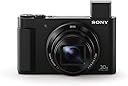
📷 Capture Brilliance, Share Instantly, Stand Out Effortlessly!
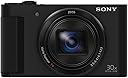
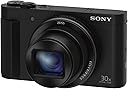
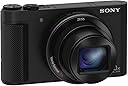
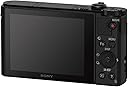
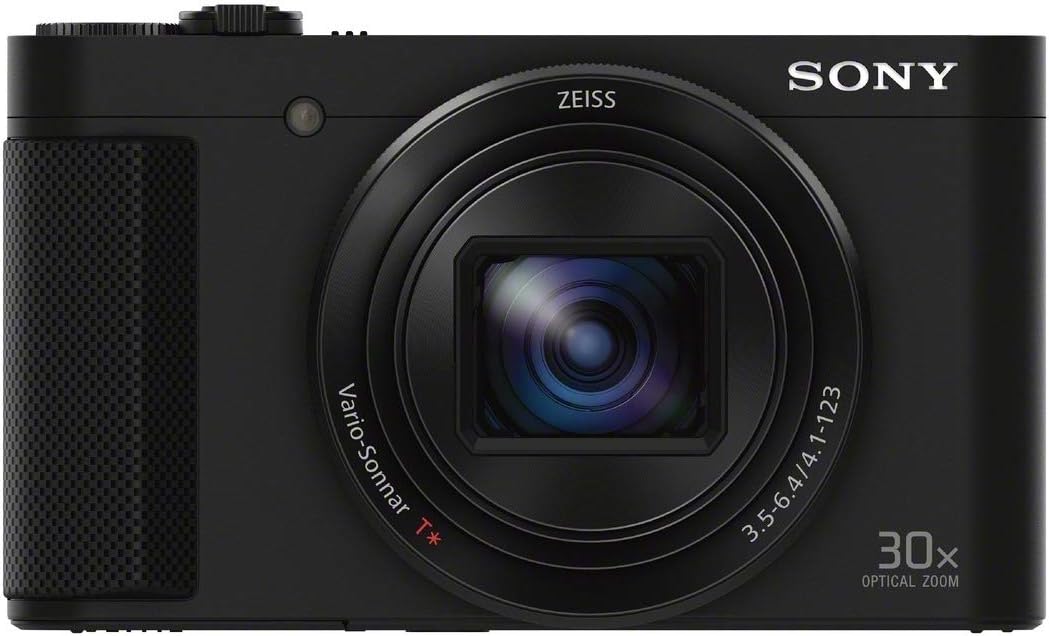
The Sony DSCHX90V/B is a compact powerhouse featuring a 30x ZEISS optical zoom lens and an 18.2MP Exmor R CMOS sensor for exceptional image quality, especially in low light. Its 3-inch 180° tilting LCD and pop-up OLED Tru-Finder provide versatile framing options, while built-in Wi-Fi and NFC enable instant photo sharing. Ideal for professionals and enthusiasts seeking a lightweight, high-performance camera that keeps pace with their dynamic lifestyle.


| ASIN | B00VWJOK7M |
| Aperture modes | F3.5-F6.3 |
| Aspect Ratio | 16:9, 3:2, 4:3 |
| Auto Focus Technology | Center, Continuous, Contrast Detection, Face Detection, Live View, Multi-area, Selective single-point, Single, Tracking |
| Autofocus Points | 79 |
| Best Sellers Rank | #80,098 in Electronics ( See Top 100 in Electronics ) #662 in Digital Point & Shoot Cameras |
| Bit Depth | 8 Bit |
| Brand | Sony |
| Built-In Media | AC adapter AC-UB10C/UB10D, Camera, Instruction Manual, Micro USB cable, Rechargeable Battery Pack NP-BX1, Wrist Strap |
| Camera Flash | Built-In |
| Camera Lens | ZEISS Vario-Sonnar T* Lens |
| Color | Black |
| Compatible Devices | Smartphone |
| Compatible Mountings | Zeiss |
| Connectivity Technology | HDMI, NFC, USB |
| Continuous Shooting | 10 |
| Customer Reviews | 4.0 4.0 out of 5 stars (253) |
| Digital Zoom | 2 |
| Display Fixture Type | Tilting |
| Display Resolution Maximum | 921000 |
| Display Type | LCD |
| Dots Per Screen | 921000 Dots |
| Effective Still Resolution | 18.2 |
| Expanded ISO Minimum | 100 |
| Exposure Control | Aperture Priority, Automatic, Manual, Shutter priority |
| File Format | JPEG (Exif v2.3) |
| Flash Memory Speed Class | 1 |
| Flash Memory Type | SD/SDHC/SDXC, Memory Stick Duo |
| Flash Modes | Auto; Flash On; Slow Sync; Flash Off; Rear Sync |
| Flash Sync Speed | 1/200 |
| Focus Features | Contrast detection |
| Focus Mode | Continuous-Servo AF (AF-C) |
| Focus Type | Auto Focus |
| Form Factor | Compact |
| Global Trade Identification Number | 00027242889651 |
| HDMI Type | Type D Micro HDMI |
| Hardware Interface | AV Port |
| Image Capture Type | Stills & Video |
| Image stabilization | Optical |
| Item Weight | 8.64 ounces |
| JPEG Quality Level | Fine |
| Lens Construction | 11 Elements in 10 Groups |
| Lens Type | standard-zoom |
| Manufacturer | Sony |
| Manufacturer Part Number | DSCHX90V/B |
| Maximum Aperture | 3.5 f_stop |
| Maximum Focal Length | 72 centimeters |
| Maximum Shutter Speed | 1/2000 seconds |
| Memory Slots Available | 1 |
| Metering Methods | Multi, Center-weighted, Spot |
| Minimum Focal Length | 24 millimeters |
| Minimum Shutter Speed | 30 seconds |
| Model Name | Sony Cyber-shot DSC-HX90V |
| Model Number | DSCHX90V/B |
| Model Series | HX90 |
| Number of Diaphragm Blades | 5 |
| Number of Items | 1 |
| Optical Zoom | 30 x |
| Photo Sensor Resolution | 18.2 mp |
| Photo Sensor Size | 1/2.3-inch |
| Real Angle Of View | 84.1 degrees |
| Recording Capacity | 67.2 minutes |
| Screen Size | 3 inches |
| Self Timer | 10 seconds, 2 seconds, 5 seconds |
| Sensor Type | BSI CMOS |
| Series Number | 590 |
| Shooting Modes | Automatic |
| Skill Level | Professional |
| Special Feature | Zeiss Vario-Sonnar T* 30x Optical Zoom Lens; Optical SteadyShot Image Stabilization |
| Supported Image Format | JPEG |
| Total Still Resolution | 18.2 mp |
| Total USB 2.0 Ports | 1 |
| Total USB Ports | 1 |
| Total Video Out Ports | 1 |
| Touch Screen Type | Capacitive |
| UPC | 027242889651 |
| Video Capture Format | AVCHD, XAVC S |
| Video Output | HDMI |
| Video Resolution | FHD 1080p |
| Viewfinder | Electronic |
| Viewfinder Magnification | 0.5x |
| Warranty Description | 1 year coverage for labor, 1 year coverage for parts |
| White Balance Settings | Auto, Cloudy, Custom, Daylight, Shade |
| Wireless Technology | BuiltIn, NFC |
| Zoom | Optical zoom and digital zoom |
T**T
Real review from real buyer - pros and cons
I've been waiting a long time for this camera. I never pre-order cameras but when I read the specs on this a few months ago I decided to risk it. The elements that caught my eye were: electronic viewfinder, purported low-light sensitivity, 30X zoom, and integration with smartphone. I'd characterize myself as an advanced amateur user. Meaning I like to learn all the functions and play with different features and mode. I've also been disappointed many times by cameras with poor low-light performance and poor focusing, so those are particularly important to me. Having said that, here's my review after 2 days of using. Interface: I've used Panasonics before so switching to a Sony took a while to get used to. There are lots of rings and dials and very tiny buttons. If you have fat fingers, don't get this camera. My fingers are average for a guy and I do have to be careful where I press. If you leave settings on full auto of course you don't need to use buttons, but if you want to control a lot of settings, then you do. One nice positive is the big control ring around the lens. It can be used to adjust shutter speed and aperture. Viewfinder: You have to manually pop up the viewfinder with a tiny slider. I'm somewhat nearsighted (-1.50) but the diopter adjustment was easy and I have no problem seeing perfectly clear through it. The viewfinder is high enough resolution that I can actually see that the image is focused. Lots of information is also presented in the display. Display: The main display is great and I like the fact that it can pivot 180 degrees up to do selfies, and also is good for taking pictures close to the ground. It also can display whether the camera is level, which is great for shooting landscapes with horizons. It is also good enough in bright sunlight, though in such situations I do prefer the viewfinder. Low light: Low light performance is above par for a camera with such a small sensor. Sony has a nice feature where it will take multiple fast exposures and blend them together to achieve a low-noise yet non-blurry low light image. I've included an example of that. Zoom: the 30X optical zoom is amazing. I've include pictures comparing full-wide to full-zoom. On other 30X cameras I've tried, the long end of the range is almost always unusably blurry. With this camera, it is quite acceptable and even impressive from the samples I've uploaded. Dynamic range: The camera has 3 modes - regular mode, expanded dynamic range mode, and HDR. Photos with HDR do look a bit odd, but the camera does a great job of blending multiple shots together without blurring. I didn't spend a lot of time playing with these modes, but most people will leave it on the expanded dynamic range mode and let the camera decide when to activate HDR and by how much. Video: The camera promises 5-axis stabilization. It does work quite well as my hands have tremors and I'm usually disappointed with handheld videos from my smartphone and previous cameras. I shot a video rapidly changing subjects far and near and moving the zoom a lot, and the camera kept up the whole time without doing that annoying "focus search" that other cameras seem to do whenever the subject changes. I'd give it high marks for being intelligent. Conclusion: I wanted a great pocket-sized camera that works for travel, indoor parties, and some fine photography such as flowers, landscapes, and portraits. I believe I've found the camera with the best of all worlds, without excessive compromise. Would I get better images from a 1" sensor? Probably, but then I'd sacrifice the zoom. If I were to have just one camera, this would be it.
L**2
one of the best pocket-sized big-zoom camera
This is my second Sony HX camera. My first was a Sony HX-50 that died after several years of use (lens motor stopped working). This version is improved in a couple of important ways. Most importantly, the popup viewfinder is tremendously useful in daylight conditions. The viewscreen is often hard to see in sunlight, but that is never a problem with the viewfinder. Opening the viewfinder is a little clunky, but you get used to it. The viewfinder does have a focus lever so using it with glasses is no problem. I also like that the GPS locks on much more quickly than older cameras (that often had GPS that were too slow to be useful). Despite the features, this camera is slimmer than my old HX-50. The main downside to this camera (and probably all compact big-zoom cameras) is that the image sensor is very small, which limits the quality of your images. Even in bright sunlight conditions, my photos are always grainy when viewed on a large screen. They may look fine on a cell phone screen or a low quality viewer (like Facebook or Instagram), but when viewed full-screen on a computer screen, the image quality is noticeably more grainy and less dynamic than photos from a better camera. Photos are still much better than any cell phone camera, of course. A big zoom camera is great for sports and wildlife and if you want a big zoom in a pocket sized camera, you'll be hard pressed to find anything better than this. For sports and wildlife photos, getting closer to your subject is often not possible. I've taken usable wildlife and sports photos from hundreds of yards away, even miles away for landscape photos. If you don't need the big zoom or can tolerate a bigger camera (like a one-inch or micro-4/3 or APS-sized sensor), however, you can do much better than this (for a bigger price).
M**E
Best for photography and zoom
Purchased this DSC-HX90V and the DSC-RX100 IV with the same seller and at the same time. The following review (after this one) is about the latter. That said, I am happy with the great zoom ability of 30X - about dectuple that of the 1" sensor model. It is of course a tradeoff (in a 'lower CyberShot league') with a small 1/2.3" size, but surprisingly, in spite of such differences, the quality of photography is near that of that other model. Noise reduction is appropriate and does really well on the 18 megapixels, something that all other compact 'super-zoom' cameras come nowhere close. Pros: + Great for distance photography, such as wildlife on the lake, lunar shots - even at night. + Decent video quality during the day, and zooming is very fast (default setting is normal). + Unlike the DSC-HX60V model, the new 50 mbps codec is available, but you must have a supported card. (See cons.) + Half the price of the DSC-RX100 IV (much better overall value). * Fits easily in even a shirt pocket. * Better battery life than on the DSC-RX100 IV (this is obviously due to processing requirements, so this con is acceptable given the laws of the camera's physics). * Excellent focusing ability and accuracy (still a problem on all RX100 models). * Oustanding photo quality found on the DSC-HX60V (even though that model is 20 megapixels). Cons: - Poor video performance in low-light because of the f3.5 aperture (again, a tradeoff with the extreme zoom and small sensor size). - Cannot record 4K (this is actually UHD - 4K is true on another camera, such as Panasonic GH4). - Cannot take still photos during movie-recording as on the DSC-RX100 IV (does not have the new DRAM chip; stacked sensor). - Flash barely tilts enough for even flash lighting as on DSC-RX100 IV. - Viewfinder needs pulled out after ejection-up unlike DSC-RX100 IV (the image size is far too tiny; you do not even need to do this on that other model). - Must choose high display quality to see WYSIWYG results in photos and videos (this is misleading because the concept is like preview quality over actual render quality in a video editor on a computer). - Very low aperture of f3.5 at wide angle at night (for example, clouds passing by, stargazing, and so forth). - No internal memory (even Panasonic no longer includes it in their upscale cameras) and no memory card; same with the other model. - No still capture during movie-recording. - Need specific card class to shoot in the new 50 mbps movie-record setting (this is not a requirement on Panasonic DMC-FZ1000, even though it caused a rare malfunction yesterday afternoon). - No UHD recording support, but a camera of this type would not be powerful enough anyway. I really like this camera and recommend it over the DSC-RX100 IV if you do not do much night videography, do not need advanced video capabilities, and need great photo quality. Distance shots are the strongest selling point for me on this camera (whether at a park, buildings across a lake, amusement park close-ups of roller coaster tracks, and so on). Even though it may be great for sports shots at a ballgame, it probably won't be ideal for clouds rolling on by at night because the aperture is too small. The price is very attractive too. Given the technical compromises for such a small body and retail value, I issue this a 5-star review. Great for what it can do, and what it cannot do I have no complaints. In most respects, I prefer it over the DSC-RX100 IV for most purposes, when best quality and wide-angle-only shots (during the day) are less necessary. Be sure to read my upcoming review on that model if you have not already done so. Thanks for reading, and good luck. - Matt Eye
S**T
Great usability but mediocre image quality
The Sony HX90V offers great functionality and a nice shooting experience but ultimately, even considering its sensor size, image quality falls short with detail smearing down at the lowest ISOs when blown up to anything larger than web size photos. While I realize that they have decreased the MP slightly on this model, I still think 18MP is way too much for a camera with a 1/2.3" sensor. I kind of feel, for an enthusiast-oriented megazoom, they should've gone with something like 12MP like Panasonic did for its Lumix ZS50. Detail smearing due to noise reduction is visible at reduced sizes at base ISO. Most pedestrian point and shoot cameras these days should at least be able to give you the ability to blow up your prints at ISO100. RAW capture is also not available on this model, which is unfortunate, because you can customize the level of noise reduction applied and potentially get better photos than what they out of camera JPEGs display.To balance this out, color and exposure are pretty good. The camera doesn't blow out highlights as badly as some of its peers. It's unfortunate that image quality falls short because, otherwise, this is a nice camera to use. The autofocus is fast and mostly on target. The image stabilization works well. And the viewfinder is actually very nice, despite being a lower resolution than the ones found in the RX100 series cameras. Battery life is also pretty good. The LCD screen on back is pretty good as well. I have not shot with the Panasonic ZS50 so I can't really comment on overall image quality compared to this camera, but, the fact that you can shoot RAW gives it a leg up over the Sony. If you never really blow up your photos at all, then this might be an alright choice. But if you at least want to make larger prints from images at base ISO in good light, I would look elsewhere.
P**T
Another great Sony camera
I should probably say first that I am a huge fan of Sony cameras. I have a Sony DSLR and 2 previous HX models. First, if you are wanting this camera to perform like a DSLR, this camera will not do that. It is still a point and shoot with a small sensor. As long as you are aware of this limitation, then you will probably be pleasantly surprised. I purchased this camera mainly for use at concerts, going to places like Seaworld, video recording my daughters dance performances, and just general photography. I do have a DSLR but I find that its size and weight prevents me from using it very often. There is nothing wrong with my other HX models but the 30x optical zoom on this camera in a small body was just too much to pass on. My favorite feature of this camera is the control ring. I thought it would be the zoom, but it's definitely the control ring. I find myself shooting in S mode quite often at concerts and the control ring allows me to easily and quickly make adjustments in the dark. This is wonderful!! My least favorite feature is how the pop-up viewfinder works. It pops up but then you have to pull part of the eye piece towards you to get it to work. Its a little cumbersome, but not terrible. The size is nice. Since this was going to be my main concert camera size was extremely important. Most venues do not allow any camera with a detachable lens or one where the lens extends beyond a certain length. My larger HX (sorry, I dont know the model number off the top of my head but its in the "bridge camera" size range) would often give me issues. I would have to explain that no, the lens does not detach but sometimes they still didn't want to let me in with it. I am confident that I will not have that problem with this camera. I know there are lighter and smaller cameras out there but I'm not sure if any of them pack so much into them. The grip took a little getting used to as the body is slightly different than my other HX model, but that was nothing significant. The record button for video recording is in a much better position now and can be found easily in the dark. The menus and scene selections are very intuitive, particularly if you have ever used a Sony camera before. The battery life is as expected. I had no problems during a 3 hour concert taking stills and videos about 40% of the time. The picture and video quality was what I would expect from Sony and this type of camera. It works excellent in great lighting, struggles a bit in low light. I'm not one of those that zooms in at 100% and looks for purple fringing, noise, and so forth. I also don't do large prints - 8x10 maximum, but mostly 4x6. I found the concert images were better than expected. This is really putting the device to its maximum capabilities. I know I'm not going to get perfect images when you zoom in at 30x optical from really far away. But I could tell who I was taking pictures of and wide angle shots caught some really beautiful mood pictures of the overall stage. I was impressed that the camera was able to capture the colors in almost the same hue as I was seeing with my eyes. I've noticed that at concerts cameras tend to not be able to capture the stage lighting well. Purples come out as blue, and so forth. With some experiments with the settings, this camera did a pretty decent job. The tilting screen is nice to have on such a small camera. I kind of wish that it rotated in the opposite direction so that you could hold the camera above your head and use the lcd screen, but this is a minor issue. It worked well for taking a selfie. Overall I am very pleased with this camera. I would definitely recommend it to others.
P**L
If This Camera Is So Smart, Why Does My Mobile Phone Take Better Pictures Faster?
This expensive gadget is a lesson in engineers and marketing people not knowing the difference between function and features. The function of a camera is to take acceptable pictures by whatever figure of merit the owner wants to apply. My 1957 Kodak Brownie Holiday took amazing pictures, despite being nothing more than a pinhole camera with a lens. The plethora of settings and latencies belies its claim to be a sophisticated device. If it’s so smart, why does it have more settings than a LearJet? It often fails to focus, even when given ample time. The latency in the time to focus means that often spur-of-the-moment shots are missed. I lost over 30% of the pictures I took on a recent trip to China because it didn’t get the parameters right, or didn’t focus, before the shot was lost. Fortunately, I was able to backstop some of the situations with my mobile camera. Its mandatory demand to connect to a smartphone on shutdown often causes a struggle to get the fool device to turn off. You can’t turn off the smartphone interface without using airplane mode, which shuts down the GPS. Turning it off entails a contest of waiting for the interface to come up, and having to press a button several time. Then, it sometimes turns itself on in your pocket. The GPS takes an inordinate amount of time to lock up. Even for a stand-alone gadget, designed in 2013ish, it’s too long. It also forgets its location when entering a building (GPS, in the L-band, doesn’t propagate inside brick and concrete). It also didn’t work on a train, even near a window. I suspect the trouble lies in the timing algorithm. A better solution would be to use a Qualcomm Snapdragon chip that has built-in GPS and can grab accurate time-codes from the mobile device bands. Even in airplane mode, my mobile phone was able to maintain GPS positioning. I like the remote control, but there ought to be an option to not transfer pictures to the phone. Also, the remote and picture synchronization doesn’t work with an iPad.
U**T
Amazing little travel camera.
I bought this camera in a hurry after my Olympus OM-D E-M10 broke just before a vacation to India. I could not have made a better choice. First, and most important to me, image quality of this little camera is amazing. Using the automatic settings it accurately chooses the right focal points, exposure, resulting in vibrant-colored images. Manual modes are there as well, and although they are not as easily controlled as a larger camera, they are adequate. One of the best surprises of this camera was the zoom - which is a real tele zoom, allowing for some amazing shots of wildlife etc. Low light exposures come out well, there is little noise at higher iso settings. Personally I feel the red color is a bit too vibrant, but that is easily helped. Camera size is very small, and the battery lasts for many exposures. The only negative is maybe the viewfinder, which requires two steps to deploy, and is fairly hard to use for someone with glasses (I wear glasses and used it regularly, but I think I can't see the whole viewfinder due to the extra distance). I used the USB port to charge the camera on the road, and it requires a good overnight charge to be completely full. When I received my Olympus back, I had to get used to it after using the Sony so intensely, and for a while I wasn't sure if I wanted to go back. Of course they are very different cameras, but since I travel a lot, there have since been many situations where I would have preferred to the smaller Sony, despite the lack of pro-style exchangeable lenses. Overall, if you are looking for a very compact camera for many different situations (like a vacation), this is an excellent choice.
C**1
Low Light Auto Mode Differences + Extra Benefits
I bought this DSC-HX90V to replace my old DSC-HX-9V which recently had a scratch on the lens. I searched and compared among Nikon, Panasonic and Sony.Finally I decided to continue with Sony. I was particularly concerned about some reviewers' comments on poor low light sensitivity, but the low light issue was not my prior experience with the 9V model. So I ordered it anyway. Today I received the HX90V and I am happy about my decision. I shot at various light levels and tried at different Scene and Auto settings. I would like to share my observations here: 1. Shooting at very dim indoor lights: It turned photos into very good photos. 2. Shooting at objects placed under dinning table with lights dimmed to minimum: got dim photo just light seen by naked eyes. When the light turned very slightly righter, still dim, it triggered much brighter photo. The trigger level is still low light to me. 3. I finally found the difference: 90V has two auto settings on the dial: Intelligent Auto (Green Symbol on dial)) is not as good as Superior Auto (Yellow Symbol). Superior Auto took a decent photo when Intelligent could not even produce any photo. Also if the Scene (SCN symbol) is set to Steady Night Shot (Half moon with Palm hand), it will take in more lights than other daylight setting. So by choosing the Steady Night Shot and then also use the Superior Auto, much better low light photos are obtained. 4. Other settings that can produce good photos under very low lights: Set dial at A (Aperture Priority) and P (Program Auto). These two settings will take a picture with one shutter click sound. The Superior Auto setting will take a photo with several shutter click sounds. Also I just realized another benefit when I searched the Sony web site. It provides a free download of Play Memories software, which is very extensive in the latest edition. It will be worthwhile for people who may want to try some fancy work on photography or simply organizing the photos on the computer. It search through the hard drive and organize them under one roof. . I would give it a 5 stars if it does not have the following minor issues: 1. The On-Off button is level with the body and very difficult to find it in the dark. Wish it can be found more easily if it can be made more obvious when being searched by finger in the dark. Some difference in vertical height or surface texture will be easier to use in the dark. 2. The zoom at 30X may lock onto out of focus scene due to hand vibration and then I needed to pull back the zoom and restart the zoom a few times before it will refocus properly. 3. The battery compartment door is very difficult to open and close. Wish it is Slide knob is bigger, with more friction for easier opening with the finger. 4. My old HX9V will display remaining battery power for how many minutes. The HX90V does not display that information. That information is very useful to let user know how full is the battery and how much longer usage time is available. Overall, so far I like it.
S**N
Great alternative to the more costly RX100
Great alternative to the more costly RX100. This is a camera that works well under good light. In dim conditions, the quality of the pictures suffer. Overall, a recommended camera for recreational use and portability.
G**Z
Falla en envío
Nunca me llegó, espere por 3 semanas y nada. Muy mal, no he vuelto a encontrar el producto. Una pena
S**R
Four Stars
Great camera, we love it and fit in a pocket.
J**E
Good product
Sony Cams are the best Good quality and easy to use
M**R
Five Stars
Very nice camera I really like it.
Trustpilot
1 month ago
3 days ago