
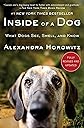
Inside of a Dog: What Dogs See, Smell, and Know
Product ID: 1699281
Buy anything from 5,000+ international stores. One checkout price. No surprise fees. Join 2M+ shoppers on Desertcart.
Desertcart purchases this item on your behalf and handles shipping, customs, and support to South Korea.
"Every dog owner should have this book." —Oprah Winfrey, The Oprah Podcast NOW FULLY REVISED AND UPDATED! The beloved #1 New York Times bestseller that “causes one’s dog-loving heart to flutter with astonishment and gratitude” ( The New York Times Book Review ). The instant classic on the mind of the dog is now updated to include the latest results in the booming field of dog cognition. What do dogs know? How do they think? The answers will surprise and delight you as cognitive scientist Alexandra Horowitz explains how dogs perceive their daily worlds, each other, and that other quirky animal, the human. Inside of a Dog is a fresh look at the world of dogs—from the dog’s point of view. In clear, crisp prose, Horowitz introduces the reader to dogs’ perceptual and cognitive abilities and then draws a picture of what it might be like to be a dog. What’s it like to be able to smell not just every bit of open food in the house but also to smell human emotions and even the passage of time? What is it like to have such good hearing that they notice the bodily vibrations of insects and the hum of a fluorescent light? Horowitz’s engaging narrative allows us to replace our urge to anthropomorphize dogs with a true understanding of the canine experience. What’s it like to use your mouth as a hand? How does a tiny dog manage to play successfully with a Great Dane? Why must a person on a bicycle be chased? This fully revised and updated edition also reflects the latest findings on canine perception, dogs’ understanding of our emotions and of our language, and the evolving story of domestication. Some discoveries are not only informative but curiously amusing, such as dogs’ asymmetrical nostril use and their alignment with the earth’s magnetic field when pooing. Much more than a scientific exploration, Inside of a Dog is a love letter to dogs, filled with personal observations and practical advice for people who live with dogs. With a light touch and the weight of scientific authority behind her, Horowitz offers an unparalleled exploration into the minds of our beloved four-legged companions. Review: It’s worth a read to learn more about your dog - The book and the content itself is quite good. I was looking for something to really understand my dog better and to make our life easier together the actual book that I received was in decent condition for being marked “good”. Overall, I recommend it. Review: Great Insights - I was never really a "dog person". Then Lucy happened. I was looking for a pet for my wife (her dog had passed about a year prior) when I met Lucy, a red toy poodle, and it was love at first sight. We have been inseparable since. Now, I am a dog person. And being a new dog person, I wanted to learn about dogs. I was reading a dog blog and the blogger recommended this book. Most of the books I'd read up to then were about training, care and how-to. But, this book was said to help you understand how they think, to see the the world from their point of smell. Any healthy relationship is based on trust AND understanding. Your dog keenly observes you to understand you. This book will help you understand your dog. If you love dogs, if you see your dog as a little person and not just property, then this book will give you great insights into their world.








| Best Sellers Rank | #343 in Books ( See Top 100 in Books ) #1 in Dog Training (Books) #2 in Cognitive Psychology (Books) #2 in Medical Cognitive Psychology |
| Customer Reviews | 4.4 out of 5 stars 3,221 Reviews |
N**M
It’s worth a read to learn more about your dog
The book and the content itself is quite good. I was looking for something to really understand my dog better and to make our life easier together the actual book that I received was in decent condition for being marked “good”. Overall, I recommend it.
G**E
Great Insights
I was never really a "dog person". Then Lucy happened. I was looking for a pet for my wife (her dog had passed about a year prior) when I met Lucy, a red toy poodle, and it was love at first sight. We have been inseparable since. Now, I am a dog person. And being a new dog person, I wanted to learn about dogs. I was reading a dog blog and the blogger recommended this book. Most of the books I'd read up to then were about training, care and how-to. But, this book was said to help you understand how they think, to see the the world from their point of smell. Any healthy relationship is based on trust AND understanding. Your dog keenly observes you to understand you. This book will help you understand your dog. If you love dogs, if you see your dog as a little person and not just property, then this book will give you great insights into their world.
P**T
A Limited Glimpse of the Dog's Perspective
The book is informative and entertaining, as far as it goes, but offers little in the way of practical advice. It does offer insights that will promote greater human understanding of dogs and concludes with a strong chapter that suggests ways humans can relate better to the dogs in their households. The book also does an outstanding job of describing dogs' sensory experience of the world, devoting nearly 100 pages to the subject. But in its claim to present the canine perspective, the book falls short. Horowitz does decode some situations according to a canine point of view -- her discussion of doggy raincoats and the way that their tight embrace might make dogs feel "subdued" rather than protected is an amusing example. But an overwhelming anthropomorphic bias comes through. For instance, after lengthy and well-done sections describing dogs' vision and how it differs from humans' and explaining that smell is dogs' primary source of information, Horowitz attributes her dog's hesitance to enter the elevator to age-related deterioration of her vision or difficulty adjusting to low light after being outside. These are both reasons a human might hesitate. But the crevice between the floor and the elevator harbors many strange smells; this is an alternative reason, more in tune with what matters to dogs, that dogs might hesitate to enter elevators. Another (though unlikely in the case of Horowitz's apartment-dwelling dog) is an unpleasant memory of the moving floor. Horowitz also stays loyal to her scientist roots in her reliance on research studies -- even poorly designed and executed studies -- to draw conclusions, even when real-life experience points to different conclusions. A study of dogs' reactions to "emergency" situations is instructive. In this study, humans set up a highly contrived scenario, first having owners introduce their dogs to a "friendly stranger" and then having the owners feign an emergency -- a heart attack, for example. None of the dogs tested did what the humans wanted them to do (seek help from the "stranger"). Calling this a "clever" experiment, Horowitz draws the conclusion that dogs "simply do not naturally recognize or react to an emergency situation." A more obvious conclusion, and one that gives more credit to the dogs' intelligence, is that the dogs could tell that the people were faking -- none of the scents and signals that indicate true alarm or physical dysfunction would have been present in the "actors." Some dogs do, in fact, react to emergency situations, even those that they have not been specifically trained for. Horowitz relies exclusively on some studies that dogs "failed," such as the mirror test for self-awareness and a test of whether dogs felt "guilt" if they "stole" a treat, in arriving at her limited conclusions about doggy consciousness and self-awareness. She fails to acknowledge (or notice?) that the tests cited are anthropocentric in design -- that is, they test things that are relevant to people but not to dogs -- and were conducted in unfamiliar, contrived environments where the dogs' behavior would be far from natural. Other research showing strong evidence of dog self-awareness is not mentioned. Finally, and despite a section at the beginning of the book chiding scientists' tendency to see one animal as representative of a species, she makes many broad statements about dog behavior that are seemingly based on her observations of her one dog. Overall, the book provides a good description of dogs' sensory perceptions of the world, but I think that its conclusions about dog behavior, consciousness, and self-awareness are questionable.
T**A
Wish I'd read this years ago
Not a science book, not a philosophy book, and not a sentimental book. But it has elements of all of the above. This text served as confirmation of things my own dog has patiently taught me over the years. As I got to know him, I stopped seeing him as "other," or a "mere" animal (as if a human is not also a mere animal). Recognizing and respecting him as a sentient being with a complex inner world and—(for all his cuteness) a fully mature adult of his species with his own ideas and wants—led me to carefully consider whether I was allowing him the level of agency and equality in our relationship that he deserves. This led to seemingly small changes in my behavior, like asking his permission to pick him up (instead of just hoisting him up as the mood took me), allowing 𝗵𝗶𝗺 to set our pace on walks to smell ALL the things (even if it takes 20 minutes to get to the end of the block), and letting him proudly shred up chunks of my lawn after he pees (it seems to make him happy... and in hindsight, the appearance of the grass is a trivial thing compared to the happiness of a living being). These new ways of considering and seeing him strengthened our bond in a profound and, for me, a deeply spiritual way. 𝗧𝗵𝗲 𝘀𝗮𝗺𝗲 𝘄𝗮𝘆 𝗺𝘆 𝗱𝗼𝗴—𝗶𝗻 𝗵𝗶𝘀 𝗶𝗻𝗳𝗶𝗻𝗶𝘁𝗲 𝘄𝗶𝘀𝗱𝗼𝗺—𝗴𝗲𝗻𝘁𝗹𝘆 𝗹𝗲𝗱 𝗺𝗲 𝘁𝗼 𝘁𝗵𝗲𝘀𝗲 𝗰𝗼𝗻𝗰𝗹𝘂𝘀𝗶𝗼𝗻𝘀 𝗵𝗶𝗺𝘀𝗲𝗹𝗳, 𝘁𝗵𝗶𝘀 𝗮𝘂𝘁𝗵𝗼𝗿 𝗱𝗼𝗲𝘀 𝘁𝗵𝗲 𝘀𝗮𝗺𝗲 𝗯𝘆 𝗹𝗲𝗮𝗱𝗶𝗻𝗴 𝗿𝗲𝗮𝗱𝗲𝗿𝘀 𝘁𝗵𝗿𝗼𝘂𝗴𝗵 𝗮 𝗱𝗼𝗴'𝘀 𝗲𝘅𝗽𝗲𝗿𝗶𝗲𝗻𝗰𝗲 𝗼𝗳 𝘁𝗵𝗲 𝘄𝗼𝗿𝗹𝗱: 𝘄𝗵𝗮𝘁'𝘀 𝗶𝗺𝗽𝗼𝗿𝘁𝗮𝗻𝘁 𝘁𝗼 𝗵𝗶𝗺 (𝗮𝗻𝗱 𝘄𝗵𝗮𝘁'𝘀 𝗻𝗼𝘁), 𝗮𝗻𝗱 𝗵𝗼𝘄 𝗵𝗲 𝘀𝗲𝗲𝘀 𝘂𝘀. Another aspect of dog-ness this author expands nicely on is how dogs experience the world through their keen sense of smell. One of my nicknames for my canine friend has long been "Little Time-Traveler." I'm so impressed and humbled by how he experiences the world in a way that's hard for me to fully imagine: taking in not only about the present state of affairs, but also what's happened here before, and sometimes even things that haven't happened 𝘆𝗲𝘁. If I could tell you what happened on any given spot days ago, or what's going to happen a few minutes from now, you'd think I was some kind of genius or psychic. When we consider an animal's "intelligence" only in relation to human intelligence, we're doing both them and ourselves a disservice. This is the book I wish I'd read years ago, before I ever got a dog. I could have gone into the relationship from the start on more equal and harmonious footing, instead of blundering along and trying to figure these things out as I went along.
K**R
Dog smart
Every dog lover should have a copy of the book.
K**I
Not bad but definitely not good
This book has some good information, but I was dissatisfied overall with how the content was organized and presented. The author vacillates between excessively scientific jargon and jarringly "cutesy" anecdotes. The sub-chapter headings made no sense to me, and much of the work felt repetitive and/or actually meaningless. By the end of the book, I actually felt like the author was preaching at me about how I should interact with my dog, but it felt wildly out of place. There are many other dog books that present the same information in a more concise, accessible manner. There are books that explain the science clearly, and there are books where the author's voice and writing style are actually enjoyable and where anecdotes about their own dogs are meaningful, funny, and illuminating. Three stars because the book isn't absolute garbage and the facts in it align with what I've read in other books, so it's at least not detracting from the resources available to learn about dogs.
R**U
Enlightening for most all dog owners wanting a little peek inside their best friend
This stupendusly brilland scientist,Dr.Alexandra Horowitz, whoes latter-life career sift from editing a dictionary to returning to graduate school, for a docterate in neuroscience, specializing in canine perception & cognitive-affectual processing. Alexandra Horowitz's meticulus & agile intellect, configured in this book, her highly refined scientific point of view. A view largely driven by her own interactions with "Pumpernickel," a clear source on un-scientific data but loaded with humanity, comes togather "Inside a Dog." As a dog owner herself,she explains "Pumpernickel, who was a constant source of delight and mystery," The author's weaving on scientific treads with common ownership strands of their phenonenal experiances, into a world view,& manages to open up a new kaleidoscopic perspective for readers to glimps into. This is accomplished by her cohering modern neuroscience with a dog lover's effection, just as 52 million US pet owners hold for their non-hominoid family members. The kaleidoscopic optic Alexandra Horowitz constructs, integrates cutting-edge science with ordinary, everyday socially personal experiences, derived from our extra-species interactions. This vital & engrossing book,"Inside of a Dog: What Dogs See, Smell, & Know," has been cleaverly composed to assure an owner's "consciousness raising" for their "best friend's," unique perceptual & cogntive processing aptitudes. Through knowing your "buddies" actual componients for thinking, feeling, emoting, hearing, seeing, & a dog's outragious "ofactory seeing navagation with distal enviosioning capascities" (an all seeing noise), dog lovers will never perceive ot think of the fiends to the same. This book will revitaliz anyones appreaciation for a dog's consciousness--from a canine prespective-- articulted to their humanoid packleaders.
R**N
Too reductionist and speculative
This book addresses an extremely interest subject, and parts of the book are quite well-written. Some of the information, like the biology of scent and vision, was interesting and useful. And there were some good stories about Pump, the author's dog. But the book tried to reduce a lot of dog behaviors to biology and evolution. I did not find these attempts especially persuasive. Who's to say a dog does not have emotions at least as deep and meaningful as a human's? I did not find this book was all that helpful either in trying to communicate with my dog. Some of the dogs the author talks about seemed a lot smarter than my dog. My dog mostly cares about food, and to some extent walking and barking at things. She does not learn a bunch of new commands like some of the dogs discussed. But at the same time, she is very charismatic, she is extremely good at convincing people to do things for her and also influencing people generally. She does all this in a way that looks simple, but isn't. She can figure out how to extract food from just about anyone, it seems. At the same time, sometimes the author argues that certain remarkable behaviors my dog does are common. Well, maybe they are, but who's to say my dog does not do these for a remarkable reason? For example, I think it is quite impressive that my dog taught herself some words, notably "WALK" without ever being expressly taught them. Indeed she gets very excited when anyone says the world. I believe this to be rather impressive, even if the author says it is common. That is because the way my dog learned these was especially impressive, in my view, given how little else she cares about things. Also, the book's discussion of the grace of dogs is a bit elliptical. I was not persuaded by a lot of the biological arguments. I think my dog moves in an amazingly graceful manner, and do not see how evolution requires this. I feel like the author would look at my dog and just see a lot of biology and evolution, rather than her special personality. Nevertheless, the author seems heartfelt in her views, and there is information. The book design is of very quality, with a great picture of a dog on the cover.
A**R
Interesting and insightful
A very interesting insight into dogs. I had many "Ah, so that's why ..." moments while reading it.
M**N
A lot of gabble with a few misunderstandings
No need to come from some university to write that kind of book. The author should have red R.Sheldrake studies and yes ,my dog was waiting behind the door long before my arrival ( my wife as witness) and no , I was not coming back at the same hour eveyday and about the experiment of the owner of a dog in a life threatening siuation (p.239), dogs are very sensitive to the human feelings and the fear felt by his owner and the absence of it as he fakes it can be easily detected by a dog, it is not surprising the poodle settled for a nap,clever chap !
A**ー
Forced myself to read the last 100 pages
The book began well but somehere in the middle, it started to get long winded with very lengthy scientific explanation of how other species of animals behave before it came back on how dogs behave. Scientific evidence aside, I would have preferred not to have ploughed through a few pages (on how horses, blue tits, chimpanzees etc behave) before reaching a few sparse paragraphs on dogs. The chapter which did me in was the one on Noble Mind where it went on and on incessantly. As I was at page 200, I forced myself to read through the remaining pages. Another thing that was annoyed me was how every chapter or section within the section started out about the author's dog. It grated after a while. I'd take Dog is Love by Clive Wynne anytime who does not drown you with endless scientific ramble but just giving you enough. Tiresome read overall.
K**E
an elusive world, "umwelt"
With a dog overwhelmingly centered, I have strengthened my desire to see through his self-world or "umwelt." "Imagine the world from the dog's perspective," she says, "forget anthropomorphism." Alexandra Horowitz will help you ease the tensions between what you think you know about dogs and what they actually do. It is as if you practice, say, a meditation far enough to go into satori. That, in effect, is a moment when you understand what it is like to be a dog or his "umwelt."
A**R
Understanding the science
Amazing book to realize where we are getting wrong in understanding Dog. I am still in the initial pages and finding this book very helpful.
Trustpilot
1 week ago
2 weeks ago