
Desertcart purchases this item on your behalf and handles shipping, customs, and support to South Korea.
📚 Elevate your data game with the ultimate R programming tour!
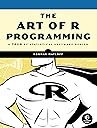
The Art of R Programming is a comprehensive guidebook that takes readers through the essentials and advanced concepts of R software development. Suitable for all skill levels, it covers functional and object-oriented programming, data visualization, performance optimization, and debugging, making it an indispensable resource for professionals and enthusiasts aiming to master statistical computing.
| Best Sellers Rank | #857,454 in Books ( See Top 100 in Books ) #150 in Mathematical & Statistical Software #478 in Software Design & Engineering #783 in Statistics (Books) |
| Customer Reviews | 4.4 out of 5 stars 352 Reviews |
T**1
The BEST book on R Programming out there.
Anyone seeking to learn R faces two major challenges: (1) learning how to swim in the sea of information: R packages, books, websites, blog posts, message boards etc. that threatens to drown a newbie and (2) and coming to grips with the structure, syntax and features of the language itself. Having some idea of what one wants to do with R is clearly an important first step that will set the path of learning. R, an open source computer language, is the premier software system for statistical computing. Not only can any statistical idea be expressed in R, it is likely that someone in the open source community has already written a function to accomplish or at least facilitate any statistical analysis a working statistician or data scientist might be contemplating. R functions are organized into libraries or packages that usually relate to some particular statistical task. Assuming something like an average of 20 functions per package, the 3400 available contributed packages[1] offer over 68,000 routines to read in data, manipulate it analyze it and visualize the results. No one could possibly become familiar with all of these. But, because R is an interpreted (instant feedback) language that encourages experimentation, some serious, sophisticated statistical analyses can be accomplished by stringing together the appropriate functions into a script. If interest in R is to only perform some particular analysis then a beginner’s best bet might be to select one of 100 or so books or blogs on doing statistics with R that provides relevant sample code and cut and paste to get a workable script. There is no shame in this. That is why all the open source authors went to the trouble of packaging up their work. However, if a person really wants to be able to speak the R language and become a competent R programmer then, at the present time, one can find no better guide than Norman Matloff’s The Art of R Programming. Professor Matloff is a statistician and a computer scientist with a considerable amount of teaching experience. His book is no mere programming reference guide. It is a carefully crafted sequence of lessons that start at the beginning and work up to some fairly advanced topics including a lucid account of object-oriented programming in R, a presentation of the rudiments of TCP/IP operations and a discussion of R programming for the internet, examples of parallel programming with R, and a discussion spanning several chapters of how to write production-level R code that includes methods and advice on debugging R code, writing efficient R code, and interfacing R with other languages. Other distinguishing features of the book are brief examples showcasing a large number of functions (including rare gems such as D() for symbolic differentiation) that indicate the power and scope of R, and over thirty “Extended Examples” each of which is a credible study in writing careful, professional code. The most captivating aspect of the book, however, is Matloff’s thoughtful manner of exposition. R’s rich, compact syntax can be challenging the first time around. Matloff knows where the difficulties are. His presentations of R’s various features and functions begin from a point of view that anticipates obstacles that likely to confound someone going down the R path for the first time and guides the novice around them. I expect that The Art of R Programming will appeal to diverse audience of aspiring R programmers.
S**R
Excellent guide to the R language
There are hundreds of R books, but this is the best one to address the core problem of learning to *program* in R. As reviewer Jason notes, R is used by several audiences with varying needs, but anyone who uses R for long must come to terms with learning to program it. This is the book for that. What Matloff does is to lay out the essentials of the R language (or S, if you prefer) in depth but in a readable fashion, with well-chosen examples that reinforce learning about the language itself (as opposed to focusing on statistics or data analysis). I'm a long-time (12 years) R user, which is my platform for analytics every day, and I have programmed in a variety of languages from C to Perl. I have long missed the fact that there is nothing for R comparable to Kernighan & Ritchie ("K&R", The C Programming Language ) or similar programming classics; finally there is. Matloff is not quite as beautiful and elegant as K&R (and to be fair, is not in their position as the language creator) but this book has similar goals and comes reasonably close. I think there are two primary audiences for this book: those who are learning R from a computer science or programming background; and statisticians and others who use the programming language and want a thorough exposition. In my case, for instance, despite having written perhaps 100k lines of R code over the years, there remained areas where I was uneasy (e.g., exactly how do lists relate to data frames). Matloff sets it all straight, in friendly, readable fashion. Even in rudimentary chapters, I learned shortcuts and miscellaneous functions that are quite useful. The examples throughout are more "CS-like" than statistical, which is highly advantageous for this topic. In addition to the tutorial content, it is well-suited as a quick reference. It doesn't aim to be comprehensive from a function point of view (which is almost impossible, and what R Help is for), but it is comprehensive from a programming conceptual point of view. In short, if you program R, and unless you're a member of R-Core, then I believe you'll enjoy this, will learn something, and will refer back to it repeatedly.
C**Y
A Programmers Introduction to R
The uniformly good reviews for "The Art Of R Programming" led me to read it, and I'm glad I did. I've used R casually for years as a sort of "secret weapon" to quickly analyze a few millions data points, graph it, and draw useful conclusions, all before some one could load the data into a SQL database. I've long believed that R is a clean, well designed language for data analysis that was missing a good introductory text for programmers. R's type system, lexical structure, run time mechanics, and functional nature make it one of the best designed languages around, but this also seems to be one of the best kept secrets in the software community. Until I read "The Art of R Programming" I'd never come across material on R that introduced R as a programming language. Most of what I saw presented it as a statistical toolbox that you could, almost accidentally, program. However, be warned that the book is not rigorous, either as an introduction or a reference. It is concise, easy to read, and much is driven by case studies to show you how to do things. But it often left me uneasy as a software engineer. For example, it states that R uses "lazy evaluation" when a more accurate statement would be that it is simply evaluates function arguments lazily. The description of the run time object environment is clunky: evaluation contexts, closures, and recursion are treated separately. It does not entirely explain how symbol look up works for functions (you won't learn why "sum <- 1; sum(1,2,3)" will still evaluate to 6). The discussion on object copy-on-change was so vague that I failed to understand how I could use that information. Okay, so it's not perfect, and it's definitely no K&R. But it's still way better than any other introduction I've seen before. It may be the best way to get started and then go on to the masses of freely available information about R. I wish this book had been available years ago when I first typed "R" at my shell prompt. It would have saved me a lot of pain!
B**T
My Favorite Introduction Book to R
Learning R is a chore. I started as an epidemiologist using SAS and I spent dozens of hours on stackoverflow trying to get knowledge in R and then turned to this book. Having decent knowledge it was very easy to get through and Norm is a great teacher. The lessons in the book build upon each other and all the examples are really practical. A book like this can't be good at everything since he has to touch really quickly on topics. Some of the later chapters that talk about interfacing with other languages was a bit over my head and I skipped them. For all the epidemiologist who are looking to learn R I recommend this book first, it's assumes you know little and gives you a solid foundation. Does it tackle very single subject in the book with depth? No, but that's not the goal. But if you're new or wanting to learn more it'll help you tremendously.
D**N
Disorganized, no data to work through examples, no first option to learn R
I agree in that this book does not deserve 5 stars. I am currently studying it to learn R, I will divide my comments in positive and negative things. POSITIVE 1) the book actually presents all the basic structure and objects that one uses in R 2) it builds in a correct order and has many examples throughout each chapter 3) one actually learns many new stuff, but this book is certainly not the right palce to begin to learn R NEGATIVE 1) it is somehow disorganized because throughout the first 6 chapters the author uses examples where he develops functions, and the topic of functions is not even introduced yet, the reader has to wait until chapter 7 for that. So, if one is a novice with no previous knowledge of programming in R, such a reader will be left without a clue of what is going on. Even when the author explains step by step what the function is doing, how can he expect a novice to follow his explanations knowning nothing about functions. 2) this book can be a second option to learn and get a good grasp of R language. I actually first studied the first part (R language) of the book Introduction to scientific programming and simulation using R 2nd edition, and before moving into the following parts of that book, I decided I needed to get a better grasp of R concepts and structure, so I bought The art of R programming. 3) the book does not provide the data sets for the examples, after searching in the web I found a web page that contains many of the data sets that are used in the book, but not all of them, here it is https://github.com/rlim19/TheArtOfR. So, in order for an introductory book to actually do the job, the reader needs the data sets to type code and understand what is going on, otherwise is worthless, particularly because there are no exercises at the end of each chapter to practice. 4) there are some terrible examples such as 5.3.1 (no data file associated with this one); 5.4.3 (there is no data to work along with it, so it is complex and really boring to try to follow what the author is trying to explain); 6.3.2 (the function subtable that the author constructs does not work for the "vt" table [gender, race, pol]); 6.3.3 (author keeps building funcitons to explain things in tables, and he has not yet introduced the function concept in the book!). Plus there are many other samaller mistakes in the book, for example page 114, the second table for the loall object, the intercept says "col" and it should be "clmn"; page 83, the test object reports a 48, which is a mistake it should be 50 according to the built of the original object in page 82. And there are many other mistakes like this, that one catches if you are actually typing and reading every page. In summary, I would not recommend the book to start learning R, look for a better option, then you can get something good out of this book.
D**R
Just the kind of book I wanted
I'm a moderately experienced R user. I do a fair amount of data analysis and modeling and R is almost exclusively the tool I use. I am adept at data IO, plotting, fitting data, etc., however the power of R goes much beyond simple data manipulation. I found this book to be an excellent introduction to the breadth and depth of what R can do. New concepts and functions are introduced by showing how they are used in simple examples, and common pitfalls and "gotchas" are anticipated and pointed out. One should keep in mind that although R has excellent graphics capabilities via the lattice and ggplot2 libraries, only the base plotting routines are introduced here. By no means do I consider this a shortcoming for this book because there are whole books dedicated to R graphics, and this is a programming-oriented book. What this book does cover beyond the usual things you'd expect in an R book (e.g., data frames, arrays, etc.) are things like object-oriented programming, building up simulations, debugging tools and techniques, performance enhancements, interfacing to other languages, and parallel processing. The kind of things I want to master in order to exploit the real power of R.
M**Y
So much better than what is online
I thought i could get away with not buying a book on R and just stick to the introduction to R that comes with the software. Boy, was I wrong. The online documentation (and this includes a certain number of tutorials on the web) are quite mediocre compared to this excellent book. Matloff's book explains what is really going inside the data structures and the related operations, and now R does not look like such a hack I thought it was. The writer is to be commended for his very clear style, but be aware, this wont be the only book you should buy, in the log run but for the price it's a steal. I got the kindle edition by the way. I also got the excellent R Cookbook (O'Reilly Cookbooks) which is a different kind of book that wont replace Matloff's book. I used the latter to make some of the points made by Matloff sink in. You'll probably also want a book on R graphics in the long run. You could easily go through a lot of programming without the kind of deep understanding that this book instills, so the book can be useful to some people who have been hacking in R for years. Thanks to this book I now enjoy using R, what more could you want?
M**L
Matloff provides an excellent starting point for learning R
Matloff provides an excellent starting point for learning R. He presents just enough detail to enable a reader to learn but not enough so that the reader gets bogged down. For instance, I initially started with Crawley's The R Book but lost interest before I got an overview of the language. After reading Matloff, however, Crawley filled in a lot of the detail that Matloff didn't attempt to address. This book provides an overview of the language at just the right level to master it. The order of presentation is appropriate; the examples are interesting and pertinent (loved the Chinese dialect and textual examples); errors are extremely rare. My one complaint would be no exercises to practice with, but these aren't part of the author's mandate. There's tons of books on different disciplines that do have exercises once you've learned the basic language (e.g., the Use R! series). Lastly, this book doesn't require more than a basic knowledge of statistics for understanding of the material or examples. I highly recommend it as a starter book for R learners at all levels.
L**O
Livro muito bom. Indico a todos!
Comprei o livro que foi a indicação de um amigo que trabalha a tempo com o R. Sou biólogo e trabalho com grandes volumes de dados, para isso preciso de um software que seja maleável para minhas análises. O livro é realmente bom para quem está começando, tem muito mais conteúdo do que muito material que já li e cursos que fiz. Indico para todos que estiverem procurando material sobre o assunto.
C**A
Excellent condition
Nice and clean book.
J**S
Correcto
Es una guía de programación, pero no profundiza en aspectos de data science, o en estadística o en gráficos que es donde R es potente.
D**E
Une bone entrée en matière
Le livre est d'un abord facile. Les exemples et exercices sont d'une compléxité limitée au début pour se complexifier ensuite. Tout est très lié, dès le début, aux applications pratiques de R à des problemes statistiques
K**G
Good book - worth buying.
I have to do some R programming for work. This book has good extended examples which help I understand how R works and demonstrate what R can do. I have learnt some other programming languages before and learnt a little bit of R back in uni. I wish I had this book when I was doing my uni course! It is not for total beginners, and it helped me to go deeper and use R in different ways. Some people say one can learn R from the Internet. That's true but this book provides a much more structured way for understanding each "class" and the associated attributes. Have almost finished the book and I think it is a keeper. I have bought other programming books before which I found totally useless.
Trustpilot
2 weeks ago
3 weeks ago