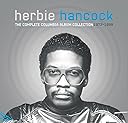




The Complete Columbia Album Collection
Product ID: 23467079
Desertcart purchases this item on your behalf and handles shipping, customs, and support to South Korea.
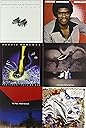
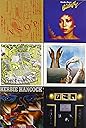
Gathered here for the first time are all of the recordings Herbie Hancock (b. 1940) made for Columbia Records U.S. and CBS/Sony Records Japan between 1972 and 1988--a stunningly creative, 17-year period, yielding 31 albums. Eight of the titles in this set have never been released outside of Japan. This collection of 34 newly-remastered CDs showcases Herbie's virtuosity in a dazzling display of musical styles. It is a testament to his fearlessness, innovation, and ever-evolving curiosity, as well as his significant commercial success--the platinum certifications of Head Hunters and Future Shock. Herbie's influence on countless musicians and musical styles has been and continues to be enormous. The elegant, highly-stylized 200-page book contains an insightful overview essay, complete discographical data, mini-histories of each album, an electronic instrument glossary, and dozens of striking images. The 17 remarkable years captured here find him at his very peak. Includes 3 albums made for Columbia U.S. which have never been on CD - Sunlight, Magic Windows, and Lite Me Up. Contains the only 2 piano trio recordings ever made by Herbie as a leader (both featuring Ron Carter & Tony Williams) + his only solo piano/solo keyboards sessions ever (The Piano and Dedication). Other highlights include Herbie's Mwandishi band (Sextant); the platinum-selling Headhunters period (Head Hunters/Thrust/Flood); his enormously popular, MTV-pioneering Rockit band (Future Shock/Sound-System/Perfect Machine); and historical acoustic jazz recordings featuring Chick Corea, Wayne Shorter, Freddie Hubbard, Ron Carter and Tony Williams among others (the VSOP bands; his duet with Chick Corea; trio recordings with Ron Carter & Tony Williams; and his brilliant solo piano/solo keyboards recordings). ALBUMS 1. Sextant (1973) 2. Head Hunters (1973) 3. Dedication (1974)* 4. Thrust (1974) 5. Death Wish /OST (1974) 6. Flood (1975)* 7. Man-Child (1975) 8. Secrets (1976) 9. V.S.O.P. (1976 - 2CDs ) 10. Herbie Hancock Trio (1977)* 11. V.S.O.P.: The Quintet (1977) 12. V.S.O.P.: Tempest In The Colosseum (1977)* 13. An Evening With Herbie Hancock & Chick Corea (1978 - 2 CDs) 14. Sunlight (1978) 15. Feets Don't Fail Me Now (1978) 16. Direct Step (1978)* 17. The Piano (1978) 18. V.S.O.P.: Live Under The Sky (1979 - 2 CDs) 19. V.S.O.P.: Five Stars (1979)* 20. Butterfly w/ Kimiko Kasai (1979)* 21. Monster (1980) 22. Mr. Hands (1980) 23. Magic Windows (1981) 24. Herbie Hancock Trio w/ Ron Carter + Tony Williams (1981)* 25. Herbie Hancock Quartet (1981) 26. Lite Me Up (1982) 27. Future Shock (1983) 28. Sound-System (1984) 29. Village Life (1984) 30. Round Midnight / OST (1985) 31. Perfect Machine (1988) * First time on CD outside of Japan. Review: Comprehensive; A Must for Collectors - I pre-ordered this from desertcart. This is the golden egg. Yes, it is expensive, but if you can afford it, buy it. It has a lot of recordings only released in Japan. It goes thru various phases of his career. There is straight ahead Jazz & the Funk period, that made him famous to many. It comes in a nice box, booklet. Read the reviews from those better than I am, & who may go into more depth. This is one purchase I am glad I made. The man of course has played with greats, people playing with him have become or were great. A nice collection, a bit pricey, but consider how many discs are included. Something for every Jazz or music mood. Thank You for taking a moment to read this small review Review: complete satisfaction - Ease of transaction and complete satisfaction with the product. As a Herbie Hancock fan my expectations were totally exceeded. Package contained songs I had always wanted to purchase but was not able for one reason or another.
R**N
Comprehensive; A Must for Collectors
I pre-ordered this from Amazon. This is the golden egg. Yes, it is expensive, but if you can afford it, buy it. It has a lot of recordings only released in Japan. It goes thru various phases of his career. There is straight ahead Jazz & the Funk period, that made him famous to many. It comes in a nice box, booklet. Read the reviews from those better than I am, & who may go into more depth. This is one purchase I am glad I made. The man of course has played with greats, people playing with him have become or were great. A nice collection, a bit pricey, but consider how many discs are included. Something for every Jazz or music mood. Thank You for taking a moment to read this small review
R**S
complete satisfaction
Ease of transaction and complete satisfaction with the product. As a Herbie Hancock fan my expectations were totally exceeded. Package contained songs I had always wanted to purchase but was not able for one reason or another.
I**D
The Whole Columbia Thing.
Excellent compilation of his work at Columbia with some unreleased gems. A reminder of the creativity and power of Mr. Hancock. Awesome!
W**G
Five Stars
A steal for $70. Sounds great
J**N
Great 70s Jazz Box Set
This Box Set is so affordable and well put together that it was hard to resist. Herbie Hancock was quite prolific during his Columbia years, and the 34 mini LP styled CDs have great period covers.The music is always enjoyable and creative, and makes for easy listening jazz. If you like 70's and 80's jazz, don't miss it.
D**I
If you don't own the Japanese releases ... an excellent way to acquire these beauties
I acquired all these separately, over 20 years, on LP and CD, and while that was fun and worth it, I probably paid a fortune. I can certainly attest that the Japanese CDs in this collection that have not been readily available in the US (at various times) will provide the biggest bang for your buck. If I did not already own these CDs, it would be a steal at this price to get these gems: 1. Dedication (1974)* (nice solo piano -- rare at the time for Herbie, and then some interesting solo synth explorations. 2. Flood (1975)* (the ONLY commercially released live Headhunters album is a killer. I remember ordering the original gatefold LP from Japan. It's been a favorite ever since) 3. Herbie Hancock Trio (1977)* (Hancock/Carter/Williams) 4. V.S.O.P.: Tempest In The Colosseum (1977)* (there will never be enough VSOP. This one's also a killer, with some nice tunes not on the US releases) 5. Direct Step (1978)* (not a killer, perhaps, but good funk. some Headhunters, but with Alphonse Mouzon). 6. V.S.O.P.: Five Stars (1979)* One of my favorite all time jazz releases ever, marred only by the fact that it's one tune too short! It's the only studio recording of VSOP and contains compositions by 4 of the five stars (still don't know why they didn't include a number by Ron Carter to make this complete. Hubbard's opening Skagly is a killer, but Tony Williams Mutants on the Beach with this band is beyond great. Beautifully full, clear recording. You will rarely, if ever, hear Ron Carter's bass so clear. 7. Butterfly w/ Kimiko Kasai (1979)* Not a killer, exactly, but good Headhunters backing. 8. Herbie Hancock Trio w/ Ron Carter + Tony Williams (1981)* (another good trio release) Some of these, particularly Flood and Five Stars, should have been released in the US. They're too good not to be. And again, if these are new to you, this is absolutely a reason to buy this set. You'll eventually forgive the inclusion of Feets Don't Fail Me Now. If you own none of these ... what's wrong with you?
M**.
Herbie's Columbia recordings are timeless just like a work of art.
Herbie's albums are very rare and timeless. The all time best Herbie Hancock albums that are very high budget sellers off of the Complete Columbia Album Collection are Head Hunters from 1973 and put out Chameleon as a 7 inch single and later made his first ever national TV appearance on a weekly dance show "Soul Train" with the legendary Don Cornelius as the show's musical guest along with co-musical guests the legendary Yvonne Fair and Motown legends The Miracles it was originally aired on September 28, 1974 Episode Series #110 perfoming his all time classics from the Columbia record label Head Hunters album live on Soul Train are Chameleon (A-Side), Watermelon Man and Vein Melter (B-Side). Also, I like Future Shock (Grammy Award winning jazz album from 1983) and released his first ever MTV music video from Future Shock "Rockit" using his vocoder vocals in the music video. On the legendary musician, Herbert Jeffrey "Herbie" Hancock (born April 12, 1940) is an American pianist, keyboardist, bandleader and composer.[1] As part of Miles Davis's Second Great Quintet, Hancock helped to redefine the role of a jazz rhythm section and was one of the primary architects of the "post-bop" sound. He was one of the first jazz musicians to embrace music synthesizers and funk music (characterized by syncopated drum beats). Hancock's music is often melodic and accessible; he has had many songs "cross over" and achieved success among pop audiences. His music embraces elements of funk and soul while adopting freer stylistic elements from jazz. In his jazz improvisation, he possesses a unique creative blend of jazz, blues, and modern classical music, with harmonic stylings much like the styles of Claude Debussy and Maurice Ravel. Hancock's best-known solo works include "Cantaloupe Island", "Watermelon Man" (later performed by dozens of musicians, including bandleader Mongo Santamaría), "Maiden Voyage", "Chameleon", and the singles "I Thought It Was You" and "Rockit". His 2007 tribute album River: The Joni Letters won the 2008 Grammy Award for Album of the Year, only the second jazz album ever to win the award, after Getz/Gilberto in 1965. Hancock practices Nichiren Buddhism and is a member of the Buddhist association Sōka Gakkai International.[2][3][4] As part of Hancock's spiritual practice, he recites the Buddhist chant Nam Myoho Renge Kyo each day.[5] In 2013, Hancock's dialogue with Wayne Shorter and Daisaku Ikeda on jazz, Buddhism and life was published in Japanese. On July 22, 2011 at a ceremony in Paris, Hancock was named UNESCO Goodwill Ambassador for the promotion of Intercultural Dialogue. In 2013 Hancock joined the University of California, Los Angeles faculty as a professor in the UCLA music department where he will teach jazz music.[6] Hancock is the 2014 Charles Eliot Norton Professor of Poetry at Harvard University. Holders of the chair deliver a series of six lectures on poetry, "The Norton Lectures", poetry being "interpreted in the broadest sense, including all poetic expression in language, music, or fine arts." Previous Norton lecturers include musicians Leonard Bernstein, Igor Stravinsky and John Cage. Hancock's theme is "The Ethics of Jazz."[7] In his early life, Hancock was born in Chicago, Illinois. Like many jazz pianists, Hancock started with a classical music education. He studied from age seven, and his talent was recognized early. Considered a child prodigy,[8] he played the first movement of Mozart's Piano Concerto No. 26 in D Major, K. 537 (Coronation) at a young people's concert on February 5, 1952, with the Chicago Symphony Orchestra (led by CSO assistant conductor George Schick) at age 11.[9] Through his teens, Hancock never had a jazz teacher, but developed his ear and sense of harmony. He was also influenced by records of the vocal group the Hi-Lo's. He reported that: the time I actually heard the Hi-Lo's, I started picking that stuff out; my ear was happening. I could hear stuff and that's when I really learned some much farther-out voicings – like the harmonies I used on Speak Like a Child – just being able to do that. I really got that from Clare Fischer's arrangements for the Hi-Lo's. Clare Fischer was a major influence on my harmonic concept... He and Bill Evans, and Ravel and Gil Evans, finally. You know, that's where it came from.[10] In 1960, he heard Chris Anderson play just once, and begged him to accept him as a student.[11] Hancock often mentions Anderson as his harmonic guru. Hancock left Grinnell College, moved to Chicago and began working with Donald Byrd and Coleman Hawkins, during which period he also took courses at Roosevelt University. (He later graduated from Grinnell with degrees in electrical engineering and music. Grinnell also awarded him an honorary Doctor of Fine Arts degree in 1972.[9][12]) Donald Byrd was attending the Manhattan School of Music in New York at the time and suggested that Hancock study composition with Vittorio Giannini, which he did for a short time in 1960. The pianist quickly earned a reputation, and played subsequent sessions with Oliver Nelson and Phil Woods. He recorded his first solo album Takin' Off for Blue Note Records in 1962. "Watermelon Man" (from Takin' Off) was to provide Mongo Santamaría with a hit single, but more importantly for Hancock, Takin' Off caught the attention of Miles Davis, who was at that time assembling a new band. Hancock was introduced to Davis by the young drummer Tony Williams, a member of the new band. On the Miles Davis Quintet and with the Blue Note/Capitol Years (1962-69), Hancock received considerable attention when, in May 1963,[9] he joined Davis's Second Great Quintet. Davis personally sought out Hancock, whom he saw as one of the most promising talents in jazz. The rhythm section Davis organized was young but effective, comprising bassist Ron Carter, 17-year-old drummer Williams, and Hancock on piano. After George Coleman and Sam Rivers each took a turn at the saxophone spot, the quintet would gel with Wayne Shorter on tenor saxophone. This quintet is often regarded as one of the finest jazz ensembles[by whom?], and the rhythm section has been especially praised for its innovation and flexibility[by whom?]. The second great quintet was where Hancock found his own voice as a pianist. Not only did he find new ways to use common chords, but he also popularized chords that had not previously been used in jazz. Hancock also developed a unique taste for "orchestral" accompaniment – using quartal harmony and Debussy-like harmonies, with stark contrasts then unheard of in jazz. With Williams and Carter he wove a labyrinth of rhythmic intricacy on, around and over existing melodic and chordal schemes. In the latter half of the 1960s their approach became so sophisticated and unorthodox that conventional chord changes would hardly be discernible; hence their improvisational concept would become known as "Time, No Changes".[citation needed] While in Davis's band, Hancock also found time to record dozens of sessions for the Blue Note label, both under his own name and as a sideman with other musicians such as Shorter, Williams, Grant Green, Bobby Hutcherson, Rivers, Byrd, Kenny Dorham, Hank Mobley, Lee Morgan and Freddie Hubbard. His albums Empyrean Isles (1964) and Maiden Voyage (1965) were to be two of the most famous and influential jazz LPs of the 1960s, winning praise for both their innovation and accessibility (the latter demonstrated by the subsequent enormous popularity of the Maiden Voyage title track as a jazz standard, and by the jazz rap group US3 having a hit single with "Cantaloop" (derived from "Cantaloupe Island" on Empyrean Isles) some twenty five years later). Empyrean Isles featured the Davis rhythm section of Hancock, Carter and Williams with the addition of Hubbard on cornet, while Maiden Voyage also added former Davis saxophonist Coleman (with Hubbard remaining on trumpet). Both albums are regarded as among the principal foundations of the post-bop style.[citation needed] Hancock also recorded several less-well-known but still critically acclaimed albums with larger ensembles – My Point of View (1963), Speak Like a Child (1968) and The Prisoner (1969) featured flugelhorn, alto flute and bass trombone. 1963's Inventions and Dimensions was an album of almost entirely improvised music, teaming Hancock with bassist Paul Chambers and two Latin percussionists, Willie Bobo and Osvaldo "Chihuahua" Martinez. During this period, Hancock also composed the score to Michelangelo Antonioni's film Blowup (1966), the first of many soundtracks he recorded in his career. Davis had begun incorporating elements of rock and popular music into his recordings by the end of Hancock's tenure with the band. Despite some initial reluctance, Hancock began doubling on electric keyboards including the Fender Rhodes electric piano at Davis's insistence. Hancock adapted quickly to the new instruments, which proved to be instrumental in his future artistic endeavors. Under the pretext that he had returned late from a honeymoon in Brazil, Hancock was dismissed from Davis's band. In the summer of 1968 Hancock formed his own sextet. However, although Davis soon disbanded his quintet to search for a new sound, Hancock, despite his departure from the working band, continued to appear on Davis records for the next few years. Noteworthy appearances include In a Silent Way, A Tribute to Jack Johnson and On the Corner. On the Warner Brothers years "Fat Albert", "Mwandishi" and "Crossings" from 1969 to 1972, Hancock left Blue Note in 1969, signing with Warner Bros. Records. In 1969, Hancock composed the soundtrack for the Bill Cosby animated children's television show Fat Albert and the Cosby Kids. Titled Fat Albert Rotunda (1969), the album was mainly an R&B-influenced album with strong jazz overtones. One of the jazzier songs on the record, "Tell Me a Bedtime Story", was later re-worked as a more electronic sounding song for the Quincy Jones album, Sounds...and Stuff Like That!! (1978). Hancock became fascinated with accumulating musical gadgets and toys. Together with the profound influence of Davis's Bitches Brew (1970), this fascination would culminate in a series of albums, in which electronic instruments are coupled with acoustic instruments. Hancock's first ventures into electronic music started with a sextet comprising Hancock, bassist Buster Williams and drummer Billy Hart, and a trio of horn players: Eddie Henderson (trumpet), Julian Priester (trombone), and multireedist Bennie Maupin. Dr. Patrick Gleeson was eventually added to the mix to play and program the synthesizers. In fact, Hancock was one of the first jazz pianists to completely embrace electronic keyboards.[citation needed] The sextet, later a septet with the addition of Gleeson, made three albums under Hancock's name: Mwandishi (1971), Crossings (1972) (both on Warner Bros. Records), and Sextant (1973) (released on Columbia Records); two more, Realization and Inside Out, were recorded under Henderson's name with essentially the same personnel. The music exhibited strong improvisational aspect beyond the confines of jazz mainstream and showed influence from the electronic music of contemporary classical composers. Synthesizer player Gleeson, one of the first musicians to play synthesizer on any jazz recording, introduced the instrument on Crossings, released in 1972, one of a handful of influential electronic jazz/fusion recordings to feature synthesizer that year. On Crossings (as well as on Weather Report's I Sing the Body Electric), the synthesizer is used more as an improvisatory global orchestration device than as a strictly melodic instrument. An early review of Crossings in Downbeat magazine complained about the synthesizer, but a few years later the magazine noted in a cover story on Gleeson that he was "a pioneer" in the field of electronics in jazz. In the albums following The Crossings, Hancock started to play synth himself, with synth taking on a melodic role. Hancock's three records released in 1971–1973 later became known as the "Mwandishi" albums, so-called after a Swahili name Hancock sometimes used during this era (Mwandishi is Swahili for writer). The first two, including Fat Albert Rotunda were made available on the 2-CD set Mwandishi: the Complete Warner Bros. Recordings, released in 1994, but are now sold as individual CD editions. Of the three electronic albums, Sextant is probably the most experimental since the ARP synthesizers are used extensively, and some advanced improvisation ("post-modal free impressionism") is found on the tracks "Hornets" and "Hidden Shadows" (which is in the meter 19/4).[citation needed] "Hornets" was later revised on the 2001 album Future2Future as "Virtual Hornets". Among the instruments Hancock and Gleeson used were Fender Rhodes piano, ARP Odyssey, ARP 2600, ARP Pro Soloist Synthesizer, a Mellotron and the Moog synthesizer III. All three Warner Bros. albums Fat Albert Rotunda (1969), Mwandishi (1971), and Crossings (1972), were remastered in 2001 and released in Europe but were not released in the US as of June 2005. In the winter of 2006–7 a remastered edition of Crossings was announced and scheduled for release in the spring. The Columbia/CBS/Sony Music Years (1972-1988), After the sometimes "airy" and decidedly experimental "Mwandishi" albums, Hancock was eager to perform more "earthy" and "funky" music. The Mwandishi albums – though later seen as respected early fusion recordings – had seen mixed reviews and poor sales, so it is probable that Hancock was motivated by financial concerns as well as artistic restlessness.[citation needed] Hancock was also bothered by the fact that many people did not understand avant-garde music. He explained that he loved funk music, especially Sly Stone's music, so he wanted to try to make funk himself. He gathered a new band, which he called The Headhunters, keeping only Maupin from the sextet and adding bassist Paul Jackson, percussionist Bill Summers, and drummer Harvey Mason. The album Head Hunters, released in 1973, was a major hit and crossed over to pop audiences, though it prompted criticism from some jazz fans. Despite charges of "selling out", Stephen Erlewine of Allmusic positively reviewed the album among other friendly critics, saying, "Head Hunters still sounds fresh and vital three decades after its initial release, and its genre-bending proved vastly influential on not only jazz, but funk, soul, and hip-hop."[13] Drummer Mason was replaced by Mike Clark, and the band released a second album, Thrust, the following year, 1974. (A live album from a Japan performance, consisting of compositions from those first two Head Hunters releases was released in 1975 as Flood. The record has since been released on CD in Japan.) This was almost as well received as its predecessor, if not attaining the same level of commercial success. The Headhunters made another successful album called Survival of the Fittest in 1975 without Hancock, while Hancock himself started to make even more commercial albums, often featuring members of the band, but no longer billed as The Headhunters. The Headhunters reunited with Hancock in 1998 for Return of the Headhunters, and a version of the band (featuring Jackson and Clark) continues to play live and record. In 1973, Hancock composed his second masterful soundtrack to the controversial film The Spook Who Sat by the Door. Then in 1974, he also composed the soundtrack to the first Death Wish film. One of his memorable songs, "Joanna's Theme", would later be re-recorded in 1997 on his duet album with Shorter, 1 + 1. Hancock's next jazz-funk albums of the 1970s were Man-Child (1975), and Secrets (1976), which point toward the more commercial direction Hancock would take over the next decade. These albums feature the members of the Headhunters band, but also a variety of other musicians in important roles. During the late 1970s and early 1980s, Hancock toured with his V.S.O.P. quintet, which featured all the members of the 1960s Davis quintet except Davis, who was replaced by trumpeter Hubbard. There was constant speculation that one day Davis would reunite with his classic band, but he never did so. VSOP recorded several live albums in the late 1970s, including The Quintet (1977). In 1978, Hancock recorded a duet with Chick Corea, who had replaced him in the Davis band a decade earlier. Hancock also released a solo acoustic piano album titled The Piano (1979), which, like so many Hancock albums at the time, was initially released only in Japan. (It was finally released in the US in 2004.) Several other Japan-only releases have yet[when?] to appear in the US, such as Dedication (1974), V.S.O.P.'s Tempest in the Colosseum (1977), and Direct Step (1978). Live Under the Sky was a VSOP album remastered for the US in 2004, and included an entire second concert from the July 1979 tour. From 1978 to 1982, Hancock recorded many albums consisting of jazz-inflected disco and pop music, beginning with Sunlight (featuring guest musicians including Williams and Pastorius on the last track) (1978). Singing through a vocoder, he earned a British hit,[14] "I Thought It Was You", although critics were unimpressed.[15] This led to more vocoder on 1979 follow-up, Feets, Don't Fail Me Now, which gave him another UK hit in "You Bet Your Love".[14] Albums such as Monster (1980), Magic Windows (1981), and Lite Me Up (1982) were some of Hancock's most criticized and unwelcomed albums, the market at the time being somewhat saturated with similar pop-jazz hybrids from the likes of former bandmate Hubbard. Hancock himself had quite a limited role in some of those albums, leaving singing, composing and even producing to others. Mr. Hands (1980) is perhaps the one album during this period, that was critically acclaimed. To the delight of many fans, there were no vocals on the album, and one track featured Pastorius on bass. The album contained a wide variety of different styles, including a disco instrumental song, a Latin-jazz number and an electronic piece, in which Hancock plays alone with the help of computers. Hancock also found time to record more traditional jazz while creating more commercially oriented music. He toured with Williams and Carter in 1981, recording Herbie Hancock Trio, a five-track live album released only in Japan. A month later, he recorded Quartet with trumpeter Wynton Marsalis, released in the US the following year. Hancock, Williams and Carter toured internationally with Wynton and his brother, saxophonist Branford Marsalis, in what was known as "VSOP II". This quintet can be heard on Marsalis' debut album on Columbia (1981). In 1982 Hancock contributed to the Simple Minds album New Gold Dream (81,82,83,84), playing a synthesizer solo on the track "Hunter and the Hunted". In 1983, Hancock had a mainstream hit with the Grammy-award winning instrumental single "Rockit" from the album Future Shock. It was the first jazz hip-hop song[16][17][18] and became a worldwide anthem for the breakdancers and for the hip-hop culture of the 1980s.[19][20] It was also the first mainstream single to feature scratching, and also featured an innovative animated music video, which was directed by Godley and Creme and showed several robot-like artworks by Jim Whiting. The video was a hit on MTV and reached No. 8 in the UK.[21] The video won in five categories at the inaugural MTV Video Music Awards. This single ushered in a collaboration with noted bassist and producer Bill Laswell. Hancock experimented with electronic music on a string of three LPs produced by Laswell: Future Shock (1983), the Grammy Award-winning Sound-System (1984), and Perfect Machine (1988). During this period, he appeared onstage at the Grammy Awards with Stevie Wonder, Howard Jones, and Thomas Dolby, in a synthesizer jam. Lesser known works from the 1980s are the live album Jazz Africa (1987) and the studio album Village Life (1984), which were recorded with Gambian kora player Foday Musa Suso.[22] Also, in 1985 Hancock performed as a guest on the album So Red the Rose (1985) by the Duran Duran spinoff group Arcadia. He also provided introductory and closing comments for the PBS rebroadcast in the United States of the BBC educational series from the mid-1980s, Rockschool (not to be confused with the most recent Gene Simmons' Rock School series). In 1986, Hancock performed and acted in the film 'Round Midnight. He also wrote the score/soundtrack, for which he won an Academy Award for Original Music Score. Often he would write music for TV commercials. "Maiden Voyage", in fact, started out as a cologne advertisement. At the end of the Perfect Machine tour, Hancock decided to leave Columbia Records after a 15-plus-year relationship. As of June 2005, almost half of his Columbia recordings have been remastered. The first three US releases, Sextant, Head Hunters and Thrust, as well as the last four releases, Future Shock, Sound-System, the soundtrack to Round Midnight, and Perfect Machine. Everything released in America from Man-Child (1975) to Quartet (1982) has yet to be remastered. Some albums, made and initially released in the US, were remastered between 1999 and 2001 in other countries. Hancock also re-released some of his Japan-only releases in the West, such as The Piano.
G**Z
All of the Chameleon's Colors
As Bob Beldon writes in his notes for the 200 page book that accompanies this 34 disc collection of albums, the trend setting and following Herbie Hancock was like a chameleon “in the sense of an evolving, inclusive entity that flows with the waters and rhythms of life, embracing each moment for what it is.” Hancock made his name as a leader in the post bop format of acoustic jazz in the sixties. But, from 1972 to 1988, the era that this gigantic gold mine of album sleeved set of discs actually covers, Mr. Hancock set, jumped on, re-defined and transcended genres, trends and styles with a variety of sounds and bands that ranged from post modern acoustic to synthesized funk. And everything, and I mean EVERYTHING, in between. One of the hooks on this boxed set of the 31 different releases (3 are double discs) that Hancock released during those 16 years (essentially putting out 2 albums a year!) is that 8 of these musical entities have never been available in the US before, having been released in only the Japanese market. Those eight delights are Dedication (1974), Flood (1975), The Herbie Hancock Trio (1977) Tempest In The Colosseum (1977), Five Stars (1979), Butterfly (1979), and Herbie Hancock Trio With Ron Carter + Tony Williams (1981). Any self-respecting Hancock fan will salivate for joy over what his ears have been missing with these bathing beauties. Going over each disc individually would be like going on a tour of the Louvre-it’s just overwhelming and exhausting. The easier route here is to put Hancock’s releases into various categories. First and foremost are the acoustic sets, and they are in solo format (half of The Piano-the other half is electronic), Duo (a marvelous set with Chick Corea in concert), Trio (a couple discs with Ron Carter and Tony Williams that are the epitome of style and grace-too bad he did this format so rarely!) , Quartet (with the addition of a young and voracious Wynton Marsalis), Quintet (the famed VSOP band, having a front line of Wayne Shorter and Freddie Hubbard in their absolute primes, which was supposed to be a reunion of Miles Davis’ band, but Davis wisely demured) and various other combinations (from his must-have soundtrack to ‘Round Midnight with Dexter Gordon). Second, you get the “fusion” format which includes the musically imaginative but commercially disastrous Mwandishi band, which coalesced to become the classic 1975 Headhunter band in studio AND at a HOT concert setting of this unit which gave bands like Return to Forever and Weather Report a run for their money. Third is the “funk” section which has highlights with Flood, Manchild, Secrets and half of the VSOP set with “Wah Wah” Watson on guitar. Fourth is a small set of vocal discs such as Sunlight, which has Hancock experimenting with vocal machines, but has as its zenith the obscure Butterfly with Kimiko Kasai delivering some mesmerizing work. Fifth is the “synth-rock-disco” and R&B phase with the poppish Feet Don’t Fail Me Now and the eyebrow raising mega hit “Rockit” along with Sound System. Uncategorizable discs include the intriguing soundtrack to Charles Bronson’s Death Wish and the fascinating collection of duos with kora and talking drummer Foday Musa Suso on Village Life. Unless these discs were all put together into a giant box like this, it would be impossible to appreciate the strides that Hancock took to experiment with various at-the-time nascent keyboard electronics and creating a state of the art system of sounds as if he were a sonic chemist mixing solutions together to create a completely new solution. Going back and forth between “plugged in” and then being on the cutting edge of the return to acoustic jazz is an impressive testimony for the catholic and ecumenical view that Hancock has had towards music its use for entertainment AND art. Not a small feat, in retrospect. Highlights? You’ve got to be KIDDING! It depends what style of Hancock you prefer. It’s hard to believe that one person would be a devoted fan of each of these divergent musical tastes and styles, yet one person actually wrote and PERFORMED them all! Personally, the concert material with Hubbard, Shorter and Marsalis is what first attracted me to Hancock and jazz, but the infectious joy of the Headhunters band, particularly the irresistible riff on “Chameleon” and the re-vamped “Watermelon Man” will cause you to run for your bell bottoms and Afro Sheen in seconds flat. The fact that he did an acoustic trio format so rarely makes those sessions with Carter and Williams lovely jewels as well. It would be interesting to see which smaller box set would sell the best if they divided the discs up according to styles, but that’s a moot point; you’re going to want this whole set, just to appreciate what a genius sounds like through the years.
Z**R
Five Stars
I LOVE IT
Y**Y
Good to have this collection.
Great box set.
G**M
An Excellent Box Set
This is a really fantastic box set. The music is diverse and never predictable. From album to album Herbie Hancock never seems to come out of the same hole twice. OK with a set of this size you won't get on with everything. The box itself is sturdy and well designed. The cardboard cases are of a good quality and the book that comes with the set is very informative. I got this set for under £40. So if you ever see it for that kind of price jump at it. It might take a while to get through, but it is well worth the effort.
I**O
Fondamentale, esaustivo, imperdibile!
La Sony pubblica, strategicamente in tempo per il prossimo Natale, un cofanetto contenente la discografia di Herbie Hancock del periodo Columbia dal 1972 al 1988: si tratta di 31 album per 34 cd. Si inizia con Sextant del 1972 per arrivare a Perfect Machine del 1988, passando dal seminale Head Hunters (contenente Chameleon e Watermelon Man in versione elettrica), Thurst, Man Child, dal manifesto del jazz elettrico Future Shock e dalla colonna sonora del film Round Midnight di Bertrand Tavernier. Sono inclusi i doppi album V.S.O.P., live del 1977 con un cast stellare (Ron Carter, Tony Williams, Wayne Shorter e Freddie Hubbard), An Evening With Herbie Hancock & Chic Corea, e un altro live V.S.O.P. The Quintet – Live Under The Sky registrato nel 1979 a Tokyo. Non mancano, come è ovvio aspettarsi in queste “operae omniae”, alcune chicche costituenti album di difficile reperibilità o mai ristampati su cd almeno in Europa, e precisamente: Dedication, album da solista registrato nel 1974 in Giappone nel quale il Nostro si cimenta con ogni tipo di strumento a tastiera, Flood, altro album live “giapponese”, i due album singoli V.S.O.P. del 1977 e un altro del 1979 (Five Stars) in quintetto con Freddie Hubbard, Ron Carter, Wayne Shorter e Tony Williams, Directstep in settetto fra cui troviamo Paul Jackson, Bennie Maupin e Bill Summers, un album sostanzialmente pop inciso con Kimiko Kasai dal titolo “Butterfly”, un altro in trio con Ron Carter e Tony Williams inciso già all’epoca (1981) totalmente in digitale, Lite Me Up, l’album da studio Quartet con Ron Carter, Wynton Marsalis e Tony Williams e Village Life del 1985, disco etnico inciso con il percussionista e vocalista Foday Musa Soso. Dal lato tecnico non si tratta propriamente di nuovi remaster per quanto concerne gli album normalmente disponibili in cd singolo (valga per tutti Future Shock presentato con la bonus-track della versione singola su cd, ma non menzionata nella copertina del fac-simile del 33 giri), mentre per gli inediti mi sento di affermare che sia stato effettuato un lavoro di ripulitura accurato, anche se non si hanno termini di confronto. Il cofanetto è all’incirca un cubo che contiene altresì un ricchissimo libretto di 200 pagine con foto, dati tecnici ed articoli (in inglese) riguardanti ognuno degli album. I cd, anche per motivi di spazio, sono proposti in formato vinile-replica. Unico appunto: purtroppo il cofanetto, in spesso cartoncino, una volta aperto si richiude difficilmente, con il rischio che la parte superiore si incastri e si danneggi: meglio non richiuderlo completamente, anche se in questo modo occuperà più spazio nella vostra libreria. Per concludere: quest’opera documenta in modo esaustivo e completo il periodo più “elettrico” e pop della sterminata discografia di Herbie Hancock, uno dei più grandi pianisti (e non solo) jazz attualmente in circolazione, che ebbe inizio ufficialmente nel lontano 1962 con il disco Takin’ Off per la Blue Note. Ritengo che il fan e l’appassionato di jazz non debba lasciarsela sfuggire, considerando che include diversi album inediti su cd per di più ad un prezzo veramente allettante, almeno su Amazon.it.
A**ー
ハービー、安いぜ!でも、うまいぜ!
ハービーは、最高だね。あれだけ聴いても飽きない。テクニックもバッグンだし、いい企画だと思う。
Trustpilot
1 month ago
1 month ago