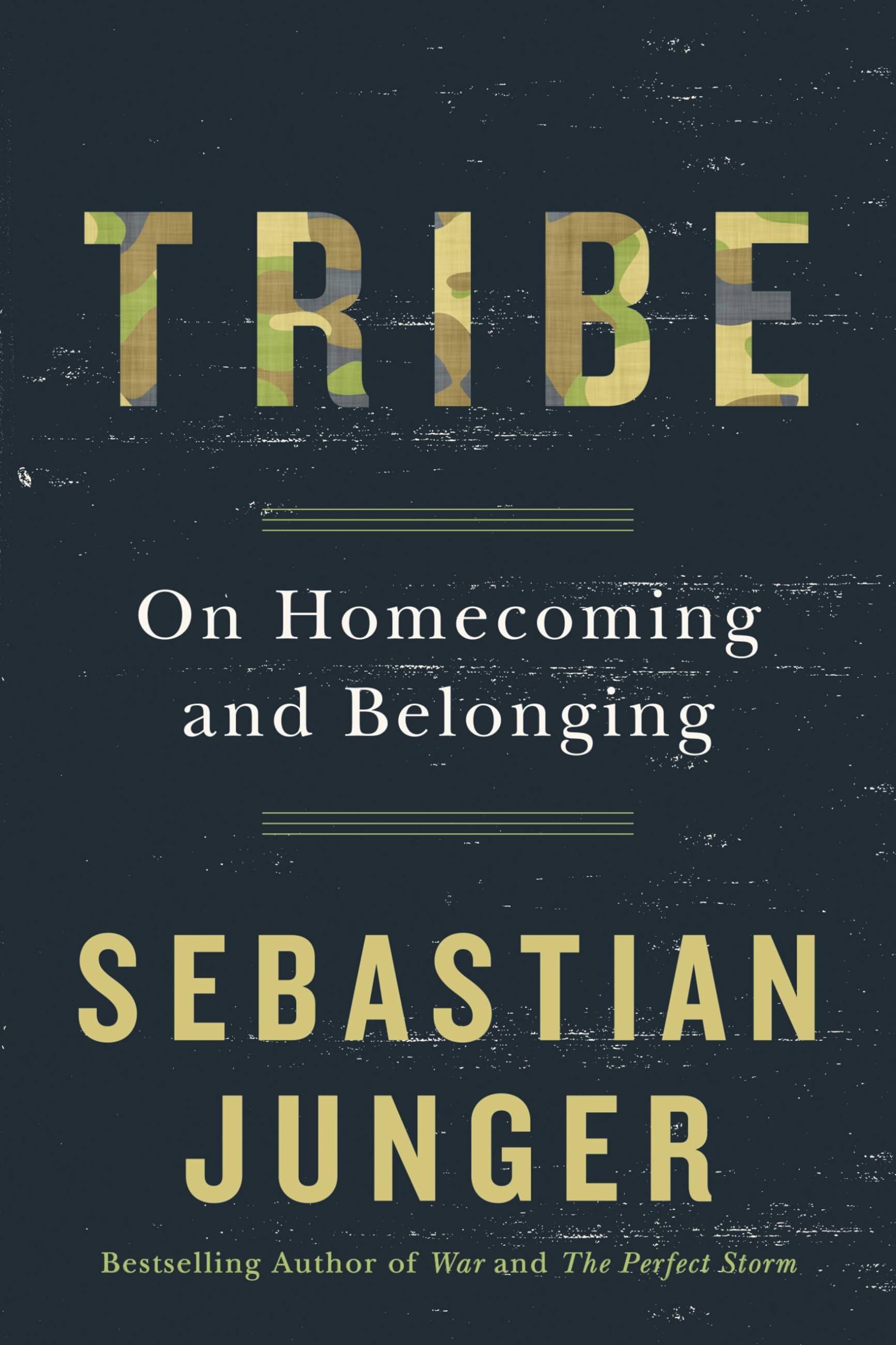
Tribe: On Homecoming and Belonging
Product ID: 28467495
Desertcart purchases this item on your behalf and handles shipping, customs, and support to South Korea.
We have a strong instinct to belong to small groups defined by clear purpose and understanding--"tribes." This tribal connection has been largely lost in modern society, but regaining it may be the key to our psychological survival. Decades before the American Revolution, Benjamin Franklin lamented that English settlers were constantly fleeing over to the Indians-but Indians almost never did the same. Tribal society has been exerting an almost gravitational pull on Westerners for hundreds of years, and the reason lies deep in our evolutionary past as a communal species. The most recent example of that attraction is combat veterans who come home to find themselves missing the incredibly intimate bonds of platoon life. The loss of closeness that comes at the end of deployment may explain the high rates of post-traumatic stress disorder suffered by military veterans today. Combining history, psychology, and anthropology, Tribe explores what we can learn from tribal societies about loyalty, belonging, and the eternal human quest for meaning. It explains the irony that-for many veterans as well as civilians-war feels better than peace, adversity can turn out to be a blessing, and disasters are sometimes remembered more fondly than weddings or tropical vacations. Tribe explains why we are stronger when we come together, and how that can be achieved even in today's divided world. Review: A Needed Conversation These Days - So maybe, you are like me, and you see that society and the church is fragmenting. The divide in this world is becoming greater. The polarization within the church is wider, and the cultural forces are splitting deeper. As someone who seeks to bring unity to diversity, this book interested me. It is written within the context of war, and studding the elements of how humans bond. There are some deep insights in this reality. The author notes "First agriculture, and then industry, changed two fundamental things about the human experience. The accumulation of personal property allowed people to make more and more individualistic choices about their lives, and those choices unavoidably diminished group efforts toward a common good. And as society modernized, people found themselves able to live independently from any communal group. A person living in a modern city or a suburb can, for the first time in history, go through an entire day— or an entire life— mostly encountering complete strangers. They can be surrounded by others and yet feel deeply, dangerously alone." He does not seem far off of his estimation. He talks about the role of wealth plays in the process, and though I disagree on the years, I do see his insights to be true. He notes "a wealthy person who has never had to rely on help and resources from his community is leading a privileged life that falls way outside more than a million years of human experience. Financial independence can lead to isolation, and isolation can put people at a greatly increased risk of depression and suicide. This might be a fair trade for a generally wealthier society— but a trade it is." You might not agree with all of his assessments, but he does deal with the issues of disunity within the world. Over and over again, as I read this book, I saw the church needing to be at the front of the line for unity. The church provides a community, it provides opportunities to help others, and provides a place to overcome the effects of community stress, or natural terrible events. The idea of belonging is something that we all need to focus on in the coming years. Review: An important, pragmatic perspective - It is trite to say we can't always understand why bad things happen. From the devastating news of schools shootings, wars that appear on the surface to have little relevance 'back home', and financial injustices that literally rob society; these are at once at the top of our news streams, and almost as quickly dismissed as aberrations. There is little available time or devoted attention to a meaningful public discussion on these topics before the next news cycle rolls in. We expect that 'leaders' are taking appropriate steps and doing what's necessary in our collective interests. However feeling that our leadership has their hands on the wheel of an incredibly complex world seems less and less reassuring when simultaneously watching the showcase of highly divisive political spectacle play out in the same news stream. Sebastian Junger provides compelling insights on how to consider these problems. Rather than looking at the symptoms and recent historical perspectives, he looks much further back, into the deep evolutionary foundations that are likely shaping our everyday actions. He addresses everything from how we inappropriately treat our soldiers, the unbalanced attention to criminal acts within our society, and the fundamental social needs that are shown to be more powerful than war and catastrophe. He asks us consider danger of ignoring our responsibilities to society in favor of personal gain. He does this with a uniquely balanced perspective that demonstrates the power and value in combining 'left' and 'right' ideological viewpoints rather than demonizing anyone. Tribe takes on the highly complex topic of human nature in modern society and accomplishes a thoughtful treatment with a very personal tone in a quick read. Well worth the short investment in time for what you will walk away with.
| Best Sellers Rank | #11,861 in Books ( See Top 100 in Books ) #2 in Iraq War History (Books) #2 in Afghan War Military History #9 in Violence in Society (Books) |
| Customer Reviews | 4.5 out of 5 stars 11,638 Reviews |
M**E
A Needed Conversation These Days
So maybe, you are like me, and you see that society and the church is fragmenting. The divide in this world is becoming greater. The polarization within the church is wider, and the cultural forces are splitting deeper. As someone who seeks to bring unity to diversity, this book interested me. It is written within the context of war, and studding the elements of how humans bond. There are some deep insights in this reality. The author notes "First agriculture, and then industry, changed two fundamental things about the human experience. The accumulation of personal property allowed people to make more and more individualistic choices about their lives, and those choices unavoidably diminished group efforts toward a common good. And as society modernized, people found themselves able to live independently from any communal group. A person living in a modern city or a suburb can, for the first time in history, go through an entire day— or an entire life— mostly encountering complete strangers. They can be surrounded by others and yet feel deeply, dangerously alone." He does not seem far off of his estimation. He talks about the role of wealth plays in the process, and though I disagree on the years, I do see his insights to be true. He notes "a wealthy person who has never had to rely on help and resources from his community is leading a privileged life that falls way outside more than a million years of human experience. Financial independence can lead to isolation, and isolation can put people at a greatly increased risk of depression and suicide. This might be a fair trade for a generally wealthier society— but a trade it is." You might not agree with all of his assessments, but he does deal with the issues of disunity within the world. Over and over again, as I read this book, I saw the church needing to be at the front of the line for unity. The church provides a community, it provides opportunities to help others, and provides a place to overcome the effects of community stress, or natural terrible events. The idea of belonging is something that we all need to focus on in the coming years.
C**X
An important, pragmatic perspective
It is trite to say we can't always understand why bad things happen. From the devastating news of schools shootings, wars that appear on the surface to have little relevance 'back home', and financial injustices that literally rob society; these are at once at the top of our news streams, and almost as quickly dismissed as aberrations. There is little available time or devoted attention to a meaningful public discussion on these topics before the next news cycle rolls in. We expect that 'leaders' are taking appropriate steps and doing what's necessary in our collective interests. However feeling that our leadership has their hands on the wheel of an incredibly complex world seems less and less reassuring when simultaneously watching the showcase of highly divisive political spectacle play out in the same news stream. Sebastian Junger provides compelling insights on how to consider these problems. Rather than looking at the symptoms and recent historical perspectives, he looks much further back, into the deep evolutionary foundations that are likely shaping our everyday actions. He addresses everything from how we inappropriately treat our soldiers, the unbalanced attention to criminal acts within our society, and the fundamental social needs that are shown to be more powerful than war and catastrophe. He asks us consider danger of ignoring our responsibilities to society in favor of personal gain. He does this with a uniquely balanced perspective that demonstrates the power and value in combining 'left' and 'right' ideological viewpoints rather than demonizing anyone. Tribe takes on the highly complex topic of human nature in modern society and accomplishes a thoughtful treatment with a very personal tone in a quick read. Well worth the short investment in time for what you will walk away with.
A**N
almost to self-help book
A book that studies the effects of people /tribes, .pulling themselves together through Community.. and not through pampering or narcotics….
A**S
Tribe
"A society that doesn't offer its members the chance to act selflessly... isn't a society in any tribal sense of the word; it's just a political entity that, lacking enemies, will probably fall apart on its own." In our modern world when someone uses the word "tribal" it's typically used as a derogatory term accusing individuals or small groups of people of only thinking about themselves and refusing to be a part of the grander society as a whole. Sebastian Junger reminds us however, that being "tribal" may not only be a good thing but could be what helps us survive the modern era. Is it healthy that we are becoming a more individualistic society? Today a person could go an entire day, week or even years mostly encountering complete strangers. This is a far cry from what it used to mean to be human, and because of this, there comes with it a deeply disturbing cost. As we lose our need for others, we also lose what keeps us alive in battle, what gives our sacrifices meaning, and what gives us our morality -- group pressure and community. Today we live in a post-Emersonian, Nietzschean, cowboy society where the individual has come out on top. We love the man who can be his own individual, and stand up to the crowd -- but that doesn't mean we don't need the crowd, that we don't need to relate with one another. In fact one could argue, and Sabastian does, that we need now community more than ever. Our tribal past is calling to us and if we ignore it we ignore it at our own peril. As Sebastian says: "We are not good to each other. Our tribalism is to an extremely narrow group of people: our children, our spouse, maybe our parents. Our society is alienating, technical, cold, and mystifying. Our fundamental desire, as human beings, is to be close to others, and our society does not allow for that." But for Sebastian it's more than just rudeness, higher rates of depression, rising suicide rates, etc. It's also about what happens when we find ourselves in a society where we can take advantage of each other with no visible cost. When a group of people can cost American society several trillion dollars in losses -- roughly one-quarter of that years GDP - and not be tried for high crimes? When you can carelessly throw trash on the ground because you don't feel connected enough to the group around you, to the shared ethos of protecting something valuable? These might seem like minor things, and we may be glad we live in a society that can withstand these kinds of blows... but blows they are. They are blows against our relatedness, our sense of sacrifice, and what we need to really survive and thrive -- to be human. I could go on, but you should really just read the book yourself. It's a fantastic reminder of not only the importance of community but that it's a biologically fundamental need that we cannot ignore. "Belonging to a society requires sacrifice, and that sacrifice gives back way more than it costs. That sense of solidarity is at the core of what it means to be human and undoubtedly helped deliver us to this extraordinary moment in our history. It may also be the only thing that allows us to survive it."
M**D
Have Post Traumatic Stress? Well, you are more human that you even realize...
Along with, B.G. Burkett's "Stolen Valor", this book is better medicine for a war Veteran than most modern psychology. Junger researched his subject, and experienced a great amount of it himself, thoroughly (anyone who claims he did not do his research needs to spend some time reading the bibliography this book contains, which is a great value in and of itself). Frankly, it is a good indictment of modern society, and most especially modern psychological methods for dealing with post traumatic stress. Junger does a fantastic job of pointing out how PTS is a normal human reaction to stressful near fatal events, not just limited to war but including accident and sexual assault. Frankly, those who experience PTS may in fact be more psychologically stable human beings that those that never have to suffer through such events. Mankind is an amazing creature, and our capacity for dealing with violence, death, and destruction is necessarily very strong, despite what modern society tends to think. One would never wish bad things on people, however, when you realize just how generous and genuine people become in such conditions, you begin to really wonder if our Information Age is really that much better than the Stone Age. Every mental health professional who has to deal with patients that have post traumatic stress needs to read this book. Everyone who knows a war veteran should read this book and then give a copy that veteran. Everyone who knows someone who survived a horrible event that has left a mark on them should read this book and pass it on. To be a survivor is to be human.
G**Y
Recommended with a big caveat.
Junger's book "War" was fantastic so I expected a little more from this book. I didn't see the page count when I ordered it, so I was very surprised to receive such a slim volume. And I think that is precisely the weakness of "Tribe". He has a very insightful analysis of society here, and I would give it very high praise if it were a long-form piece in the New Yorker or the Atlantic but as a book it just isn't well developed. There are too many generalizations and assumptions that the reader is expected to accept (perhaps validly considering the long bibliography). In contrast to the typical "pop" social science and psychology books that are too long, "Tribe" is too short - 134 pages is not enough to really "proove" the argument. We, the audience, should not be so easily persuaded based on the author's reputation. This book has good storytelling and good prose, and it does truly give us something to think about but it also comes across as more of an outline for a more profound, groundbreaking book that could-have-been. That being said, I still recommend "Tribe" because it does present a unique perspective on our social bonds (or lack thereof). So, read it with a grain-of-salt, I guess.
K**N
Great Read
I picked up Tribe: On Homecoming and Belonging after hearing Joe Rogan recommend it, and I’m really glad I did! It’s a short book, but it packs a punch. Sebastian Junger dives into the importance of community, belonging, and how modern society often disconnects us from the sense of tribe that’s essential for well-being. It’s thought-provoking and really makes you reconsider how we live today. If you’re short on time, I’d recommend the audiobook first – it’s a great listen and really engages you in the topic. Highly recommend this book if you're looking for something insightful and impactful, even though it's a quick read!
D**N
"It was better when it was really bad."
This was recommended to me by a brother-in-arms during a discussion about the transition from combat to civilian life and the challenges and obstacles it presents. It was not at all what I had expected. Junger's WAR did a solid job of showing the depth of commitment between soldiers in combat, and I had anticipated more of the same here. While this is part of the book, Junger seeks to take a more holistic look at why, when things are grim, people do what they do: why do people sacrifice and behave altruistically in times of crisis? He makes a stab at an answer, but in the end, the conclusions are unsatisfying. Essentially, Junger argues, people are missing a sense of belonging, of being an important part of a larger whole, of feeling important to their community - their tribe. I get this; this sense of belonging and trust and altruism is among the things I miss the most from my time in the military (and combat.) Junger provides a lot of evidence to support this from primatology to early American history to the struggles and issues returning warriors experience today. There is much that Junger writes about that I agree with: that in spite of the modern conveniences and comforts we have, the modern wold also alienates us from one another. That the contempt we have for other Americans who politically disagree with us is toxic; that the conservative outrage at social service cheats is absolutely right - but so is the liberal inclination to provide social services to the needy. That the platitudes of "thank you for your service", yellow ribbons and military discounts are hollow in a society that does nothing to share, recognize or even authentically hear the voices of veterans. Yet I can't help but feel Junger missed an opportunity. He does a remarkable job of describing the problem, of quantifying it, even of showing what works in terms of "belonging" in other parts of the world - but he is not detailed enough nor forceful enough to propose a solution for Americans here and now. He alludes to what is necessary: a sense of solidarity that transcends wealth, social class, race and gender -but does little to point the way to how that can be created in a modern, industrialized society. Perhaps it can't be. But I suspect it could be.
K**R
thoroughly amazing
From a returned serviceman: This book answered questions inside myself that I had been asking for years since returning home. Junger perfectly encapsulates the feeling of the unknown as one transitions from military life to civilian life. A must read for anyone who has served or is close with someone else who has served.
F**E
Tribe
“Something that would make us feel like a tribe. What I wanted wasn’t destruction and mayhem but the opposite: solidarity. I wanted the chance to prove my worth to my community and my peers, but I lived in a time and a place where nothing dangerous ever really happened.” “I thought about that man for the rest of my trip. I thought about him for the rest of my life. He’d been generous, yes, but lots of people are generous; what made him different was the fact that he’d taken responsibility for me. He’d spotted me from town and walked half a mile out a highway to make sure I was okay.” “Humans don’t mind hardship, in fact they thrive on it; what they mind is not feeling necessary. Modern society has perfected the art of making people not feel necessary. It’s time for that to end.” “Crèvecoeur seemed to have understood that the intensely communal nature of an Indian tribe held an appeal that the material benefits of Western civilization couldn’t necessarily compete with.” “We had no master to oversee or drive us, so that we could work as leisurely as we pleased,” she explained. “No people can live more happy than the Indians did in times of peace … Their lives were a continual round of pleasures.” “It’s easy for people in modern society to romanticize Indian life, and it might well have been easy for men like George as well. That impulse should be guarded against. Virtually all of the Indian tribes waged war against their neighbors and practiced deeply sickening forms of torture. If there is any conceivable defense for such cruelty, it might be that in Europe at the time, the Spanish Inquisition was also busy serving up just as much barbarism on behalf of the Catholic Church.” “On other levels, however, there seemed to be no competing with the appeal of the Indians. Hunting was obviously more varied and interesting than plowing fields. Sexual mores were more relaxed than in the early colonies (in the 1600s, colonial boys on Cape Cod were publicly whipped if they were caught talking to a girl they weren’t related to). Indian clothing was more comfortable, Indian religion was less harsh, and Indian society was essentially classless and egalitarian.” “Successful hunters and warriors could support multiple wives, but unlike modern society, those advantages were generally not passed on through the generations. Social status came through hunting and war, which all men had access to, and women had far more autonomy and sexual freedom—and bore fewer children—than women in white society.” “The question for Western society isn’t so much why tribal life might be so appealing—it seems obvious on the face of it—but why Western society is so unappealing. On a material level it is clearly more comfortable and protected from the hardships of the natural world. But as societies become more affluent they tend to require more, rather than less, time and commitment by the individual, and it’s possible that many people feel that affluence and safety simply aren’t a good trade for freedom.” “The relatively relaxed pace of !Kung life—even during times of adversity—challenged long-standing ideas that modern society created a surplus of leisure time. It created exactly the opposite: a desperate cycle of work, financial obligation, and more work. The !Kung had far fewer belongings than Westerners, but their lives were under much greater personal control.” “Genetic adaptations take around 25,000 years to appear in humans, so the enormous changes that came with agriculture in the last 10,000 years have hardly begun to affect our gene pool. Early humans would most likely have lived in nomadic bands of around fifty people, much like the !Kung.” “They would have experienced high levels of accidental injuries and deaths. They would have countered domineering behavior by senior males by forming coalitions within the group. They would have been utterly intolerant of hoarding or selfishness. They would have occasionally endured episodes of hunger, violence, and hardship. They would have practiced extremely close and involved childcare. And they would have done almost everything in the company of others. They would have almost never been alone.” “First agriculture, and then industry, changed two fundamental things about the human experience. The accumulation of personal property allowed people to make more and more individualistic choices about their lives, and those choices unavoidably diminished group efforts toward a common good. And as society modernized, people found themselves able to live independently from any communal group.” “As affluence and urbanization rise in a society, rates of depression and suicide tend to go up rather than down. Rather than buffering people from clinical depression, increased wealth in a society seems to foster it.” “The mechanism seems simple: poor people are forced to share their time and resources more than wealthy people are, and as a result they live in closer communities.” “Financial independence can lead to isolation, and isolation can put people at a greatly increased risk of depression and suicide. This might be a fair trade for a generally wealthier society—but a trade it is.” “human beings need three basic things in order to be content: they need to feel competent at what they do; they need to feel authentic in their lives; and they need to feel connected to others. These values are considered “intrinsic” to human happiness and far outweigh “extrinsic” values such as beauty, money, and status.” “Bluntly put, modern society seems to emphasize extrinsic values over intrinsic ones, and as a result, mental health issues refuse to decline with growing wealth.” “The alienating effects of wealth and modernity on the human experience start virtually at birth and never let up. Infants in hunter-gatherer societies are carried by their mothers as much as 90 percent of the time, which roughly corresponds to carrying rates among other primates. One can get an idea of how important this kind of touch is to primates” “Also unthinkable would be the modern practice of making young children sleep by themselves. In two American studies of middle-class families during the 1980s, 85 percent of young children slept alone in their own room—a figure that rose to 95 percent among families considered “well educated.” “The isolation is thought to make many children bond intensely with stuffed animals for reassurance. Only in Northern European societies do children go through the well-known developmental stage of bonding with stuffed animals; elsewhere, children get their sense of safety from the adults sleeping near them.” “The point of making children sleep alone, according to Western psychologists, is to make them “self-soothing,” but that clearly runs contrary to our evolution.” “As modern society reduced the role of community, it simultaneously elevated the role of authority. The two are uneasy companions, and as one goes up, the other tends to go down.” “Boehm’s research has led him to believe that much of the evolutionary basis for moral behavior stems from group pressure. Not only are bad actions punished, but good actions are rewarded. When a person does something for another person—a prosocial act, as it’s called—they are rewarded not only by group approval but also by an increase of dopamine and other pleasurable hormones in their blood. Group cooperation triggers higher levels of oxytocin, for example, which promotes everything from breast-feeding in women to higher levels of trust and group bonding in men. Both reactions impart a powerful sensation of well-being. Oxytocin creates a feedback loop of good-feeling and group loyalty that ultimately leads members to “self-sacrifice to promote group welfare,” in the words of one study. Hominids that cooperated with one another—and punished those who didn’t—must have outfought, outhunted, and outbred everyone else. These are the hominids that modern humans are descended from.” “Subsistence-level hunters aren’t necessarily more moral than other people; they just can’t get away with selfish behavior because they live in small groups where almost everything is open to scrutiny. Modern society, on the other hand, is a sprawling and anonymous mess where people can get away with incredible levels of dishonesty without getting caught.” “Thomas Paine, one of the principal architects of American democracy, wrote a formal denunciation of civilization in a tract called Agrarian Justice: “Whether … civilization has most promoted or most injured the general happiness of man is a question that may be strongly contested,” he wrote in 1795. “[Both] the most affluent and the most miserable of the human race are to be found in the countries that are called civilized.” “protesting an immoral war was just as honorable as fighting a moral one. Either way, he made it clear that my country needed help protecting the principles and ideals that I’d benefited from my entire life.” “In many tribal societies, young men had to prove themselves by undergoing initiation rites that demonstrated their readiness for adulthood” “Modern society obviously doesn’t conduct initiations on its young men, but many boys still do their best to demonstrate their readiness for manhood in all kinds of clumsy and dangerous ways. They drive too fast, get into fights, haze each other, play sports, join fraternities, drink too much, and gamble with their lives in a million idiotic ways. Girls generally don’t take those kinds of risks, and as a result, boys in modern society die by violence and accidents at many times the rate that girls do. These deaths can be thought of as one generation after another trying to run their own initiation rites because they live in a society that no longer does that for them.” “An earthquake achieves what the law promises but does not in practice maintain,” one of the survivors wrote. “The equality of all men.” “The positive effects of war on mental health were first noticed by the great sociologist Emile Durkheim, who found that when European countries went to war, suicide rates dropped. Psychiatric wards in Paris were strangely empty during both world wars, and that remained true even as the German army rolled into the city in 1940. Researchers documented a similar phenomenon during civil wars in Spain, Algeria, Lebanon, and Northern Ireland.” “Depression rates for both men and women declined abruptly during that period, with men experiencing the most extreme drop in the most violent districts. County Derry, on the other hand—which suffered almost no violence at all—saw male depression rates rise rather than fall. Lyons hypothesized that men in the peaceful areas were depressed because they couldn’t help their society by participating in the struggle. “When people are actively engaged in a cause their lives have more purpose … with a resulting improvement in mental health,” “It would be irresponsible to suggest violence as a means of improving mental health, but the Belfast findings suggest that people will feel better psychologically if they have more involvement with their community.” “American analysts based in England monitored the effects of the bombing to see if any cracks began to appear in the German resolve, and to their surprise found exactly the opposite: the more the Allies bombed, the more defiant the German population became. Industrial production actually rose in Germany during the war. And the cities with the highest morale were the ones—like Dresden—that were bombed the hardest.” “Fritz went on to complete a more general study of how communities respond to calamity. After the war he turned his attention to natural disasters in the United States and formulated a broad theory about social resilience. He was unable to find a single instance where communities that had been hit by catastrophic events lapsed into sustained panic, much less anything approaching anarchy. If anything, he found that social bonds were reinforced during disasters, and that people overwhelmingly devoted their energies toward the good of the community rather than just themselves.” “Fritz’s theory was that modern society has gravely disrupted the social bonds that have always characterized the human experience, and that disasters thrust people back into a more ancient, organic way of relating” “If there are phrases that characterize the life of our early ancestors, “community of sufferers” and “brotherhood of pain” surely must come close.” “Humans are so strongly wired to help one another—and enjoy such enormous social benefits from doing so—that people regularly risk their lives for complete strangers.” “Men have to wait, on average, until age seventy-five before they can expect the same kind of assistance in a life-threatening situation that women get their whole lives. Given the disproportionately high value of female reproduction to any society, risking male lives to save female lives makes enormous evolutionary sense.” “The greater empathic concern women demonstrate for others may lead them to take positions on moral or social issues that men are less likely to concern themselves with. Women tend to act heroically within their own moral universe, regardless of whether anyone else knows about it—donating more kidneys to nonrelatives than men do, for example.” “The beauty and the tragedy of the modern world is that it eliminates many situations that require people to demonstrate a commitment to the collective good. Protected by police and fire departments and relieved of most of the challenges of survival, an urban man might go through his entire life without having to come to the aid of someone in danger—or even give up his dinner.” “The vast majority of people in modern society are able to pass their whole lives without ever having to answer that question, which is both an enormous blessing and a significant loss. It is a loss because having to face that question has, for tens of millennia, been one of the ways that we have defined ourselves as people. And it is a blessing because life has gotten far less difficult and traumatic than it was for most people even a century ago.” “Canadian psychologists who interviewed the miners after their rescue determined that these early leaders tended to lack empathy and emotional control, that they were not concerned with the opinions of others, that they associated with only one or two other men in the group, and that their physical abilities far exceeded their verbal abilities. But all of these traits allowed them to take forceful, life-saving action where many other men might not. Once the escape attempts failed, different kinds of leaders emerged. In what researchers termed the “survival period,” the ability to wait in complete darkness without giving up hope or succumbing to panic became crucial. Researchers determined that the leaders during this period were entirely focused on group morale and used skills that were diametrically opposed to those of the men who had led the escape attempts. They were highly sensitive to people’s moods, they intellectualized things in order to meet group needs, they reassured the men who were starting to give up hope, and they worked hard to be accepted by the entire group. Without exception, men who were leaders during one period were almost completely inactive during the other; no one, it seemed, was suited to both roles. These two kinds of leaders more or less correspond to the male and female roles that emerge spontaneously in open society during catastrophes such as earthquakes or the Blitz.” “In every upheaval we rediscover humanity and regain freedoms,” one sociologist wrote about England’s reaction to the war. “We relearn some old truths about the connection between happiness, unselfishness, and the simplification of living.” What catastrophes seem to do—sometimes in the span of a few minutes—is turn back the clock on ten thousand years of social evolution” “I do miss something from the war. But I also believe that the world we are living in—and the peace that we have—is very fucked up if somebody is missing war. And many people do.” “We didn’t learn the lesson of the war, which is how important it is to share everything you have with human beings close to you. The best way to explain it is that the war makes you an animal. We were animals. It’s insane—but that’s the basic human instinct, to help another human being who is sitting or standing or lying close to you.” “What I had was classic short-term PTSD. From an evolutionary perspective, it’s exactly the response you want to have when your life is in danger: you want to be vigilant, you want to avoid situations where you are not in control, you want to react to strange noises, you want to sleep lightly and wake easily, you want to have flashbacks and nightmares that remind you of specific threats to your life, and you want to be, by turns, angry and depressed. Anger keeps you ready to fight, and depression keeps you from being too active and putting yourself in more danger. Flashbacks also serve to remind you of the danger that’s out there—a “highly efficient single-event survival-learning mechanism,” as one researcher termed it.” “If war were purely and absolutely bad in every single aspect and toxic in all its effects, it would probably not happen as often as it does. But in addition to all the destruction and loss of life, war also inspires ancient human virtues of courage, loyalty, and selflessness that can be utterly intoxicating to the people who experience them.” “The Iroquois Nation presumably understood the transformative power of war when they developed parallel systems of government that protected civilians from warriors and vice versa. Peacetime leaders, called sachems, were often chosen by women and had complete authority over the civil affairs of the tribe until war broke out. At that point war leaders took over, and their sole concern was the physical survival of the tribe. They were not concerned with justice or harmony or fairness, they were concerned only with defeating the enemy. If the enemy tried to negotiate an end to hostilities, however, it was the sachems, not the war leaders, who made the final decision. If the offer was accepted, the war leaders stepped down so that the sachems could resume leadership of the tribe. The Iroquois system reflected the radically divergent priorities that a society must have during peacetime and during war. Because modern society often fights wars far away from the civilian population, soldiers wind up being the only people who have to switch back and forth. Siegfried Sassoon, who was wounded in World War I, wrote a poem called “Sick Leave” that perfectly described the crippling alienation many soldiers feel at home: “In bitter safety I awake, unfriended,” he wrote. “And while the dawn begins with slashing rain / I think of the Battalion in the mud.” “2011 study of street children in Burundi found the lowest PTSD rates among the most aggressive and violent children. Aggression seemed to buffer them from the effects of previous trauma that they had experienced.” “Treating combat veterans is different from treating rape victims, because rape victims don’t have this idea that some aspects of their experience are worth retaining,” “a person’s chance of getting chronic PTSD is in great part a function of their experiences before going to war.” “Sexual abuse is a well-known predictor of depression and other mental health issues,” “The vast majority of traumatized vets are not faking their symptoms, however. They return from wars that are safer than those their fathers and grandfathers fought, and yet far greater numbers of them wind up alienated and depressed. This is true even for people who didn’t experience combat. In other words, the problem doesn’t seem to be trauma on the battlefield so much as reentry into society.” “Most primates, including humans, are intensely social, and there are very few instances of lone primates surviving in the wild. A modern soldier returning from combat—or a survivor of Sarajevo—goes from the kind of close-knit group that humans evolved for, back into a society where most people work outside the home, children are educated by strangers, families are isolated from wider communities, and personal gain almost completely eclipses collective good.” “Even if he or she is part of a family, that is not the same as belonging to a group that shares resources and experiences almost everything collectively.” “We are not good to each other. Our tribalism is to an extremely narrow group of people: our children, our spouse, maybe our parents. Our society is alienating, technical, cold, and mystifying. Our fundamental desire, as human beings, is to be close to others, and our society does not allow for that.” “In humans, lack of social support has been found to be twice as reliable at predicting PTSD as the severity of the trauma itself.” “According to Shalev, the closer the public is to the actual combat, the better the war will be understood and the less difficulty soldiers will have when they come home.” “Because modern society has almost completely eliminated trauma and violence from everyday life, anyone who does suffer those things is deemed to be extraordinarily unfortunate. This gives people access to sympathy and resources but also creates an identity of victimhood that can delay recovery.” “The language of ‘I am a victim too’ did not originate from the combatants themselves,” Hoffman told me. “[Aid organizations] would come in and say, ‘This is how you’re supposed to be feeling … and if you do, then you’ll have access to food supplies and training.” “These people committed terrible acts of violence during their wars, and many of them felt enormously guilty about it, but they were never able to work through those feelings because their victim status eclipsed more accurate and meaningful understandings of violence. Mende combatants often described combat as something that makes the heart “heat up,” transforming a fighter to the point where he is thought to have literally become someone else. In that state he is capable of both great courage and great cruelty. Such a state of hyperarousal is familiar to many soldiers or athletes and has a firm basis in the neurobiology of the brain. For the Mende, it means that the moral excesses of the battlefield don’t necessarily have to be brought home.” “In the United States we valorize our vets with words and posters and signs, but we don’t give them what’s really important to Americans, what really sets you apart as someone who is valuable to society—we don’t give them jobs. All the praise in the world doesn’t mean anything if you’re not recognized by society as someone who can contribute valuable labor.” “What I liked about the encounter was that it showed how very close the energy of male conflict and male closeness can be. It’s almost as if they are two facets of the same quality; just change a few details and instead of heading toward collision, the men head toward unity.” “Two of the behaviors that set early humans apart [from other primates] were the systematic sharing of food and altruistic group defense.” “The earliest and most basic definition of community—of tribe—would be the group of people that you would both help feed and help defend. A society that doesn’t offer its members the chance to act selflessly in these ways isn’t a society in any tribal sense of the word; it’s just a political entity that, lacking enemies, will probably fall apart on its own.” “The public is often accused of being disconnected from its military, but frankly it’s disconnected from just about everything. Farming, mineral extraction, gas and oil production, bulk cargo transport, logging, fishing, infrastructure construction—all the industries that keep the nation going are mostly unacknowledged by the people who depend on them most.” “And when you fraudulently claim money from the government, you are ultimately stealing from your friends, family, and neighbors—or somebody else’s friends, family, and neighbors. That diminishes you morally far more than it diminishes your country financially. My friend Ellis was once asked by a troubled young boy wether there was any compelling reason for him not to pull the legs off a spider. Ellis said that there was. “Well, spiders don’t feel any pain,” the boy retorted. “It’s not the spider I’m worried about,” Ellis said.” “Virtually every culture in the world has its version of the skinwalker myth. In Europe, for example, they are called werewolves (literally “man-wolf” in Old English). The myth addresses a fundamental fear in human society: that you can defend against external enemies but still remain vulnerable to one lone madman in your midst.” “As such, those crimes conform almost exactly to the kind of threat the Navajo seemed most to fear on the reservation: murder and mayhem committed by an individual who has rejected all social bonds and attacks people at their most vulnerable and unprepared.” “in New York City, where rates of violent crime, suicide, and psychiatric disturbances dropped immediately. In many countries, antisocial behavior is known to decline during wartime. New York’s suicide rate dropped by around 20 percent in the six months following the attacks, the murder rate dropped by 40 percent, and pharmacists saw no increase in the number of first-time patients filling prescriptions for antianxiety and antidepressant medication.” “Today’s veterans often com home to find that, although they’re willing to die for their country, they’re not sure how to live for it.” “It’s a level of contempt that is usually reserved for enemies in wartime, except that now it’s applied to our fellow citizens. Unlike criticism, contempt is particularly toxic because it assumes a moral superiority in the speaker. Contempt is often directed at people who have been excluded from a group or declared unworthy of its benefits. Contempt is one of four behaviors that, statistically, can predict divorce in married couples.” “The United States is so powerful that the only country capable of destroying her might be the United States herself, which means that the ultimate terrorist strategy would be to just leave the country alone. That way, America’s ugliest partisan tendencies could emerge unimpeded by the unifying effects of war.” “For nearly a century, the national suicide rate has almost exactly mirrored the unemployment rate, and after the financial collapse, America’s suicide rate increased by nearly 5 percent. In an article published in 2012 in The Lancet, epidemiologists who study suicide estimated that the recession cost almost 5000 additional American lives during the first two years - disproportionately among middle-aged white men.” “Deep in the bush they encountered two men, strangers, who had run out of food and were extremely hungry. Thomas gave them all his flour and lard, despite the fact that he would have to cut his own trip short as a result. Leacock probed Thomas as to why he did this, and he finally lost patience with her. “Suppose, now, not to give them flour, lard,” he explained. “Just dead inside.”
T**E
Javier Moro
Muy interesante, como todos los de este autor. Lo leí de un tirón. Bien documentado, bien escrito, os lo recomiendo.
P**N
Livre exceptionnel
Livre très interressant que j'ai beaucoup apprécié. Livraison efficace. Explications très succintes des propos de cet auteur très connu dans son domaine.
J**E
The missing link in mental health?
I read this book twice. And I was sad the first time around when I reached the end. It could point in an optimistic direction for anyone closely affected by PTSD/trauma. The author’s perspective is valuable from his war journalist career: he witnessed many things first hand. Excellent read. Just a bit short.
Trustpilot
1 month ago
2 weeks ago