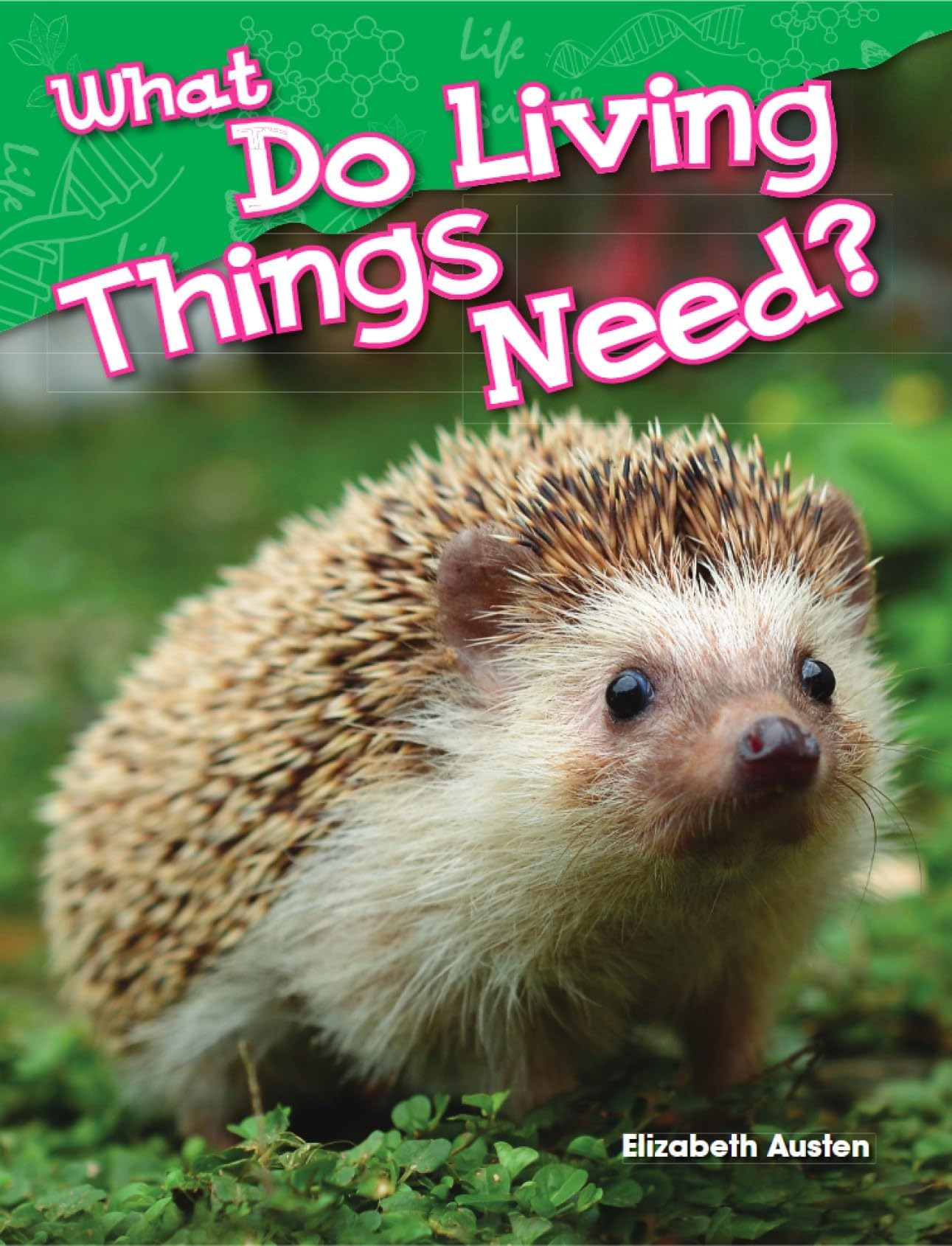
What Do Living Things Need?
Buy anything from 5,000+ international stores. One checkout price. No surprise fees. Join 2M+ shoppers on Desertcart.
Desertcart purchases this item on your behalf and handles shipping, customs, and support to South Korea.
Description
This book introduces students to the things that humans need to live: food, shelter, water, and air. With images that are easy to identify and clear, simple sentence structures, this science reader simplifies scientific concepts for young students as they improve their reading skills. A fun and easy science experiment and Your Turn! activity provide more in-depth opportunities for additional learning. Nonfiction text features include a glossary and an index. Engage students in learning with this dynamic text! Review: Good pictures - Good pictures Review: Teacher buy - Great for my library


Specifications
| Best Sellers Rank | #546,451 in Books ( See Top 100 in Books ) #403 in Children's Flower & Plant Books (Books) #488 in Children's Biology Books (Books) #1,274 in Children's Zoology Books (Books) |
| Customer Reviews | 4.6 out of 5 stars 72 Reviews |
Reviews
A**R
Good pictures
Good pictures
D**A
Teacher buy
Great for my library
L**N
Kindergarten appropriate-great lead-in for Life Science.
Perfect for Kindergartners!
A**R
Five Stars
Nice book the children in the classroom enjoyed it
S**R
Too simple - not that effective
We are doing a lesson with the kids on needs verses wants. It made sense therefore to read a book on what living things actually NEED to live. Then the kids were going to study an animal and make a diorama showing what they needed to live. This book however missed the mark for that need. it awkwardly presented some material and did not really explain anything. I did like their bones and muscle books from another series, but this series just is too simple and not as effective at teaching like it should have. BTW - What living things typically need are: 1. food / nutrients, 2. water, 3. air / gases, 4. sunlight (makes vitamins by hitting your skin, keeps the planet warm, photosynthesis), 5. shelter / protection, 6. ideal environmental conditions (temperature, humidity, ecosystem), 7. other living things (like gut bacteria or predators), 8. a way to get rid of waste, and 9. a way to reproduce. I guess you could also argue - 10. a way to fight off disease and 11. a way to protect the integrity of genetic material. Now with young kids, I probably would not spend time explaining the DNA, reproduction, and predators part.... but the rest is all things a Kindergartner can understand. We really do not give kids the credit they deserve - they are capable of learning more than you think! Especially since its things these kids already do to live themselves... its something they can understand.
S**Y
Super simple book
I agree with the other reviewer who said this was too simple. I wanted to expand a little bit more on the lessons I give to my almost 4 year old, and this is not cutting it. There’s one sentence per every two pages, except for maybe the last page.
Common Questions
Trustpilot