
Desertcart purchases this item on your behalf and handles shipping, customs, and support to South Korea.
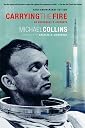
The years that have passed since Neil Armstrong, Buzz Aldrin, and Michael Collins piloted the Apollo 11 spacecraft to the moon in July 1969 have done nothing to alter the fundamental wonder of the event: man reaching the moon remains one of the great events--technical and spiritual--of our lifetime. In Carrying the Fire , Michael Collins conveys, in a very personal way, the drama, beauty, and humor of that adventure. He also traces his development from his first flight experiences in the air force, through his days as a test pilot, to his Apollo 11 space walk, presenting an evocative picture of the joys of flight as well as a new perspective on time, light, and movement from someone who has seen the fragile Earth from the other side of the moon. Review: Collins can write! Funny, factual to large audience.Test pilot,astronaut,later General - Carrying The Fire is a great astronaut book. Michael Collins shows us he is a very very good writer and refused to use a ghost writer. He explains he is deliberately trying to write to a wide audience not just the technologically inclined. His writing style is light and crisp while humorous. He is not constantly me me me and shows us there were other astronauts smarter than he and more suited for different jobs. We see his early career as a fighter pilot and experimental test pilot. Then we see his NASA training. He goes up in Gemini 10 and does a very important spacewalk. At the time John Young as the commander of Gemini 10 and Mike Collins set a new altitude record. Also a retrieval of a micro meteor pad from the Agena spacecraft is accomplished by Mike Collins with the help of his spacewalk. Many pictures and valuable navigation by different stars is accomplished. Many experiments are accomplished. The individual astronauts are assigned different jobs/specialties. He is assigned by Al Shepard to be in charge of space suits and EVAs (space walks). We see he is never in the loop to be a commander of a space mission but to serve as a very important specialist and later as the Columbia pilot. We see the horror of the loss of Gus Grissom, Ed White and Roger Chaffee in the Apollo 1 fire. Many of the astronauts lives are discussed. Excellent pictures are in the book. My favorite historically is the one with his father in uniform with General Pershing and a nice picture of NASA 904 T38 flying....our teacher,transportation and toy. Mike trains and trains and is the Columbia pilot on Apol1o 11. Neil Armstrong and Buzz Aldrin become first and second men on the moon. Mike's job is to stay in orbit and retrieve the Eagle and get everybody home. We see he is all alone as he orbits the Moon. He can talk to Houston control and with Neil and Buzz on the moon at times when properly positioned in lunar orbit. However orbiting on the far side of the moon he is completely cut off from humanity and is in his own universe. He has deep thoughts on his temporary solitude without fear and loneliness. He explains he is not jealous he did not set foot on the moon and his part in the mission was just as important and he is proud of it. Later he becomes the Assistant Secretary for Public Affairs with the State department for a year. He meets dozens of high officials, kings and queens, and presidents. Later still he is in charge of the Smithsonian Air and Space museum. He stays with the Air Force and retires from the Air Force reserves as a Major General. Collins says he is happy retired with his family and has had a great life. He explains we should go to Mars but also that we should cherish and help solve the huge problems facing us on Earth. We can and must do both. His main word for Earth as seen from space is fragile. Readers will enjoy Mike Collins writing style. We get lots of factual information that is very interesting but definitely not dry. Mike is able to be funny with a quick wit and show us his shortcomings as well as his strengths. Mike Collins a true American hero.I really enjoyed this book and look forward to reading other books by Mike Collins. The man can really write. 5 stars. Review: The right stuff: astronaut autobiographies from Glenn to Hadfield - An enduring image of an ‘astronaut’ was created for the public by NASA, Time magazine, and Tom Woolf’s The Right Stuff. These caricatures of the original seven American astronauts, the so-called Mercury-7, chosen to assert American supremacy over the communist threat of Sputnik have seemingly endured way past their use by date. A resurgence in interest in ‘astronauts’ was made almost single-handedly in the English speaking world by the Canadian Colonel Chris Hadfield. His much publicised exploits, through the media of YouTube, as commander of expedition 35 aboard the International Space Station made obvious a change from May 5, 1961 when Alan Shepherd rode Freedom 7 into the history books. In his autobiographical An Astronaut’s Guide to Life on Earth, the now retired Hadfield provides one of the most readable and honest stories of his journey from being a glider in the Royal Canadian Air Cadets in 1975 to commanding the international space Station in 2013 - after ‘only’ 21 years of astronaut training. He candidly describes the effort and training to get to being a modern astronauts - studying, practicing, learning, waiting, preparing for the worst - then being flexible enough to deal with the unexpected. What I liked is his can do approach as explained in his response to the 1969 Apollo 11moon landing and wanting to become an astronaut: I also knew, as did every other kid in Canada, that it was impossible. Astronauts were American. NASA only accepted applications from U.S citizens, and Canada didn’t even have a space agency. I was old enough to understand that getting ready wasn’t simply a matter of playing “space mission” with my brothers in our bunk beds, underneath a big National geographic poster of the Moon. But there was no program I could enroll in, no manual i could read, no one to ask. There was only one option, I decided. I had to imagine what an astronaut might do if he were 9 years old, then do exactly the same thing. His laconic, sometimes counter-intuitive advise is always presented with a wealth of evidence to support his lesson. His Frank assessment of the impact of his dream on the rest of his family make a good reminder for all the corporate males who neglect family events for yet another sales meeting. Hadfield’s book is a great read and compares favorably with two of my other notable astronaut autobiographies. At the age of five I was devastated when my mum said to me that I could not become an astronaut. She dashed my probably overly enthusiastic boyish exuberance regarding space exploration explaining that I would need to be both American and a military pilot. Despite this early reality check, and taking a different path to Hadfield, I followed the Apollo program with enthusiasm - racing home from primary school to watch the historic moon-walk of Armstrong and Aldrin. Of those Apollo 11 voyagers only Michael Collins put pen to paper to capture his journeys as an astronaut in the vivid and captivating Carrying the Fire. Collins displays a fine writing style and wry sense of humor. He wrote from an earlier time than Hadfield. Collins was part of the “Apollo fourteen”, the third group of astronauts, after being unsuccessful for selection in the second group, the “New Nine”. Collins adroitly describes his emergence as an astronaut, training for and flying on Gemini 10 with John Young and participating in the US’s third “space walk”. Collins was originally picked as part of the Apollo 8 crew. He was replaced by Jim Lovell when a bone spur was discovered on his spine, requiring surgery. He relates his feelings at losing this opportunity, Apollo 8 became the bold second manned Apollo flight all the way to circle the Moon, and then gaining his place in history as the Command Module Pilot of Apollo 11. Other books from this era that deserve a mention are Deke Slayton’s Deke and John Glenn’s A Memoir. Both of these were of the Mercury 7. Glenn’s memoir is so straight that it strains the reader’s credulity. Extraordinarily enough it is all John Glenn - astronaut, married family man, US Senator - it is definitely one of an uncomplicated patriotic kind. Slayton was different, grounded with a heart irregularity and instead of flying became the first Chief of the Astronaut Corps and selected the crews who flew Gemini, Apollo and Skylab missions. His book, written as he was dying from cancer, covers the full space race period up to his retirement post the start of the Space Shuttle era. Other books of note are books by Eugene Cernan The Last Man on the Moon, and John Young’s Forever Young. My third must read astronaut autobiography though is Mike Mullane’s Riding Rockets. This in my mind is a minor classic, again so different to both Collins and Hadfield. Mullane was part of the Space Shuttle generation of astronauts, the 1978 class of TFNGs (the Thirty Five New Guys), a group that included the first female NASA astronauts. This book contains an emotional level and cadence not pictured in other first hand astronaut memoirs. Mullane, a self-confessed inhabitant from planet ‘arrested development’ shares his growing pains in recognising that women could be colleagues and brilliant astronauts at that. His brutally honest depiction of losing his friend Judy Resnik in the Challenger disaster due to NASA hubris. Mullane describes in vivid detail the subsequent appalling bureaucratic treatment of the family members who were present at the disastrous launch. His own experience prior to this when STS-27 suffered near catastrophic heat shield damage from launch damage makes this description all the more poignant. The whole fateful uncertainty of the Space Shuttle era, the “glory and the folly” of this remarkable era in human exploration of near space is wittily and cuttingly told. If you aren’t both amazed and angered in reading this memoir than I suggest you go back and read it again. Chris Hadfield | An Astronaut’s Guide to Life on Earth | Little Brown & Company | 2013 | ISBN 978-0-316-25301-7 | 295 pp | hardback Michael Collins | Carrying the Fire | 1974 | 40th Anniversary edition 2009 | Farrar Straus and Giroux | ISBN 978-0-374-53194-2 | 478 pp | paperback Mike Mullane | Riding Rockets | Scribner | 2006 | ISBN 978-0-7432-7683-2 | 382 pp | paperback This review first published on dragonlaughing
| Best Sellers Rank | #1,161,544 in Books ( See Top 100 in Books ) #209 in Air Travel Reference (Books) #318 in Astronautics & Space Flight #574 in Aeronautics & Astronautics (Books) |
| Customer Reviews | 4.8 out of 5 stars 1,741 Reviews |
T**N
Collins can write! Funny, factual to large audience.Test pilot,astronaut,later General
Carrying The Fire is a great astronaut book. Michael Collins shows us he is a very very good writer and refused to use a ghost writer. He explains he is deliberately trying to write to a wide audience not just the technologically inclined. His writing style is light and crisp while humorous. He is not constantly me me me and shows us there were other astronauts smarter than he and more suited for different jobs. We see his early career as a fighter pilot and experimental test pilot. Then we see his NASA training. He goes up in Gemini 10 and does a very important spacewalk. At the time John Young as the commander of Gemini 10 and Mike Collins set a new altitude record. Also a retrieval of a micro meteor pad from the Agena spacecraft is accomplished by Mike Collins with the help of his spacewalk. Many pictures and valuable navigation by different stars is accomplished. Many experiments are accomplished. The individual astronauts are assigned different jobs/specialties. He is assigned by Al Shepard to be in charge of space suits and EVAs (space walks). We see he is never in the loop to be a commander of a space mission but to serve as a very important specialist and later as the Columbia pilot. We see the horror of the loss of Gus Grissom, Ed White and Roger Chaffee in the Apollo 1 fire. Many of the astronauts lives are discussed. Excellent pictures are in the book. My favorite historically is the one with his father in uniform with General Pershing and a nice picture of NASA 904 T38 flying....our teacher,transportation and toy. Mike trains and trains and is the Columbia pilot on Apol1o 11. Neil Armstrong and Buzz Aldrin become first and second men on the moon. Mike's job is to stay in orbit and retrieve the Eagle and get everybody home. We see he is all alone as he orbits the Moon. He can talk to Houston control and with Neil and Buzz on the moon at times when properly positioned in lunar orbit. However orbiting on the far side of the moon he is completely cut off from humanity and is in his own universe. He has deep thoughts on his temporary solitude without fear and loneliness. He explains he is not jealous he did not set foot on the moon and his part in the mission was just as important and he is proud of it. Later he becomes the Assistant Secretary for Public Affairs with the State department for a year. He meets dozens of high officials, kings and queens, and presidents. Later still he is in charge of the Smithsonian Air and Space museum. He stays with the Air Force and retires from the Air Force reserves as a Major General. Collins says he is happy retired with his family and has had a great life. He explains we should go to Mars but also that we should cherish and help solve the huge problems facing us on Earth. We can and must do both. His main word for Earth as seen from space is fragile. Readers will enjoy Mike Collins writing style. We get lots of factual information that is very interesting but definitely not dry. Mike is able to be funny with a quick wit and show us his shortcomings as well as his strengths. Mike Collins a true American hero.I really enjoyed this book and look forward to reading other books by Mike Collins. The man can really write. 5 stars.
K**R
The right stuff: astronaut autobiographies from Glenn to Hadfield
An enduring image of an ‘astronaut’ was created for the public by NASA, Time magazine, and Tom Woolf’s The Right Stuff. These caricatures of the original seven American astronauts, the so-called Mercury-7, chosen to assert American supremacy over the communist threat of Sputnik have seemingly endured way past their use by date. A resurgence in interest in ‘astronauts’ was made almost single-handedly in the English speaking world by the Canadian Colonel Chris Hadfield. His much publicised exploits, through the media of YouTube, as commander of expedition 35 aboard the International Space Station made obvious a change from May 5, 1961 when Alan Shepherd rode Freedom 7 into the history books. In his autobiographical An Astronaut’s Guide to Life on Earth, the now retired Hadfield provides one of the most readable and honest stories of his journey from being a glider in the Royal Canadian Air Cadets in 1975 to commanding the international space Station in 2013 - after ‘only’ 21 years of astronaut training. He candidly describes the effort and training to get to being a modern astronauts - studying, practicing, learning, waiting, preparing for the worst - then being flexible enough to deal with the unexpected. What I liked is his can do approach as explained in his response to the 1969 Apollo 11moon landing and wanting to become an astronaut: I also knew, as did every other kid in Canada, that it was impossible. Astronauts were American. NASA only accepted applications from U.S citizens, and Canada didn’t even have a space agency. I was old enough to understand that getting ready wasn’t simply a matter of playing “space mission” with my brothers in our bunk beds, underneath a big National geographic poster of the Moon. But there was no program I could enroll in, no manual i could read, no one to ask. There was only one option, I decided. I had to imagine what an astronaut might do if he were 9 years old, then do exactly the same thing. His laconic, sometimes counter-intuitive advise is always presented with a wealth of evidence to support his lesson. His Frank assessment of the impact of his dream on the rest of his family make a good reminder for all the corporate males who neglect family events for yet another sales meeting. Hadfield’s book is a great read and compares favorably with two of my other notable astronaut autobiographies. At the age of five I was devastated when my mum said to me that I could not become an astronaut. She dashed my probably overly enthusiastic boyish exuberance regarding space exploration explaining that I would need to be both American and a military pilot. Despite this early reality check, and taking a different path to Hadfield, I followed the Apollo program with enthusiasm - racing home from primary school to watch the historic moon-walk of Armstrong and Aldrin. Of those Apollo 11 voyagers only Michael Collins put pen to paper to capture his journeys as an astronaut in the vivid and captivating Carrying the Fire. Collins displays a fine writing style and wry sense of humor. He wrote from an earlier time than Hadfield. Collins was part of the “Apollo fourteen”, the third group of astronauts, after being unsuccessful for selection in the second group, the “New Nine”. Collins adroitly describes his emergence as an astronaut, training for and flying on Gemini 10 with John Young and participating in the US’s third “space walk”. Collins was originally picked as part of the Apollo 8 crew. He was replaced by Jim Lovell when a bone spur was discovered on his spine, requiring surgery. He relates his feelings at losing this opportunity, Apollo 8 became the bold second manned Apollo flight all the way to circle the Moon, and then gaining his place in history as the Command Module Pilot of Apollo 11. Other books from this era that deserve a mention are Deke Slayton’s Deke and John Glenn’s A Memoir. Both of these were of the Mercury 7. Glenn’s memoir is so straight that it strains the reader’s credulity. Extraordinarily enough it is all John Glenn - astronaut, married family man, US Senator - it is definitely one of an uncomplicated patriotic kind. Slayton was different, grounded with a heart irregularity and instead of flying became the first Chief of the Astronaut Corps and selected the crews who flew Gemini, Apollo and Skylab missions. His book, written as he was dying from cancer, covers the full space race period up to his retirement post the start of the Space Shuttle era. Other books of note are books by Eugene Cernan The Last Man on the Moon, and John Young’s Forever Young. My third must read astronaut autobiography though is Mike Mullane’s Riding Rockets. This in my mind is a minor classic, again so different to both Collins and Hadfield. Mullane was part of the Space Shuttle generation of astronauts, the 1978 class of TFNGs (the Thirty Five New Guys), a group that included the first female NASA astronauts. This book contains an emotional level and cadence not pictured in other first hand astronaut memoirs. Mullane, a self-confessed inhabitant from planet ‘arrested development’ shares his growing pains in recognising that women could be colleagues and brilliant astronauts at that. His brutally honest depiction of losing his friend Judy Resnik in the Challenger disaster due to NASA hubris. Mullane describes in vivid detail the subsequent appalling bureaucratic treatment of the family members who were present at the disastrous launch. His own experience prior to this when STS-27 suffered near catastrophic heat shield damage from launch damage makes this description all the more poignant. The whole fateful uncertainty of the Space Shuttle era, the “glory and the folly” of this remarkable era in human exploration of near space is wittily and cuttingly told. If you aren’t both amazed and angered in reading this memoir than I suggest you go back and read it again. Chris Hadfield | An Astronaut’s Guide to Life on Earth | Little Brown & Company | 2013 | ISBN 978-0-316-25301-7 | 295 pp | hardback Michael Collins | Carrying the Fire | 1974 | 40th Anniversary edition 2009 | Farrar Straus and Giroux | ISBN 978-0-374-53194-2 | 478 pp | paperback Mike Mullane | Riding Rockets | Scribner | 2006 | ISBN 978-0-7432-7683-2 | 382 pp | paperback This review first published on dragonlaughing
D**D
Collins is a 'Steely-Eyed, Two-Fisted Writer'
Michael Collins has a genuine gift with prose; he describes precisely and with flair, has a deadpan wit that can be as dry as the desert and as innocent as a lamb, and is simply the finest writer of the Mercury-Gemini-Apollo astronauts. His book gives a first-hand account not only of the selection process that he endured, but the hectic, colorful, Astro-A-Go-Go world of Houston in the Sixties. He somehow resists the urge to turn his story into self-adulation, bully pulpit, or tedium; an urge that seemingly overpowered many of his fellow astronauts when they 'wrote' their own books. His 'reporter's eye' and droll wit is especially surprising in someone that is a military academy graduate, career officer (he retired with great distinction as a lieutenant general), and a trained engineer. Collin's description of the training and flight of Gemini 10 with 'Corned Beef' John Young is vivid and arresting. His narration of his space walk is so entrancing that it settled the question -- at least, for me -- what it was truly like 'up there'. Apollo 11, the Big Enchilada, is one of the book's finest segments. Collins gives readers such a sense of belonging to the mission themselves that it is irresistible. He describes the training in the simulators, the torture in the 'Vomit Comet' and the 'G-Wheel', and how it was to work with Armstrong and Aldrin. In this last, he is frank and candid. As he notes, it is difficult to have so many 'overachieving sons of overachievers' working together without some friction. He relates a small flare between the other two, after a 'crash' on the lunar surface during simulator training. This incident later appeared, nearly verbatim in the magnificent Tom Hanks 'From Earth to Moon' series. Collins also takes particular care to pay homage and respect to the most unappreciated and neglected of the astronaut's support system -- his wife, Patricia. By the way, he and Patricia are still married (to each other), for about a half century, having been married at Chambley, France, which happens to be where I was born. Although I doubt that the two events are related. At least, one hopes so. This book also has the advantage of giving color and life to other books about the space program, particularly Andrew Chaikin's wonderful 'A Man on the Moon: The Voyages of the Apollo Astronauts', and Gene Kranz's 'Failure Is Not An Option'. Collins has that most difficult-to-exercise gift of the writer -- what to leave on the cutting room floor. I always found myself feeling, as I do with a great actor, of wanting just a little more. He never over-explains, and his description, even of the most prosaic and mundane things, is terse, apt, and still vibrant and vivid. I believe that he could write a pilot's checklist and make it absorbing. This is one of the books that I buy in bulk, and give away. Not only is it a record of a fascinating time in history, but it is a fine example of how such a tale should be written. A small aside about the humor in the book; there is a footnote regarding radio procedures among fighter pilots that is simply one of the funniest things that I've ever read. How many footnotes have ever made you laugh aloud? I read the book (in one sitting, I might add, and yes -- it's that good) while occupying a booth next to a plate-glass window in a tavern during an afternoon of mixed thundershowers and blasting sunlight. When I read that particular bon mot, I roared, causing the other customers to stare and the waitress to bring me a glass of water and ask if I were all right. I also owe a personal debt to Michael Collins. My brilliant and beautiful wife, Diane, are getting ready to retire. When our financial adviser asked me to describe my goals for a perfect retirement, I thought for a moment, and paraphrased something that Collins had said in his magnificent book: "Sitting on the porch in the evening, and talking to my wife."
B**Y
A Fantastic and Up-Close Book from "The Other Guy"
I recently came across Carrying the Fire by Michael Collins about a week and a half ago. I thought to myself “Who is Michael Collins?” I knew who he was of course, but was wondering what business he had writing a book. After all, he was the “third guy” on Apollo 11, the oft-forgotten Command Module Pilot while Neil and Buzz had their moment in history. If you had to read a book from anybody, why him? It had great reviews and I picked it up because of this. I figured he might have a unique perspective on the whole ordeal by not being in the limelight and the reviews did not disappoint. I found it a wonderful book by a fantastic astronaut who is realistic and down to Earth with his words while still being able to let his rhetoric soar towards the Moon when it is needed. The book covers his entire time in the space program (and slightly before) in a roughly autobiographical fashion. His descriptions of Gemini 10 and Apollo 11 are fantastic and you are left feeling that you are along with him in his tiny spacecraft for days on end; the writing at this point almost seems like a thriller. You get to hear about the struggles that are little-known with being an astronaut and the challenges involved in getting to the moon. You get an idea of his peers and their differing attitudes, personalities, and skills. With this book I felt I had a surprisingly personal and up-close view of NASA, the astronauts, and the race to the moon in the 1960s that nothing else seemed to capture. The book is not without its flaws as tiny as they are. Collins seems very pragmatic and down to Earth, and you sometimes fault him for not having his head-in-the-clouds a bit more, but he is himself in this book and that is commendable. He didn't use a ghost writer and that shows. You can’t much fault him much for this and it’s a rather minor point! The book was also written in the early 1970s which makes it dated. This works both ways, for good and for bad. On the negative side, some parts seem outdated and there is much optimistic speculation but little fact on how the space program played out after the Apollo program. On a positive note the optimism displayed is shocking because much of it is wrong. Collins expected us to be on Mars by now and the fact that we aren't is surprising. Another positive is that the writing is fresh and not being recalled decades after the fact. The book has a new forward by the author, but a new version with a “final chapter” by Collins would close it out wonderfully. Collins, being in his 80s, would be nice to hear from with a retrospect to the book. I’d recommend this to anyone with any interest in the Gemini, Apollo, or the 1960s space race in general. Other space fans might also be pleased but this is the period the book focuses on. It gives a close-up and personal view of NASA in the 1960s from the perspective of one of the luckiest astronauts to have lived. While he wasn’t one of the “big guys” who walked on the moon he was there on the landmark Apollo 11 flight and he gives a unique perspective on the affair that none other can. Coupled with wonderful and insightful writing, this is a fantastic book indeed.
W**B
What it was like
Here we are, 40-plus years after the first moon landing, and the curiosity remains. What was it like? There are only three men who know what that trip was like -- Neil Armstrong, Buzz Aldrin and Michael Collins. They flew on Apollo 11 in July, 1969. While Armstrong and Aldrin went down to the surface and walked around for a while, Collins stayed in the command module that circled the moon. It's interesting, then, that Collins produced what is considered the best of the astronaut memoirs, "Carrying the Fire." The reason for the book's popularity -- it was just reprinted, in fact, so you can pay less than $20 for a trade paperback edition instead of the $65 quoted here -- is pretty obvious. Collins goes into great detail about the astronaut experience. He starts out as a test pilot at Edwards AFB in California less than 10 years before the moon landing, and eventually works his way into the astronaut program at NASA. Collins went up on two space flights in that part of his career, debuting on Gemini 10 in 1966. To show you the level of detail in the book, Collins doesn't leave the earth's surface, in a manner of speaking, until after page 200. But fly he does, and the descriptions of the spaceflights are clearly the most exciting portions of the book. Collins has said every astronaut grows tired of the question, "What's it like up there?", and this is something of a long, satisfying answer. Most people, especially the ones prompted to read this, remember many of the details of the space program and the moon flight. Still, there are many bits of interesting information passed along here. For example, Collins was originally scheduled to fly on Apollo 8, the one that was the first flight to circle the moon. He thought he had suffered from bad luck when he needed an operation that forced him off that flight, but he was bumped to Apollo 11 which ended up making history. It caused a ripple effect in the astronaut assignments. If Collins hadn't gone under the knife, someone else might have made those first steps on the moon -- perhaps Jim Lovell. Collins is also quite frank about his relationship with the rest of the Apollo 11 crew. They were, in a sense, professionally compatible strangers. Yes, they got along all right, but there wasn't a great deal of fun or a sense of friendship carried on the spacecraft. The three of them had a job and they did it, but they never felt bonded for life. Collins later watched other crews who had those feelings with a sense of envy. Collins first wrote this book in 1974, and went back to collect backup information about the trips so that he could refresh his memory. That pays off, so that "Carrying the Fire" has all the details a space enthusiast could want. There's no way to make them all interesting to the more average reader, of course, and that means the book does have some dry spots. It comes with the territory. Still, Collins comes off in "Carrying the Fire" as smart, serious but with a sense of humor, thoughtful and professional. Tom Wolfe wrote about astronauts having "The Right Stuff;" Collins obviously has those qualities in large numbers. And he's a pretty fair writer, too.
D**D
World Through My Window
I would have liked the above review subject title as the book title as well, (actually initially considered by the author himself), but "Carrying the Fire - An Astronaut's Journeys" like so many other reviewers have said, is just plain TERRIFIC as is!!! Well deserving of 5 stars, if for no other reason, because it is so well written by former Gemini 10 and Apollo 11 Astronaut, Michael Collins. Mr. Collins is a highly skilled writer far beyond what most readers might expect from someone intimately involved with NASA and early spaceflight technology. This book was written 33 years ago, when the success of NASA's space program was still a big part of American pride (and still is). Michael Collins tells it all from his own first hand experiences before, during and after the triumpant return of Apollo 11 of which he played such a crucial role as that mission's Command Module Pilot. His up close and personal account of Apollo 11 is really only one part, a relatively small part of "his" story as a flyer. However, there were many other 'stories' that led up to that flight, that played a far bigger part of an Astronaut's story. This book is about the WHOLE story of something that most of us will never really know ALL about, nor intimately live and breath during our daily lives. Michael Collins actually LIVED that life while dedicating and sacrificing and trying to do all the other things that we all must do. He had to aspire and sucumb to superhuman demands on his physical, mental and emotional (and family's) well being for many years in preparation for that most historic of space missions, Apollo 11. That was also the first actually mission to land men on the Moon, and therefore the riskier compared to all that followed. Apollo 11 was fascinating and famously successful, but still incredibly dangers. However, it was its predessor, Apollo "1", that was by far the most hazardous, in which three of Collins' fellow NASA astronauts lost their lives to a fire in the same (although earlier design) type of spacecraft while still on the launch pad performing "routine" tests. Apollo 13 demonstrated that these risks are REAL once again, but such were the clear and present dangers of the manned space program back in the 60s, and earlier 70s. Those risks are still ongoing during the more recent era of the Space Shuttle missions as has been tragically (and sadly) seen twice since the earlier "space race" period. Was all this loss of extraordinary pilots' and/or spacecraft explorers lives worth it? "Carrying the Fire" will help answer that question and probe into many other trials and tribulations of manned spaceflight from a very humanistic, boldly adventurous, and often humorous perspective. Get this book, read it, and you be the judge. I could not put my copy down until it WAS read, cover to cover. For me, it was a fascinating book, eloquent in so many ways, and simply just that INTERESTING! Michael Collins is a true American hero of the manned space program and we, (and the many more newer generations of astronauts) are all better for his many outstanding contributions, both in flight and on the ground; none-the-least of which is this book of his memoirs.
R**R
A geekfest for non-geeks-- and that's a compliment
I picked this book up based on a recommendation in Gene Weingarten's Washington Post column. I can't remember what Gene said exactly, but it had to do with people who were unexpectedly good writers, providing insight into important moments in history. Which is exactly what Carry the Fire is: a candid, funny, moving story of a bunch of "test pilot engineers" and thousands of un-named unsung heroes (including the glue-pot ladies who made sure the space suits didn't leak) managing to put two men on the moon in 1969. I am not a technical person, but I do like a good adventure story, and I am willing to accept the premise that I must learn a little science in order to enjoy the adventure. Michael Collins pulled me along into the sciences of navigation, physics, geology, etc. all with the goal of getting to the moon, and I was happy to be along for the ride. He claims to be a non-emotional kind of guy, which makes the emotions of this book all the more moving: facing and conquering the claustrophobia attendant on being in a pressure suit, delivering the worst of all possible news to one of the Apollo I wives, contemplating the very real possibility that something would happen to strand Eagle on the moon, and he would have to return to Earth alone-- all of these episodes left me sleepless on the evenings on which I read them. Lastly, I will share that I am the child of one of those thousands of people who made Michael Collins' space flight possible. I did not appreciate at the time my dad's role (or his engineering brain) which made him part of history-- I only saw a guy who went off to work at the Cape every day. I remember the day when I arrived home from school to find him at home ahead of me-- the first time ever-- washing the car, on the edge of tears. For many years, that remarkable scene was my primary impression of the disaster that was Apollo I-- something so catastrophic that my dad would come home from work early. This book helps me to frame my dad's workaholism and long absences in my childhood as part of the larger mission-- one which took many men away from their families to do something almost impossible, "in peace for all mankind."
C**R
Waited 40+ years read it
I recall seeing this in bookstores when it was first published so many years ago. By the time I became interested in reading about the Apollo flights I knew this book was the one other astronauts said was the very best. I'd pick up a paperback copy once and a while at a bookstore or read the dustjackets of hardbacks at my local public library, but I never read it for decades and decades. I wanted to wait to read it, anticipate savoring it, and have more historical context and time to appreciate it well. Walking through the National Air & Space Museum he helped to build I'd silently thank him and the many others who got it built and while working for a year on the National Cathedral grounds and watching the last stone raising to finish that 100+ year project I'd often look up at the Moon rock in a stained glass window there and know he was responsible for that, too. Gemini 10, Apollo 11, this book, the Air & Space Museum,and that Moon window - what a lot of accomplishments. He certainly deserves to be "lazy" as he describes himself in this book. 50 years have flown by since the Apollo 11 Moon landing. It seems like yesterday I was a little kid with a Snoopy astronaut doll watching the launch on TV with neighbors and looking at the Moon through an old orchard tree as the astronauts slept after the first moonwalk. Now after reading this book I feel like I went along with him from astronaut selection to his 40 year preface on this paperback edition. For sure, I'll be buying new the edition out next month with his 50th Apollo 11 anniversary updated preface. Looking forward to what the author has to say about NASA 's commercial crew program and its progress getting USA-made manned spacecraft back into space. Can't wait! Another 50 years from now, indeed for hundreds of years, people will still be reading this book. It is that good. Glad I waited to read it.
S**I
Interessante
Conoscevo poco della vita di Collins, a parte il fatto che fosse l'astronauta designato a non scendere sulla Luna. Il libro è molto interessante, scorrevole e ricco di informazioni per chi è curioso di conoscere cosa sta dietro quella straordinaria impresa.
P**1
Take Care Michael
Passionnant. Très bien écrit, complet et très agréable à lire. Pas de vantardise dans le propos: un beau recul sur cette place de héros national. Un grand homme ! Et un grand livre. God bless you Mike. Take care !
A**W
Outstanding
I bought this book as I had heard that Michael Collins’ ‘Carrying the Fire’ was the best book available covering the Apollo missions to the moon and whilst I have nothing to compare it to, I can certainly believe the claim. Collins is an excellent writer and his book conveys the feelings of a humble and humorous individual who frankly has little to be humble about as like all Astronauts he had to be exceptional just to be selected as part of the 3rd Astronaut intake (having failed in his bid to be taken on in the 2nd – proving persistence is a virtue). The book was written in 1974, Collins having retired from Nasa in January 1970, just a few months after Buzz Aldrin. I suppose there is not much challenge left to a man who had flown to the Moon though I had always felt it must have been disappointing for Collins to have gone all that way and not set foot on the surface. I now know different, Collins was offered further flights and it is likely he would have commanded Apollo 17 had he opted to remain with Nasa though this book reveals just how tough, in particular on the families of the Astronauts, and dangerous the job was. Today we look back on Apollo and tend to forget those Astronauts lost in flying accidents (most were test pilots and continued to fly during training) or on Apollo 1 and the near fatal Apollo 13 flight (I vividly remember following 13 at Primary school) perhaps we see it with rose-tinted hindsight. That the families, lacking hindsight, could not know that there would be no more losses until Challenger, along with the intense training regime with weeks spent in Florida whilst families were housed in Houston, brings the realisation that intense dedication for even these high flyers was required and it also shows why individual astronauts flew only a few missions each. By the time he joined the Astronaut programme, Michael Collins had already ejected from an F86 and had been a test pilot with the USAF. Selected as an Astronaut, he details here the training programmes that were to prepare him for his 1st flight and Spacewalk aboard Gemini 10, itself a stepping stone to JFK’s challenge to the USA to set a man on the moon and return him safely to earth before the end of the 1960s. On the Gemini mission, John Young manoeuvred the capsule to rendezvous and dock with an Agena engine pre-placed in orbit and used it to boost them to a new height record. Collins describes the techniques of piloting the craft and the concerns during that flight of fuel burn, his sore knee – caused by the bends – and the spacewalk he completed before successful re-entry and pick up. Moving on to Apollo was a whole new ball game and initially a tragic one as one of Collins’ first acts with the programme was to break the news of her husband’s death in the Apollo 1 capsule fire to Martha Chaffee. During 1968, Collins noticed that his legs were not working as they should, then as he walked down stairs, his knee would almost give way. His left leg also had unusual sensations when in hot and cold water. Reluctantly he sought medical advice and the diagnosis was a cervical disc herniation, requiring two vertebrae to be fused together. The surgery was followed by 3 months in a neck brace thus removing him from the crew of Apollo 9 but ironically paving the way for his participation in Apollo 11 as crews were juggled! Perhaps the most fortuitous injury in history. The Apollo 11 mission record starts, appropriately, with Chapter 11 and takes from here until the end of the book. The training regimes, different for Collins who would remain on the Command Module and Armstrong and Aldrin who would take the LM, are detailed from here on as are minute details such as the design of the mission patch to big issues such as Collins noting on launch that Armstrong’s clothing was uncomfortably near the abort handle, to the landing of Eagle and Collin’s attempts to spot the LM whilst orbiting all are well told. As the 1st mission to land on the moon the 6-week quarantine period after landing is also recorded though Collins is suitably sceptical to its efficacy if they had been contaminated by moon bugs. The Apollo 11 mission is fascinating in the telling as well as the fact. My edition of the book was the 2001 edition with a Foreword by Charles Lindbergh (yes that one). My only criticism of the book is that the quality of the photos was not great as they were printed on the same paper as the text rather than on photographic paper this is a shame as the Nasa has some superb colour shots of both Gemini 10 and Apollo 11. Having said that this doesn’t detract from the story. In addition to the text there are a number of tables comparing the different flights of each programme and sketch drawings throughout the book to explain some of the more technical concepts – though nothing here is hard to understand.
F**H
One of the best books I’ve aver read, in all aspects.
Michael Collins could have been a brilliant writer of suspense books. I was gripping my chair all the way, even though I knew they returned safely. His description, with all the detail and explanation, was superb, his choice of analogies and metaphors when explaining something outstanding. This is how he described the tentative appearance of the earth over the moon’s horizon: “It pokes its little blue bonnet up over the craggy rim and then, not having been shot at, surges up over the horizon with a rush of unexpected colour and motion.” The little bit of quirky humour appears. The writing is totally natural, as if the words flowed from his pen without any work at all.
R**E
Collins is a master raconteur. This is a must-have for any historian or enthusiast of the Apollo Space Program.
I always viewed Michael Collins as the "Ringo Starr" of Apollo 11 because unlike Neill Armstrong and Buzz Aldren, he did not set foot on the moon and so I believe that he is often overlooked by history and regrettably so. Collins is not only an intelligent and accomplished individual but he is perhaps one of the finest raconteurs ever to come out of the space program. The man's wit and wisdom are simply priceless. Prior to reading his book, I had seen filmed interviews of Collins and found them to be very entertaining (I mean that in a positive way). Collins presents a candid, humorous, informative and thorough narrative of his life leading up to and during his career as an astronaut. His self-deprecating manner makes one admire him even more, for he comes across as a real human being: for all of his amazing accomplishments, Collins is a man that I would be comfortable in sitting down with over a few martinis (which seems to be one of his favourite drinks) and an evening of yarning. I loved this book and it will permanently occupy an honoured space on my bookshelf.
Trustpilot
2 weeks ago
2 weeks ago