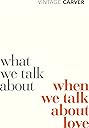
What We Talk About When We Talk About Love: Raymond Carver (Vintage Classics)
Product ID: 48440950
⏰Same-day Dispatch before 12 noon
📦NewMint Condition
🔄No-quibbles Returns
Desertcart purchases this item on your behalf and handles shipping, customs, and support to South Korea.
📚 Own the stories that defined a generation—don’t miss out on this literary gem!
What We Talk About When We Talk About Love is Raymond Carver’s influential 1980s short story collection, known for its spare style and deep exploration of human relationships. This Vintage Classics edition ships same day if ordered before noon, arrives in pristine new condition, and comes with guaranteed packaging and no-quibble returns, making it a perfect addition for discerning readers and collectors alike.

| Best Sellers Rank | 16,203 in Books ( See Top 100 in Books ) 676 in Short Stories (Books) 3,165 in Literary Fiction (Books) 4,831 in Contemporary Fiction (Books) |
| Customer Reviews | 4.2 out of 5 stars 3,068 Reviews |
I**N
Classic short stories from a brilliant writer
This is a great collection of short stories from Carver. They have his trademark sparse style and sense of realism and the characters are detailed and believable. The stories are simple but touch on serious and universal themes, developed without excessive prose and with strong dialogue. There are often some oddities that give the stories nice specificity and the sense of place in all of them is excellent. And the characters’ personality quirks make them stick in your mind long after you’ve put the book down.
C**B
Carver short stories
I enjoyed almost all of these stories, both the subject matter and Carver’s writing style. For a similar and excellent collection of American short fiction from the same period (early 1980s), I would recommend Liars in Love by Yates.
M**E
Minimalism a fine example
This book of short stories was recommended to me as a good example of minimalism. The stories are short and sharp as might be expected when considering that Raymond Carver is a writer known for his succinct text. I enjoyed the stories even though they are miserable and gloomy. The book has ecouraged me to read more about Carver himself.
T**T
Brevity is the soul of wit.
This slim paperback doesn’t look particularly impressive at first glance but it has had a significant influence on generations of writers since its publication in 1981 while also securing Carver a place in American literature. There is much to admire here particularly the lean, pared-to-the-bone prose that reduces storytelling to the barest number of words. This is more difficult than is commonly believed and every aspiring writer can learn something from Carver’s minimalist text. This simplicity of style disguises a complexity of meaning and grasping the message behind these stories is trickier than you might expect. Most left me with that baffled feeling you get when you fail to understand the punchline of a joke and I suspect that Carver does this on purpose to force the reader to think through what they’ve just read. There are a couple of exceptions to this formula where the shock-ending payoff really hits home and for me these are the standouts. Overall be prepared for a quick easy read followed by some long hard work trying to make sense of what just happened.
R**S
A Good Writer
Raymond Carver is a writer I like. He writes about the human condition wonderfully. If you like your fiction more action based, you might not enjoy his work—you may find it dull.
K**N
A LITTLE TO LEAN AND MEAN FOR MY TASTE
This is one of those books and one of those American writers like Tennessee Williams, Ernest Hemingway and F Scott Fitzgerald that I never read at the time. Not old enough; not interested or more likely, not mature enough to appreciate them. So as a consequence American culture, American mores and in particular a wide range of post-war American social and economic policies with the prime purpose I suspect of reinforcing the belief that individuals are responsible for their own destiny have rather passed me by. And I am not now interested in catching-up. It’s a series of [17] short stories. Can’t remember the last collection of short stories I read; was it Olive Kitteridge [Elizabeth Strout]? . . . [which I adored], so I am not against fiction in this format. All the reviewers refer to his pared-down writing style as if it is to be admired. One reviewer refers to the similarities between Carver and the singer/actor and songwriter, Tom Waites. Not a Tom Waites fan. They seem to have booze in common. So anyway, this is a novel comprising of bleak vignettes about men mostly blue collar, mostly drunks, mostly in broken or almost broken marriages in the American Mid-west in the sixties. It is an attempt I think to blend the particular and the universal, moving away from a straight narrative retelling in search of a larger truth. As I said it is very lean, which I do quite like although this is too big a dose for me: I think writing a short story well is pretty difficult.
A**R
Not for the fainthearted.
Fascinating, well written stories about complex relationships. Challenging and heart rending some of them.
N**G
Arrived the next day
Arrived quickly & in good condition
C**N
What we talk about when we talk about love
This book, just as the following mentioned book, contains short stories about the behavior of ordinary human beings, like you and me. The autor is known as the "American Chegov" and was in my opinion one of the best story tellers in the western world I enjoyed both books very much and provided good value for the money.
D**D
This is a short book with long echoes...
Book review of What We Talk About When We Talk About Love by Raymond Carver Carver’s short stories are quiet, spare, and deceptively simple. But they cut close to the bone. In What We Talk About When We Talk About Love, men and women circle the same human ache: the longing to be seen, chosen, and forgiven. Love here isn’t sentimental. It’s awkward, bruised, sometimes clumsy; and therefore recognisably real... What’s striking is Carver’s empathy for both sexes. His men are often rough-edged, stoic, and reluctant to express emotion, yet they aren't caricatures. They carry responsibility, guilt, loyalty, and a yearning to do right, even when they fail. That quiet endurance, the willingness to stay in the room with suffering, is a form of masculinity rarely celebrated today; but it's deeply human. The women, too, are portrayed with dignity: perceptive, weary, hopeful, and honest about the costs of love. There are no villains here, only people struggling to love well with their limited tools... From a Christian perspective, Carver’s work reads like a meditation on fallen humanity. Grace isn't preached, but its absence is keenly felt. The stories quietly remind us why forgiveness, covenant, and sacrificial love matter; because without them, love fragments into confusion and pain. These relationships would be enhanced through faith, and through belief. This is a short book (less than 180 pages) with long echoes...
C**A
Beginners e What we talk about when we talk about love
Não restam duvidam de que Raymond Carver é um escritor necessário — mesmo não sendo o tão apregoado minimalista que dizem ser. Porém, quando adquiri Beginners e What do we talk about when we talk about Love (original e mutilação), estava muito mais interessado na sua luta — não com as palavras, mas com seu editor, mistura de copidesque estilista e açougueiro, Gordon Lish, que, sem cerimônias e escrúpulos, transfigurou, por exemplo, o excelente conto A small, good thing, de 26 páginas, num resíduo de apenas 9, com o título The bath. Um massacre, felizmente reparado. carlos loria
P**I
Minimal
A fantastic and a very unique piece of literature. The language is all one reads a Carver for. Minimal, dry eyed, poignant.
E**O
I you havent read Raymond Carver yet....just go ahead
This author has the ability to translate the endlessly complexities in a love relationship With very few words from the author you as an reader know exactly whats going on between the couples.... Been there seen that got the T-Shirt Its everyday life in average surroundings nothing fancy or outlandish the scene is set for disappointment and despair and confusion and forgiveness
Trustpilot
2 weeks ago
4 days ago