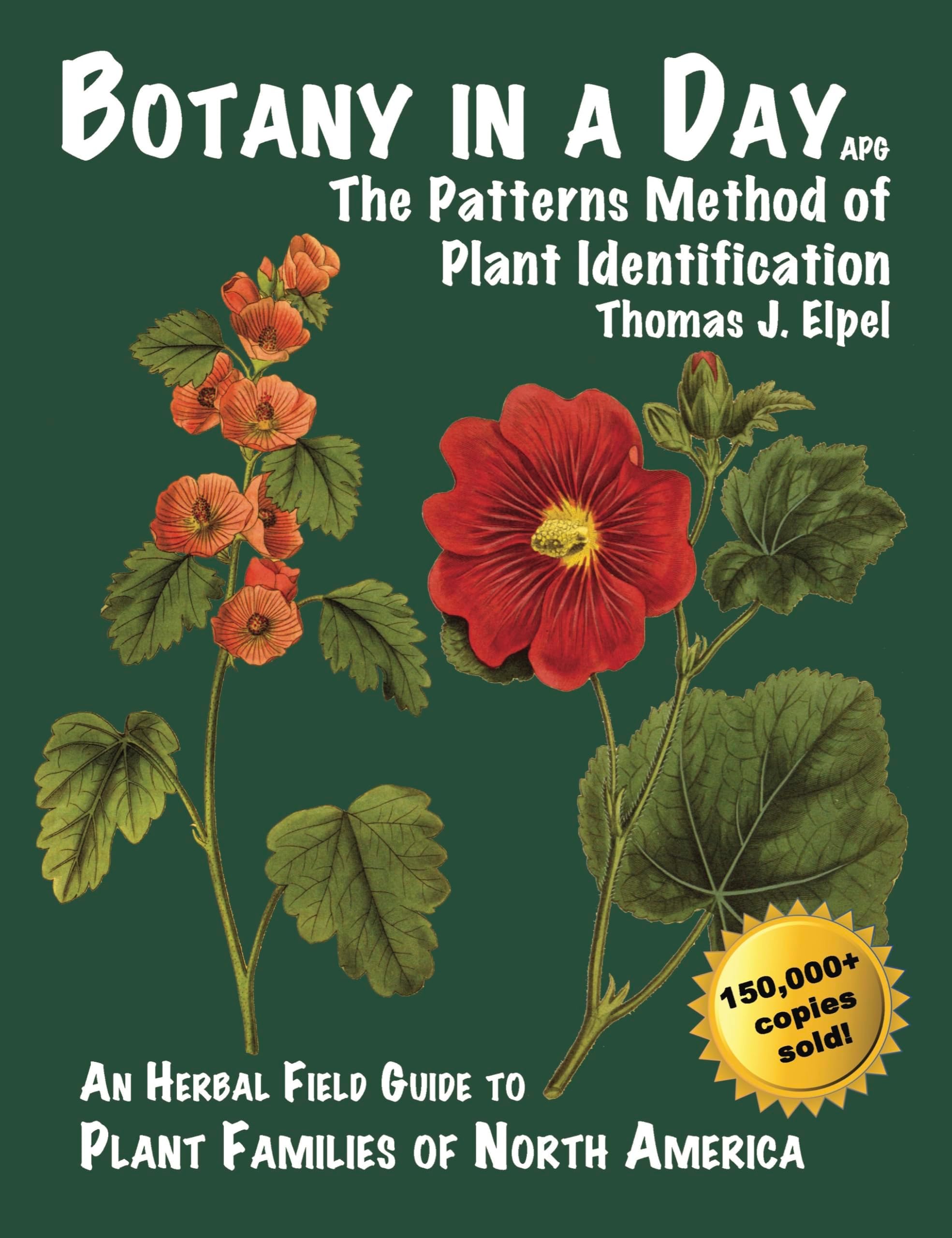
Botany in a Day: The Patterns Method of Plant Identification
Product ID: 48842333
Botany in a Day is now available in a full-color version. With more than 50,000 copies sold, this is a passport to identifying plants and their uses. Looking for a faster, easier, and engaging way to identify plants? Related plants have similar characteristics, and they often have similar uses. Rather than learning new plants one-at-a-time, it is possible to learn them by the hundreds, based on plant family patterns. Each family of related plants has unique patterns for identification. Learn to recognize these patterns, and discover them again and again in the plants you encounter. It is possible to instantly recognize a plant never before seen, and in many cases, to know its edible or medicinal properties on the spot-even before you have identified it down to the species! Botany in a Day is changing the way people learn about plants. A one-day tutorial introduces eight of the world's most common plant families, applicable to more than 45,000 species of plants. Master these eight patterns and have the skills to recognize an astonishing number of plants on any continent. Add to your repertoire by keying out entirely unknown plants and learning additional family patterns. Botany in a Day is principally written for North America, but used and adored by readers all over the world. It is used as a textbook in numerous universities, high schools, and herbal schools. This book is widely used in nature programs and promoted in national parks. Botany in a Day is your passport connection to nature and discovering the amazing world of plants! Review: This is a fabulous book and I recommend it for all people starting out in botany - This is a fabulous book and I recommend it for all people starting out in botany. This would have been a helpful addition to my studies for a Master in Ethnobotany. A fast and practical approach to botany. Review: The wildflower ID book I've always dreamt of. - This is the plant identification book I've always been dreaming of. Most plant identification guides give you a lot of complex information and leave you to work out how to absorb it and organise it in your head. The fact is that with most identification guides it's only by getting out in the field and keying out the plants you see that you build up that knowledge. However the problem with them can be overly technical language which more often than not causes you to require several attempts before getting it right, if at all. That's not the case with this book. It starts by giving you a grounding in the basic terminology that you need to know, and no more than is required (rather than having to be an expert in plant anatomy). As someone who has struggled with plant and flower anatomy in the past I just found that this book put it all together in a way that just lodged in my head and stayed there very quickly - from working out whether something is a dicot or a monocot, to being able to identify how many carpels a flower has. Before I purchased this book I was put off by the fact that it is focused on the plants of North America and that a review on this website mentioned a possible dangerous confusion between the common names of plants with the Americans having the same name for a safe plant over there as an entirely different species over here which is highly dangerous. However by focusing on the latin names rather than the common names that problem can be easily circumvented. Additionally, it's not a major issue that some of the species can only be found in North America as a large focus of the book is narrow identification down to specific families of plants, from which point you can focus in on that family using local field guides.
| Best Sellers Rank | 279,828 in Books ( See Top 100 in Books ) 967 in Nature References 1,760 in Garden Plants 10,620 in Popular Science |
| Customer Reviews | 4.8 out of 5 stars 2,357 Reviews |
A**R
This is a fabulous book and I recommend it for all people starting out in botany
This is a fabulous book and I recommend it for all people starting out in botany. This would have been a helpful addition to my studies for a Master in Ethnobotany. A fast and practical approach to botany.
I**E
The wildflower ID book I've always dreamt of.
This is the plant identification book I've always been dreaming of. Most plant identification guides give you a lot of complex information and leave you to work out how to absorb it and organise it in your head. The fact is that with most identification guides it's only by getting out in the field and keying out the plants you see that you build up that knowledge. However the problem with them can be overly technical language which more often than not causes you to require several attempts before getting it right, if at all. That's not the case with this book. It starts by giving you a grounding in the basic terminology that you need to know, and no more than is required (rather than having to be an expert in plant anatomy). As someone who has struggled with plant and flower anatomy in the past I just found that this book put it all together in a way that just lodged in my head and stayed there very quickly - from working out whether something is a dicot or a monocot, to being able to identify how many carpels a flower has. Before I purchased this book I was put off by the fact that it is focused on the plants of North America and that a review on this website mentioned a possible dangerous confusion between the common names of plants with the Americans having the same name for a safe plant over there as an entirely different species over here which is highly dangerous. However by focusing on the latin names rather than the common names that problem can be easily circumvented. Additionally, it's not a major issue that some of the species can only be found in North America as a large focus of the book is narrow identification down to specific families of plants, from which point you can focus in on that family using local field guides.
R**D
Helped me ID food and medicine plants around the world...
First and foremost, this is a book for learning Plant Families, as it's sub-title clearly states. It is not meant to be a field guide, as one negative reviewer complained about. Learning plants is hugely time consuming, and can seem daunting to the beginner. Yet every plant belongs within a family, and once you learn the "pattern of the family", it becomes a lot easier to narrow down your search. If you are a forager or herbalist this will be hugely important and extremely useful to you. Unlike botanists, who need to be "species specific". It will also help you ID plant families around the world. Not just in the UK or United States. I've used it to find plants in Africa, India and Asia! Foragers and herbalists oftentimes only need to know the family the plant belongs to. Simply because some species within a family are all edible EG. Mallow Family... With that in mind this book is the best there is on the market. And I own a huge number of different plant ID books, yet still keep returning to this fantastic resource time and again. This book has enabled me to identify food and medicine plants anywhere in the world... and I travel a lot! A fantastic resource for beginners who are interested in foraging for wild edible plants or wildcrafting herbs for plant medicine... as well as beginner botanists.
A**R
Lovely book
This book so really easy to read so plant families etc. Seem not so confusing. I would definitely recommend
D**E
With some work it should be worth the price paid. However, it isn't Botany in a day.
For years I was looking at printouts from the website and with some initial success identifying Mustard, none came after. So I decided to get the book as printing off colour photos for the plants was not practical. I expected the book would be simple but it has a complex way of presenting the first two chapters which are a mandatory read. I cannot understand why. And it also peddles Evolution theory heavily even though it is unnecessary and also unfounded. With such a bad start to a community I admired online I was about to regret this purchase, until I used the book to identify a Geranium family plant in the garden.
A**R
Fantastic Course Book
Great book to support my foundation herbalism course
E**E
A great introduction to the plant world
I gave this as a gift to my boyfriend who has no scientific background but got interested in plants and he absolutely loved it. I read a few pages too and I appreciated that the author managed to create a pretty extensive guide while still keeping it personal and very easy to read.
M**S
Mrs J Marks
Received this item yesterday, it is a Christmas present for my husband. Please remove it from Bev Marks wish list
I**S
Libro interesante, pena no haber traducción al español
Falta de traducción
B**O
Complete and easy to read
The book is able to guide the novice through the complexity of the botanical world: it starts by providing very simple and concise background knowledge and then it gradually goes deeper into more detailed information. The author puts enormous efforts in trying to explain himself in the clearest way possible, producing an excellent introduction for the newbies and a valuable resource the experienced botanist can refer to.
A**I
Need some improvement
Still need improvement
B**O
Excelente!
Um ótimo livro pra quem tem um pouco de noção de botânica e quem já é experiente na área.
G**A
Come damaged
Overall good book but came slightly damaged, the pages have been slightly stuck to each other with some pink unknown substance.
Trustpilot
3 weeks ago
1 month ago