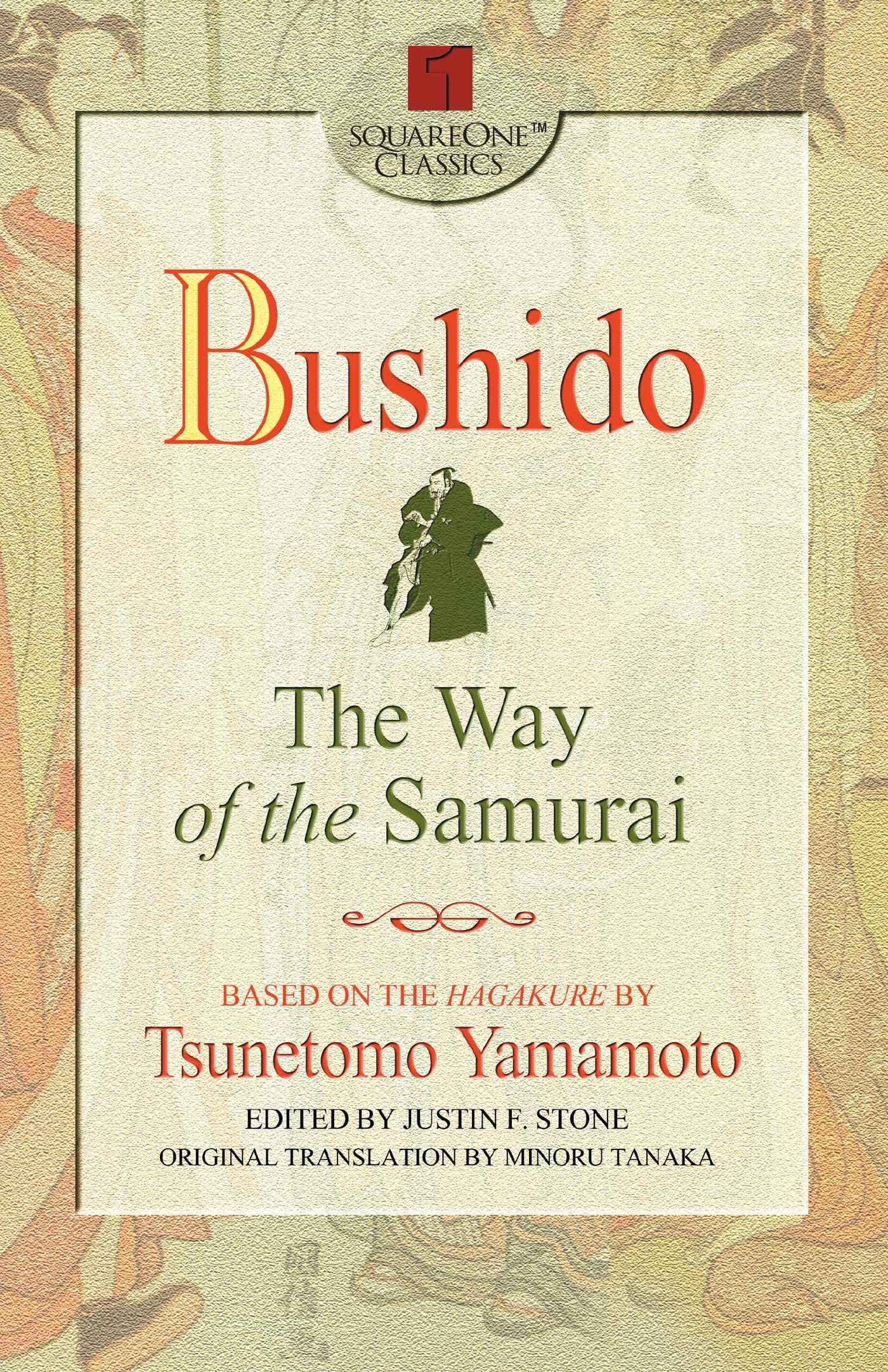
Bushido: The Way of the Samurai (Square One Classics)
Buy anything from 5,000+ international stores. One checkout price. No surprise fees. Join 2M+ shoppers on Desertcart.
Desertcart purchases this item on your behalf and handles shipping, customs, and support to South Korea.
Description
- New
- Mint Condition
- Dispatch same day for order received before 12 noon
- Guaranteed packaging
- No quibbles returns
In eighteenth-century Japan, Tsunetomo Yamamoto created the Hagakure, a document that served as the basis for samurai warrior behavior. Its guiding principles greatly influenced the Japanese ruling class and shaped the underlying character of the Japanese psyche, from businessmen to soldiers. Bushido is the first English translation of this work. It provides a powerful message aimed at the mind and spirit of the samurai warrior. With Bushido , one can better put into perspective Japan's historical path. Review: HAPPY - VERY HAPPY Review: Bushido life. - Bushido is very honorable system.
Specifications
| Best Sellers Rank | 497,747 in Books ( See Top 100 in Books ) 609 in Eastern Mystical Philosophy (Books) 1,127 in Martial Arts (Books) |
| Customer Reviews | 4.5 out of 5 stars 414 Reviews |
Reviews
A**N
HAPPY
VERY HAPPY
A**A
Bushido life.
Bushido is very honorable system.
G**E
Four Stars
good book
J**L
Great book
Historical refference
F**X
... simple translation of a very complex philosophy makes for easy reading and inspires further research
A simple translation of a very complex philosophy makes for easy reading and inspires further research.
A**B
Interesting
I love the ancient ways of thinking and feel the book put many of those thoughts into quite a readable format.
R**D
idealized self aggrandisement that covers over ugly realities
This is one of those basic tracts that is given to those who move to Japan, as a view into how things are supposed to work. While it sounds very good when you read it - there are indeed wonderful codes to live by that are elegantly expressed - once you have lived there for a few months you see that it has less (and more) to do with everyday life than meets the eye. Afterall, there are two levels when dealing with Japan: Tatemae, the syrupy feel-good version of things that saves everyone's "face", and Honne, which is the way people really feel about things; the former gets pounded into your head at the office, the latter you elicit slowly when you go to the bars after work and get drunk. However, Tatemae is a useful tool for bureaucracies, as it is the official way things are supposed to appear to function, complete with a code for the behavior that one should simulate, no matter how differently (or alienated) one feels underneath. The "Bushido" is the purest Tatemae, an instrument of control that is wielded but has little personal meaning beyond that. In my opinion - and I witnessed this often while living in Japan - all the talk of honor and value and loyalty is just that: mere words to mask brutal authoritarianism and mindless obedience to one's place in the hierarchy. As such, there are very interesting things to learn here about how people choose (or submit to a compulsion from without) to behave, but it will not teach the reader about how they feel inside. Recommended, but don't take it at face value. Indeed, if you accept this as reality, it is the same as believing that medieval knights lived strictly in accordance with chivalric codes and the Chritian ideal, I wish I could sound more inspired and interested about Japan, but having lived there, I know the ugliness underneath from experience.
N**Y
Five Stars
Small thin but excellent little book
J**F
A classic text
A great read for anyone studying Bushido.
C**N
Creating Super-men...
The Hagakure was dictated by Yamamoto and later scribed verbatim by Tsuramoto Tashiro over a period of seven years (1710-1716) in which they lived together in a far off mountain retreat in Japan. Tashiro was sworn to secrecy over the texts contents because the author believed the teachings to be far too radical and too militaristic for the then peaceful times during the Shogunate Rule (1603-1867). During this time of unusual calmness, the teachings of Buddhism and the ethical codes of Confucius permeated Japan, enriching every aspect of her culture from arts to politics. But the old Samurai, Yamamoto, believed (though acknowledging the Buddha and the tenets of Confucius) that the Samurai, as a class, had become effeminate and weak. Yamamoto's basic premise was that the Samurai could not serve two masters (religion and the Clan) and by doing so had become less effective. The service of the lord and the clan should come first, and once this was done, one could then amuse oneself with the studies of the humanities. In writing the Hagakura, Yamamoto hoped that someday the Samurai would return to the purity of its strong and compassionate past. More than this, however, he wanted to create a class of super-men. As Tanaka explains in his historical overview: "In his (Yamamoto) talks, he wanted every Samurai to become a super-man. But he wanted super-men who were capable of gaining great power, not for their own self-interest, but for the interest of the clan. He wanted super-men who were capable of operating effectively for the solidarity of the clan." (xv) This is the key to the power and longevity of the way of the Samurai, and that is its notion of devout loyalty to the Lord of the Clan and the Clan itself. All other concerns in life are simply deemed irrelevant. Moreover, that other essential dictum, do your duty to your parents. And lastly, but most importantly, ensuring compassion for all sentient beings and the devout service of others. By devoting oneself to these vows of allegiance and practicing them, Yamamoto believed the Samurai would attain super-man status. This particular translation is divided into eleven books, covering personal, social and philosophical advice from How to Excel Above Others, How to Conduct Yourself, Spiritual Vigour and Conceal Your Wisdom. These titles really speak for themselves. This is an excellent text to prime oneself on the foundational tenets of the way of the Samurai and a good introduction to the history of Japanese culture and thought in terms of social discourse and philosophical perspective.
J**A
Eigenartiger Bushidō sehr verständlich gemacht
Die Erklärungen, die vor allem vor dem eigentlichen Buch, dem tatsächlichen Hagakure, niedergeschrieben wurden, haben enorm geholfen, die tatsächliche Aussage des Buches und vor allem des weltbekannten Zitates "Bushidō is about death", zu illustrieren. Auch wenn Yamamoto mit seiner Ansicht über den Charakter eines Samurai (wobei er Ruf & Ehre als höchste Werte setzt) ganz gewiß noch die alten, längst vergangenen Kriegerehren von der Kamakura- bis hin zur Sengoku-Periode, ehrt und versucht, sie als Stützpfeiler für die, seiner Meinung nach, verweichlichten und effimierten Samurai der friedlichen Edō-Periode, in welcher er ja selbst lebte, umzuschreiben, um so den Geist des Kriegers weiterhin, auch zur Friedenszeit, aufrechterhalten zu können. Das aber vor allem seine Ansicht über Ruf & Ehre in einer immermehr zivil werdenden Gesellschaft eigentlich unumsetzbar sind, hat dazu geführt, dass das Hagakure von der Mehrheit aller Menschen, auch von der kaiserlichen Armee später, bruchstückweise und kontextlos (Fehl-/Falsch-) Interpretiert wurde. Kurzum, es ist ein sehr eigenartiges, wenngleich auch tiefgreifendes Werk, dass viel mehr als die obengenannte Aussage zu bieten hat...und ganz gewiß kann manch' eine Lehre selbst heute noch Verwendung, selbst im nicht-japanischem Westen, finden. p.s. Das Englisch ist überraschend einfach gehalten (für die breite Masse, ganz im Gegenteil zu manch anderer Übersetzung)
T**D
Bushido Is an easy read of a samurai's code.
The book of Bushido is made up of a number of rules the samurai Tsunetomo Yamamoto taught his disciple, Tsuramoto Tashiro. Over the period of seven years In which Tashiro lived with Yamamoto in his mountain retreat, he recorded what the old samurai taught him. This record of Yamamoto's rules for samurai was published by Tashiro and became known as Bushido. While I strongly disagree with some of these rules or lessons, I found quite a few that a person might want to learn well and make part of their own code of behavior. I know I will. Furthermore, Bushido gives us a good view of the cultural makeup of the Japanese people of today, many of whom do their best to follow the way of Bushido. All-in-all, I found this translation of the way of Bushido easy to follow, easy to read through quickly and quite interesting. I would highly recommend this small book to anyone wishing to understand the Japanese psyche and for anyone seeking a bit of wisdom.
M**S
Fear the warrior who only unsheathe their sword seldomly
The book is a must read, you gain a self realization that we can do more with our lives. Take the essence of Bushido and apply in a modern world.
Common Questions
Trustpilot