
Buy anything from 5,000+ international stores. One checkout price. No surprise fees. Join 2M+ shoppers on Desertcart.
Desertcart purchases this item on your behalf and handles shipping, customs, and support to South Korea.
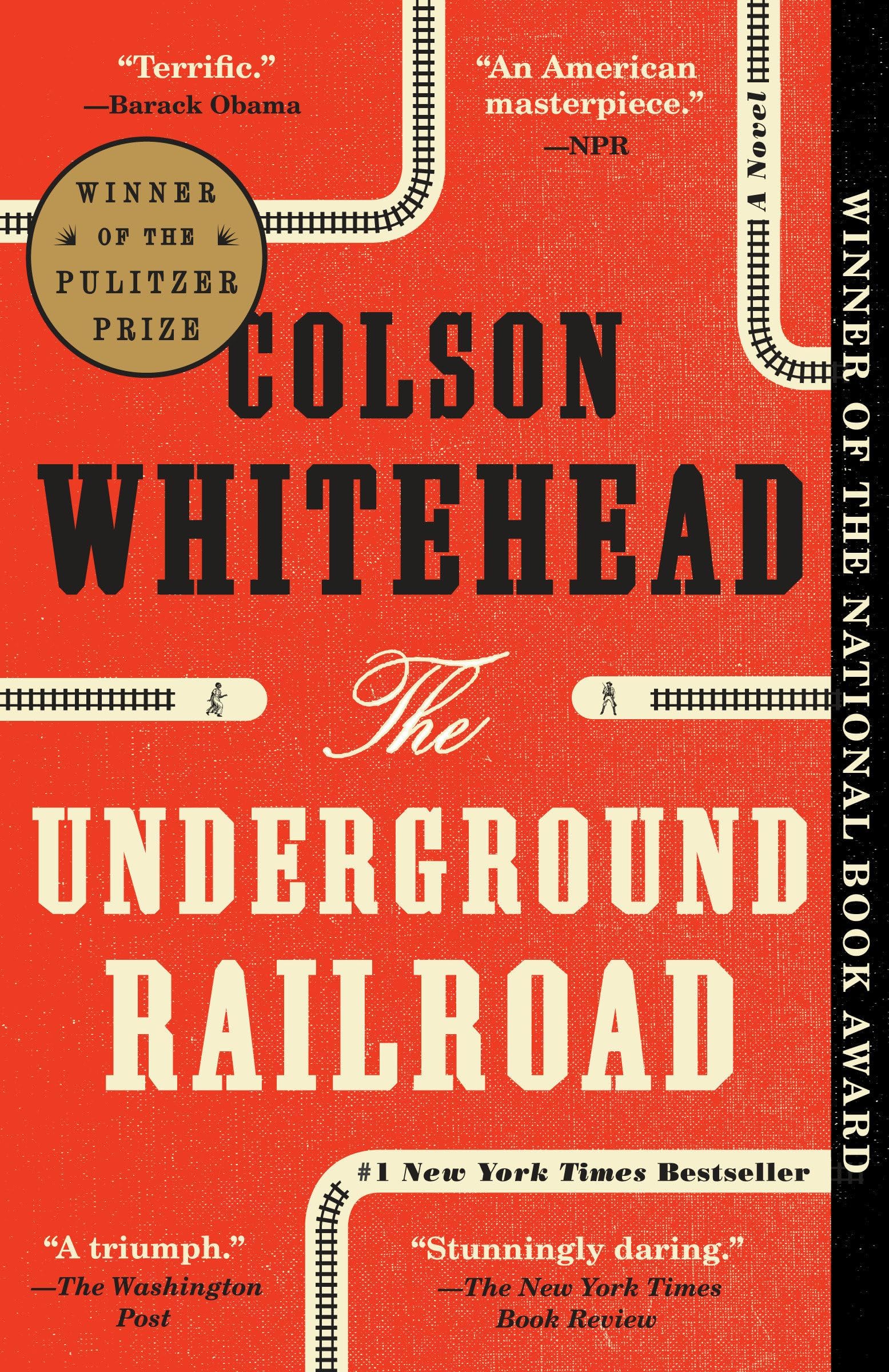
#1 NEW YORK TIMES BESTSELLER โข PULITZER PRIZE WINNER โข NATIONAL BOOK AWARD WINNER โข "An American masterpiece" (NPR) that chronicles a young slave's adventures as she makes a desperate bid for freedom in the antebellum South. One of The New York Times โs 10 Best Books of the 21st Century โข A Kirkus Reviews Best Fiction Book of the Century โข A Los Angeles Times Best Fiction Book of the Last 30 Years The basis for the acclaimed original Prime Video series directed by Barry Jenkins. Cora is a slave on a cotton plantation in Georgia. An outcast even among her fellow Africans, she is on the cusp of womanhoodโwhere greater pain awaits. And so when Caesar, a slave who has recently arrived from Virginia, urges her to join him on the Underground Railroad, she seizes the opportunity and escapes with him. In Colson Whitehead's ingenious conception, the Underground Railroad is no mere metaphor: engineers and conductors operate a secret network of actual tracks and tunnels beneath the Southern soil. Cora embarks on a harrowing flight from one state to the next, encountering, like Gulliver, strange yet familiar iterations of her own world at each stop. As Whitehead brilliantly re-creates the terrors of the antebellum era, he weaves in the saga of our nation, from the brutal abduction of Africans to the unfulfilled promises of the present day. The Underground Railroad is both the gripping tale of one woman's will to escape the horrors of bondageโand a powerful meditation on the history we all share. Review: A Contemporary Masterpiece - When I first came across Colson Whiteheadโs The Underground Railroad, I honestly wondered what a contemporary writer could add to the canon of antebellum literature. Could a Harvard graduate born after Dr. Kingโs assassination really provide any insight beyond that which had already been provided by many who had actually lived it? Contemporary African American writers have shown a tendency to delve into the psychological and spiritual lives of African Americans during slavery, and this novel is certainly a reflection of that trend, as Whiteheadโs portrayal of a slave escape (an unfair shortening of what the novel truly is) is not only riveting storytelling but also a take on the psyche of the American slave that is fresh and different. When I say it is different, I hesitate: It is, in many ways, a tale of the deplorable conditions of slavery that are all too familiar. The difference is the absolute bleakness with which Whitehead overwhelms the reader in a setting that gives birth to both his narrative and the psyches of his characters. Largely told through the limited third person perspective of the protagonist Cora (though other charactersโ perspectives are also employed), the bleakness of her and her peopleโs lot emanates from the pages: bleak circumstances, little hope, and only momentary rests in a landscape rife with violence, danger, hate, and darkness. Indeed, Coraโs notion that the world seemed โAs ifโฆ there were no places to escape to, only places to fleeโ is a notion the reader retains throughout this work. What Whitehead has done is recreate a landscape similar to the one found in Zone One, a zombie tale that, like the novel reviewed herein, defies the conventions of its genre. The barren and bleak wasteland containing the possibility of danger at every turn, with only moments of rest in between episodes of danger, is reminiscent of The Underground Railroad. Such a world is expected in a zombie tale, and yes, dangers were possible at every turn for escaped slaves, but Whitehead brings them to life so masterfully that it is sometimes gut wrenching to turn the pages. Just as in Zone One, we know any respite or peace found in The Underground Railroad is, as its main characters also are, in constant danger. โSometimes a slave will be lost in a brief eddy of liberation,โ the narrator remarks, and time and again, the reader gets lost in the same reverie, only for the ugly horror looming in the background to intrude upon both the charactersโ and the readerโs respite. Whiteheadโs prose is refreshing in its descriptiveness. His focus on darkness, blackness, and barrenness in many of his scenes adds to the suspenseful effect of ever-present danger. His haunting description of burned fields and mountains in Tennessee is among the most vivid and undeniably memorable of the novel. The biggest complaint by negative reviewers on desertcart is that it is โpoorly written,โ mostly referring to Whiteheadโs tendency to use sentence fragments within his prose, yet these are typically well-placed and rhythmical, adding a verse-like effect and sometimes adding the effect of fragmentation of thoughts, speech, etc. Human beings often think and speak in fragments, and these seem fitting for Whiteheadโs chosen point-of-view, making his characters more authentic. The technique also emphasizes the fragmented society about which he writes. In short, everything Whitehead does works together masterfully towards a single effect even Poe would admire, and the chilling horror in the aforementioned mountainside scenes even rivals Poeโs masterful descriptive powers. There is yet another similarity to Zone One: the idea of โotherness.โ In Zone One, Whitehead โchallenges readers to think about how we dehumanize others, how society tramples and consumes individuals, and how vulnerable we all are" (from the Norton Anthology of African American Literature, Vol. 2, "The Contemporary Period.) The Lieutenant, a character in Zone One, says of zombies, โMustnโt humanize them. The whole thing breaks down unless you are fundamentally sure that they are not you." Clearly the whites depicted in The Underground Railroad, save the ones involved with the railroad itself, had applied that logic to African Americans. Accepting such a lie not only condones but also encourages the horrific violence Whitehead describes, violence with an unfortunate historical basis. In short, The Underground Railroad is a contemporary masterpiece. Whiteheadโs โAcknowledgementsโ section references several works to which he feels indebted; it is doubtless that he could have added hundreds more. While indebted to slave narratives, Whitehead has the ability to describe the realities of slavery with its ugly and naked truths woven into a nightmarish reality that is perhaps closer to depicting the psyche of enslaved men and women who longed for freedom than those primary sources whose audience shaped their purpose and limited their range of expression. Whitehead resists employing flowery prose and cliche figures of speech to attempt to depict what his setting, a claustrophobic nightmare characterized by darkness and ugliness and dotted with people just as ugly, does for him. The story is breathed forth from this setting almost effortlessly. To call this a bleak book without hope, though, would be misguided. At one point, during an exploration of a library, Cora finds many stories of her people, โthe stories of all the colored people she had ever known, the stories of black people yet to be born, the foundations of their triumphs.โ The Underground Railroad is an important and significant contribution to these stories of the African American experience -- a story of struggles and triumphs, nightmares and dreams, hopes and fears. The Underground Railroad, like numerous other important African American works, makes room for hope and endurance in the midst of adversity and a universe that, though it may indifferently overwhelm its inhabitants, is still one in which we must live. Review: A fine book all in all - The Underground Railroad โ Colson Whitehead The most compelling part of Colson Whiteheadโs The Underground Railroad is the discussion of survival of a beautiful mind through terrible adversity. Coraโs matter-of-fact description of the trials she suffersโhistrionics would do no goodโand her understanding that to survive is to win against the forces of darkness is a commentary of the brutality of slavery no screed could better. I am an old white male. Slavery has always been a repulsive condition โฆ but a โcondition.โ I canโt know how close Whiteheadโs imagined reality is to the individual human reality of keeping hope alive when there is no reason to, but Cora has put a human face on the horrible condition I have imagined since childhood. The writing is economical, clear and sometimes just beautiful. The villain is as much cottonโโan engine that did not stop, its hungry boiler fed with bloodโโas it is the enslavers and the Ridgeways. Colson says, โAt the auction block they tallied the souls purchased at each auction, and on the plantations the overseers preserved the names of workers in rows of tight cursive. Every name an asset, breathing capital, profit made flesh. The peculiar institution made Cora into a maker of lists as well. In her inventory of loss people were not reduced to sums but multiplied by their kindnesses. People she had loved, people who had helped her.โ A whole new take on the concept of human capital. There are aspects of the book that are either problems the writer and editors didnโt correct or are quite possibly an instance of a brilliant writer deciding to ignore the rules. In main line reviews, there is much mention made of the physical underground railroad. I found that helpful, because it loosed the bonds of history to remind me that the story is essentially science fiction. Tempting to call it historical fiction, but historical fiction almost always weaves fictional material around the true historical timeline. Whitehead did not do this, and it occasionally caused unnecessary trouble. I donโt think South Carolina had an especially paternalistic view of slaves and former slaves, but Colsonโs imagining of it set the stage for what really happened at Tuskegee starting in the 1930โs. Iโm sure there were some folks worried about an exploding Black population, but that seemed a weak pretext to base an (imaginary) doctrine on. But the railroad was always in the background, reminding us of the fictive basis of the novel. Other throwaway time disjunctures donโt work so well, e.g., Cora speaks of โthe rags that made everyone happy.โ While Joplin said the โraggedโ playing style had been around for a while, nobody called it ragtime until about 1895. So, why take our train of thought onto that side track when we are being regularly jolted between historical events, back and forward movement (e.g., Caesarโs backstory reappears for no particular reason ยพ through the book)? Also, there never was a credible reason Randall was so fixated on Cora, except to keep the indefatigable Ridgeway on her trail. Finally, I thought Whitehead was enslaved by his structure. Cora is pragmatic, always looking forward despite terrible loss. We donโt get inside her head to see her thoughts much, because to be true to his character must let her have her barricades against the outside world. I wish heโd let us in a bit more. Ah, well. The book is an often beautifully written, jumping, jarring, jolting ride very much like Coraโs ride under ground. A fine book all in all.


| Best Sellers Rank | #11,315 in Books ( See Top 100 in Books ) #16 in Black & African American Historical Fiction (Books) #535 in Literary Fiction (Books) |
| Customer Reviews | 4.4 out of 5 stars 70,351 Reviews |
B**N
A Contemporary Masterpiece
When I first came across Colson Whiteheadโs The Underground Railroad, I honestly wondered what a contemporary writer could add to the canon of antebellum literature. Could a Harvard graduate born after Dr. Kingโs assassination really provide any insight beyond that which had already been provided by many who had actually lived it? Contemporary African American writers have shown a tendency to delve into the psychological and spiritual lives of African Americans during slavery, and this novel is certainly a reflection of that trend, as Whiteheadโs portrayal of a slave escape (an unfair shortening of what the novel truly is) is not only riveting storytelling but also a take on the psyche of the American slave that is fresh and different. When I say it is different, I hesitate: It is, in many ways, a tale of the deplorable conditions of slavery that are all too familiar. The difference is the absolute bleakness with which Whitehead overwhelms the reader in a setting that gives birth to both his narrative and the psyches of his characters. Largely told through the limited third person perspective of the protagonist Cora (though other charactersโ perspectives are also employed), the bleakness of her and her peopleโs lot emanates from the pages: bleak circumstances, little hope, and only momentary rests in a landscape rife with violence, danger, hate, and darkness. Indeed, Coraโs notion that the world seemed โAs ifโฆ there were no places to escape to, only places to fleeโ is a notion the reader retains throughout this work. What Whitehead has done is recreate a landscape similar to the one found in Zone One, a zombie tale that, like the novel reviewed herein, defies the conventions of its genre. The barren and bleak wasteland containing the possibility of danger at every turn, with only moments of rest in between episodes of danger, is reminiscent of The Underground Railroad. Such a world is expected in a zombie tale, and yes, dangers were possible at every turn for escaped slaves, but Whitehead brings them to life so masterfully that it is sometimes gut wrenching to turn the pages. Just as in Zone One, we know any respite or peace found in The Underground Railroad is, as its main characters also are, in constant danger. โSometimes a slave will be lost in a brief eddy of liberation,โ the narrator remarks, and time and again, the reader gets lost in the same reverie, only for the ugly horror looming in the background to intrude upon both the charactersโ and the readerโs respite. Whiteheadโs prose is refreshing in its descriptiveness. His focus on darkness, blackness, and barrenness in many of his scenes adds to the suspenseful effect of ever-present danger. His haunting description of burned fields and mountains in Tennessee is among the most vivid and undeniably memorable of the novel. The biggest complaint by negative reviewers on Amazon is that it is โpoorly written,โ mostly referring to Whiteheadโs tendency to use sentence fragments within his prose, yet these are typically well-placed and rhythmical, adding a verse-like effect and sometimes adding the effect of fragmentation of thoughts, speech, etc. Human beings often think and speak in fragments, and these seem fitting for Whiteheadโs chosen point-of-view, making his characters more authentic. The technique also emphasizes the fragmented society about which he writes. In short, everything Whitehead does works together masterfully towards a single effect even Poe would admire, and the chilling horror in the aforementioned mountainside scenes even rivals Poeโs masterful descriptive powers. There is yet another similarity to Zone One: the idea of โotherness.โ In Zone One, Whitehead โchallenges readers to think about how we dehumanize others, how society tramples and consumes individuals, and how vulnerable we all are" (from the Norton Anthology of African American Literature, Vol. 2, "The Contemporary Period.) The Lieutenant, a character in Zone One, says of zombies, โMustnโt humanize them. The whole thing breaks down unless you are fundamentally sure that they are not you." Clearly the whites depicted in The Underground Railroad, save the ones involved with the railroad itself, had applied that logic to African Americans. Accepting such a lie not only condones but also encourages the horrific violence Whitehead describes, violence with an unfortunate historical basis. In short, The Underground Railroad is a contemporary masterpiece. Whiteheadโs โAcknowledgementsโ section references several works to which he feels indebted; it is doubtless that he could have added hundreds more. While indebted to slave narratives, Whitehead has the ability to describe the realities of slavery with its ugly and naked truths woven into a nightmarish reality that is perhaps closer to depicting the psyche of enslaved men and women who longed for freedom than those primary sources whose audience shaped their purpose and limited their range of expression. Whitehead resists employing flowery prose and cliche figures of speech to attempt to depict what his setting, a claustrophobic nightmare characterized by darkness and ugliness and dotted with people just as ugly, does for him. The story is breathed forth from this setting almost effortlessly. To call this a bleak book without hope, though, would be misguided. At one point, during an exploration of a library, Cora finds many stories of her people, โthe stories of all the colored people she had ever known, the stories of black people yet to be born, the foundations of their triumphs.โ The Underground Railroad is an important and significant contribution to these stories of the African American experience -- a story of struggles and triumphs, nightmares and dreams, hopes and fears. The Underground Railroad, like numerous other important African American works, makes room for hope and endurance in the midst of adversity and a universe that, though it may indifferently overwhelm its inhabitants, is still one in which we must live.
J**S
A fine book all in all
The Underground Railroad โ Colson Whitehead The most compelling part of Colson Whiteheadโs The Underground Railroad is the discussion of survival of a beautiful mind through terrible adversity. Coraโs matter-of-fact description of the trials she suffersโhistrionics would do no goodโand her understanding that to survive is to win against the forces of darkness is a commentary of the brutality of slavery no screed could better. I am an old white male. Slavery has always been a repulsive condition โฆ but a โcondition.โ I canโt know how close Whiteheadโs imagined reality is to the individual human reality of keeping hope alive when there is no reason to, but Cora has put a human face on the horrible condition I have imagined since childhood. The writing is economical, clear and sometimes just beautiful. The villain is as much cottonโโan engine that did not stop, its hungry boiler fed with bloodโโas it is the enslavers and the Ridgeways. Colson says, โAt the auction block they tallied the souls purchased at each auction, and on the plantations the overseers preserved the names of workers in rows of tight cursive. Every name an asset, breathing capital, profit made flesh. The peculiar institution made Cora into a maker of lists as well. In her inventory of loss people were not reduced to sums but multiplied by their kindnesses. People she had loved, people who had helped her.โ A whole new take on the concept of human capital. There are aspects of the book that are either problems the writer and editors didnโt correct or are quite possibly an instance of a brilliant writer deciding to ignore the rules. In main line reviews, there is much mention made of the physical underground railroad. I found that helpful, because it loosed the bonds of history to remind me that the story is essentially science fiction. Tempting to call it historical fiction, but historical fiction almost always weaves fictional material around the true historical timeline. Whitehead did not do this, and it occasionally caused unnecessary trouble. I donโt think South Carolina had an especially paternalistic view of slaves and former slaves, but Colsonโs imagining of it set the stage for what really happened at Tuskegee starting in the 1930โs. Iโm sure there were some folks worried about an exploding Black population, but that seemed a weak pretext to base an (imaginary) doctrine on. But the railroad was always in the background, reminding us of the fictive basis of the novel. Other throwaway time disjunctures donโt work so well, e.g., Cora speaks of โthe rags that made everyone happy.โ While Joplin said the โraggedโ playing style had been around for a while, nobody called it ragtime until about 1895. So, why take our train of thought onto that side track when we are being regularly jolted between historical events, back and forward movement (e.g., Caesarโs backstory reappears for no particular reason ยพ through the book)? Also, there never was a credible reason Randall was so fixated on Cora, except to keep the indefatigable Ridgeway on her trail. Finally, I thought Whitehead was enslaved by his structure. Cora is pragmatic, always looking forward despite terrible loss. We donโt get inside her head to see her thoughts much, because to be true to his character must let her have her barricades against the outside world. I wish heโd let us in a bit more. Ah, well. The book is an often beautifully written, jumping, jarring, jolting ride very much like Coraโs ride under ground. A fine book all in all.
M**E
A Haunting Bold Account of Slavery and Escape Via a Virtual Underground Railroad
A work of amazing scope and breadth, shocking in the brutality of events, and so pertinent to politics and race discussions being held today. This is an important piece of literature reminding Americans of our history, the beginnings of race relations in our country, and you can follow this thread out to today and realize that we still have a long way to go. I love that Michelle Obama reminded us that the white house was built by slaves, at the DNR earlier this month, a fact that is also mentioned in this book. Our government is literally built on slavery. โWhite folk eat you up but sometimes colored folk eat you up, too.โ Cora is the protagonist of the novel, born on a Georgia cotton plantation, whose mother runs away from the plantation while Cora is still young. Cora is mistreated by the slave owners and fellow slaves alike, being shunned, raped, whipped, and degraded in every way seemingly possible. She is labelled a stray. The horrors she and others face on the plantation at the outset of this novel are shocking in their rendering and brutality. โWith strategic sterilization โ first the women but both sexes in time โ we could free them from bondage without the fear that theyโd butcher us in our sleep.โ Caesar, a fellow slave, approaches her with an escape plan and she accepts. The book follows Coraโs tortuous escape route on a literal underground railroad, bringing a magical element into the novel. This isnโt the only time that Colson Whitehead takes liberty with historical elements. Each stop along the railroad highlight different aspects of African American history, that in reality may have occurred in vastly different times and places. While Cora and Caesar are in South Carolina, the Tuskegee experiment is being conducted on the black population, an event that in history does not occur until much later, 1932-1972, with penicillin becoming available for the treatment of syphilis in 1947. It was also here in South Carolina, where Cora is offered sterilization and is asked to help persuade the other blacks living there to accept this measure. โIn North Carolina, the negro race did not exist except at the end of ropes.โ Again, the fear many whites have of blacks is manifested in hatred and horrific acts. The North Carolinians in the novel abolished slavery by abolishing blacks from the state; those who did not leave willingly were hung along the โFreedom Trail,โ as decided by the โJustice Convention.โ Such ironical terms are attached to such atrocities to emphasize the justification involved. โBut they were prisoners like she was, shackled to fear.โ Those who aid Cora are subjected to the same fate as blacks. Whitehead tackles many heavy issues in this novel, even religion. Cora sees paradox and hypocrisy in the bible. Ridgeway and other use the bible to find justification for their cause and actions. It is interesting to me the continuing theme of religion, something that many people find such comfort and peace in, also becomes a tool or justification for divisiveness and war. In Tennesee, Whitehead tackles the treatment of Native Americans. โManifest Destinyโ is cited as the ultimate narcissistic doctrine of self justification for the mistreatment and displacement of another race. Some chapters are named for the location in which they occur, but others are named after a character in the book, to get better insight into their mindset and thinking. Interestingly and unsurprisingly, the thugs of society, found purpose in becoming slave catchers. Homer never received his own chapter, and this leaves the reader wondering why a free black would choose to spend his life working and living alongside Ridgeway, a monstrous slave-catcher. Valentineโs Farm, in Indiana, becomes a relative utopia, where blacks can live freely and share ideas, at least for a time. Lander states, โAnd America, too, is a delusion, the grandest one of all. The white race believes โ that it is their right to take the land. To kill the Indians. Make war. Enslave their brothers. This nation shouldnโt exist, if there is any justice in the world, for its foundations are murder, theft, and cruelty. Yet here we are.โ These words are so important. Whiteheadโs words and message throughout this novel are direct, strong, and sweeping. We cannot be blind to our past. We cannot repeat the past by creating a culture of fear. We must live with our past, acknowledge our past and continue to make peace with it. There is so much to take in with this novel โ the brutality of slavery and treatment of blacks outside of slavery, the kindness shown by those who were willing to risk their lives to help, the feeling that there is nowhere to escape to, only places to flee, the deeply seated racial prejudice and violence that continues, and so much more. I highly recommend this book to everyone! It is hugely pertinent to current times, beautifully rendered, and brilliant. There is so much to this novel, that I had to sit and think about it for days before attempting to put thoughts into a review. It is excellent material for discussion. For discussion questions, please see book-chatter.com
J**E
A powerful, astonishing novel that finds more truth in its magical realism than a literal story ever could have allowed
If all Colson Whiteheadโs remarkable The Underground Railroad had to offer was its central conceit โ in which the โUnderground Railroad,โ a covert, loose organization that worked to help slaves in the Confederacy get to freedom, becomes a literal subterranean rail network โ that might almost be enough to capture the imagination and make the book great. Because, in short, what this allows Whitehead to do is tell an age-old story โ the efforts of a runaway slave to escape โ in a way that feels like little else out there, bringing new life to a story that none of us can ever afford to forget. Itโs a minor tweak to reality, but it gives the story a unique, odd feel, making literal the astonishing work that went into saving these people. So, yeah, that might be enough. But luckily for us all, Whitehead has more on his mind than just that one conceit. Instead, Whitehead turns this flight for freedom into a modern day Odyssey, letting each stop along the way become an entirely different narrative in the life of slavery, Americaโs race relations, prejudice, and fear. And the result is a sprawling, strange, haunting novel, one whose separate episodes combine to make something far more fascinating and complex than any one story might have been able to do on its own. For instance, a more traditional slave escape narrative could never contain the subtly wrong paradise that feels at first like heaven on Earth, only to have Whitehead slowly turn that world on its head. You wouldnโt have the nightmarishly violent community that has purged itself of African-Americans in the most horrific way possible; nor would you have the beauty of acts of kindness that come when least expected. In Whiteheadโs capable hands, the journey becomes a more complex one, echoing back and forth through time as he takes on racism not just as an explicit force of slavery, but as a much more insidious, subtle evil that can hide behind peopleโs smiles. In other words, itโs not just the slave catchers we need to fear; itโs those for whom help means condescension and manipulation. Make no mistake, though; this is undeniably a book about slavery, and one that deals with the horrors of the institution without blinking or flinching. Violence is casual and brutal, with torture being commonplace and almost barely worthy of mention. And while our heroineโs plantation is known for its cruelty, that doesnโt mean that itโs any more cruel than half of what she sees in her journeys. Whitehead doesnโt allow us the luxury of โthis place is the worstโ; itโs just a particularly bad one, but nothing special. And even if it were somehow worse, it barely compares to some of the psychological and emotional horrors to come, and the wanton cruelty and disregard that we see on display throughout the book. And yet, for all of that, The Underground Railroad is still a slave escape narrative, one in which weโre invested in our heroineโs success, and one that keeps us reading in the face of all of the potential horrors, hoping for something good. Whitehead never lets The Underground Railroad become crushing or so bleak as to be unpalatable; he tempers it, mixing the good and the bad, and investing us in the characters so that we need them to succeed โ and feel it all the more when some of them donโt. In other words, The Underground Railroad is something remarkable โ a look at history that finds its truth through fiction, a dose of magical realism that serves to emphasize hard facts, a novel that explores ideas that many of us wish we had left in history. That it does all this is no small feat; that it does so in such a complex, powerful way without ever becoming didactic or simplistic, even less of one. But the fact that it manages to do all of that while still telling a gripping, exciting story? Thatโs what makes it such an incredible novel, and worthy of its reputation.
L**S
ESTEEMED AS THE GREAT NOVEL, THE GREAT STORY
THE WINNER OF NATIONAL BOOK AWARD 2017, PULITZER PRIZE 2017, ESTEEMED AS THE GREAT NOVEL, THE GREAT STORY, THE GREAT PORTRAIT OF THE DARK SIDE OF AMERICAN HISTORY โ SLAVERY. IS IT HONESTLY THAT GOOD? OR MAYBE A PART OF ITS GREATNESS RESULTS FROM THE CONTEXT OF THE TIMES WHEN IT WAS PUBLISHED? C olson Whiteheadโs โUnderground Railroadโ is a story of the dark side of history โ slavery, the costs people had to pay for being โalive,โ the longing for freedom of those who imagined this possibility, and eventually of escape from the South northward to freedom of oneโs dreams. The underground railroad in the novel is an actual one, a real path to oneโs liberation from the chains of slavery. Established by the white activists, risking their own and their familiesโ lives in the name of their beliefs. The main axis is the escape of the two protagonists Cora and her friend from the plantation Ceaser for the North by underground railroad. Desperate for freedom and quality of life they decide to take their future into their own hands. Well, at least regarding the making of the decision. Their path to freedom turns out to be rather a bumpy one. Following the protagonists, we encounter, as they do, all the horrific, humiliating and terrifying reality of those times. Further, Whitehead interposes in their journey passages about Coraโs grandmother Ajarry who was brought to America on the ship with other slaves. He begins with portraying the context and the impotence of enslaved to find their way out of it. First, by erasing their identity and heritage, they could have brought to American soil. THEY HAD BEEN STOLEN FROM VILLAGES ALL OVER AFRICA AND SPOKE A MULTITUDE OF TONGUES. THE WORDS FROM ACROSS THE OCEAN WERE BEATEN OUT OF THEM OVER TIME. FOR SIMPLICITY, TO ERASE THEIR IDENTITIES, TO SMOOTHER UPRISINGS. Those raised already in the slavery donโt know any other world. They were born into the white menโs world. Since they are illiterate, with no other heritage than slavery and subjection to the white race, that obviously (in their views) is the superior one, the plantation was the only known world. The world where the rules and boundaries are more than clear and probably, regardless of how ridiculous it might sound, thus the only โcomfort zoneโ to live. KNOW YOUR VALUE AND YOU KNOW YOUR PLACE IN THE ORDER. TO ESCAPE THE BOUNDARY OF THE PLANTATION WAS TO ESCAPE THE FUNDAMENTAL PRINCIPLE OF YOUR EXISTENCE: IMPOSSIBLE. Since the characters of Whiteheadโs novel, at least most of them, have no other experiences outside the plantation, no knowledge of words, have never made any significant decisions in their lives they naturally become incapacitated, incapable of not only making any change but even thinking of it. โI CANโT DECIDE FOR MYSELF,โ CORA SAID. โWHY CANโT THEY? ON THE PLANTATION, MASTER DECIDED EVERYTHING FOR US. โฆโ Cora and Ceaser while moving northward with the underground railroad, eventually become aware of how deceptive is their liberation. On the one hand, as a result of Ridgeway, slaves hunter, desperate to seize the two fugitives, following their every step. On the other, by confronting with the dissonance of their vision of what they would encounter on their way to the North with the reality they have to face: racism, hatred, disgust with black people and in a result brutal and barbarian murders. Whitehead portrays the brutality with a precision giving us all the horror and repugnance that the events could arouse in us. The endeavor for freedom seems to be in the novel unattainable for the protagonists. Wherever they go and try to settle within the groups or communities that are in favor of equality, they eventually have to leave and start their chase for freedom once again. There is always some tension, some boundaries that make their liberation quite illusory. โAND AMERICA, TOO, IS A DELUSION, THE GRANDEST ONE OF ALL. THE WHITE RACE BELIEVES โ BELIEVES WITH ALL ITS HEART โ THAT IT IS THEIR RIGHT TO TAKE THE LAND. TO KILL INDIANS. MAKE WAR. ENSLAVE THEIR BROTHER. THIS NATION SHOULDNโT EXIST, IF THERE IS ANY JUSTICE IN THE WORLD, FOR ITS FOUNDATIONS ARE MURDER, THEFT, AND CRUELTY. YET HERE WE ARE.โ โThe Underground Railroadโ takes on fundamental issues that have never been dealt appropriately. As I see it, it is crucial nowadays to dedicate literary novels to matters that are critical in our history. We all shall learn a lesson from stories like this one, told by Colson Whitehead. Although I find this novel of a great importance there is this thought that I had, reading the book, that I couldnโt stop thinking about. Is โThe Underground Railroadโ honestly that good as almost everyone praise? Is it that innovative and literary master crafted? As far as I am concerned, no, itโs not. When I was reading it, I couldnโt help myself thinking โwell, Iโve already read that.โ Obviously, one can say that there is nothing wrong about it. Eventually, thatโs how it all happened. Thus you canโt rewrite the events. However, as I see it, itโs rather a case of how you portray those events. I found the novel quite schematic and repetitive concerning the states of characters, the problems and the emotions Whitehead presents. Then again, itโs more about how you do it than what you do. Let me invoke here just three great novels for my argument. First, โThe Known Wolrdโ by Edward P. Jones, who amazingly portrays the longing for freedom, the absurdity of slavery as well as its brutality. When I read the first part of Whiteheadโs novel, I had in my mind pictures that rendered from Jonesโ book and honestly couldnโt resist thinking that the latter one is much more emotional, innovative regarding the way it represents feelings, characters, and their struggles. Second, โThe Black Boyโ by Richard Wright that takes a stance on how important and essential role in oneโs freedom plays words and knowledge of them. The book also portrays the journey that the protagonist takes toward freedom in the North of America and how illusory it actually is on the way. Then again, personally, I find Wrightโs novel much more credible and sensitive and further, much better regarding literary art. Third and the last I want to invoke is โBelovedโ by Toni Morrison. Most of the reviews say that Whiteheadโs novel is so moving, so emotional that you sincerely canโt resist it. It definitely is repulsive concerning all the brutality and horror it describes in the lives of its characters. However, is it honestly as profoundly moving as Morrisonโs passages in โBeloved?โ โThe Underground Railroadโ is a good book, but itโs not, in my opinion, an extraordinary one. Whitehead took on a complicated task โ to write a novel that would not only tell the story that has already been told so many times (and Iโm not saying too many times!) but would be able to stand in line with some great pieces of literary art like Morrisonโs or Wrightโs. The way I see it, he did not quite manage to do this.
J**O
Chilling and Powerful
A chilling tale of Cora, a slave on the brutal Randall plantation, who attempts the impossible: escape. Cora runs away with Caesar, a fellow slave whom she barely knows, but who has a connection to the underground railroad if only they can make it that far. Cora is relentlessly pursued by Ridgeway, a slave catcher who is obsessed with finding Cora as Cora's mother Mabel is the only slave he has ever failed to recover. This book is a powerful narrative of the brutality of slavery and plantation life, and though the graphic depictions of beatings are hard to read, I dared not look away. Whitehead beautifully illustrates the high cost of freedom and the emotional slavery that still exists as Cora lives in constant fear even after escaping. I really liked this novel and the spotlight it shines on the history of slavery in the US. Unfortunately, I felt that even before Cora reaches Valentine, a lot of the tension that kept me furiously flipping pages in the first half of the novel began to dissipate and important scenes (can't mention specifics without spoilers) were rushed toward the end. In addition, though this story is Cora's, Whitehead provides other points of view, including Ridgeway's and several people who help Cora along the way. Honestly, I wasn't interested in a number of these points of view (I'm talking about you Ethyl). Though at times these points of view filled in details for the reader, I wanted to stay with Cora and not have my attention diffused by other less important - and less interesting - characters. Overall, I wished the last third of the book had fewer descriptions of Valentine and stayed longer with those important moments of great emotional impact so that we could experience along with Cora the first time she allows herself to love and feel safe as well as the final conflict with Ridgeway. 4.5 stars
D**S
Not what I was expecting, but a good read
Vivid and rough vision of southern slavery. The story has a plausible sequence of events and covered the regional variations, the principled and unprincipled, with everyone imperfect and struggling with the limited resources the times provided.
K**E
Fantastical and Heart-Wrenching
The Underground Railroad by Colsom Whitehead is a thrilling rendition of a young black girl named Coraโs escape from slavery on a Georgia Plantation by using a literal underground railroad system. Coraโs journey includes every experience an escaped slave could encounter, such as a wild capture by the slave hunter, Ridgeway, who holds a grudge against her mother. She sees and experiences the harsh realities of white supremacy at every station and comes to her own conclusions on the meaning of freedom and how to achieve it. Furthermore, through various backstories, Whitehead illustrates the discourse between warring ideologies of the antebellum south that led to the Civil War and abolitionist movement. This book was very thought-provoking on the power that groups of people have over one another, and how ideologies can be so pervasive as to cloud out rationality in a crowd-mentality. Though there were not characters that I could personally identify with in this novel, it is still quite emotional and gut-wrenching to read about some of the realities that black people had to experience and how hard they had to fight to be heard. This novel touches on topics like politics and race discussion that is still pertinent in the modern era, where racism and bigotry can still make a come-back. Coraโs plight is very compelling and keeps your attention, waiting to see what the conclusion of the story will be. This is a section of American history that, while formative, is nothing to be proud of and is not covered enough in public schooling. It is startling how Whitehead makes the story so fantastical, but also very real. I will most certainly be recommending this book to a few people. If youโre interested in emotionally charged historical fiction, then this is the perfect story for you. โThe world may be mean, but people don't have to be, not if they refuse.โ โ Colson Whitehead, The Underground Railroad
F**A
Sublime
Il y a tout dโabord la mรฉtaphore. Lโunderground railroad, le chemin de fer clandestin, ce rรฉseau de routes clandestines utilisรฉ en Amรฉrique du Nord par les esclaves pour rejoindre les รฉtats abolitionistes et gagner la libertรฉ. Il nโy eut jamais ni chemin de fer ni tunnel, mais dans son roman Underground Railroad, Colson Whitehead lui donne existence. Il y a ensuite les stations qui sโouvrent ร des espaces et des temps imaginรฉs, bousculant la prรฉcision historique. Il y a encore les allรฉgories. Milieu du XIXe siรจcle, Gรฉorgie. Nous sommes avant la Guerre de Sรฉcession (1861-1865) et lโAmรฉrique du Nord est encore divisรฉe par la ligne Mason-Dixon qui sรฉpare les รฉtats abolitionnistes du Nord des รฉtats esclavagistes du Sud. Cora est une jeune femme de seize ans, esclave dans une plantation de Gรฉorgie. Sa grand-mรจre, Ajarry, a รฉtรฉ amenรฉe ici ร bord dโun des navires nรฉgriers. Sa mรจre, Mabel, lโa abandonnรฉe pour sโenfuir et contrairement ร de nombreux autres esclaves qui ont tentรฉ de trouver la libertรฉ, nโa jamais รฉtรฉ reprise. Terrence Randall, le propriรฉtaire de la plantation, est particuliรจrement sadique. Cora, ร son tour, sโenfuit, avec lโaide de lโUnderground Railroad, ses conducteurs, et ses gardiens de station. Mais elle est poursuivie par Ridgeway, le chasseur dโesclaves ayant รฉchouรฉ ร retrouver sa mรจre et qui cette fois a jurรฉ de ramener Cora ร la plantation. Le parcours de Cora lโamรจnera ร traverser plusieurs รฉtats amรฉricains qui, dans la construction imaginaire de Colson Whitehead, illustrent chacun ร leur tour un modรจle social et politique de traitement de lโesclave. Certains exercent une violence ouverte et institutionnalisรฉe envers les Noirs, esclaves รฉchappรฉs ou hommes libres ; dโautres offrent ce qui sโapparente ร un asile mais cachent sous des atours idylliques une rรฉalitรฉ bien plus violente et sombre que la surface ne le laisse prรฉsager. Le roman sโorganise en onze chapitres qui alternent portrait dโun personnage et portrait dโun รฉtat, une des stations empruntรฉes par Cora dans sa fuite : Ajarry, Gรฉorgie, Ridgeway, Caroline du Sud, Stevens, Caroline du Nord, Ethel, Tennessee, Caesar, Indiana, Mabel. Colson Whitehead sโappuie sur des rรฉalitรฉs historiques mais brouille le temps et lโespace pour mieux en extraire la continuitรฉ des maux et รฉtendre la question de lโesclave et de ses consรฉquences ร lโรฉpoque moderne. Pour vous expliquer cela, je vais utiliser lโexemple de la Caroline du Sud, premiรจre รฉtape de la fuite de Cora aprรจs la Gรฉorgie. Cora ne sโappelle plus Cora, mais Bessie. (Cora est un personnage universel. En รฉtant attentif, on croisera aussi une รฉvocation dโAnne Frankโฆ) Elle et son compagnon Caesar ont trouvรฉ refuge dans cet รฉtat qui offre la protection du gouvernement aux esclaves fugitifs. La ville symbolise la modernitรฉ, notamment ร travers le Griffin Building, ร la fois hรดpital et administration. Immeuble de douze รฉtages, il possรจde un ascenseur. Le lecteur devine alors que nous avons effectuรฉ un saut dans le temps. Le premier ascenseur utilisรฉ aux Etats-Unis le fut ร New York, dans le Equitable Life Building construit en 1870, soit des annรฉes aprรจs la fin de la guerre de sรฉcession. Cora/Bessie va dรฉcouvrir lโenvers du dรฉcor et les sombres desseins dโun gouvernement dont elle est devenue la propriรฉtรฉ. Colson Whitehead parle du programme de stรฉrilisation forcรฉ qui a eu court au dรฉbut du XXe siรจcle, ou encore de lโรฉtude de Tuskegee sur la syphilis entre 1932 et 1972. Continuitรฉ des maux. Le rรฉcit saute ainsi, dans lโespace et le temps. Chaque nouvelle station apporte ses espoirs, ses horreurs et ses symboles, comme autant dโunivers parallรจles. Lโun des puissants symboles du livre est le ยซ Freedom trail ยป, cette route bordรฉe dโarbres qui accrochent ร leurs branches les corps mutilรฉs des hommes, femmes, enfants noirs assassinรฉs dans un รฉtat, la Caroline du Nord, qui a aboli lโesclavage, mais a aussi aboli les noirs. Lieu dโhorreur quasi mystique qui semble nโavoir ni dรฉbut ni fin, le Freedom Trail symbolise ร la fois la violence sans fin exercรฉe sur les Noirs amรฉricains et le parcours de Cora vers la libertรฉ parsemรฉ de morts. Underground Railroad est un livre dur qui ne fait lโimpasse sur aucune forme de violence, de la torture aux violences sexuelles, en passant bien sรปr par le meurtre pur et simple. Mais la plus grande violence montrรฉe par Colson Whitehead est celle qui ne guรฉrit jamais : la dรฉshumanisation. Lโesclavage est montrรฉ comme un systรจme รฉconomique. Le corps de lโesclave possรจde une valeur marchande. La grand-mรจre de Cora, Ajarry dont lโhistoire ouvre le roman, est vendue et revendue plusieurs fois avant mรชme dโarriver sur le continent amรฉricain. Les corps des esclaves morts sont vendus par des trafiquants de cadavres pour des expรฉrimentations mรฉdicales. Cora travaille comme exposition vivante dans un musรฉe sur lโhistoire amรฉricaine alors mรชme que les blancs sont reprรฉsentรฉs par des mannequins. Ridgeway, le chasseur dโesclaves, calcule la pertinence de ramener un esclave ou le tuer en fonction du profit rรฉalisรฉ face aux dรฉpenses engagรฉes. Lโesclave nโest toujours quโune marchandise, un objet, jamais un รชtre humain. Le 26 juillet dernier, le sรฉnateur rรฉpublicain de lโArkansas, Tom Cotton (ce nom ne sโinvente pas), dรฉcrivait lโesclavage comme ยซ un mal nรฉcessaire ยป au dรฉveloppement รฉconomique du pays. Continuitรฉ des maux. Colson Whitehead use de lโimaginaire pour construire une histoire de lโAmรฉrique noire et du mensonge que constitue ร ses yeux ce pays. Il bat en brรจche le mythe de la dรฉclaration dโindรฉpendance perpรฉtuant la lรฉgende dโun pays dans lequel les hommes ont รฉtรฉ crรฉรฉs libres et รฉgaux en y opposant lโhistoire des Indiens dโAmรฉrique et des esclaves africains, des terres volรฉes et des vies volรฉes. Il porte son roman par une รฉcriture puissante, rรฉaliste et directe, qui ne joue jamais des artifices du pathos, mais qui pourtant ne sโรฉloigne jamais non plus du sujet et des personnages. Il vous laisse vous dรฉbrouiller avec vos sentiments, sans vous indiquer lร oรน il faut rire, lร oรน il faut pleurer. (Spoiler : il nโy a pas beaucoup dโoccasion de rire.) Underground Railroad est un livre absolument remarquable. Une des meilleures lectures de lโannรฉe en ce qui me concerne.
N**T
Reader's delight, loving it
This is one book that would leave an imprint in your mind for years to come. You cannot just breeze through the chapters like any other book. The feeling settles in your heart and mind as you understand the pain and suffering of African Americans at the hands of whites in the eighteen century . I went through the chapters forever and have gone past only 100 pages in 30 days. Buy this book if you love the craft of writing and want to be mesmerized by the story of slaves and their perpetrators. COLSON whitehead is at the top of his game,three cheers to him for all the accolades he has garnered for this gem of a book.
S**O
Un libro che ti appassiona dal primo all' ultimo momento
Storia ben scritta e trama avvincente ed emozionante. Segnalo anche che esiste una mini serie tv. Sicuramente ne consiglio l' acquisto e la lettura.
J**E
Cycles and twists of hell - intersected with breathing spaces
This is a reading which leads one to a kind of breathlessness - bereft of words to convey the utter horror of how it was to have been a slave in the New World of the American colonies/post-War of Independence world. How ugly can one variety of pale-pinkish-hued humans be to others of darker skin! Twelve Years a Slave - both book and movie - gave some inkling - while the original and the latest versions of Roots tell other aspects. And with the rise of Trump and his racist misogynistic appointees the fear is legitimately abroad again that the move to Canada is not merely a comfortable metaphor - but quite possibly the only sensible railway journey for people to take. My great x 3 grand-mother was sentenced to being hanged - then commuted to transportation to the American colonies as an indentured servant from her court appearance at the Spring Assizes in Thetford (Tom Paine's hometown - he the author of The Rights of Man -and triple citizen - of England, of Revolutionary France - and of the US). She had stolen quite a list of things - silver cutlery and linen items - from her butcher employer Jabez TAYLOR. She was then 19. I can't know for sure but I think I can hazard an intelligent guess that her Master - Jabez TAYLOR - was not keeping his hands nor his passions - unwanted - to himself. As it happened my great X 3 grand-mother did not head to the American colonies - nor the tall young man of almost exactly the same age in the same prison with similar sentence. They became part of the complement known in Australian history as The First Fleet which was the basis of the British invasion of the land where I was born - a direct line of paternal descent from that 1788 arrival in New South Wales. Exiled. My wife and I were in Georgia earlier this year - in Savannah. We visited several places important in the Black Civil Rights movement in that city - The Beach Institute and the Ralph Mark Gilbert Civil Rights Museum - on MLK Jr Boulevard. Moving stories and exhibits. Thank-you for this powerful and soul-searing evocation of the cruelty and capriciousness of the plantation and other forms of the slavery system. Black Lives Matter - more than ever!
M**H
The Underground Railroad
A very good read - had me enthralled
Trustpilot
2 weeks ago
1 month ago