

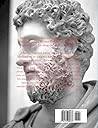
Meditations
Product ID: 66642810
Meditations is a series of personal writings by Marcus Aurelius, Roman Emperor 161–180 CE, setting forth his ideas on Stoic philosophy. Marcus Aurelius wrote the 12 books of the Meditations as a source for his own guidance and self-improvement. His stoic ideas often involve avoiding indulgence in sensory affections, a skill which, he says, will free a man from the pains and pleasures of the material world. He claims that the only way a man can be harmed by others is to allow his reaction to overpower him. An order or logos permeates existence. Rationality and clear-mindedness allow one to live in harmony with the logos.
| Best Sellers Rank | 29 in Philosophy (Books) |
| Dimensions | 18.9 x 0.74 x 24.61 cm |
| Isbn 10 | 1470089734 |
| Isbn 13 | 978-1470089733 |
| Item Weight | 295 g |
| Language | English |
| Part Of Series | Timeless Classics |
| Print Length | 128 pages |
| Publication Date | 16 Feb. 2012 |
| Publisher | CreateSpace Independent Publishing Platform |
User
A very good edition
I am reviewing the paperback edition (2011) of Marcus Aurelius' Meditations in the Oxford World's Classics edition, translated by Robin Hard with an introduction by Christopher Gill. I do not understand the one-star reviews that appear to have become attched to this edition of the Meditations. Those reviews and the images associated with a few of them must be referring to a completely different edition, and not the one I have in front of me that I reently purchased via Amazon.The Oxford World 's Classics edition (2011) is about as close to a perfect edition as you can get as a general reader. The translation is modern and fluent. There are no gobbledygook mistranslations as mentioned in some of the reviews. Robin Hard's translation of the Meditations is based on the the recent text by J. Dalfen (Leipzig, 2nd edn.,1987) while following the earlier translation by A S L Farquharson (Oxford, 1944) here and there. It reads consistently well, with no inappropriate modern slang or grammatical errors. It is a solid and clear text. The 18-page introduction by Christopher Gill is excellent in my view, particularly where it focuses on the form, purpose and style of the book, Marcus's philosophy, and the book's core ideas and recurrent themes. The selection of letters between Marcus and Fronto is also judicious and useful in fleshing out other aspects of Marcus Aurelius's character and thought. The 30-pages of explanatory notes and the index at the end of the book are also very helpful.So, all in all, I am entitely satisfied with this edition. I was simnply amazed to see the negative reviews, and felt prompted to provide this review to put the record straight as far as this specific edtion goes. As I said earier, those negative reviews must be referring to other editions of the Meditations and not to this specific one. This paperback edition Is 176 pages of clear, erudite and thoughtful work. if you want an edition that gives you just what you need to start reading and appreciating Marcus Aurelius's Meditations then this one - the 2011 Oxford Wolrd's Classics by Robin Hard and Christoper Gill - would be a very good place to start. And at the price I paid (£5.76), I am very pleased with it.
User
Book
Very good read
User
Timeless
Thoughtful in small amounts
User
Astonishing Wisdom
Although it reads like someone's journal (because it was) and the points in each of the somewhat unnecessary chapters are largely disconnected with each other, the actual content within these short aphorisms is sublime. I see some decrying this as a jumbled mess of a philosophic work but it was never intended as a treatise; Aurelius wrote it for his own personal consumption, a collection of his personal viewpoints on topics such as metaphysics and ethics. More to the point, what he wrote was beautiful, practical stoic philosophy as applicable now as it was ~1800 years ago, with the obvious exception of his religion. I find the similarities between his type of stoic thought and the philosophy of the Taoists and Buddhists both compelling and strong yet he remains firmly within a Roman set.This isn't an organised discourse or a philosophic novel to get lost in; more metaphysics in bite sized chunks, but it is well worth a read. I read it in a succession of bus journeys to and from work, and there was something very profound and "right" about that in itself!Definitely recommended, though I concede its not the be all and end all work of the stoic thinkers
User
3/5 stars - Profound content, let down slightly by translation and presentation
I bought this paperback edition of Meditations out of academic interest rather than self-help curiosity, having encountered Marcus Aurelius frequently in political theory and moral philosophy. The content itself remains compelling: short, reflective passages that reward slow reading and repetition rather than linear consumption. In my experience, the strength of the book lies in its restraint. Aurelius does not argue or persuade so much as remind, and many entries read like private prompts for intellectual discipline rather than polished doctrine. That makes it surprisingly practical when read in brief sittings.That said, this particular edition is uneven in execution. The translation feels serviceable but occasionally stiff, with phrasing that disrupts flow and makes some passages feel more obscure than necessary. Print quality is adequate for the price, though the text is compact and not especially forgiving for extended reading. As an inexpensive entry point into Stoic thought it works, but readers looking for clarity and literary smoothness may eventually want a more carefully edited translation. I value it as a reference and reflective tool, not as a definitive reading copy.
User
Simple, essential, humanistic
In todays world, someone may think that this book talk about obvious things that we all know from everyday life. But how many of us is realy concentrated about, thinking and annalize about those simple thoughts? And how many of us give the importance about those short but essentials thinking? Who of us will stop in middle of a big city or walking among the beach and try to think just like Aurelius or Seneca did? Everybody is todays life is on a rush, about job and other things in our digitally-enhanced and video-saturated age. And consider thought from the ancient world "already" examined. But the truth is from the ancient wisdom (might be Greek, Hindu, Tibetan) have a truly essence of truth about us and about how we see the world around us. Yu may not like this book, so then take some book of Dalai Lama. You will find there the same principle about how to make your life simpler, easier and without inner struggle.
User
You need this book
Favourite book
User
Text is minute and barely legible
What a dreadful reproduction. I purchased because the price was so cheap. The text is so small to be barely legible. The cost was achieved by cramming as much on to one page as was possible so as to minimise the amount of material required. Spend an extra 50p and buy a different version of this book.
User
⭐️⭐️⭐️⭐️⭐️ – philosophisch grundlegend, kulturell prägend und persönlich inspirierend.
⭐️⭐️⭐️⭐️⭐️ (5/5)„Meditations“ – zeitlose Lebensweisheit eines Philosophenkaisers📌 KurzfazitDie Meditationen sind keine systematische Philosophie, sondern persönliche Notizen eines Kaisers, der im 2. Jahrhundert n. Chr. über Sinn, Moral und Selbstbeherrschung nachdachte. Das Werk ist schlicht, eindringlich und universell – ein Text, der seit fast 2000 Jahren Menschen inspiriert, mit Klarheit und Gelassenheit zu leben.📚 Inhalt in KürzeGrundgedanken des Stoizismus:Kontrolle über das, was in unserer Macht liegt – und Akzeptanz dessen, was wir nicht ändern könnenKonzentration auf Pflicht, Tugend und VernunftVergänglichkeit von Macht, Ruhm und BesitzGelassenheit gegenüber Leid und TodKein Lehrbuch, sondern eine Sammlung persönlicher ReflexionenEntstanden während Feldzügen, in Momenten der Einsamkeit und Belastung🔬 Wissenschaftliche RelevanzStärken:Historisches Dokument: einzigartige Quelle für die stoische Philosophie und die Gedankenwelt eines römischen Kaisers.Philosophisch anschlussfähig an moderne Ethik, Psychologie (Resilienz, kognitive Verhaltenstherapie) und Achtsamkeit.Schwächen:Fragmentarisch, nicht systematisch aufgebaut.Stil kann durch Wiederholungen und Sprunghaftigkeit herausfordernd sein.👉 Fazit Wissenschaft: Ein Grundtext der Philosophie, methodisch nicht als Theorie, sondern als Reflexionssammlung.🌍 Kulturelle RelevanzTiefgreifender Einfluss auf Philosophie, Literatur und Selbsthilfekultur.Zentrale Inspirationsquelle für moderne Bücher über Resilienz, Minimalismus, Stoizismus.Hat das Bild des „philosophischen Herrschers“ in der westlichen Kultur geprägt.Heute populärer denn je, besonders in Management-, Leadership- und Selbsthilfe-Kontexten.💭 Meine persönliche MeinungPositiv: Klar, direkt, ohne Schnörkel – viele Passagen wirken erstaunlich modern.Kritisch: Manche Teile wiederholen sich stark; nicht jede Passage wirkt gleich tief.Für mich: ein Lebensbegleiter, den man immer wieder aufschlagen kann, statt ihn nur einmal durchzulesen.🎯 FazitMeditations ist ein zeitloses Meisterwerk der Lebensphilosophie, das weit über seine Epoche hinaus Bedeutung hat. Es bietet keine fertigen Rezepte, sondern Einsichten in das Ringen eines Menschen um Haltung, Pflicht und Gelassenheit.⭐️⭐️⭐️⭐️⭐️ – 5 von 5 SternenWeil: philosophisch grundlegend, kulturell prägend und persönlich inspirierend.
User
Estoicos, este es vuestro libro.
Me pregunto cómo puede un libro tan antiguo mantener de manera sencilla y fácil su contenido. Elegi esta traducción recomendada por otro autor, expresando que este manual habia traducido muy bien el libro original. Y ha dado en el clavo, incluso para un hispanohablante.Un libro muy recomendado de la mano de unos de los mayores referentes de la filosofia estoica.
User
Life changer
Awesome
User
Best book
In good condition
User
Good
Good quality as expected
Trustpilot
2 months ago
2 weeks ago