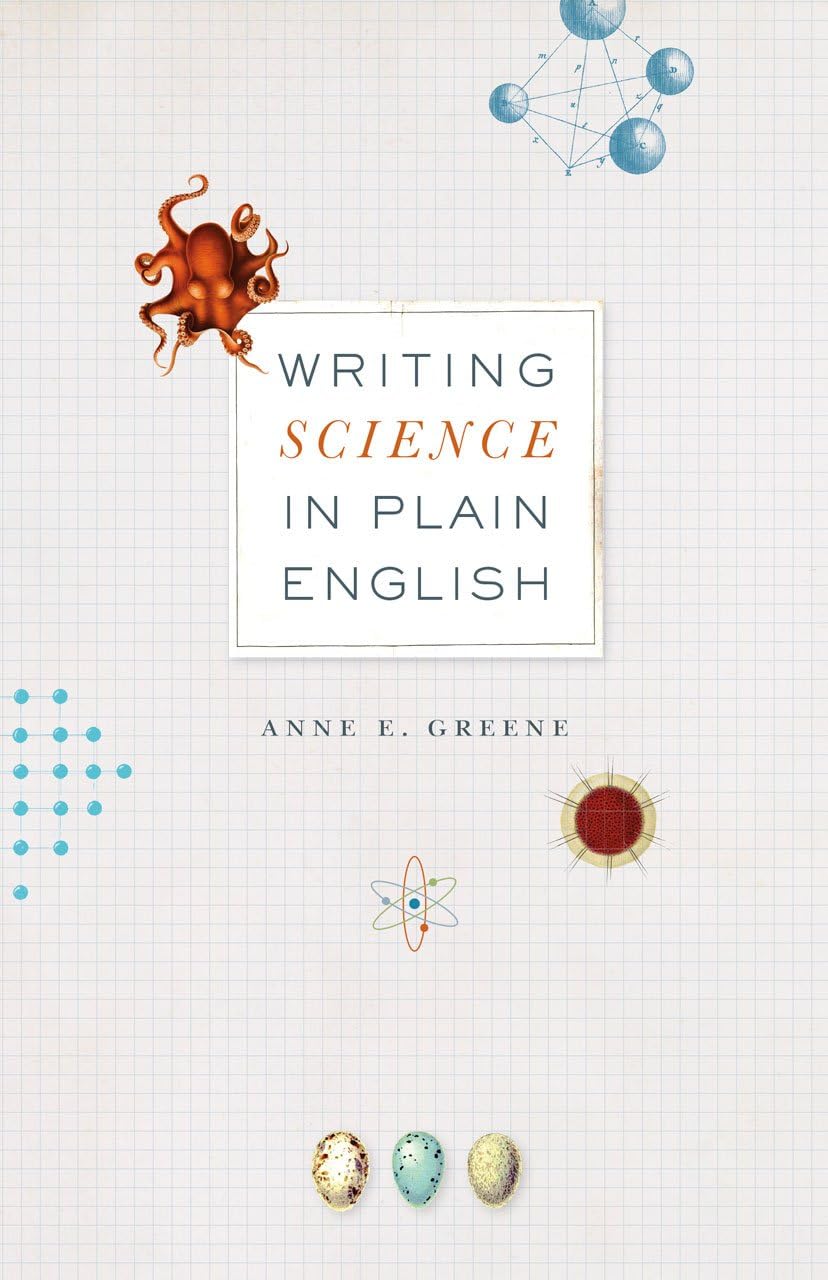
Writing Science in Plain English (Chicago Guides to Writing, Editing, and Publishing)
Product ID: 6818504
Scientific writing is often dry, wordy, and difficult to understand. But, as Anne E. Greene shows in Writing Science in Plain English ,writers from all scientific disciplines can learn to produce clear, concise prose by mastering just a few simple principles. This short, focused guide presents a dozen such principles based on what readers need in order to understand complex information, including concrete subjects, strong verbs, consistent terms, and organized paragraphs. The author, a biologist and an experienced teacher of scientific writing, illustrates each principle with real-life examples of both good and bad writing and shows how to revise bad writing to make it clearer and more concise. She ends each chapter with practice exercises so that readers can come away with new writing skills after just one sitting. Writing Science in Plain English can help writers at all levels of their academic and professional careers—undergraduate students working on research reports, established scientists writing articles and grant proposals, or agency employees working to follow the Plain Writing Act. This essential resource is the perfect companion for all who seek to write science effectively. Review: Quick, inexpensive way for you or your students to make a big jump in writing ability - I highly recommend Anne Greene’s book. She devotes each of her very short chapters to one or two key elements, and those elements lead to very clear, concise writing in any field. When writing about science, especially journal articles, authors tend to write in the third person and use passive verbs and abstract terminology. She tells her readers how to overcome these and many more problems. Although most of the principles are simple, they are unfamiliar to many students and professionals I’ve encountered. She also presents the reader with exercises to build skills in their implementation. I am teaching an undergraduate scientific technical writing course; this book does more in less time to improve writing than anything I’ve encountered to date. Whether you are teaching such a course or want a quick way to improve your own writing, you should buy this book. Your students won't believe that it is possible to buy a textbook so cheaply. An added benefit is that you can read it online or with regular e-book applications and are not constrained to reading it in the applications that many publishers require for textbooks.This enables students to read it on campus computers that don't allow the installation of applications. Review: and it will be especially good for students and post-docs as they begin a career - This is a superb book -- in the spirit of Wydick's PLAIN ENGLISH FOR LAWYERS but written with scientists in mind. Everyone can benefit from taking a look at it, and it will be especially good for students and post-docs as they begin a career.
| Best Sellers Rank | #275,973 in Books ( See Top 100 in Books ) #9 in Writing Skills Reference #164 in Scientific Reference #167 in Academic & Scholarly Writing |
| Customer Reviews | 4.6 out of 5 stars 272 Reviews |
B**R
Quick, inexpensive way for you or your students to make a big jump in writing ability
I highly recommend Anne Greene’s book. She devotes each of her very short chapters to one or two key elements, and those elements lead to very clear, concise writing in any field. When writing about science, especially journal articles, authors tend to write in the third person and use passive verbs and abstract terminology. She tells her readers how to overcome these and many more problems. Although most of the principles are simple, they are unfamiliar to many students and professionals I’ve encountered. She also presents the reader with exercises to build skills in their implementation. I am teaching an undergraduate scientific technical writing course; this book does more in less time to improve writing than anything I’ve encountered to date. Whether you are teaching such a course or want a quick way to improve your own writing, you should buy this book. Your students won't believe that it is possible to buy a textbook so cheaply. An added benefit is that you can read it online or with regular e-book applications and are not constrained to reading it in the applications that many publishers require for textbooks.This enables students to read it on campus computers that don't allow the installation of applications.
M**L
and it will be especially good for students and post-docs as they begin a career
This is a superb book -- in the spirit of Wydick's PLAIN ENGLISH FOR LAWYERS but written with scientists in mind. Everyone can benefit from taking a look at it, and it will be especially good for students and post-docs as they begin a career.
F**D
A Good Find
The book seems well laid out and succinct. Appears very useful for the scientific composition course I will teach.
E**S
Really helpful. A clear and direct approach to writing ...
Really helpful. A clear and direct approach to writing to everybody without use jargon and obscure classical scientific term. A must read, for all the new scientist!
S**N
You will never read scientific literature the same way!
After reading this book for a biology elective at the University of Washington I will never be able to read scientific literature the same. I am constantly critiquing articles I read and have begun editing my own publications accordingly! You'll love it!
C**G
Informative!
Good for novice writers.
P**R
Concise and a pleasure to read
Useful, engaging, to the point, and just what an academic short of time but that needs to improve his writing craft needs. A definite thumbs up.
L**R
A nice simple book
This is a great simple book to help fine tune your writing to be concise and clear. A nice reference book to have around
M**A
The best thing? Anne Green really teaches by example
A little gem of a book! A must-read for all (students and staff) who want to improve their writing by applying some simple and practical strategies. The best thing? Anne Green really teaches by example. And there are plenty to choose from in the book. Enjoy!
R**S
Very good book!
It is very helpful for whom needs science writing no in plain language.
A**E
Bringt zum Überlegen
Kurze Lektüre, die aber sehr hilfreich sein kann beim Schreiben. Man bekommt Tipps, um den Satzbau klar und deutlich zu halten. Die Beispiele sind sehr hilfreich.
A**I
Idee buone e semplici
Per chi si affaccia per la prima volta alla scrittura di tipo scientifico, il testo racchiude semplici indicazioni e ottimi consigli. Consigliato.
J**O
Great user guide
Very structured and contains exercises
Trustpilot
1 month ago
1 week ago