
Buy anything from 5,000+ international stores. One checkout price. No surprise fees. Join 2M+ shoppers on Desertcart.
Desertcart purchases this item on your behalf and handles shipping, customs, and support to South Korea.
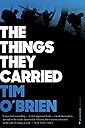
⚡ Carry the weight of history and heart with Tim O’Brien’s unforgettable classic.
The Things They Carried by Tim O’Brien is a critically acclaimed Vietnam War novel blending fact and fiction to explore the emotional burdens soldiers carry. Ranked #11 in War Fiction and praised for its vivid storytelling and psychological depth, this book remains a timeless, fast-paced read that connects generations through its powerful narrative.


| Best Sellers Rank | #879 in Books ( See Top 100 in Books ) #11 in Contemporary Literature & Fiction #16 in War Fiction (Books) #120 in Literary Fiction (Books) |
| Customer Reviews | 4.4 out of 5 stars 16,358 Reviews |
M**Z
Great read! Heart wrenching journey through Vietnam war
Tim O'Brien's "The Things They Carried" is more than just a collection of war stories; it's an intricate exploration of the burdens borne by soldiers during the Vietnam War. The book masterfully blurs the lines between fiction and memoir, creating a narrative that is both deeply personal and universally resonant. O'Brien's narrative structure is unconventional yet effective. The book is composed of interconnected stories that revolve around the experiences of a platoon of American soldiers. This fragmented style mirrors the chaotic and disjointed nature of war itself, immersing readers in the soldiers' reality. Each chapter can stand alone, yet together, they form a cohesive and compelling portrait of war and its aftermath. The characters in "The Things They Carried" are richly developed and achingly human. O'Brien delves into their inner lives, exposing their fears, hopes, and regrets. Lieutenant Jimmy Cross, for instance, is haunted by his love for a girl back home and the death of a comrade, illustrating the personal costs of leadership and responsibility. Through these intimate portrayals, O'Brien brings to life the emotional weight that each soldier carries, both literally and metaphorically. One of the book's greatest strengths is its exploration of themes such as fear, courage, guilt, and the search for meaning. The title itself is a powerful metaphor for the physical and emotional burdens the soldiers bear. O'Brien skillfully uses symbolism to enhance these themes, such as the weight of the physical items each soldier carries representing their psychological burdens. O'Brien's writing is poignant and evocative, often leaving readers with a profound sense of empathy and sorrow. His prose is both lyrical and raw, capturing the brutal realities of war while also finding moments of beauty and humanity. The book's emotional impact is heightened by O'Brien's willingness to confront the complexities of memory and truth, challenging readers to consider the nature of storytelling and the ways we process trauma. What sets "The Things They Carried" apart is its authenticity. O'Brien, a Vietnam veteran himself, infuses the book with an honesty that is both brutal and tender. He does not shy away from the horrors of war, but he also acknowledges the moments of camaraderie and love that sustain the soldiers. This balance makes the book not just a war story, but a universal exploration of the human condition. "The Things They Carried" is a masterpiece of contemporary literature, offering a profound and deeply moving look at the Vietnam War and its enduring impact on those who fought it. Tim O'Brien's ability to weave together fact and fiction, past and present, creates a narrative that is as enlightening as it is heart-wrenching. For anyone seeking to understand the true cost of war, this book is an essential read.
A**M
Truth in Fiction, Death and PTSD
Tim O'Brien is a national treasure. Thank you, Mr. O'Brian, for your work. Four things I would like to focus on in my review of this seminal Vietnam War novel: 1. O'Brien addresses head on the paradox of fiction being more true than factually accurate history in conveying an experience. A detail that did not occur, can actually convey the reality of an experience more strongly than the strictly accurate account ever could. I find this true and I find it amazing. I think in the experience of living an event, especially a stressful or traumatic event, one becomes hyper-aware of small details--even your own heartbeat. Later, when recounting the experience, the facts often don't adequately capture the intensity of the moment. The story-teller, to then give an accurate representation of the lived moment, to get the reader/hearer to feel what was felt, must add some details. To accurately convey the feeling is the art, the job of the story-teller. Factual accuracy is the domain of the academic historian. Those in the trenches, telling their lived experience, should strive for emotional accuracy--a different, but no less important, truth that must also be preserved. O'Brien does that perfectly here, if occasionally with blushed cheeks as he tells on himself for doing so. 2. Death has always been personally present in the wars of the past (in the drone and hacking wars of the future death will be largely remote). Death looms large in O'Brien's Vietnamese jungle. I found the way the soldiers dealt with death to be odd and moving and disturbing. They prop up a dead old villager and shake and high-five his remaining hand. They take turns voicing their dead battle-buddy's signature mellow tone as his dead body waits for evac choppers to arrive. Death is too terrible to face head on--it must be mocked and laughed at to be borne. The main incident when it is faced head-on haunts the narrator for the rest of his life. 3. Which brings us to PTSD. One of the soldiers kills himself after not being able to adjust to civilian life after the war. The narrator returns with his daughter to the field where his friend died looking to find closure and finds little peace. The soldiers are forever changed, their innocence lost. I served in the Army, I never saw death up close and personal, and I still had mild PTSD after getting out. I can't imagine the hell in the minds of soldiers who fought in close combat in the wars of the 20th century. I mourn with them and empathize and promise to try to do more to help vets returning from combat zones. 4. Finally, a note about the writing. It is masterful. Beautiful. Real without being trite. O'Brien's style here is as much poetry as prose. Every writer should read O'Brien and learn from a master. It was a true pleasure to read. Which seems strange to say about a book about such difficult and dark topics.
L**K
Outstanding Vietnam war history
Tim O’Brien’s The Things They Carried remains, for me, one of the most powerful works of American literature—war literature, yes, but also human literature. I first read it back in the 1990s when the Chicago Public Library chose it for their One City, One Book program. I can still picture the event where I met O’Brien: his calm voice, his steady presence, and the way he spoke about memory, truth, and the emotional residue of Vietnam. Even then, he carried a quiet gravity that you don’t forget. Revisiting the book now—decades later—has been unexpectedly emotional. My youngest son was assigned it in his English class, and together we’ve spent the last month exploring America’s involvement in Vietnam. We’ve talked history, watched films (his favorite so far is Platoon), and wrestled with the complexities of a conflict that still lingers in our national imagination. And reading O’Brien alongside him has reminded me how deeply this book cuts. For me, this reread transported me right back to my late teens and early twenties. I was too young to serve in Vietnam, but not too young to register for the draft—and certainly not too young to feel the country’s struggle to make sense of what had happened. My friends and I devoured anything we could find in those years, trying to piece together an understanding of a war that nearly pulled the country apart. In many ways, I realize I’m still trying to understand it. What makes O’Brien’s writing extraordinary is his ability to blend fact, memory, emotion, and imagination into something truer than straightforward history. His stories show what soldiers carried in their packs, yes—but more importantly, what they carried in their hearts. Fear, guilt, hope, grief, absurdity, love—it’s all there, unvarnished and unforgettable. The lines between fiction and nonfiction blur, but the emotional truth never wavers. Reading The Things They Carried again reminded me why this book has endured for so many readers across the generations. It is a masterpiece of storytelling, an essential account of the Vietnam War, and a deeply human reminder of how experiences shape us long after the moment has passed. Sharing this with my son has been unexpectedly meaningful—almost like passing forward a torch from one generation still searching for answers to another beginning the search. And the beauty of O’Brien’s writing is that it leaves space for that searching. It invites you in. A timeless, haunting, beautifully written book. I’m grateful I returned to it.
J**R
An Emotional Look Back at Vietnam
This is a brilliant and sensitive book about Vietnam. Although I wasn’t there, I served in the military during that period, safely stateside, and was glad to not go to a war that was so difficult to explain and justify. Nevertheless, I felt a sense of guilt for no other reason than that my peers were fighting and dying there. I have talked to others who stayed out of harm’s way while otherwise serving, and the same feeling was at least lurking in their psyche. Perhaps as a result, and having lived through a time when the country was torn apart by this distant conflict, I avoided the books and films that came out soon after the conflict ended. But as time passed, it became easier and appropriate to examine the experiences of those who were actually engaged in this misguided war. A couple of years ago I read “The Matterhorn”. Like this book, it is a novel, but one obviously based on the experience of the author who served in Vietnam. I found The Matterhorn quite compelling, and the recollection that sticks in my mind was of the terrible physical hardship, and the complete exhaustion of the troops. There was much more to the book, but that is what stayed with me. I found quite a different viewpoint in The Things They Carried. The book begins reciting the physical things that the troops carried- guns and boots and ponchos and rations and a myriad of supplies that necessarily weighted them down on their days and nights in the field. But it quickly became obvious that the title did not really refer to these tangible objects but instead to the emotional burdens that were much more weighty. For the author, dealing with such emotional burdens begins as he grapples with a decision to obey the draft or go to Canada. There is a wonderful chapter about his stay in a cabin near the Canadian border where, along with the aged proprietor, he contemplates his decision. He decides against leaving the country, but not out of an internal patriotism, but instead from a sense of shame if he failed to report. He did not want to disappoint his family and friends, and this fear of shame was much more compelling than the fear of war. Indeed, he would go to war and kill and maybe die, because he was embarrassed not to. This sense of shame, or embarrassment, also transferred to the battlefield. In fact, of all the things the soldiers carried, the most compelling was the fear of blushing. Men killed and died because they were embarrassed not to. Their acts of bravery were not a product of courage or valor, but from the fact that they were too frightened to be thought of as cowards. They also battled with the desire to be a good man in the midst of all the evil, to find justice amidst the dying. But war, whatever it is, is never moral-it does not instruct nor encourage virtue, nor suggest models of proper human behavior, nor restrain men from doing what they have always done. War is hell, but it is also terror and adventure and courage and discovery. The author also notes that war is nasty; war is fun. War is thrilling, war is drudgery. War makes you a man, war makes you dead. It can also be a rush, one may never feel more alive than when he’s almost dead. Amidst all the emotions, the book must also recount the grisly details of that combat, but it always seemed to me a story of emotion. And just as these men–actually boys– carried the shame of a judgmental society as their propulsion to fight and die, they acquired and returned with great burdens of guilt. This guilt was the thing they carried home, along with memories that they could not put out of their minds. These are probably the same memories that soldiers have always brought back, but those returning from Vietnam were perhaps the first to gradually discuss and try to deal with this emotional burden. The book tells a difficult and instructive story. It again raises questions and issue that were discussed at the time but have faded with other memories of those times. The author’s thoughts are timelessly pertinent: That you don’t make war without knowing why. That Vietnam seemed wrong to him because certain blood was being shed for uncertain reasons. And that when a nation goes to war it must have reasonable confidence in the justice and imperative of its cause, because you can’t fix your mistakes. Once people are dead, you can’t make them undead. Simple expectations when young lives are at stake.
R**R
I will read this one again
I'm not sure when I first heard of this book as it's one of those that always been around for years. Of course this has been around since the early 90's so I guess it has been. Recently I read the authors memoir "If I die in a combat zone box me up and ship me home" which renewed my interest in the authors work. The clincher was seeing Tim O'Brien on the Ken Burns documentary on the Vietnam War which I found very interesting and compelling. The book is set in during America’s war in Vietnam with no particular year or place though some are mentioned throughout the book. The initial chapter (or I’ve seen described as vignettes) is self-titled “The Things They Carried” in which following a platoon in the jungles of Vietnam. Described are the significant characters you will hear more of throughout the rest of the book. Not only do we learn of the things they carried physically in great detail but also emotionally. They may all be in the same place or situation but as we learn further they do not all carry the same things. “The things they carried were largely determined by necessity. Among the necessities or near-necessities were p-38 can openers, pocket knives, heat tabs, wristwatches, dog tags, mosquito repellent, chewing gum, candy, cigarettes, salt tablets, packets of kool-Aid, lighters, matches, sewing kits, Military Payment Certificates, C rations and two or three canteens of water.” (page 2) Some of the things they carried were unique to the individual. The Platoon Leader, LT Cross, carried photographs of a girl he pined for but she did not return the same feelings. One soldier carried extra rations of peaches. Another carried a toothbrush, dental floss and extra soap stolen from a hotel while on R&R. Another always carried tranquilizers. Another carried condoms. Another had comic books. One carried a New Testament Bible. The list goes on. The first vignette serves as an introduction and a jumping off point to the other stories that follow. It doesn’t follow a hard plot line or flow in chronological order. One story maybe the author writing as a middle aged father revisiting Vietnam with his sometimes bewildered daughter. Then we look into the childhood of the fictional author, also named Tim O’Brien. The use of the author’s name as the focal character gives the book an impression of a memoir but it in reality it is not. I had recently read the author’s actual memoir “If I die in the combat zone” so I already knew it wasn’t but even I had to remind myself it wasn’t autobiographical. I have no doubt though the author drew upon his own experiences in writing this book. If one is expecting hardcore details of battles or gritty hardcore close combat this will probably disappoint although many details that are gory and unpleasant it doesn’t dwell on the bloodshed or heroics. It’s a series of vignettes using the Vietnam War as a backdrop and drawing on the different soldiers to tell a series of separate stories loosely connected. Some are more believable than others but it is fiction. One often gets the feeling of underlying themes that are not obvious on the surface and require more thought. I can see myself reading this again and seeing stuff I missed previously. I recommend this highly. Not just for those looking for books of war or combat but of excellent writing and storytelling. It makes you dive in and think about what you’re reading and into the minds and motivations of the characters. I already look forward to reading this again.
D**D
Drags a bit and repetitive in the story telling
I had been wanting to read this for year, but found it lacking. For me it seemed to meander on concerning various thoughts running through a Soldier's head in Vietnam. The same thing would be repeated again and again. The book improved toward the end when the author opened up about his actual experiences.
B**S
Healing through writing. No blood and guts here.
Thank you Tim O'Brien for a wonderfully open, honest and brave work. "The things they carried" opens with a narrative of what grunts in Vietnam physically carried based on the mission, the terrain and their personal preferences. Everything carried added weight to the burden carried through the hostile country of Vietnam. "The things they carried" talks about the emotions the men carried with them. Emotions about the war, back home, their buddies, their officers and the Vietnamese. "The things they carried" includes each soldiers story. The book is a self healing in which O'Brien digs down deep into himself and brings up emotions buried by a kid in Vietnam. What he saw and how he translated it then is reanalyzed as an adult and laid out on paper for us to read and absorb. It's fascinating in so much as 20 years after the initial event, as he now recounts for us, the clarity and emotion is so obviously vivid in his mind. There are no long, drawn out and confusing battle recollections but more frozen moments in time that are now locked in a steel trap of memory. The angle of the dead man's head, the color of the medic's boots, the vibration of light at a particularly defining moment. O`Brien talks about the truth in recollection of the same story by different men. Each man adds his own spin but, to that man, it's the truth. The embellishment is not to distort the truth but serves only as a way to make the truth more truthy somehow? This isn't a story it's a healing. O'Brien has allowed us to be witnesses to his attempt to heal or, more aptly, recover his youth lost in S.E. Asia. As far as "Vietnam, none fiction" goes, this book is not the usual narrative of 13 months in the 'Nam. This one has a different slant as it's more a "20 years after the event". I thoroughly enjoyed it and got through it in 2 days, a fast read that holds you. The chapters are natural in length and there's no guess work involved. Give this one a try, you won't be disappointed.
J**P
Sometimes a great book stops being a story and becomes a reflection.
My boys and I read this at the same time. Them for class, me for connection. This is not a book one reads for pleasure, but it is a reminder that sometimes a great book stops being a story and becomes a reflection. The Things They Carried by Tim O’Brien is a collection of twenty-two interconnected short stories revolving around a platoon of American soldiers during the Vietnam War and the literal and emotional burdens each soldier carries, if only to remember they are human. This is a demanding read — not because it’s obtuse or buried in authorial swoops and swirls, but because O’Brien splays himself open, unblinkingly and with an honesty that begs for his precise language. O’Brien uses a blend of autobiographical details and fictionalization to share stories of the haunting complexities of war and its aftermath. One of the central themes is storytelling — how stories help people cope, give meaning to their experiences, and preserve memory. O’Brien uses his characters to explore the meaning of truth in both war and writing, especially during and after times of extreme conflict. Against this backdrop, we witness (sometimes unwillingly) the worst and best of human nature. It is deep and disturbing, and hoo boy, did it earn its status as a finalist for the Pulitzer. Read this when you are in a place to do so, if only because the writing and structure are elegant and majestic. But also, read it when you can stomach the violence and sorrow. The title story may be one of the best-crafted pieces I’ve ever read. The non-linear organization of the book is a lot like memory itself — asynchronous, spiraling, sometimes perseverating, sometimes rushing ahead because that’s the only speed one can self-preserve and still tell the truth. But ultimately, even that rushing is just procrastination from confronting the inevitable. This is also most definitely going on my Best Of 2024 list.
M**.
The Best Book I have read about the Vietnam War
Tim O'Neil had me enthralled from the start. This is my era and this book is outstanding.
I**A
How come I never heard of it?
Mandatory reading if you want to make sense of what is going on in our part of the world. Beautiful prose.
S**L
La guerre enfin décrite pour ce qu'elle est
Un merveilleux ouvrage entre le roman, les nouvelles et la poésie. Sur la guerre du Viet Nam, certes mais qui pourrait décrire l'âme de tous ceux qui, un jour, se retrouvent une arme à la main, jeunes et ne sachant pas pourquoi ils sont là. Plus que tout, un chef d'oeuvre de la littérature mondiale.
L**O
Capolavoro di letteratura americana contemporanea
Un libro dove forma e contenuto raggiungono una simbiosi davvero straordinaria; metamoderno, nella sua decostruzione del medium del "racconto di guerra," e al contempo nel suo utilizzo cosciente e puro. Lo stile è diretto, sommario, nell'asprezza distaccata della narrazione; la certezza espressiva nel racconto rende evidente più che mai l'ambiguità di tutto ciò che è la guerra, quella guerra, il coraggio, la paura, la fraternità dei soldati.
A**ー
The book arrived on time and was as described.
I haven't read this yet but it looks very interesting.
Trustpilot
2 weeks ago
1 week ago