
Buy anything from 5,000+ international stores. One checkout price. No surprise fees. Join 2M+ shoppers on Desertcart.
Desertcart purchases this item on your behalf and handles shipping, customs, and support to South Korea.
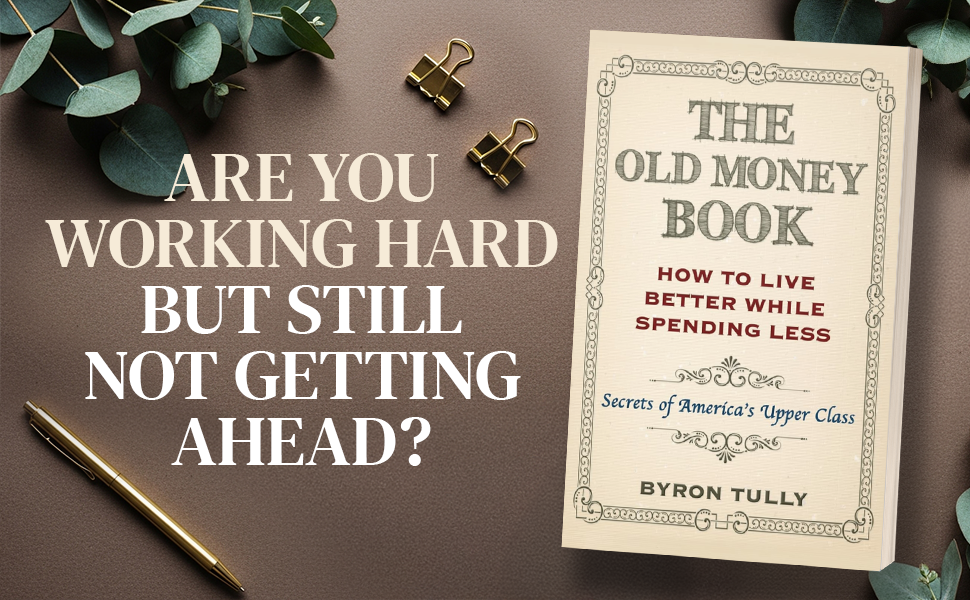
The Old Money Book details how anyone from any background can adopt the values, priorities, and habits of America's upper class in order to live a richer life. This entertaining and informative work reveals for the first time the Core Values that shape the discreet--but truly affluent--Old Money way of life. Author Byron Tully then details How Old Money Does It, offering time-tested advice on everything from clothes and cars to finances and furnishings. Whether you're just starting out or starting over, The Old Money Book shows you how you really can Live Better While Spending Less. Review: Well coordinated delivery - The book was well delivered with sufficient updates. The book is a great read. Review: Sound advice, regardless of how much money you have - What if you had plenty of money, and had gotten used to having it for many years? Better yet, what if your family had plenty of money going back multiple generations? What would your values and lifestyle be? This book purports to provide the answers by telling us how Old Money thinks and lives, and suggests that we can experience the benefits of thinking and living like Old Money even if we have middle-class money. Since I'm neither Old Money nor New Money, I've had limited exposure to these worlds, but I do find that the author's advice makes sense and resonates with my values, so I can highly recommend this well-written book to anyone who senses that the treadmill of consumerism is shallow and pointless, and wants to instead live a truly better life. Here's a summary of the main points: (1) Old Money is defined as three or more generations of wealth. (2) Personal reality matters far more than public perception. (3) The main purpose of money is freedom, not consumption. Live below your means in order to save, invest, and preserve capital. Don’t be seduced by advertising or wanting to ‘keep up’ with the consumption of others. Teach your kids to manage money and don’t spoil them. Purchases should emphasize things which will be used frequently rather than infrequently. The general idea is to preserve money so that it will securely be there throughout your life, and possibly future generations. (4) In terms of values, emphasize enjoyment of life, personal growth, learning about the world, work, social contribution, and family, rather than material possessions or social status. The priority is ‘quality of life’, including self-development, rather than ‘standard of living’. (5) Health is vital, so eat properly and exercise regularly. (6) Lifelong education, including a quality university, is essential. Turn off the TV and video games and read quality materials, and read to your kids when they’re young. ‘Education’ also includes extracurricular activities such as sports, music, theater, debate, etc. (7) Do work which you feel passionate about, work hard at it, and strive to excel. Laziness and wasting time are unacceptable, and don’t complain about doing the tedious aspects which come with all work. When working, be disciplined, avoid distractions, and be in the moment. (8) Be discrete, modest, and polite toward others. Never talk about how much money you or others have. Maintain your privacy and respect the privacy of others. Be articulate, but not pompous or loud. (9) Avoid electronic devices and spend more time face to face with family and friends. Eat meals as a family. Have plenty of good conversations, and be tolerant of diverse political and religious views. (10) Don’t waste time dating people you know you wouldn’t marry, don’t marry too early, choose your partner carefully based on shared values and goals, have a long engagement to make sure the two of you are compatible, don’t have too many kids or have them too early (use birth control), and keep your marital issues and sex life private. (11) Wear quality clothing which has understated timeless style and will last many years, rather than the latest fashion. Avoid jewelry other than a wedding band and decent watch. (12) Buy a home you can easily afford in a good neighborhood. Don’t make it bigger than it needs to be. Auctions are a good way to find quality furnishings at low cost. To free up your time, hire help for services such as cleaning the house. (13) Buy a reliable car and keep it for a long time. It shouldn’t cost more than 10% of your annual income, and used cars are often the best value. (14) Travel and see the world. It’s part of your education. When traveling, see more by walking more.


| Best Sellers Rank | #501,188 in Books ( See Top 100 in Books ) #44 in Free Enterprise #5,115 in Personal Transformation #7,353 in Motivational Self-Help |
| Customer Reviews | 4.4 out of 5 stars 1,542 Reviews |
S**.
Well coordinated delivery
The book was well delivered with sufficient updates. The book is a great read.
C**R
Sound advice, regardless of how much money you have
What if you had plenty of money, and had gotten used to having it for many years? Better yet, what if your family had plenty of money going back multiple generations? What would your values and lifestyle be? This book purports to provide the answers by telling us how Old Money thinks and lives, and suggests that we can experience the benefits of thinking and living like Old Money even if we have middle-class money. Since I'm neither Old Money nor New Money, I've had limited exposure to these worlds, but I do find that the author's advice makes sense and resonates with my values, so I can highly recommend this well-written book to anyone who senses that the treadmill of consumerism is shallow and pointless, and wants to instead live a truly better life. Here's a summary of the main points: (1) Old Money is defined as three or more generations of wealth. (2) Personal reality matters far more than public perception. (3) The main purpose of money is freedom, not consumption. Live below your means in order to save, invest, and preserve capital. Don’t be seduced by advertising or wanting to ‘keep up’ with the consumption of others. Teach your kids to manage money and don’t spoil them. Purchases should emphasize things which will be used frequently rather than infrequently. The general idea is to preserve money so that it will securely be there throughout your life, and possibly future generations. (4) In terms of values, emphasize enjoyment of life, personal growth, learning about the world, work, social contribution, and family, rather than material possessions or social status. The priority is ‘quality of life’, including self-development, rather than ‘standard of living’. (5) Health is vital, so eat properly and exercise regularly. (6) Lifelong education, including a quality university, is essential. Turn off the TV and video games and read quality materials, and read to your kids when they’re young. ‘Education’ also includes extracurricular activities such as sports, music, theater, debate, etc. (7) Do work which you feel passionate about, work hard at it, and strive to excel. Laziness and wasting time are unacceptable, and don’t complain about doing the tedious aspects which come with all work. When working, be disciplined, avoid distractions, and be in the moment. (8) Be discrete, modest, and polite toward others. Never talk about how much money you or others have. Maintain your privacy and respect the privacy of others. Be articulate, but not pompous or loud. (9) Avoid electronic devices and spend more time face to face with family and friends. Eat meals as a family. Have plenty of good conversations, and be tolerant of diverse political and religious views. (10) Don’t waste time dating people you know you wouldn’t marry, don’t marry too early, choose your partner carefully based on shared values and goals, have a long engagement to make sure the two of you are compatible, don’t have too many kids or have them too early (use birth control), and keep your marital issues and sex life private. (11) Wear quality clothing which has understated timeless style and will last many years, rather than the latest fashion. Avoid jewelry other than a wedding band and decent watch. (12) Buy a home you can easily afford in a good neighborhood. Don’t make it bigger than it needs to be. Auctions are a good way to find quality furnishings at low cost. To free up your time, hire help for services such as cleaning the house. (13) Buy a reliable car and keep it for a long time. It shouldn’t cost more than 10% of your annual income, and used cars are often the best value. (14) Travel and see the world. It’s part of your education. When traveling, see more by walking more.
A**R
An excellent read.
This is a must read book for anyone wanting to live life well. While the title might suggest that the book is strictly financial in nature, that would be a misconception. The book covers many topics - from health and education to living well while living simply. Mr. Tully writes about the values that so many of us were raised with with eloquence, and an understated style that mirrors his philosophy and prescription for living well. Everyone - but especially young adults first starting out on their own - would benefit from Mr. Tully's wisdom. An excellent read.
J**Z
Breve, conciso y facil de leer
Lectura interesante, con buenos consejos prácticos.
M**E
Une pépite !
Si vous souhaitez en savoir plus sur le mode de vie et les valeurs qui régissent l'existence des vieilles fortunes alors ce livre est tout indiqué. On y apprend qu'il ne suffit pas d'être riche pour avoir les codes des gens biens et fortunés. Encore faut-il embrasser certaines valeurs ( éthique du travail, dépenses parcimonieuses, savoir-être, et humilité). Pour toute personne qui aspire à vivre telle une personne fortunée, ce livre est un excellent guide . Vous serez surpris.e de constater à quel point tout n'est que ( essentiellement) question de mentalité et de discipline.
M**.
Very useful
Very useful
Trustpilot
1 month ago
2 weeks ago